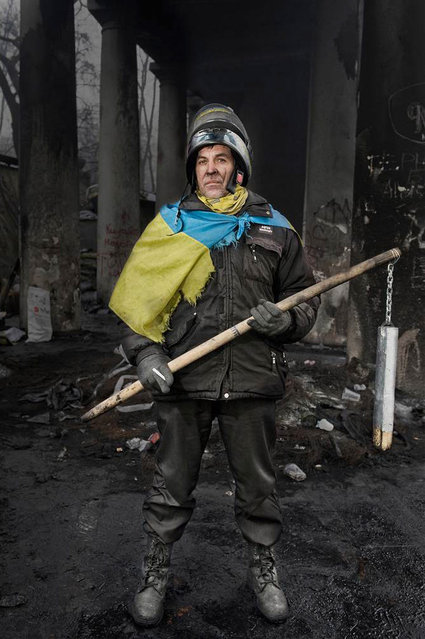
This man patrols the main front beside the access point to Lobanovskyi Dynamo Stadium, an area where the barricades are weak. For months now, he has slept very little. He is a carpenter.
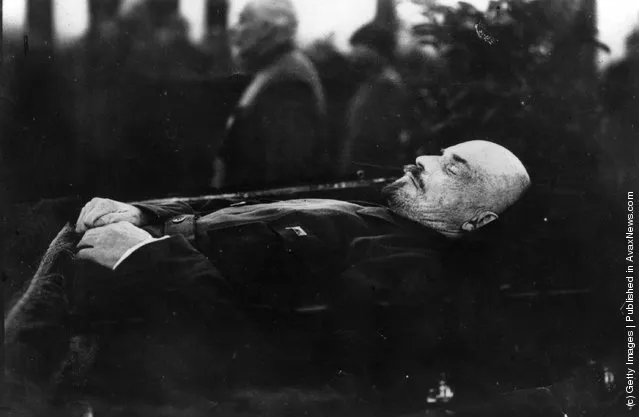
Photo: Vladimir Ilyich Lenin (1870 – 1924) lying in state in the Kremlin. (Photo by Hulton Archive/Getty Images). 1924
Important! For the same article in Russian language click here.
Something quite intriguing is happening within Russian-speaking internet during the last few – should you type a fully academic inquiry (at least, according to Russian academic requirements) in national search engines for "Lenin's mausoleum" – the first thing you get (even in top 10 searches) is website pages talking about black magic and occult. Website authors view this construction differently, but unconditionally agree on one thing: the mausoleum of the "leader of the world proletariat” – the essence of a magical artifact, a sort of “energy vampire”. It was built with a certain purpose: to drain the energy out of miserable Soviet citizens on one hand; and to poison the anthroposphere of one-sixth part of the earth with its vibes (the exact territory that was occupied by the former Soviet Union), depriving the Russian people of will to resist on the other hand. Complete nonsense? No doubt. Nevertheless, an intriguing one. Well, probably because some oddities do exist in mausoleum's history. These oddities are the thing we are going to discuss this time. First, let me refresh you memory on the subject.
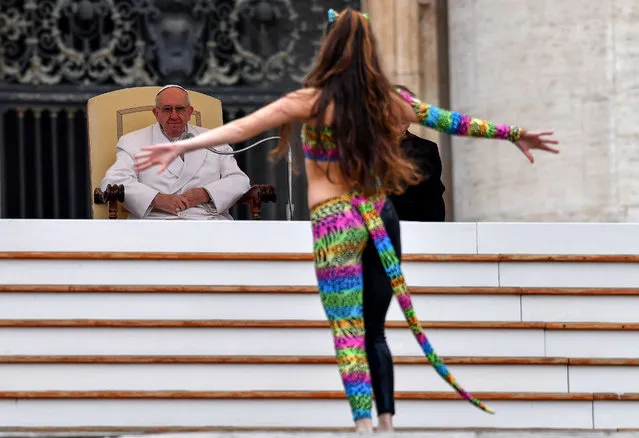
Pope Francis attends a circus performance during his weekly general audience at Paul VI hall on December 22, 2016 at the Vatican. (Photo by Alberto Pizzoli/AFP Photo)
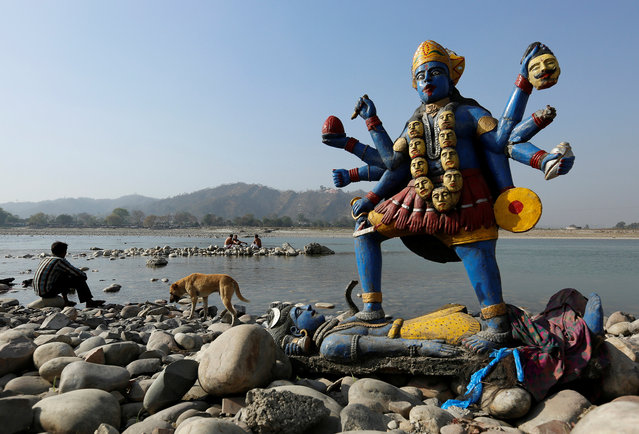
A man sits next to a damaged idol of Hindu goddess Kali which was taken out after its immersion in the river Ganges in Haridwar, India, March 29, 2017. (Photo by Danish Siddiqui/Reuters)
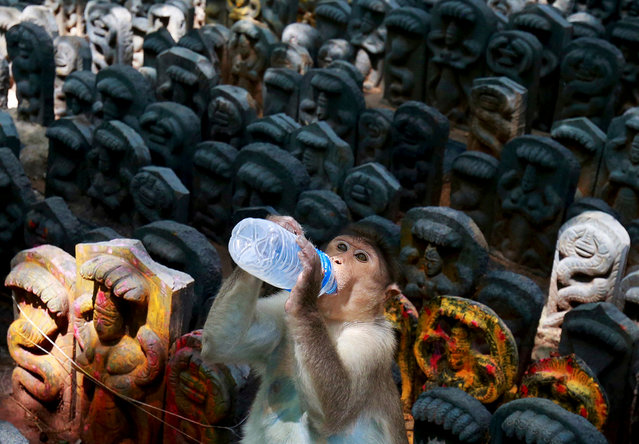
A bonnet macaque sits on consecrated idols of snakes as it drinks milk offered by a devotee during the Hindu festival of Nag Panchami, which is celebrated by worshipping snakes to honour the serpent god, inside a temple on the outskirts of Bengaluru, India, July 27, 2017. (Photo by Abhishek N. Chinnappa/Reuters)
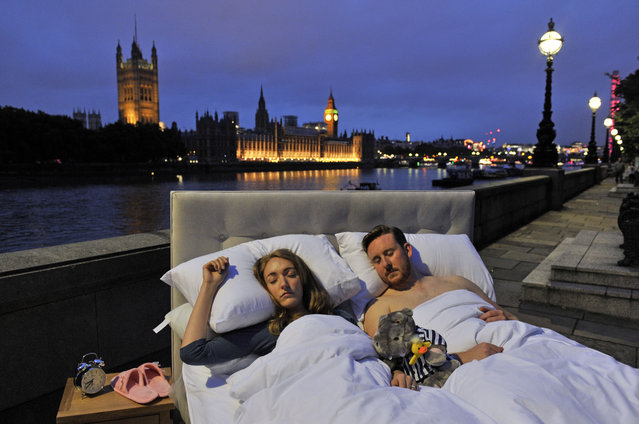
Londoners enjoy a “Silent Night” as Big Ben falls silent, London, UK on August 21, 2017. ose Allerston from Clapham, London said “After a stressful day in the office, I couldn't think of anything better than going home and climbing into bed – but when I saw this bed opposite Big Ben I just couldn't resist getting in for a snuggle”. (Photo by Imagewise Ltd/Rex Features/Shutterstock)
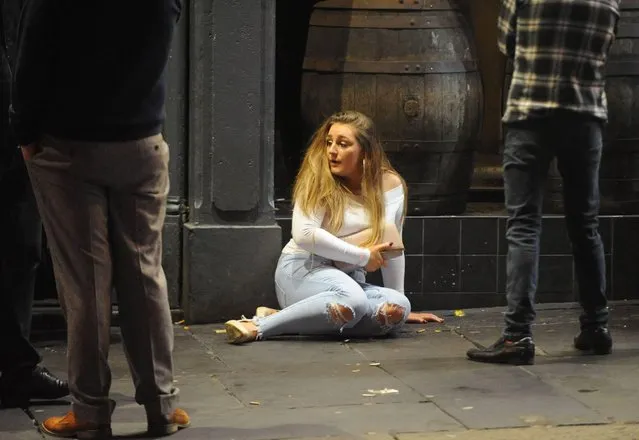
Revellers out and about in Newcastle, England on “Black Eye Friday” or “Mad Friday” on December 22, 2017 as people across the country celebrate the start of the Christmas break by hitting bars, pubs and clubs. This partygoer had so much fun she looks lost. (Photo by Craig Connor/North News and Pictures)