Loading...
Done
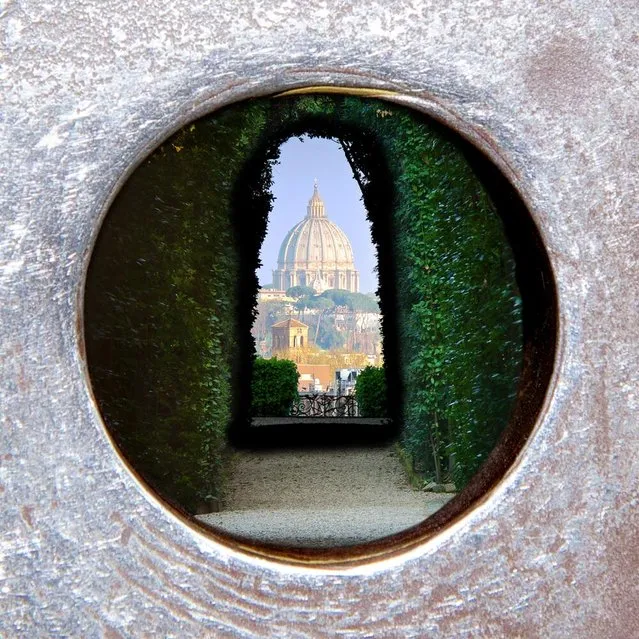
Villa Del Priorato Di Malta - Secrets In Rome

What do you imagine when you look through a key hole? Do you imagine seeing a Wonderland with a sinister Queen of Heart ruling over a magical kingdom? Or you might imagine an eye staring back at you, if you’re a fan of horror movies. Least of all do you expect seeing a picturesque view of St. Peter’s Dome, perfectly framed by green hedges. Is it a lucky coincidence, or was it intended by the maker? We might never know. However, this became a curious sightseeing spot for many tourists who visit Rome. Thus, if you’re ever in the area of Priorato dei Cavalieri di Malta, be sure to peep into this key hole.
Details
27 Oct 2014 11:40:00
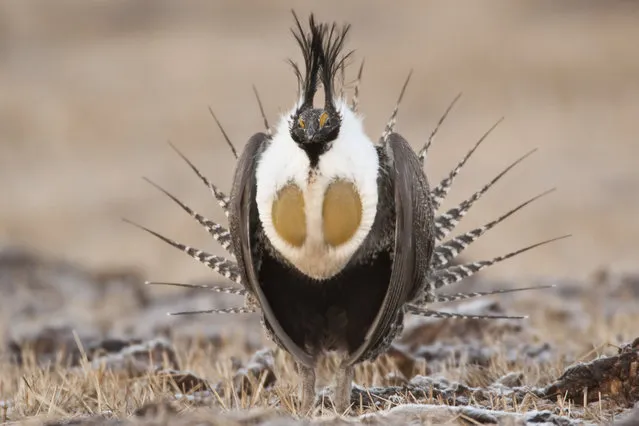
Greater Sage-Grouse

The Greater Sage-Grouse is certainly a formidable-looking bird. Being the largest grouse in North America and having tail feathers, which look like giant spikes, make for a ferocious sight. These birds are well known for their complicated courtship rituals, in which the males perform a special “strutting display” to attract the females. Another distinct feature of the Greater Sage-Grouse is two large yellow throat sacs (gular sacs), which are inflated by the males during the courtship display. Unlike pelicans, whose gular sacs are used to store fish while hunting, the throat sacks of the Greater Sage-Grouse are merely for display.
Details
21 Nov 2014 12:25:00
Paintings By Josephine Wall

Josephine Wall is an English fantasy artist and sculptor. Born in Farnham, Surrey, England in 1947, as a child she was always drawn to color, light, fantasy, and visual storytelling. Wall was influenced by Arthur Rackam illustrative ability, the surrealism of artists Magritte and Dali, along with the Pre-Raphaelites romanticism. She went to Farnham grammar school until her family Poole, Dorset when she was 14. There she studied at Parkstone (Dorset) grammar school, she then went on to study at Bournemouth College. Her first job as an artist was in 1967 at Poole Pottery as a designer and painter.
Details
07 Apr 2014 12:26:00
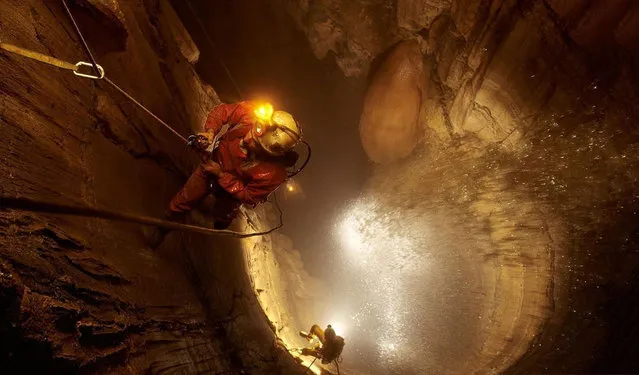
Krubera Cave Gerogia

Krubera Cave is the deepest known cave on Earth. It is located in the Arabika Massif of the Gagrinsky Range of the Western Caucasus, in the Gagra district of Abkhazia, a breakaway region of Georgia.
Details
06 Jul 2014 20:33:00
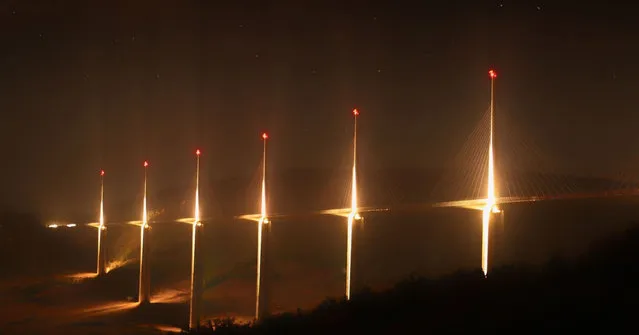
The Millau Viaduct Bridge In France

The Millau Viaduct is a cable-stayed bridge that spans the valley of the River Tarn near Millau in southern France. Designed by the French structural engineer Michel Virlogeux and British architect Norman Foster, it is the tallest bridge in the world with one mast's summit at 343.0 metres (1,125 ft) above the base of the structure.
Details
09 Jul 2014 10:18:00
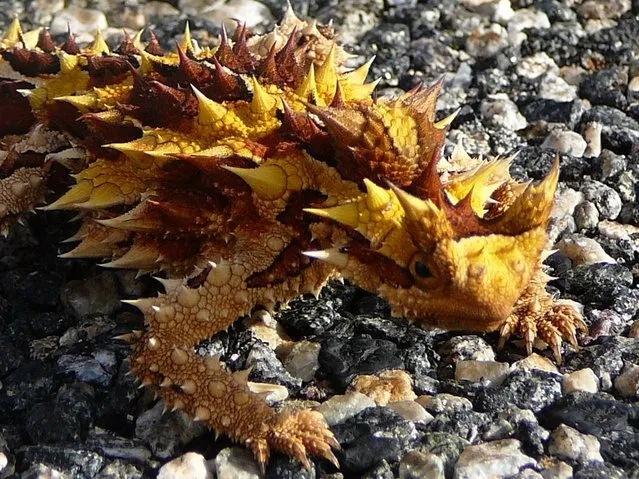
The Thorny Dragon Or Thorny Devil

The thorny dragon or thorny devil (Moloch horridus) is an Australian lizard, also known as the mountain devil, the thorny lizard, or the moloch. This is the sole species of genus Moloch. The thorny devil grows up to 20 cm (8.0 in) in length, and it can live up to 20 years.
Details
23 Jul 2014 20:20:00
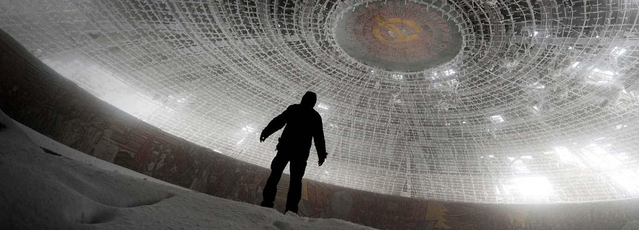
Monument of Buzludja

Buzludzha is a historical peak in the Central Stara Planina, Bulgaria and is 1441 metres high. In 1868 it was the place of the final battle between Bulgarian rebels led by Hadji Dimitar and Stefan Karadzha and the Ottoman Empire. The Buzludzha Monument on the peak was built by the Bulgarian communist regime to commemorate the events in 1891 when the socialists led by Dimitar Blagoev assembled secretly in the area to form an organised socialist movement with the founding of the Bulgarian Social Democratic Party, a fore-runner of the Bulgarian Communist Party. The Monument was opened in 1981. No longer maintained by the Bulgarian government, it has fallen into disuse. Buzludzha is reached by a 12 km side road from the Shipka Pass.
Details
12 Nov 2013 08:16:00
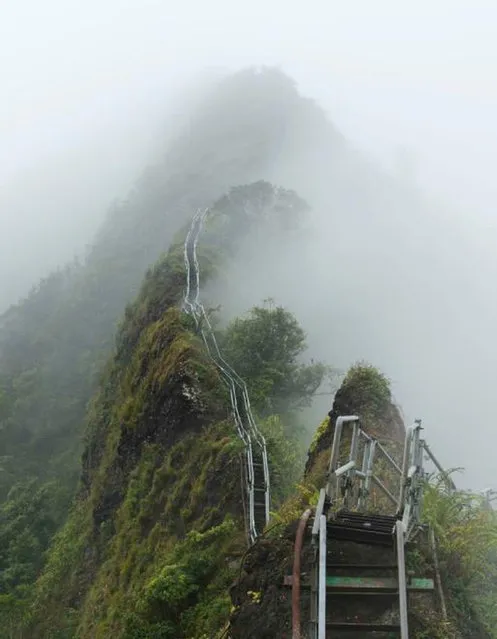
Stairway To Heaven In Hawaii

The Haʻikū Stairs, also known as the Stairway to Heaven or Haʻikū Ladder, is a steep hiking trail on the island of Oʻahu. The trail began as a wooden ladder spiked to the cliff on the south side of the Haʻikū Valley. It was installed in 1942 to enable antenna cables to be strung from one side of the cliffs above Haʻikū Valley to the other. A building to provide a continuous communication link between Wahiawā and Haʻikū Valley Naval Radio Station was constructed at the peak of Puʻukeahiakahoe, elevation about 2,800 feet (850 m). The antennae transmitted very low frequency radio signals from a 200,000-watt Alexanderson alternator in the center of Haʻikū valley. The signals could reach US Navy submarines as far away as Tokyo Bay while the submarines were submerged.
Details
30 Nov 2013 12:47:00