Loading...
Done
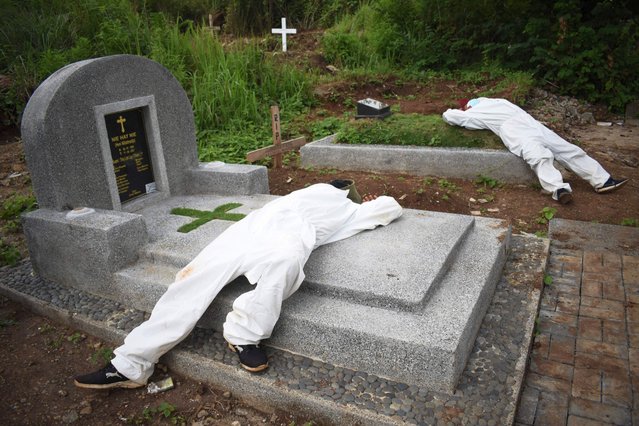
Exhausted grave diggers rest in between funerals at a cemetery designated for Covid-19 victims in Bandung on June 15, 2021, as infection numbers soar in Indonesia. (Photo by Timur Matahari/AFP Photo)

Exhausted grave diggers rest in between funerals at a cemetery designated for Covid-19 victims in Bandung on June 15, 2021, as infection numbers soar in Indonesia. (Photo by Timur Matahari/AFP Photo)
Details
16 Jun 2021 10:33:00
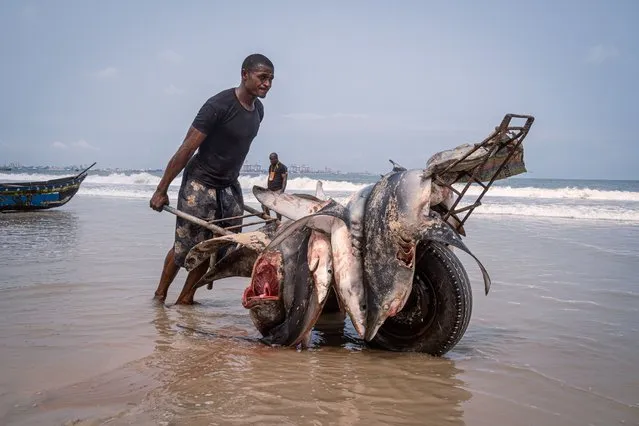
A fisherman struggles to push a wheelbarrow full of sharks that have just been dropped off a pirogue on the beach of Songolo, the fishing district of Pointe-Noire in the Republic of the Congo in November 2021. Many artisanal fishing crews on the Congolese coast specialise in shark fishing (Photo by Marco Simoncelli/Al Jazeera)

A fisherman struggles to push a wheelbarrow full of sharks that have just been dropped off a pirogue on the beach of Songolo, the fishing district of Pointe-Noire in the Republic of the Congo in November 2021. Many artisanal fishing crews on the Congolese coast specialise in shark fishing (Photo by Marco Simoncelli/Al Jazeera)
Details
09 Dec 2021 08:47:00
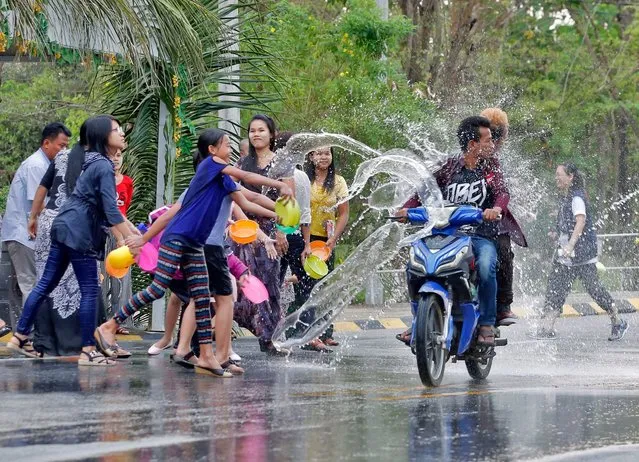
People participate in the first day of Thingyan Water Festival in Naypyitaw, Myanmar on April 13, 2018. The annual water festival, known as Thingyan, features large groups of people congregating to celebrate the by splashing water and throwing powder at each other's faces as a symbol of cleansing and washing away the sins from the old year. It marks the start of the traditional New Year and is similarly celebrated in countries such as Myanmar, Thailand, Laos and Cambodia. (Photo by Hein Htet/EPA/EFE/Rex Features/Shutterstock)

People participate in the first day of Thingyan Water Festival in Naypyitaw, Myanmar on April 13, 2018. The annual water festival, known as Thingyan, features large groups of people congregating to celebrate the by splashing water and throwing powder at each other's faces as a symbol of cleansing and washing away the sins from the old year. It marks the start of the traditional New Year and is similarly celebrated in countries such as Myanmar, Thailand, Laos and Cambodia. (Photo by Hein Htet/EPA/EFE/Rex Features/Shutterstock)
Details
27 Apr 2018 00:03:00
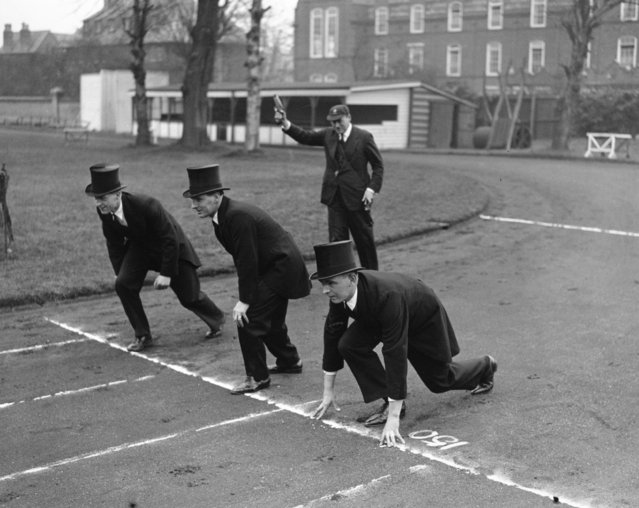
Cambridge policemen, known as “Bulldogs”, lined up for the University Bulldogs Chase, dressed in morning coats and top hats, 7th March 1936. (Photo by H. Allen/Topical Press Agency/Getty Images)

Cambridge policemen, known as “Bulldogs”, lined up for the University Bulldogs Chase, dressed in morning coats and top hats, 7th March 1936. (Photo by H. Allen/Topical Press Agency/Getty Images)
Details
21 Nov 2018 00:01:00
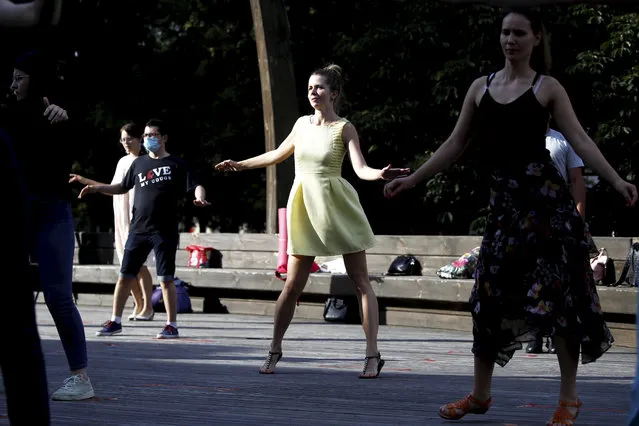
People attend a master class in Latin American dances on the deck outside No 84 Pavilion in VDNKh Exhibition Centre in Moscow, Russia on July 4, 2020. The event opens this year's season of outdoor dancing in VDNKh. (Photo by Artyom Geodakyan/TASS)

People attend a master class in Latin American dances on the deck outside No 84 Pavilion in VDNKh Exhibition Centre in Moscow, Russia on July 4, 2020. The event opens this year's season of outdoor dancing in VDNKh. (Photo by Artyom Geodakyan/TASS)
Details
24 Jul 2020 00:05:00
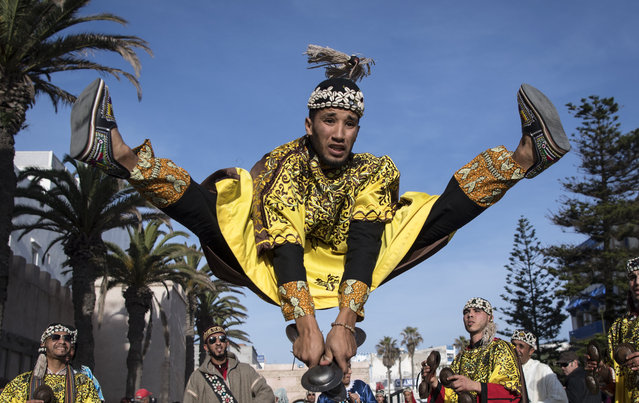
A Gnawa traditional group performs in the city of Essaouira on December 14, 2019, to celebrate the decision of adding the Gnawa culture to UNESCO's list of Intangible Cultural Heritage of Humanity. Gnawa culture, a centuries-old Moroccan practice rooted in music, African rituals and Sufi traditions, was added to UNESCO's list of Intangible Cultural Heritage of Humanity earlier in the week. Gnawa refers to a “set of musical productions, fraternal practices and therapeutic rituals where the secular mixes with the sacred”, according to the nomination submitted by Morocco. Often dressed in colourful outfits, Gnawa musicians play the guenbri, a type of lute with three strings, accompanied by steel castanets called krakebs. (Photo by Fadel Senna/AFP Photo)

A Gnawa traditional group performs in the city of Essaouira on December 14, 2019, to celebrate the decision of adding the Gnawa culture to UNESCO's list of Intangible Cultural Heritage of Humanity. Gnawa culture, a centuries-old Moroccan practice rooted in music, African rituals and Sufi traditions, was added to UNESCO's list of Intangible Cultural Heritage of Humanity earlier in the week. Gnawa refers to a “set of musical productions, fraternal practices and therapeutic rituals where the secular mixes with the sacred”, according to the nomination submitted by Morocco. Often dressed in colourful outfits, Gnawa musicians play the guenbri, a type of lute with three strings, accompanied by steel castanets called krakebs. (Photo by Fadel Senna/AFP Photo)
Details
18 Dec 2019 00:05:00
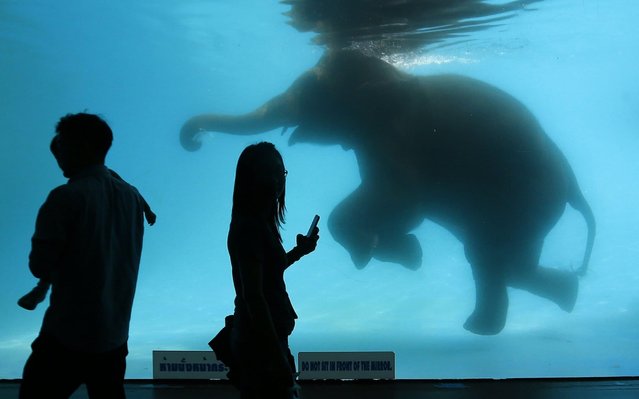
Visitors look at an elephant swimming in a pool at Khao Kheow Zoo in Chonburi, east of Bangkok, Thailand on February 4, 2020. (Photo by Chaiwat Subprasom/SOPA Images/LightRocket via Getty Images)

Visitors look at an elephant swimming in a pool at Khao Kheow Zoo in Chonburi, east of Bangkok, Thailand on February 4, 2020. (Photo by Chaiwat Subprasom/SOPA Images/LightRocket via Getty Images)
Details
06 Feb 2020 00:05:00
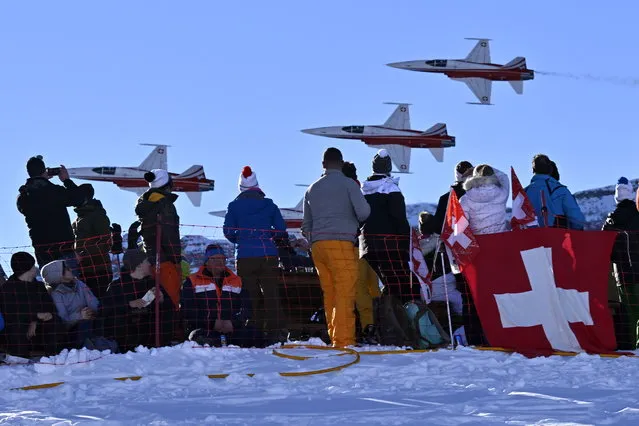
The Patrouille Suisse jets perform prior to the Men's Downhill race at the Fis Alpine Skiing World Cup in Wengen, Switzerland, 15 January 2022. (Photo by Jean-Christophe Bott/EPA/EFE)

The Patrouille Suisse jets perform prior to the Men's Downhill race at the Fis Alpine Skiing World Cup in Wengen, Switzerland, 15 January 2022. (Photo by Jean-Christophe Bott/EPA/EFE)
Details
17 Jan 2022 08:28:00