Loading...
Done
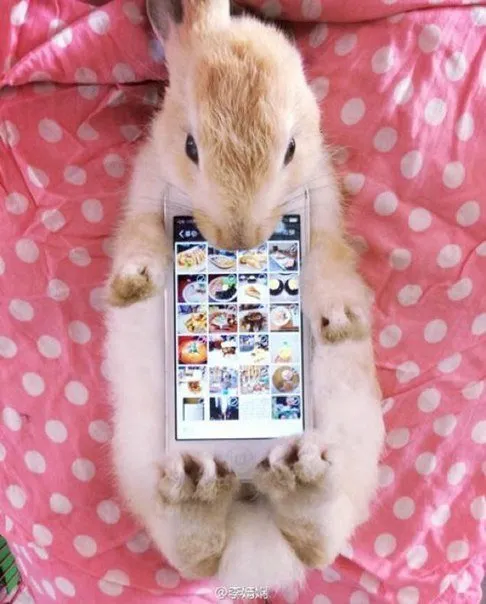
The Japanese Use A Real Rabbits As Case For Smartphone

If you see a weird trend or a mind boggling commercial, you know that it’s from Japan. Take the latest one for example. You might be misled be the title into thinking that those bloody bastards are killing poor rabbits and making iPhone cases out of them. However, the reality is much more adorable. The new trend is placing iPhones on rabbit’s tummies and taking pictures of it. Rabbits make the perfect iPhone holders! Not only are they fluffy as hell, they can also nibble on your fingers while you try to type a message, or try voiding your iPhone’s warranty by shaking your iPhone off while trying to escape this humiliation.
Details
27 Oct 2014 11:53:00
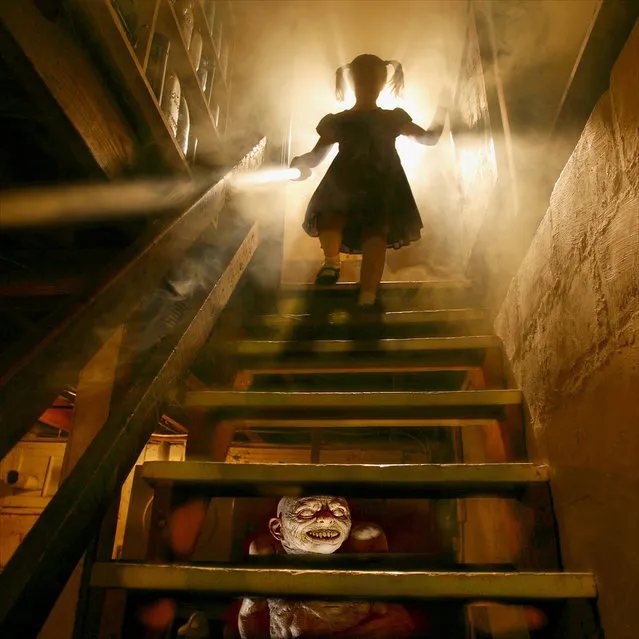
“Basement”. (Photo by Joshua Hoffine/The Washington Post)

Joshua Hoffine, based in Kansas City, Mo., and a self-proclaimed “Horror Photographer”, is interested in the psychology of fear. In his project “After Dark, My Sweet”, Hoffine’s surreal and staged images render these fears visible with the “visual grammar of a child”. Through elaborate sets, costumes, makeup and fog machines, Hoffine’s children act out these terrifying scenes in front of his camera. Here: “Basement”. (Photo by Joshua Hoffine/The Washington Post)
Details
29 Oct 2016 11:47:00
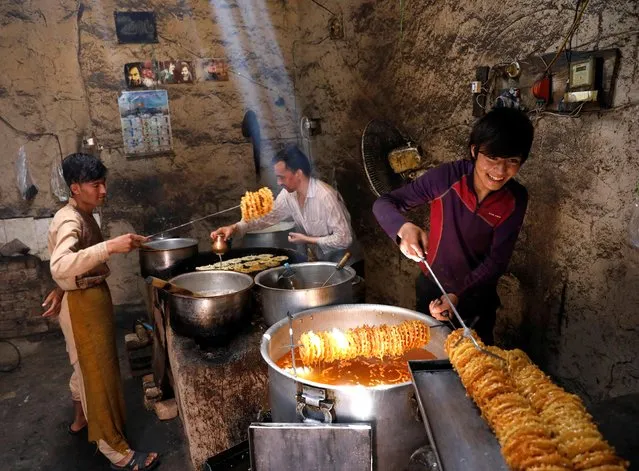
Men make sweets at a small traditional factory in preparation for Eid al-Fitr, marking the end of the fasting month of Ramadan amid the spread of the coronavirus disease (COVID-19), in Kabul, Afghanistan on May 21, 2020. (Photo by Mohammad Ismail/Reuters)

Men make sweets at a small traditional factory in preparation for Eid al-Fitr, marking the end of the fasting month of Ramadan amid the spread of the coronavirus disease (COVID-19), in Kabul, Afghanistan on May 21, 2020. (Photo by Mohammad Ismail/Reuters)
Details
26 Jun 2020 00:05:00
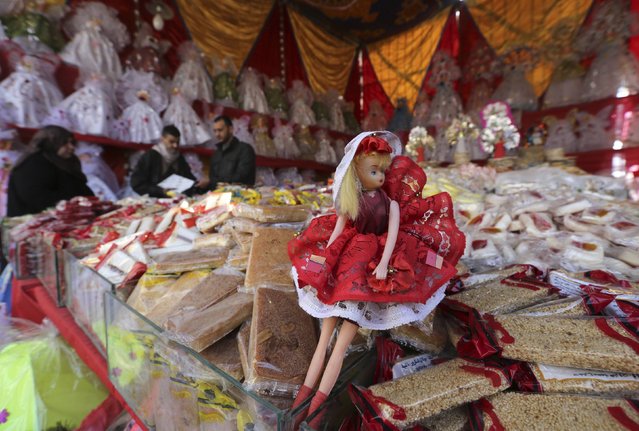
A man sells traditional doll toys and sweets for children to celebrate the birthday of prophet Muhammad, also known as “mawlid al nabi”, which will fall next week, in a makeshift tent in Cairo, December 30, 2014. (Photo by Mohamed Abd El Ghany/Reuters)

A man sells traditional doll toys and sweets for children to celebrate the birthday of prophet Muhammad, also known as “mawlid al nabi”, which will fall next week, in a makeshift tent in Cairo, December 30, 2014. (Photo by Mohamed Abd El Ghany/Reuters)
Details
31 Dec 2014 14:21:00
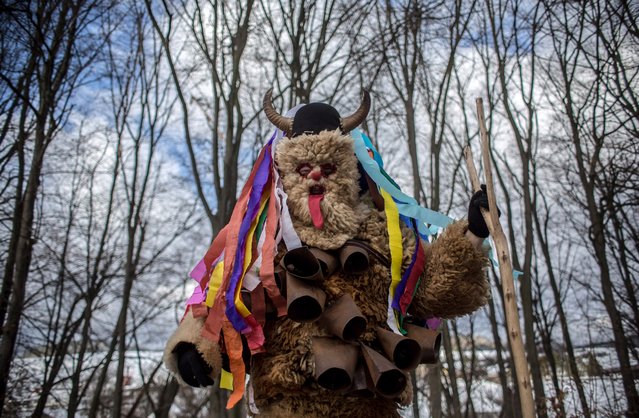
A participant dressed in a traditional devil costume walks from house to house during the traditional St. Nicholas parade on December 3, 2016 in village of Francova Lhota, Czech Republic. This type of parade is one of the most popular age-old traditions in a few villages in the Wallachia region of Eastern Czech Republic. St. Nicholas and company roam the streets going from house to house, for two or three days as St. Nicholas gives sweets and tiny gifts as a present to children and the devils get up to mischief. (Photo by Matej Divizna/Getty Images)

A participant dressed in a traditional devil costume walks from house to house during the traditional St. Nicholas parade on December 3, 2016 in village of Francova Lhota, Czech Republic. This type of parade is one of the most popular age-old traditions in a few villages in the Wallachia region of Eastern Czech Republic. St. Nicholas and company roam the streets going from house to house, for two or three days as St. Nicholas gives sweets and tiny gifts as a present to children and the devils get up to mischief. (Photo by Matej Divizna/Getty Images)
Details
05 Dec 2016 11:56:00
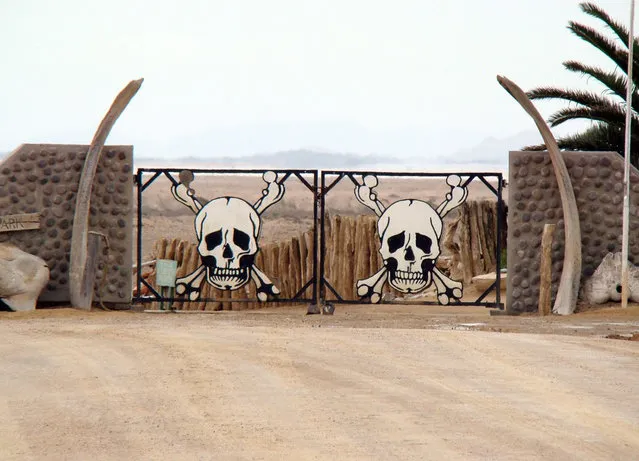
The Skeleton Coast, Namibia

The Skeleton Coast is the northern part of the Atlantic Ocean coast of Namibia and south of Angola from the Kunene River south to the Swakop River, although the name is sometimes used to describe the entire Namib Desert coast. The Bushmen of the Namibian interior called the region "The Land God Made in Anger", while Portuguese sailors once referred to it as "The Gates of Hell".
Details
23 Feb 2014 09:27:00
People walk with their arms raised as security forces restore order in Nice, France on July 14, 2016. (Photo by SIPA Press/Rex Features/Shutterstock)

People walk with their arms raised as security forces restore order in Nice, France on July 14, 2016. (Photo by SIPA Press/Rex Features/Shutterstock)
Details
15 Jul 2016 12:37:00
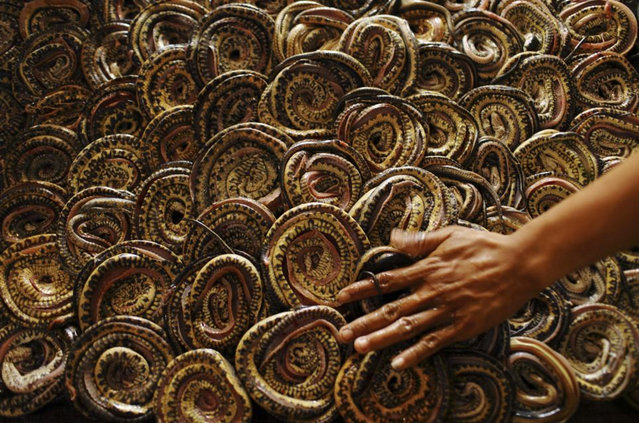
How Snakeskin Handbags Are Made

Images from a snake slaughterhouse at Kapetakan village in Indonesia’s West Java province. Wakira, who is known as “Boss Cobra”, owns the slaughterhouse that produces snake meat and skin. Snake meat is believed by some to be a remedy for skin diseases and asthma, as well as an aid to increase virility. The snake skins, measuring in the hundreds of metres, are sold to bag factories in the West and Central Java provinces on a monthly basis. The price of a bag made from snake skin costs between 150,000 rupiah ($ 15.60) and 300,000 rupiah ($31.20), depending on its size. That snakeskin handbag you’ll buy is costing a hell of a lot more.
Details
20 Feb 2013 12:00:00