Loading...
Done
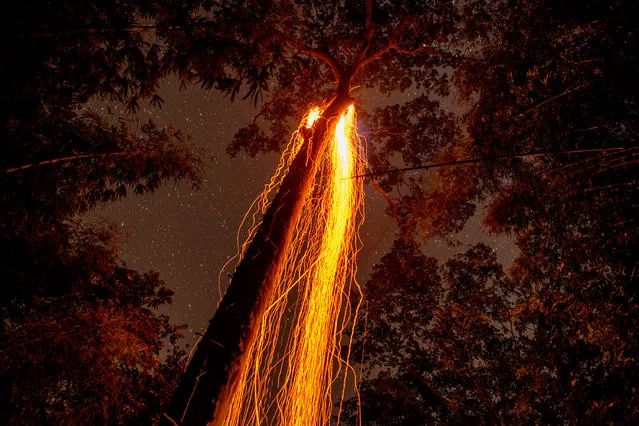
Bees are sensitive to light, which makes them follow the glowing embers down to the ground. (Photo by Hasnoor Hussain/The Guardian)

During the spring harvest season, a group of traditional Malaysian honey hunters travel to the rainforest near the Thai border to collect honeycombs from giant bees – and risk their lives climbing 200ft trees. Here: Bees are sensitive to light, which makes them follow the glowing embers down to the ground. (Photo by Hasnoor Hussain/The Guardian)
Details
22 Oct 2016 10:26:00
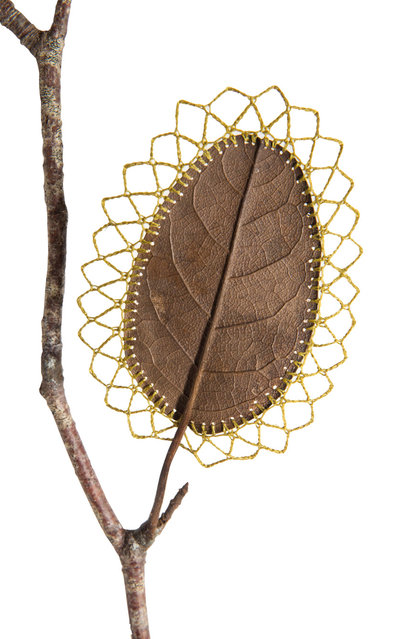
Crocheted Leaf Art By Susanna Bauer

Susanna Bauer was born in 1969 in Bavaria, Germany. She has lived in England since 1996. Susanna has worked for the television and film industry for over 16 years, making objects like King Arthur’s chalice, cheeses for Wallace and Gromit, miniature robots, spaceships and buildings.
Details
29 Jun 2015 10:49:00
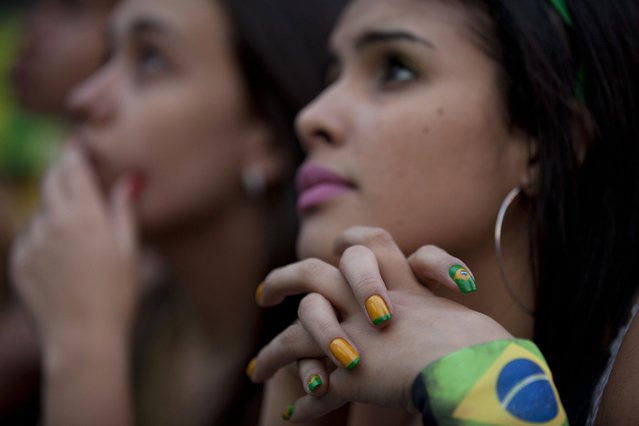
A fan watches the group A World Cup match between Mexico and Brazil via a live broadcast at the FIFA Fan Fest in Sao Paulo, Brazil, Tuesday, June 17, 2014. Forget the French manicure. It’s Brazil during World Cup, and women here want to flaunt their love of the national team with wacky nail designs. (Photo by Dario Lopez-Mills/AP Photo)

A fan watches the group A World Cup match between Mexico and Brazil via a live broadcast at the FIFA Fan Fest in Sao Paulo, Brazil, Tuesday, June 17, 2014. Forget the French manicure. It’s Brazil during World Cup, and women here want to flaunt their love of the national team with wacky nail designs. (Photo by Dario Lopez-Mills/AP Photo)
Details
19 Jun 2014 10:24:00
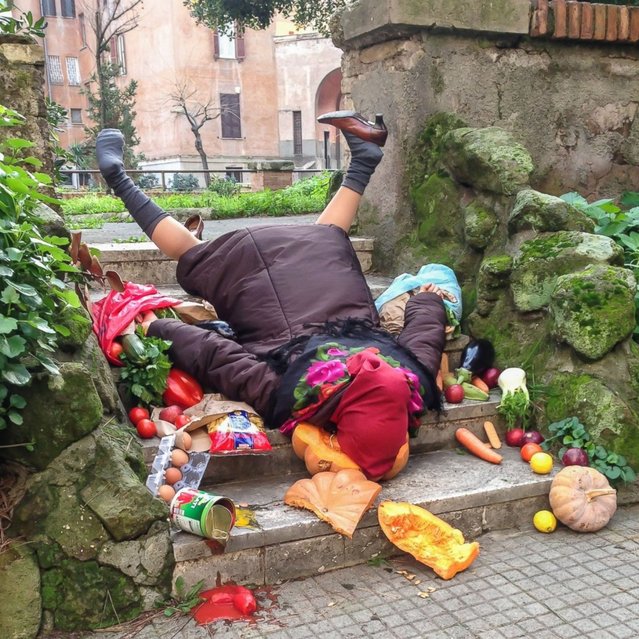
Photographer Sandro Giordoan has created a photo series of people who look like they’ve just taken terrible falls, spilling all their things around them. “Each shot ‘tells’ about worn out characters who, as if a sudden black-out of mind and body took over, let themselves crash with no attempt to save themselves, unable, because of the fatigue of the everyday ‘representation’ of living, oppressed by ‘appearance’ instead of simply ‘existing’,” said Giordano. (Photo by Sandro Giordoan)

Photographer Sandro Giordoan has created a photo series of people who look like they’ve just taken terrible falls, spilling all their things around them. “Each shot ‘tells’ about worn out characters who, as if a sudden black-out of mind and body took over, let themselves crash with no attempt to save themselves, unable, because of the fatigue of the everyday ‘representation’ of living, oppressed by ‘appearance’ instead of simply ‘existing’,” said Giordano. (Photo by Sandro Giordoan)
Details
26 Jun 2014 11:46:00
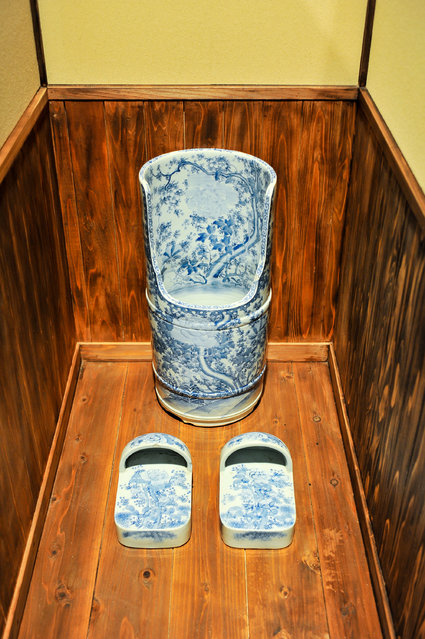
An old toilet is displayed during the “Toilet!? Human Waste and Earth's Future” exhibition at The National Museum of Emerging Science and Innovation – Miraikan on July 1, 2014 in Tokyo, Japan. The exhibition focuses on how the toilet has changed our daily lives and discovers what the most environment-friendly and ideal toilet is. (Photo by Keith Tsuji/Getty Images)

An old toilet is displayed during the “Toilet!? Human Waste and Earth's Future” exhibition at The National Museum of Emerging Science and Innovation – Miraikan on July 1, 2014 in Tokyo, Japan. The exhibition focuses on how the toilet has changed our daily lives and discovers what the most environment-friendly and ideal toilet is. (Photo by Keith Tsuji/Getty Images)
Details
03 Jul 2014 11:34:00
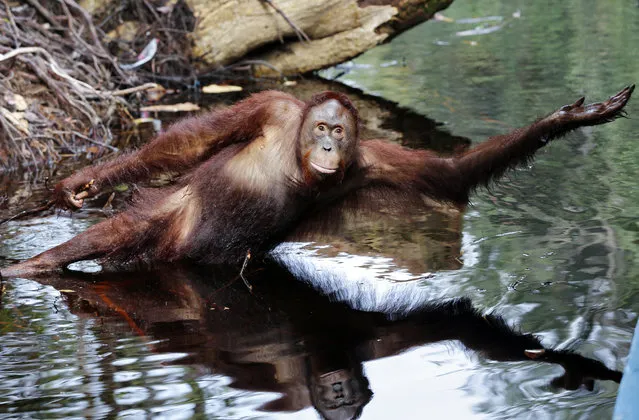
Male orangutan Percy is reflected in the Sekonyer River as he reaches over to try and touch a wooden klotok boat carrying crew and tourists, in Tanjung Puting National Park, in Kalimantan (Indonesian Borneo), Indonesia, September 4, 2013. Percy is a son, born and living in the wild, of a female orangutan named Princess, a freed former captive orangutan that anthropologist Dr Birute Galdikas rescued, rehabilitated and returned to the wild. (Photo by Barbara Walton/EPA)

Male orangutan Percy is reflected in the Sekonyer River as he reaches over to try and touch a wooden klotok boat carrying crew and tourists, in Tanjung Puting National Park, in Kalimantan (Indonesian Borneo), Indonesia, September 4, 2013. Percy is a son, born and living in the wild, of a female orangutan named Princess, a freed former captive orangutan that anthropologist Dr Birute Galdikas rescued, rehabilitated and returned to the wild. (Photo by Barbara Walton/EPA)
Details
03 Jul 2014 12:26:00
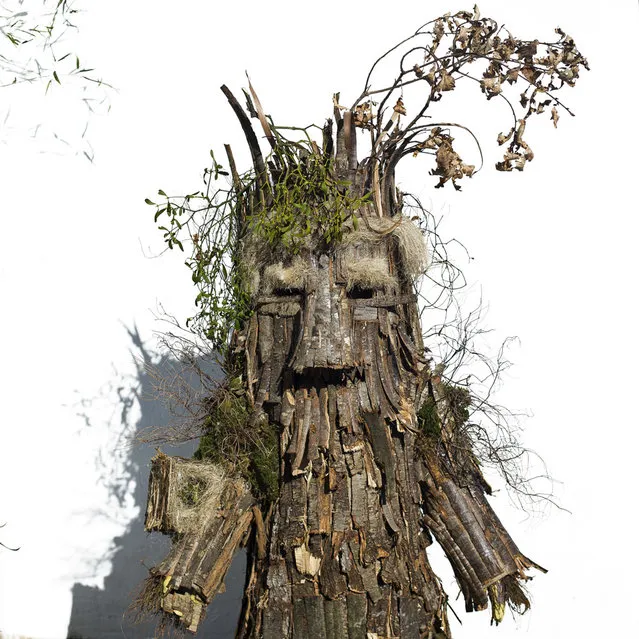
A man dressed as a  “Trapajon”, representing entities of nature, poses for a picture after taking part in the Vijanera Festival in Silio, northern Spain, Sunday, Jan. 6, 2013. The Vijanera masquerade, of pre-Roman origin, is the first carnival of the year in Europe symbolizing the triumph of good over evil and involving the participation of crowds of residents wearing different masks, animal skins and brightly colored clothing with its own complex function and symbolism and becoming the living example of the survival of archaic cults to nature. (Photo by Daniel Ochoa de Olza/AP Photo)

A man dressed as a “Trapajon”, representing entities of nature, poses for a picture after taking part in the Vijanera Festival in Silio, northern Spain, Sunday, Jan. 6, 2013. The Vijanera masquerade, of pre-Roman origin, is the first carnival of the year in Europe symbolizing the triumph of good over evil and involving the participation of crowds of residents wearing different masks, animal skins and brightly colored clothing with its own complex function and symbolism and becoming the living example of the survival of archaic cults to nature. (Photo by Daniel Ochoa de Olza/AP Photo)
Details
19 Jan 2013 13:01:00
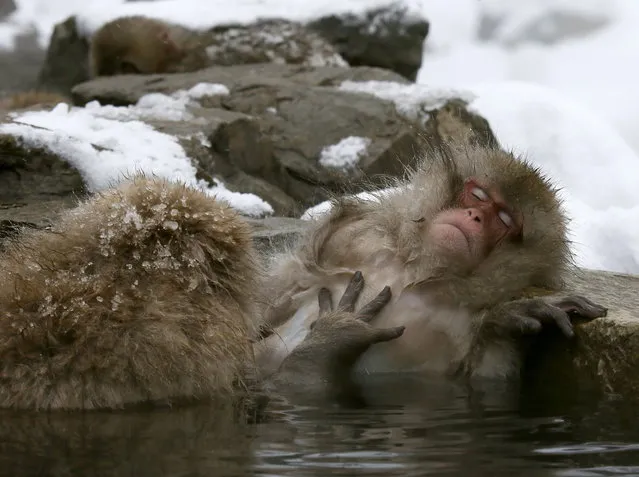
Japanese Macaque monkeys soak in the warmth of mountain hotsprings at Jigokudani Monkey Park, in Yamanouchi, central Japan, 19 January 2014. The Japanese Macaques (Macaca fuscata), also referred to as Snow Monkeys, live freely in this area that is covered by snow one third of the year. (Photo by Kimimasa Mayama/EPA)

Japanese Macaque monkeys soak in the warmth of mountain hotsprings at Jigokudani Monkey Park, in Yamanouchi, central Japan, 19 January 2014. The Japanese Macaques (Macaca fuscata), also referred to as Snow Monkeys, live freely in this area that is covered by snow one third of the year. Jigokudani is the only known place in the world where monkeys bathe in natural hot springs. As a habit, they come down from the mountains where they spend the night and bath during the day. (Photo by Kimimasa Mayama/EPA)
Details
21 Jan 2014 11:36:00