Loading...
Done
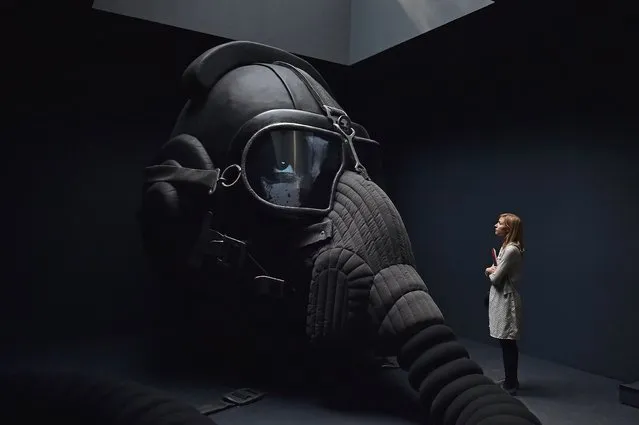
A visitor looks at a creation by Russian artist Irina Nakhova presented at the Russia's pavilion during the 56th International Art Exhibition (Biennale d'Arte) titled “All the Worlds Futures” on May 5, 2015 in Venice. (Photo by Gabriel Bouys/AFP Photo)

A visitor looks at a creation by Russian artist Irina Nakhova presented at the Russia's pavilion during the 56th International Art Exhibition (Biennale d'Arte) titled “All the Worlds Futures” on May 5, 2015 in Venice. (Photo by Gabriel Bouys/AFP Photo)
Details
09 May 2015 11:25:00
Dancers wearing masks and kimonos perform in the streets at the “Super Yosakoi 2015” dance festival in Tokyo on August 30, 2015. One hundred dance teams with some 5,500 people participated in the two-day summer festival event. (Photo by Yoshikazu Tsuno/AFP Photo)

Dancers wearing masks and kimonos perform in the streets at the “Super Yosakoi 2015” dance festival in Tokyo on August 30, 2015. One hundred dance teams with some 5,500 people participated in the two-day summer festival event. (Photo by Yoshikazu Tsuno/AFP Photo)
Details
31 Aug 2015 12:33:00
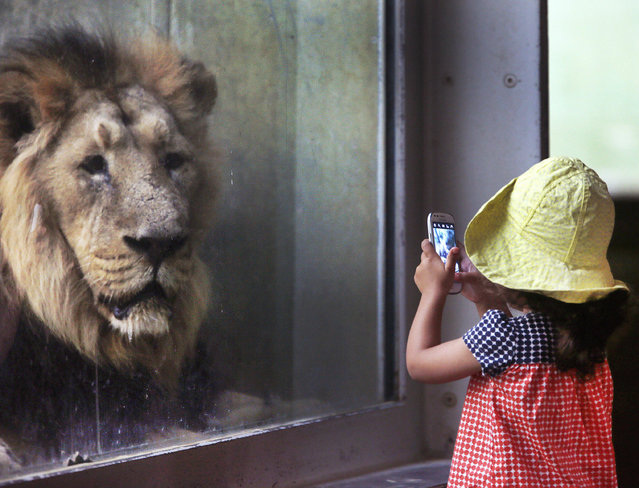
A little girl takes a picture of a lion in the zoo in Frankfurt, Germany, Tuesday, September 13, 2016. (Photo by Michael Probst/AP Photo)

A little girl takes a picture of a lion in the zoo in Frankfurt, Germany, Tuesday, September 13, 2016. (Photo by Michael Probst/AP Photo)
Details
14 Sep 2016 11:01:00
A picture made available on 09 September 2015 shows traditional mud men dancers from the Asaro District of Goroka in the Eastern Highlands Province of Papua New Guinea perform for the official opening of the Pacific Islands Forum in Port Moresby, Papua New Guinea, 08 September 2015. The Pacific Islands Forum goes from 07 to 11 September and discusses the regions vulnerability to Climate Change. (Photo by Mick Tsikas/EPA)

A picture made available on 09 September 2015 shows traditional mud men dancers from the Asaro District of Goroka in the Eastern Highlands Province of Papua New Guinea perform for the official opening of the Pacific Islands Forum in Port Moresby, Papua New Guinea, 08 September 2015. The Pacific Islands Forum goes from 07 to 11 September and discusses the regions vulnerability to Climate Change. (Photo by Mick Tsikas/EPA)
Details
10 Sep 2015 13:38:00
Contestants of a tattoo competition pose for photographs at the China TATTOO convention in Nanning, Guangxi Zhuang Autonomous Region, China, October 24, 2015. (Photo by Reuters/Stringer)

Contestants of a tattoo competition pose for photographs at the China TATTOO convention in Nanning, Guangxi Zhuang Autonomous Region, China, October 24, 2015. The annual convention was held in Nanning from October 23 to 25 this year. (Photo by Reuters/Stringer)
Details
27 Oct 2015 08:07:00
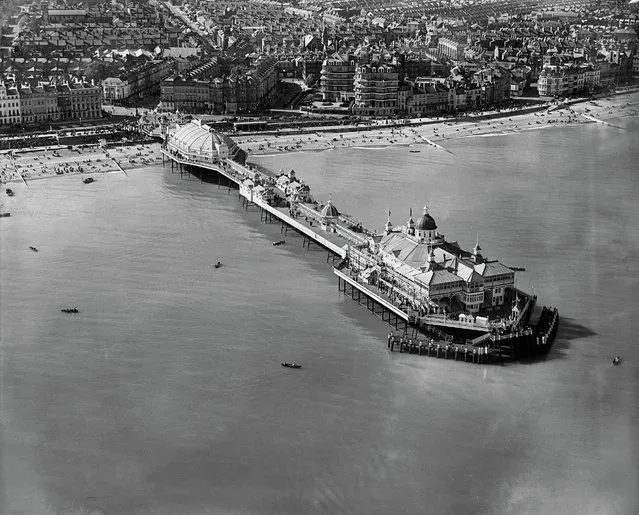
While the lido was described as bringing “modernism to the masses” on the British coast it was just the latest example of a trend that had been developing since Victorian times – transforming seaside towns into resorts for leisure and entertainment. In the latter half of the nineteenth century, the fashion was for local authorities to build great piers stretching from the promenade out into the sea

While the lido was described as bringing “modernism to the masses” on the British coast it was just the latest example of a trend that had been developing since Victorian times – transforming seaside towns into resorts for leisure and entertainment. In the latter half of the nineteenth century, the fashion was for local authorities to build great piers stretching from the promenade out into the sea. The Eastbourne Pier, pictured here in May 1931, was erected between 1866 and 1870 to an ingenious design by Eugenius Birch, which saw the structure sitting on special cups allowing the supporting struts to “move” in bad weather. Arranged on the pier's 1,000-foot length were kiosks, a theatre, a ballroom and a camera obscura. 1931. (Photo by Aerofilms Collection via “A History of Britain From Above”)

Details
25 Feb 2014 12:59:00
Young revelers take part in a parade called "La Calabiuza" on November 1, 2015, on the eve of the Day of the Dead in Tonacatepeque, 20 kms (13 miles) north of San Salvador. During the celebration, the residents of Tonacatepeque, originally an indigenous community, recall the characters from the mythology of Cuscatlan – pre-Columbian west and central regions of El Salvador – and their dead relatives. (Photo by Marvin Recinos/AFP Photo)

Young revelers take part in a parade called "La Calabiuza" on November 1, 2015, on the eve of the Day of the Dead in Tonacatepeque, 20 kms (13 miles) north of San Salvador. During the celebration, the residents of Tonacatepeque, originally an indigenous community, recall the characters from the mythology of Cuscatlan – pre-Columbian west and central regions of El Salvador – and their dead relatives. (Photo by Marvin Recinos/AFP Photo)
Details
04 Nov 2015 11:50:00
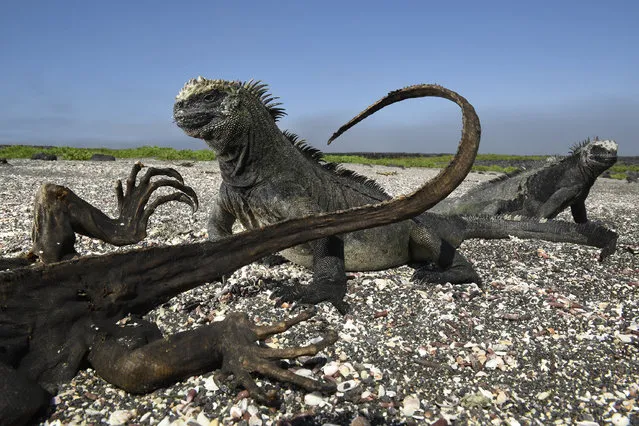
Galapagos – Rocking the Cradle: Four major ocean currents converge along the Galapagos archipelago, creating the conditions for an extraordinary diversity of animal life, April 25, 2016. The islands are home to at least 7,000 flora and fauna species, of which 97 percent of the reptiles, 80 percent of the land birds, 50 percent of the insects and 30 percent of the plants are endemic. The local ecosystem is highly sensitive to the changes in temperature, rainfall and ocean currents that characterize the climatic events known as El Niño and La Niña. These changes cause marked fluctuations in weather and food availability. Many scientists expect the frequency of El Niño and La Niña to increase as a result of climate change, making the Galapagos a possible early-warning location for its effects. (Photo by Thomas P. Peschak for National Geographic/World Press Photo)

Galapagos – Rocking the Cradle: Four major ocean currents converge along the Galapagos archipelago, creating the conditions for an extraordinary diversity of animal life, April 25, 2016. The islands are home to at least 7,000 flora and fauna species, of which 97 percent of the reptiles, 80 percent of the land birds, 50 percent of the insects and 30 percent of the plants are endemic. (Photo by Thomas P. Peschak for National Geographic/World Press Photo)
Details
16 Apr 2018 00:01:00