Loading...
Done
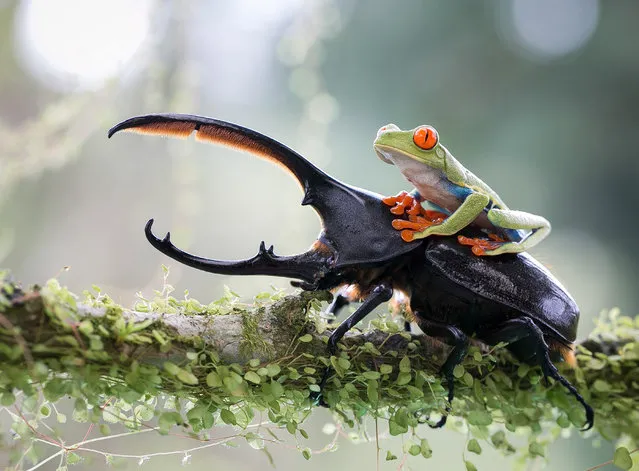
“The knight and his steed”. This picture was taken in a natural but controlled environment. There are pictures that can not be done in nature or that would imply a very high cost of both time and money, thats why photography workshops are run conducted at strategic locations and bringing EVERYONE who is interested, the basic notions (lighting, camera handling, composition, etc...) or the specimens, and afford them the opportunity to take pictures like this. (Photo and caption by Nicolas Reusens Boden (Sweden)/2014 Sony World Photography Awards)

“The knight and his steed”. This picture was taken in a natural but controlled environment. There are pictures that can not be done in nature or that would imply a very high cost of both time and money, thats why photography workshops are run conducted at strategic locations and bringing EVERYONE who is interested, the basic notions (lighting, camera handling, composition, etc...) or the specimens, and afford them the opportunity to take pictures like this. Although controlled, this shot was not prepared at all, I was performing a workshop with the agalychnis callidryas treefrog from Costa Rica when the frog managed to jump to the branch where this huge titan was sleeping... I had my gear ready so I only had to change a few settings and shoot... the rest is history. (Photo and caption by Nicolas Reusens Boden (Sweden)/2014 Sony World Photography Awards)
Details
10 Dec 2013 07:23:00
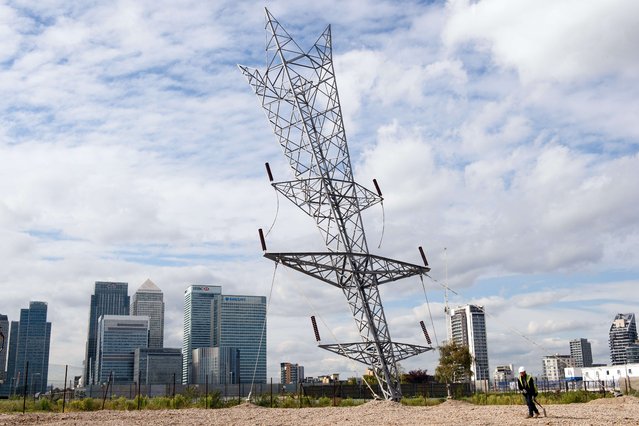
A workman smooths out the gravel near the base of British artist Alex Chinneck' latest sculpture “A bullet from a shooting star” on the Greenwich Peninsula in London on September 17, 2015. The 35-metre tall, upside-down electricity pylon overlooks the Canary Wharf financial district. (Photo by Leon Neal/AFP Photo)

A workman smooths out the gravel near the base of British artist Alex Chinneck' latest sculpture “A bullet from a shooting star” on the Greenwich Peninsula in London on September 17, 2015. The 35-metre tall, upside-down electricity pylon overlooks the Canary Wharf financial district. (Photo by Leon Neal/AFP Photo)
Details
19 Sep 2015 13:02:00
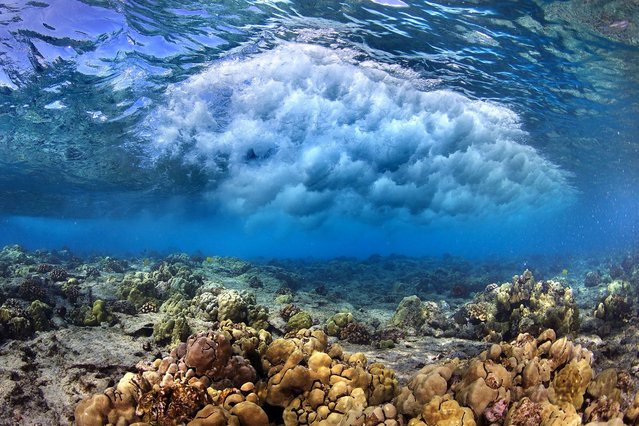
These incredible images capture the immense detail of waves beautifully crashing into the serene waters of Hawaii. (Photo by Bryce Groark/Caters)

These incredible images capture the immense detail of waves beautifully crashing into the serene waters of Hawaii. (Photo by Bryce Groark/Caters)
Details
26 Jun 2013 04:45:00
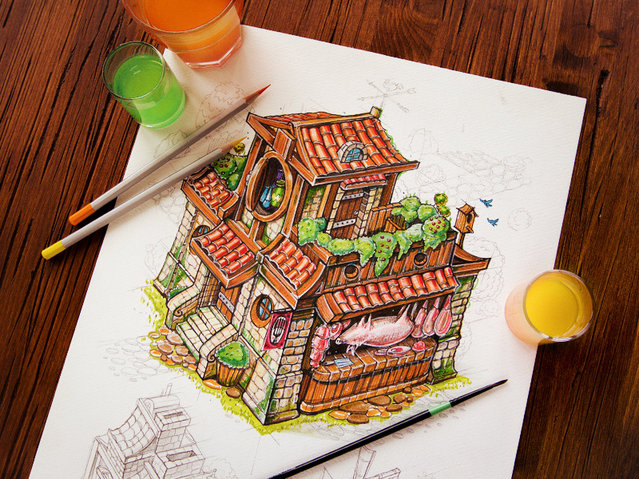
Awesome illustrations By Creative Mints

Hi! My name is Mike. I’m a graphic designer from Prague with 12 years of experience. I love the web and I thrive off of using its full potential to complete business challenges.

Creative Mints
Details
21 Dec 2013 11:28:00
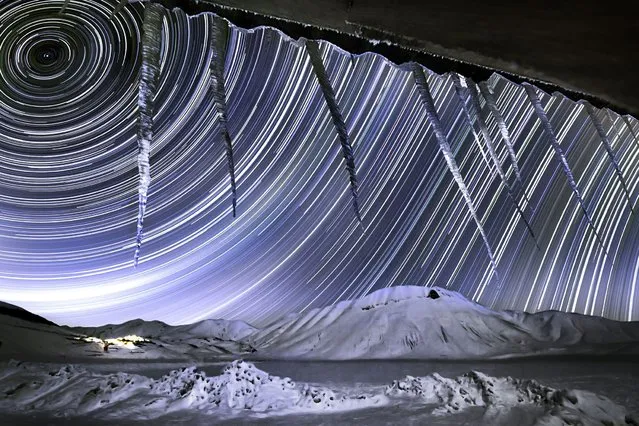
Rainbow of stars

Photographer Maurizio Pignotti, 46, spends all night in freezing temperatures painstakingly shooting the breathtaking crystal-clear stars. He uses a technique where he merges together anywhere between 80 and 450 shots to create what he describes as a “rainbow of stars”. Space-lover Maurizio, captures the star trails on the borders of the Adriatic Sea – including the Sibillini Mountains National Park, the Conero National Park, and the Gargano National Park. (Photo by Maurizio Pignotti/Caters News)
Details
31 Dec 2013 11:51:00
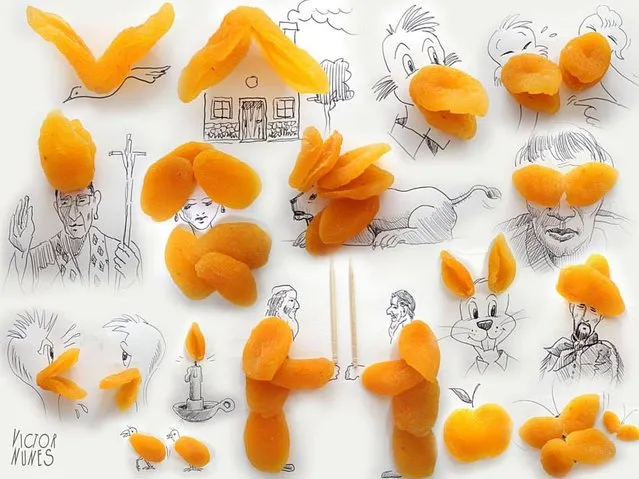
Food In Faces By Victor Nunes

Artist Victor Nunes combines every-day objects with simple illustrations to turn them into pictures of faces, animals and other playful scenes. His images invite us to look at the world differently and find creative images in our surroundings. Nunes’ art is a great example of pareidolia, which is our propensity to give meaning to random objects (like in this post about seeing faces in random objects). It’s the reason why we associate a smiley face with a human face and why some of Nunes’ pieces of popcorn or bread resemble faces to us.
Details
02 Feb 2014 11:58:00
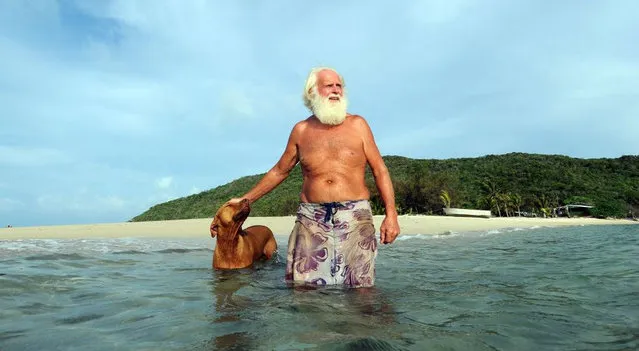
A real life Robinson Crusoe – David Glasheen

David Glasheen faces eviction from his remote tropical paradise after losing a Supreme Court legal case.
Details
08 Nov 2012 17:42:00


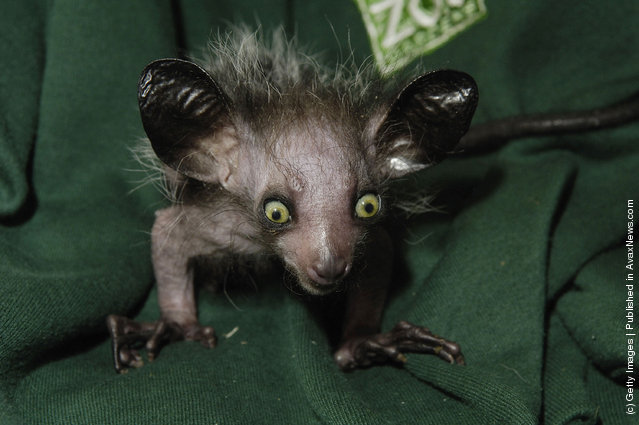
“The aye-aye (Daubentonia madagascariensis) is a lemur, a strepsirrhine primate native to Madagascar that combines rodent-like teeth and a special thin middle finger to fill the same ecological niche as a woodpecker. It is the world's largest nocturnal primate, and is characterized by its unusual method of finding food; it taps on trees to find grubs, then gnaws holes in the wood and inserts its narrow middle finger to pull the grubs out. The only other animal species known to find food in this way is the striped possum. From an ecological point of view the aye-aye fills the niche of a woodpecker as it is capable of penetrating wood to extract the invertebrates within”. – Wikipedia

Photo: In this handout image from Bristol Zoo is seen the first captive bred aye-aye in the UK named “Kintana” (meaning star in Malagasy) April 15, 2005 at Bristol Zoo Gardens, England. The zoo announced today only the second baby aye-aye to be hand-reared in the world (the first was in Jersey Zoo) and has now made his first public appearance since his birth on 11 February 2005. (Photo by Rob Cousins/Bristol Zoo via Getty Images)
Details
13 Apr 2011 13:33:00