Loading...
Done
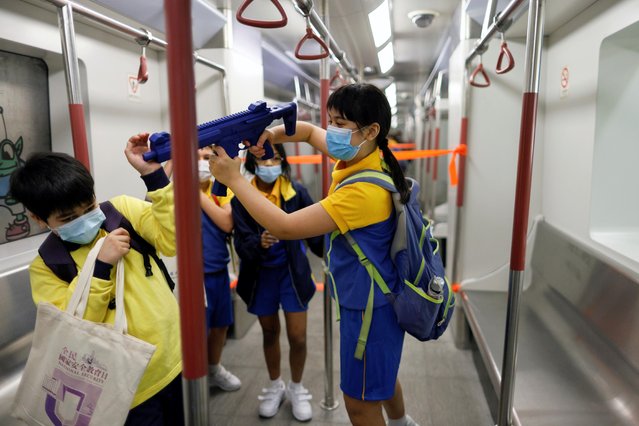
A child plays with a mock submachine gun at a model Mass Transit Railway (MTR) station to mark the National Security Education Day at Hong Kong Police College in Hong Kong, China on April 15, 2021. The “education day” was organized to promote the sweeping legislation China imposed last year, marked with school activities, games and shows, and a parade by police and other services. (Photo by Tyrone Siu/Reuters)

A child plays with a mock submachine gun at a model Mass Transit Railway (MTR) station to mark the National Security Education Day at Hong Kong Police College in Hong Kong, China on April 15, 2021. The “education day” was organized to promote the sweeping legislation China imposed last year, marked with school activities, games and shows, and a parade by police and other services. (Photo by Tyrone Siu/Reuters)
Details
16 Apr 2021 09:57:00
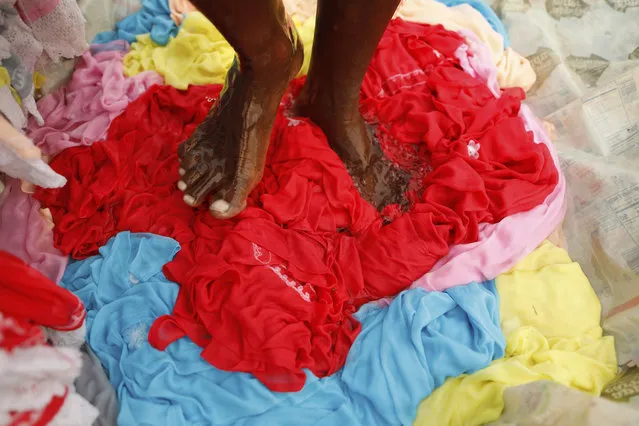
A dhobi, or a washerman washes cloths on the banks of the River Gomti in Lucknow, India, Saturday, September 12, 2020. Dhobis are traditional laundry workers who wash clothes by hand and dry them in the sun, an occupation which has been in existence for generations. Most cities in India have a Dhobi Ghat, or washermen's area, where the city's pile of clothes is laundered. This practice is still popular in India, despite of modern technology. Around 1,000 families work in Lucknow's Dhobi Ghat. However, in light of the novel coronavirus, their wages have decreased drastically. With each family earning around US$100-200 per month. (Photo by Rajesh Kumar Singh/AP Photo)

A dhobi, or a washerman washes cloths on the banks of the River Gomti in Lucknow, India, Saturday, September 12, 2020. Dhobis are traditional laundry workers who wash clothes by hand and dry them in the sun, an occupation which has been in existence for generations. Most cities in India have a Dhobi Ghat, or washermen's area, where the city's pile of clothes is laundered. This practice is still popular in India, despite of modern technology. Around 1,000 families work in Lucknow's Dhobi Ghat. However, in light of the novel coronavirus, their wages have decreased drastically. With each family earning around US$100-200 per month. (Photo by Rajesh Kumar Singh/AP Photo)
Details
25 Sep 2020 00:03:00
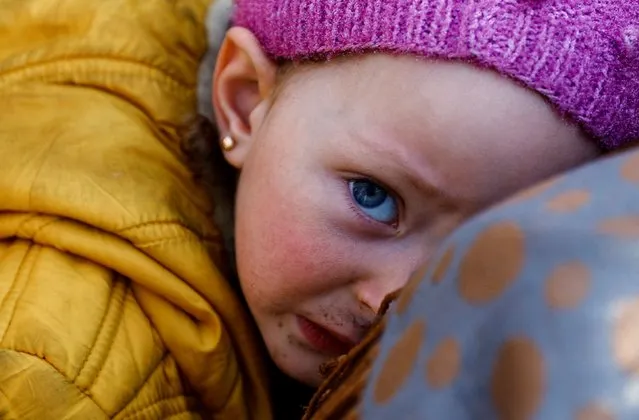
Amar, who is one-and-a-half years old and a Syrian refugee living in Turkey, looks on as the search for survivors continues in the aftermath of a deadly earthquake in Kahramanmaras, Turkey on February 13, 2023. (Photo by Suhaib Salem/Reuters)

Amar, who is one-and-a-half years old and a Syrian refugee living in Turkey, looks on as the search for survivors continues in the aftermath of a deadly earthquake in Kahramanmaras, Turkey on February 13, 2023. (Photo by Suhaib Salem/Reuters)
Details
09 Mar 2023 03:42:00
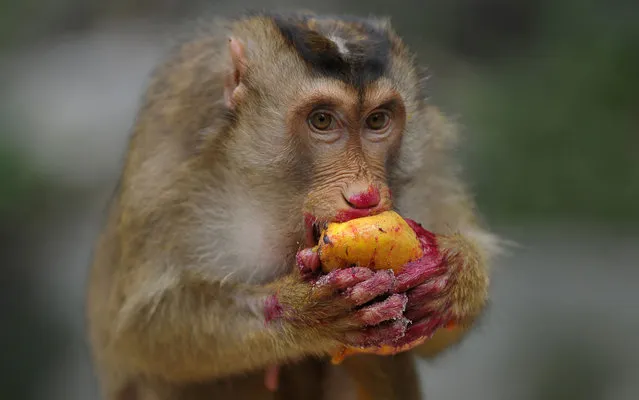
A wild macaque monkey eats fruit dropped by pedestrians in a suburb of Kuala Lumpur, Malaysia, on June 11, 2013. (Photo by Mohd Rasfan/AFP Photo)

A wild macaque monkey eats fruit dropped by pedestrians in a suburb of Kuala Lumpur, Malaysia, on June 11, 2013. (Photo by Mohd Rasfan/AFP Photo)
Details
15 Jun 2013 11:38:00
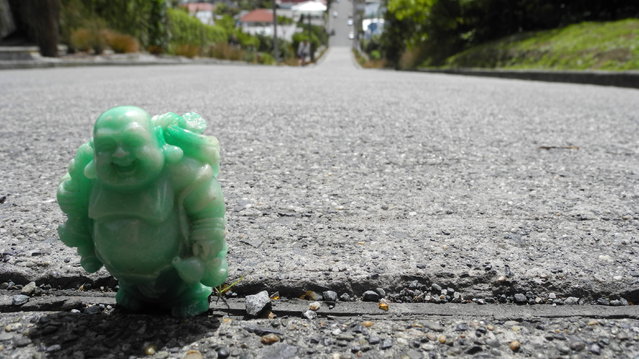
Baldwin Street - The World's Steepest Street

Baldwin Street, in Dunedin, New Zealand, is considered the world's steepest residential street. It is located in the residential suburb of North East Valley, 3.5 kilometres (2.2 mi) northeast of Dunedin's city centre.
Details
19 Jan 2014 15:26:00
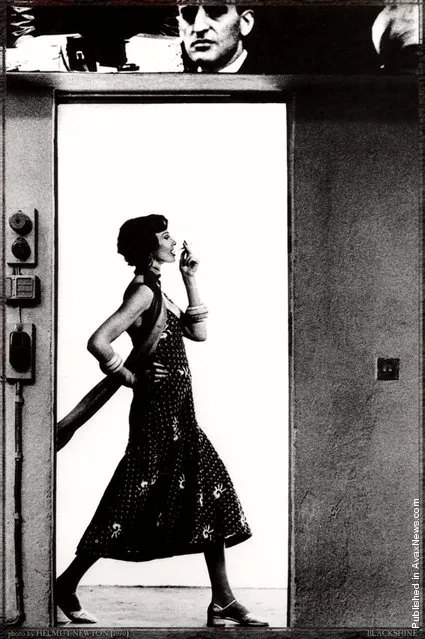
Photographers: Helmut Newton

“Newton was born in Berlin, the son of Klara “Claire” (Marquis) and Max Neustädter, a button factory owner. His family was Jewish. Newton attended the Heinrich-von-Treitschke-Realgymnasium and the American School in Berlin. Interested in photography from the age of 12 when he purchased his first camera, he worked for the German photographer Yva (Elsie Neulander Simon) from 1936. The increasingly oppressive restrictions placed on Jews by the Nuremberg laws meant that his father lost control of the factory in which he manufactured buttons and buckles; he was briefly interned in a concentration camp on “Kristallnacht”, November 9, 1938, which finally compelled the family to leave Germany. Newton's parents fled to South America. He was issued with a passport just after turning 18, and left Germany on December 5, 1938. At Trieste he boarded the “Conte Rosso” (along with about 200 others escaping the Nazis) intending to journey to China. After arriving in Singapore he found he was able to remain there, first and briefly as a photographer for the Straits Times and then as a portrait photographer”. – Wikipedia

Photo: Sigourney Weaver by Helmut Newton, 1995.
Details
08 Apr 2012 13:49:00
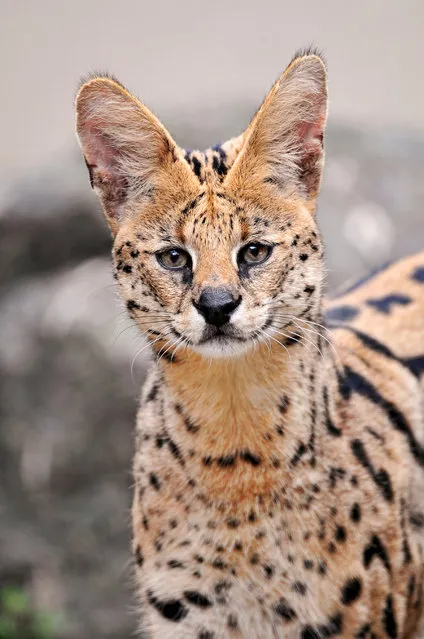
serval

This is a serval of the zoo of Amnéville, and yes indeed, he has big ears, servals are well known for that!


Emmanuel Keller began his photography in the late 1990’s when he was inspired by the emerging technology of digital photography and also by simply watching animals. Popularly known as “Tambako the Jaguar”, Emmanuel inspires many people with his photography. ...
Details
11 May 2015 09:51:00
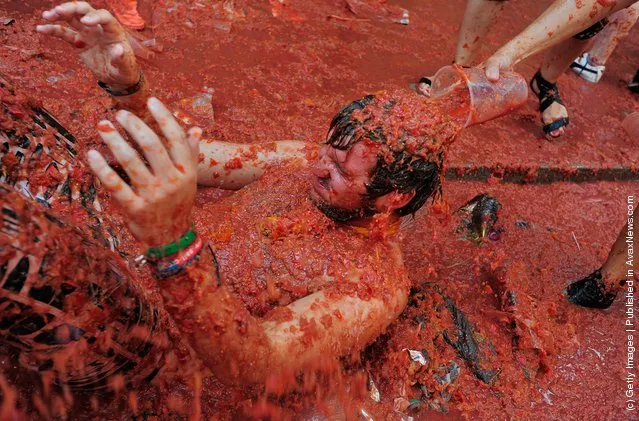
The World's Biggest Tomato Fight At Tomatina Festival 2011

A reveller is covered in tomato pulp and juice while participating in the annual Tomatina festival on August 31, 2011 in Bunol, Spain. An estimated 35,000 people threw 120 tons of ripe tomatoes in the world's biggest tomato fight held annually in this Spanish Mediterranean town. (Photo by Denis Doyle/Getty Images)
Details
01 Sep 2011 11:38:00