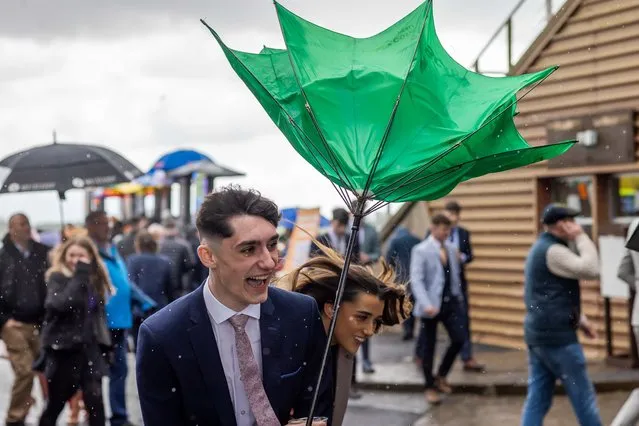
Racegoers shield themselves from the rain and wind at the Fairyhouse Easter Festival in Fairyhouse, Co. Meath, Ireland on April 10, 2023. (Photo by Morgan Treacy/Inpho)
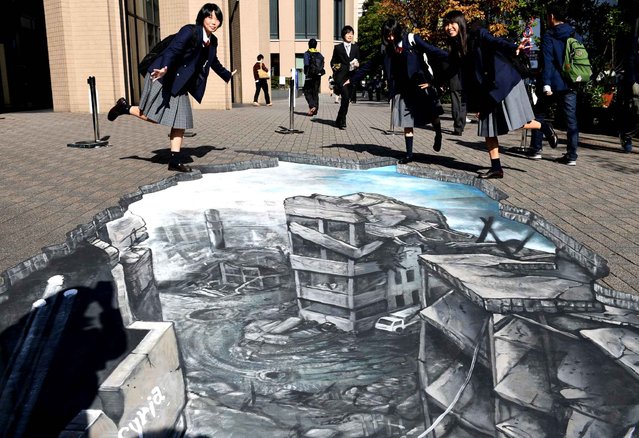
Students pose for a picture with a 3- D optical illusion artwork of a devastated cityscape in Aleppo, Syria at the campus of the Meiji University in Tokyo on November 18, 2016. The Japanese branch of the human rights organisation Amnesty International displayed the artwork to encourage people to think about the Syrian civil war. (Photo by Toshifumi Kitamura/AFP Photo)
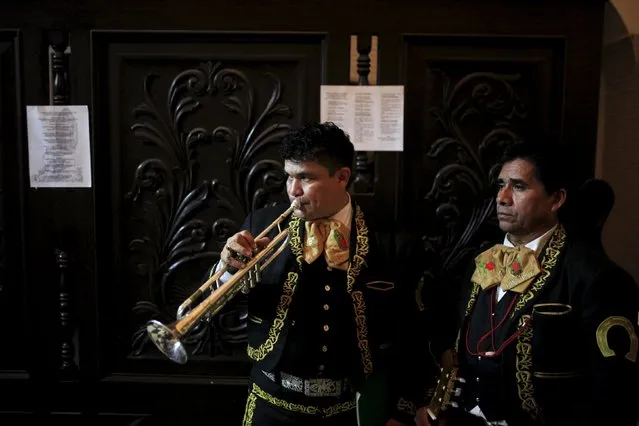
Mariachi musicians prepare to perform to celebrate the Day of the Virgin of Guadalupe outside the Basilica of Guadalupe in San Salvador, El Salvador December 11, 2015. (Photo by Jose Cabezas/Reuters)
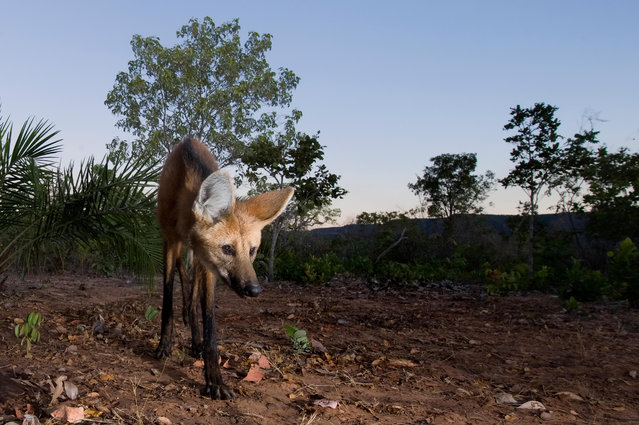
Global wildlife populations will decline by 67% by 2020 unless urgent action is taken to reduce human impact on species and ecosystems, warns the biennial Living Planet Index report from WWF (World Wide Fund for Nature) and ZSL (Zoological Society of London). From elephants to eels, here are some of the wildlife populations most affected by human activity. Here: The maned wolf is among the large mammals in the Brazilian Cerrado that are threatened by the increasing conversion of grasslands into farmland for grazing and growing crops. (Photo by Ben Cranke/Nature Picture Library/Alamy Stock Photo)
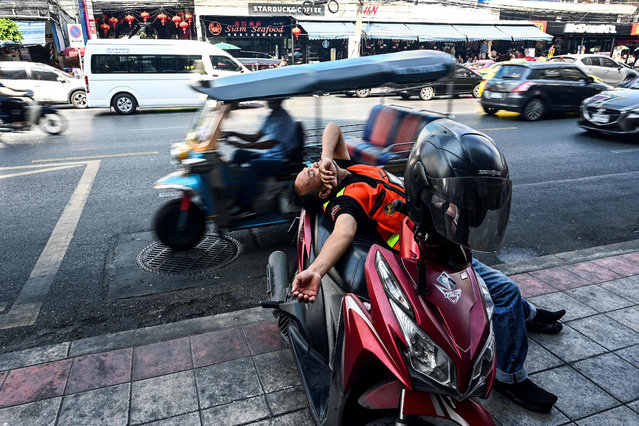
A motorcycle-taxi driver takes a nap while leaning on his bike along a street in Bangkok, Thailand on February 17, 2019. (Photo by Jewel Samad/AFP Photo)
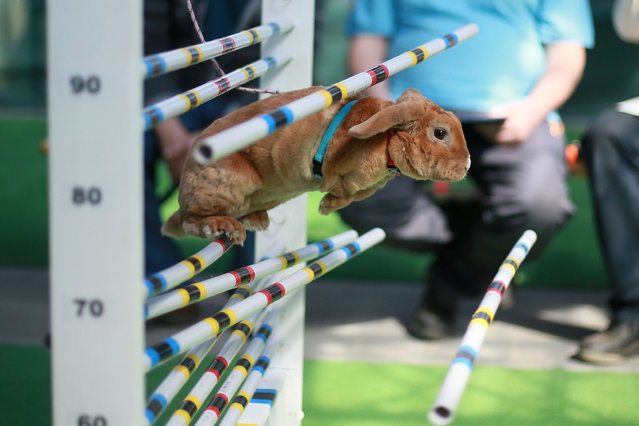
A rabbit fails to jump over an obstacle during a rabbit track and field competition on the sidelines of a hunting exhibition in Kromeriz, about 60 km east of Prague, on April 1, 2017. Circa 100 rabbits took part in the competition, including disciplines as long jump, high jump and running on a flat track. (Photo by Radek Mica/AFP Photo)