Loading...
Done
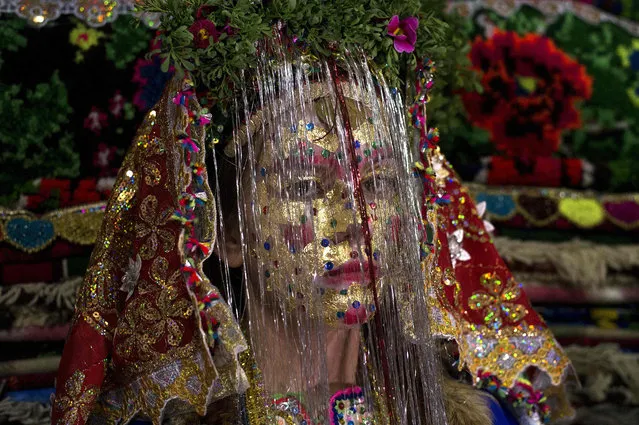
Emilia Pechinkova, a 24-years-old Bulgarian Pomak (Bulgarian speaking Muslims) bride poses for a photograph following the “gelina” or face painting ceremony carried out by female guests and relatives in preparation for her three-day wedding ceremony in the village of Draginovo, 100 kms southeast of Sofia on April 22, 2016. Bulgaria's Muslim population is one of the highest in the European Union. (Photo by Nikolay Doychinov/AFP Photo)

Emilia Pechinkova, a 24-years-old Bulgarian Pomak (Bulgarian speaking Muslims) bride poses for a photograph following the “gelina” or face painting ceremony carried out by female guests and relatives in preparation for her three-day wedding ceremony in the village of Draginovo, 100 kms southeast of Sofia on April 22, 2016. Bulgaria's Muslim population is one of the highest in the European Union. During the Communist regime religious rituals were not tolerated, and Muslims were forced to abandon wearing their traditional wedding outfits. Recently, more young Pomak women want to include traditional wedding customs that were forbidden during the regime, regardless of their secular lifestyles and the high cost of such a wedding. (Photo by Nikolay Doychinov/AFP Photo)
Details
25 Apr 2016 09:55:00
A handout image released by the Taronga Zoo shows Veiled Chameleon hatchlings at Taronga Zoo in Sydney, Australia, 11 March 2015. Taronga has welcomed more than 20 baby chameleons, with the last of three clutches of eggs hatching this week. Veiled Chameleons, or Chamaeleo calyptratus, are native to Saudi Arabia and Yemen and can live up to five years. (Photo by EPA/Taronga Zoo)

A handout image released by the Taronga Zoo shows Veiled Chameleon hatchlings at Taronga Zoo in Sydney, Australia, 11 March 2015. Taronga has welcomed more than 20 baby chameleons, with the last of three clutches of eggs hatching this week. Veiled Chameleons, or Chamaeleo calyptratus, are native to Saudi Arabia and Yemen and can live up to five years. (Photo by EPA/Taronga Zoo)
Details
21 Mar 2015 13:13:00
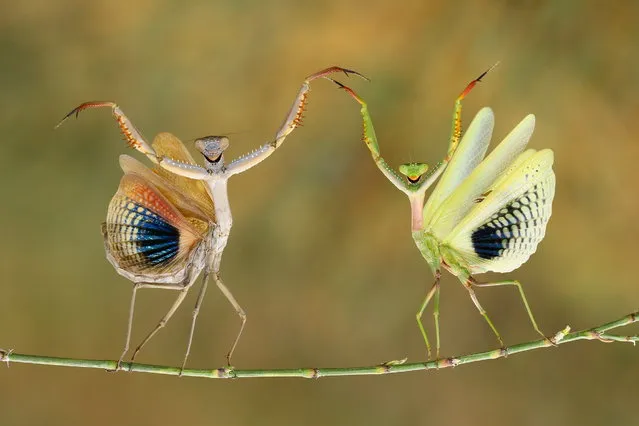
“Show Time”. It's a normal behavior of mantis. They're doing defence. When they're afraid of; raising their arms and spreading their wings. They looks like smiling dancer. Photo location: Nicosia, Cyprus. (Photo and caption by Hasan Baglar/National Geographic Photo Contest)

“Show Time”. It's a normal behavior of mantis. They're doing defence. When they're afraid of; raising their arms and spreading their wings. They looks like smiling dancer. Photo location: Nicosia, Cyprus. (Photo and caption by Hasan Baglar/National Geographic Photo Contest)
Details
28 Oct 2014 13:01:00
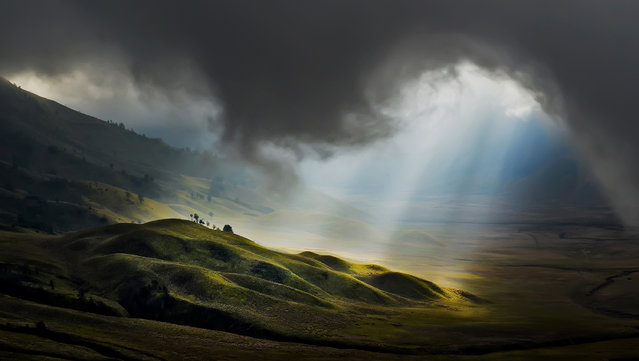
“Light From Heaven”. Taken around Mount Bromo, East Java, Indonesia in the morning. Photo location: East Java, Indonesia. (Photo and caption by Pimpin Nagawan/National Geographic Photo Contest)

“Light From Heaven”. Taken around Mount Bromo, East Java, Indonesia in the morning. Photo location: East Java, Indonesia. (Photo and caption by Pimpin Nagawan/National Geographic Photo Contest)

ATTENTION! All pictures are presented in high resolution. To see Hi-Res images – just TWICE click on any picture. In other words, click small picture – opens the BIG picture. Click BIG picture – opens VERY BIG picture.
Details
29 Nov 2013 12:36:00
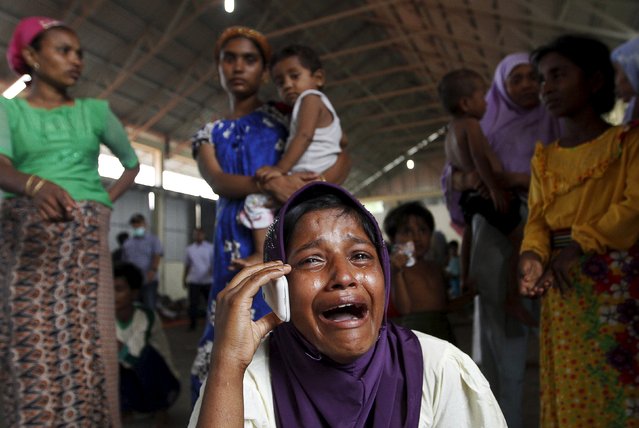
A Rohingya migrant who arrived in Indonesia by boat cries while speaking on a mobile phone with a relative in Malaysia, at a temporary shelter in Kuala Langsa in Indonesia's Aceh Province May 16, 2015. (Photo by Roni Bintang/Reuters)

A Rohingya migrant who arrived in Indonesia by boat cries while speaking on a mobile phone with a relative in Malaysia, at a temporary shelter in Kuala Langsa in Indonesia's Aceh Province May 16, 2015. Nearly 800 migrants were brought ashore in Indonesia on Friday, but other vessels crammed with them were sent back to sea despite a United Nations call to rescue thousands adrift in Southeast Asian waters with dwindling food and water. Thousands of Rohingya Muslims fleeing Myanmar and Bangladesh are stranded on boats as regional governments block them from landing. (Photo by Roni Bintang/Reuters)
Details
20 May 2015 08:53:00
Revellers enjoy the atmosphere during the opening day or “Chupinazo” of the San Fermin Running of the Bulls fiesta on July 6, 2015 in Pamplona, Spain. The annual Fiesta de San Fermin, made famous by the 1926 novel of US writer Ernest Hemmingway entitled “The Sun Also Rises”, involves the daily running of the bulls through the historic heart of Pamplona to the bull ring. (Photo by Pablo Blazquez Dominguez/Getty Images)

Revellers enjoy the atmosphere during the opening day or “Chupinazo” of the San Fermin Running of the Bulls fiesta on July 6, 2015 in Pamplona, Spain. The annual Fiesta de San Fermin, made famous by the 1926 novel of US writer Ernest Hemmingway entitled “The Sun Also Rises”, involves the daily running of the bulls through the historic heart of Pamplona to the bull ring. (Photo by Pablo Blazquez Dominguez/Getty Images)
Details
07 Jul 2015 12:08:00
A Saudi soldier fires a mortar towards Houthi movement position, at the Saudi border with Yemen April 21, 2015. (Photo by Reuters/Stringer)

A Saudi soldier fires a mortar towards Houthi movement position, at the Saudi border with Yemen April 21, 2015. (Photo by Reuters/Stringer)
Details
22 Apr 2015 09:10:00
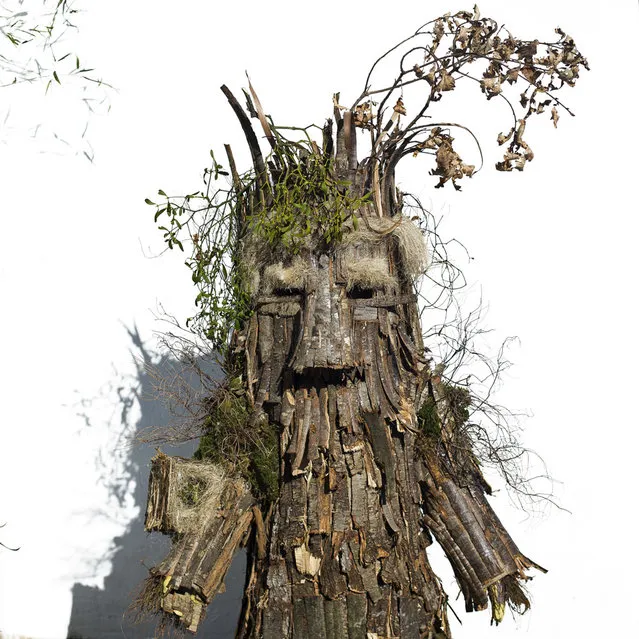
A man dressed as a  “Trapajon”, representing entities of nature, poses for a picture after taking part in the Vijanera Festival in Silio, northern Spain, Sunday, Jan. 6, 2013. The Vijanera masquerade, of pre-Roman origin, is the first carnival of the year in Europe symbolizing the triumph of good over evil and involving the participation of crowds of residents wearing different masks, animal skins and brightly colored clothing with its own complex function and symbolism and becoming the living example of the survival of archaic cults to nature. (Photo by Daniel Ochoa de Olza/AP Photo)

A man dressed as a “Trapajon”, representing entities of nature, poses for a picture after taking part in the Vijanera Festival in Silio, northern Spain, Sunday, Jan. 6, 2013. The Vijanera masquerade, of pre-Roman origin, is the first carnival of the year in Europe symbolizing the triumph of good over evil and involving the participation of crowds of residents wearing different masks, animal skins and brightly colored clothing with its own complex function and symbolism and becoming the living example of the survival of archaic cults to nature. (Photo by Daniel Ochoa de Olza/AP Photo)
Details
19 Jan 2013 13:01:00