Loading...
Done
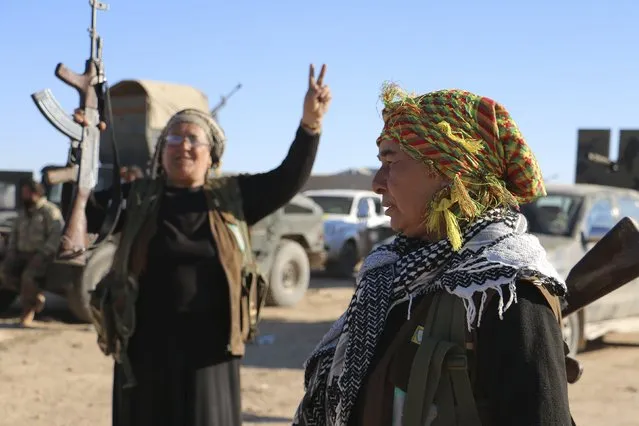
Kurdish guard women from the civilian protection unit which supports the Democratic Forces of Syria, cheer near the Syrian town of al Houl in Hasaka province, after the Democratic Forces of Syria took control of the area, November 14, 2015. (Photo by Rodi Said/Reuters)

Kurdish guard women from the civilian protection unit which supports the Democratic Forces of Syria, cheer near the Syrian town of al Houl in Hasaka province, after the Democratic Forces of Syria took control of the area, November 14, 2015. A U.S.-backed Syrian rebel alliance on Friday captured the town of al Houl in Hasaka province, which had been held by Islamic State militants, a spokesman for the Kurdish fighters, part of the grouping, said. It was the first significant advance against IS by the Democratic Forces of Syria, which was formed last month. (Photo by Rodi Said/Reuters)
Details
16 Nov 2015 08:07:00
British rally driver Kris Meeke jumps his Citroen over a brow during the fifth special stage of the World Rally Championship (WRC) Rally of Australia, near Bellingen on the New South Wales central coast on September 12, 2014. (Photo by William West/AFP Photo)

British rally driver Kris Meeke jumps his Citroen over a brow during the fifth special stage of the World Rally Championship (WRC) Rally of Australia, near Bellingen on the New South Wales central coast on September 12, 2014. (Photo by William West/AFP Photo)
Details
13 Sep 2014 12:01:00
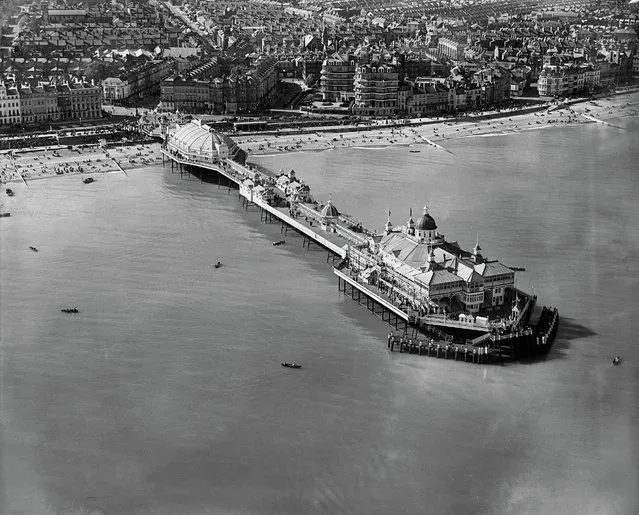
While the lido was described as bringing “modernism to the masses” on the British coast it was just the latest example of a trend that had been developing since Victorian times – transforming seaside towns into resorts for leisure and entertainment. In the latter half of the nineteenth century, the fashion was for local authorities to build great piers stretching from the promenade out into the sea

While the lido was described as bringing “modernism to the masses” on the British coast it was just the latest example of a trend that had been developing since Victorian times – transforming seaside towns into resorts for leisure and entertainment. In the latter half of the nineteenth century, the fashion was for local authorities to build great piers stretching from the promenade out into the sea. The Eastbourne Pier, pictured here in May 1931, was erected between 1866 and 1870 to an ingenious design by Eugenius Birch, which saw the structure sitting on special cups allowing the supporting struts to “move” in bad weather. Arranged on the pier's 1,000-foot length were kiosks, a theatre, a ballroom and a camera obscura. 1931. (Photo by Aerofilms Collection via “A History of Britain From Above”)
Details
25 Feb 2014 12:59:00
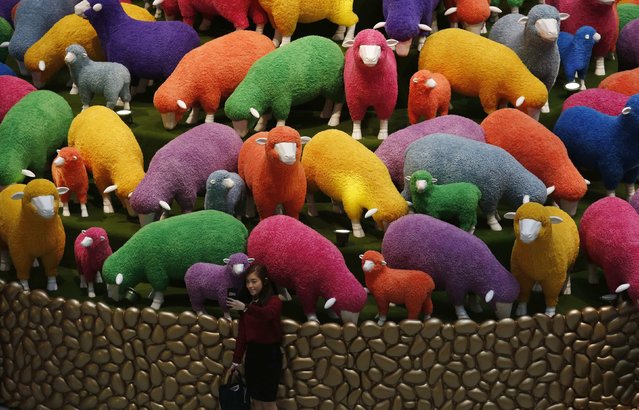
A woman takes a selfie in front of a Lunar New Year display featuring sheep at a shopping mall in Hong Kong, February 13, 2015. (Photo by Bobby Yip/Reuters)

A woman takes a selfie in front of a Lunar New Year display featuring sheep at a shopping mall in Hong Kong, February 13, 2015. (Photo by Bobby Yip/Reuters)
Details
14 Feb 2015 13:05:00


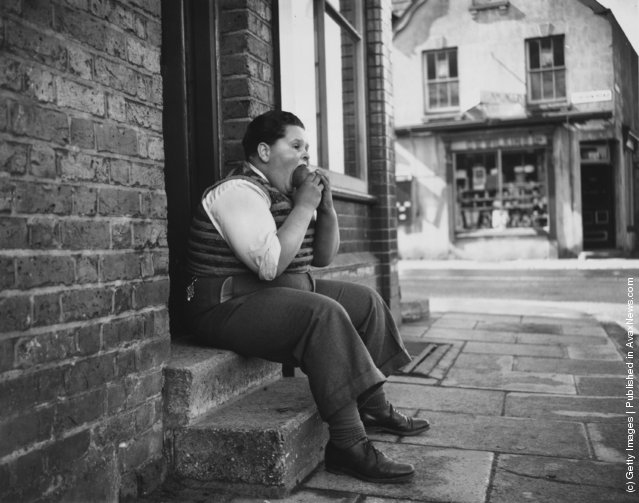
Jimmy Arnold, an overweight boy from Rochester, bites into a cake. (Photo by Reg Birkett/Keystone/Getty Images). 14th April 1951
Details
29 Mar 2011 13:25:00


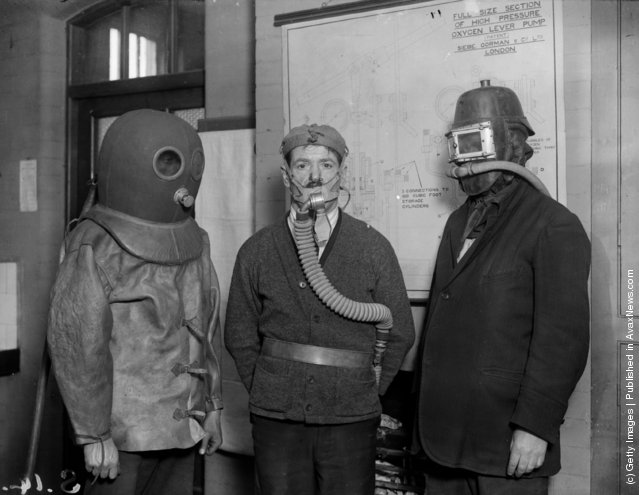
Three workers demonstrating the different types of gas masks used in mine rescue work. (Photo by Fox Photos/Getty Images). December 1925
Details
20 Apr 2011 09:17:00


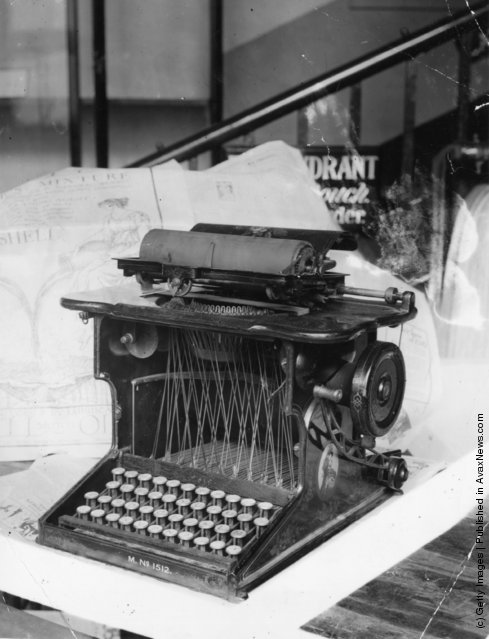
In April 2011 last factory in the world on manufacture of typewriters was closed. The epoch of typewriters has ended...

Photo: A model of a commercial typewriter from 1867. (Photo by Topical Press Agency/Getty Images). June 1923
Details
28 Apr 2011 07:25:00


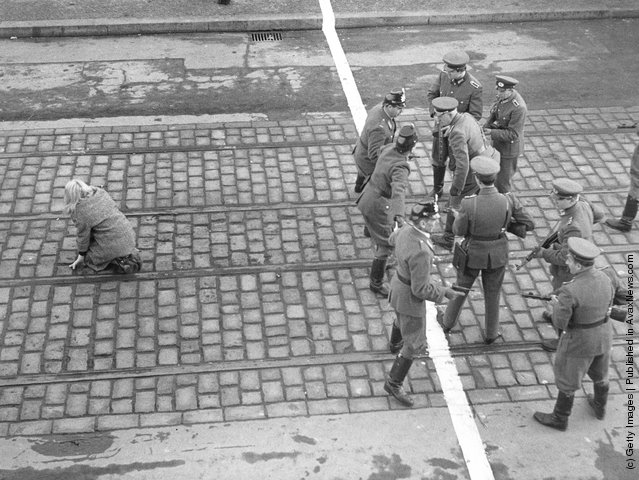
“The Berlin Wall (German: Berliner Mauer) was a barrier constructed by the German Democratic Republic (GDR, East Germany) starting on 13 August 1961, that completely cut off West Berlin from surrounding East Germany and from East Berlin. The barrier included guard towers placed along large concrete walls, which circumscribed a wide area (later known as the “death strip”) that contained anti-vehicle trenches, “fakir beds” and other defenses. The Soviet-dominated Eastern Bloc officially claimed that the wall was erected to protect its population from fascist elements conspiring to prevent the “will of the people” in building a socialist state in East Germany. However, in practice, the Wall served to prevent the massive emigration and defection that marked Germany and the communist Eastern Bloc during the post-World War II period”. – Wikipedia

Photo: West Berlin policemen and East German Volkspolizei face each other across the border in Berlin, circa 1955. (Photo by Three Lions/Hulton Archive/Getty Images)
Details
22 May 2011 10:49:00