Loading...
Done
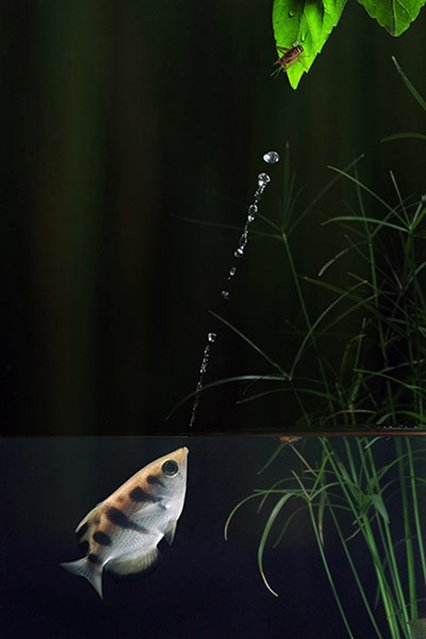
The Archerfish

The archerfish (spinner fish or archer fish) are a family (Toxotidae) of fish known for their habit of preying on land based insects and other small animals by literally shooting them down with water droplets from their specialized mouths. The family is small, consisting of seven species in the genus Toxotes; which typically inhabit brackish waters of estuaries and mangroves, but can also be found in the open ocean as well as far upstream in fresh water They can be found from India to the Philippines, Australia, and Polynesia.
Details
21 Nov 2012 12:54:00


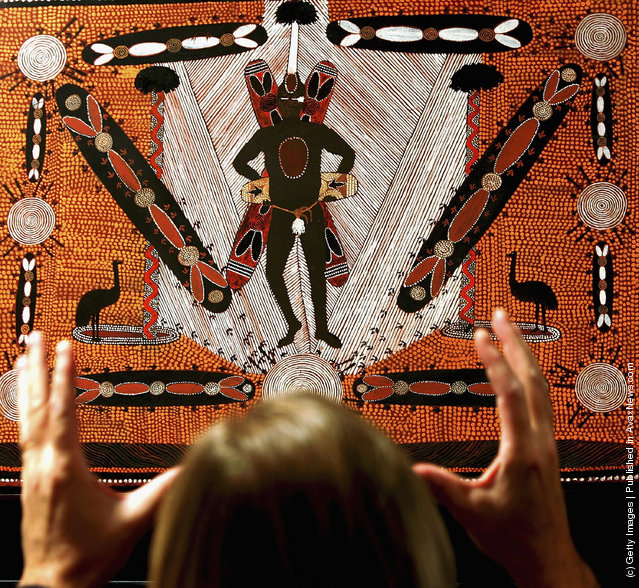
Tim Klingender, Director of Aboriginal Art at Sotheby's hangs the painting “Emu Corroboree Man” by Clifford Possum Tjapaltjarri before a record auction of Aboriginal Art July 14, 2005 in Sydney, Australia. The painting is expected to fetch AUD 150,000 – 250,000 (USD 120,000 – 200,000). Sotheby's unveiled a selection of Aboriginal art and artifacts after a tour of New York and London, which will go to auction in Melbourne July 25 2005. The total pre-sales estimate of the collection is AUD 6 million – 8.5 million (USD 5 million – 7 million). (Photo by Ian Waldie/Getty Images)
Details
01 Apr 2011 09:09:00
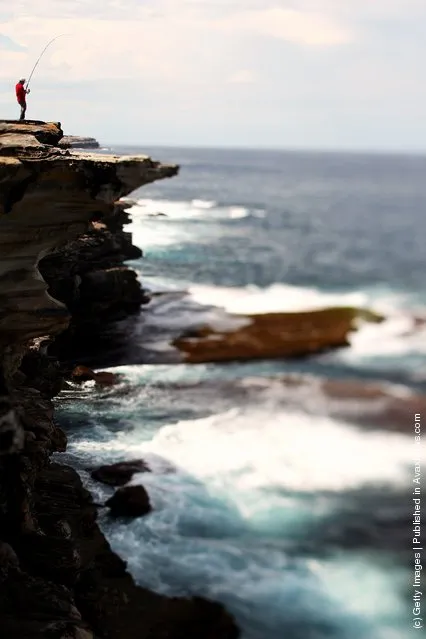
Rock Fishing In Sydney

A fisherman is seen standing on a cliff edge at Cape Bank in La Perouse on February 20, 2011 in Sydney, Australia. The practice of fishing from rock platforms, cliffs and rocky outcrops is notoriously dangerous with many anglers per year being washed into the ocean by dangerous surf or unexpected large waves. Angling is often reported as the sport having the highest mortality rate on average due to fishermen drowning with rocking fishing contributing to a high number of these deaths. (Photo by Mark Kolbe/Getty Images)
Details
16 Aug 2011 11:34:00
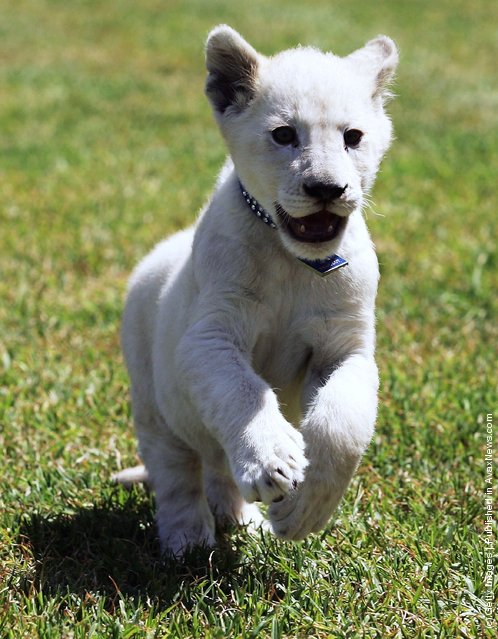
White Lion Cubs

“The white lion is not a distinct subspecies, but a special morph with a genetic condition, leucism, that causes paler colouration akin to that of the white tiger; the condition is similar to melanism, which causes black panthers”. – Wikipedia

Photo: One of two rare white lion cubs from Mogo Zoo on New South Wales South Coast is seen at a photo call at Lavender Green, Luna Park on November 23, 2006 in Sydney, Australia. (Photo by Matt King/Getty Images)
Details
26 Sep 2011 12:01:00
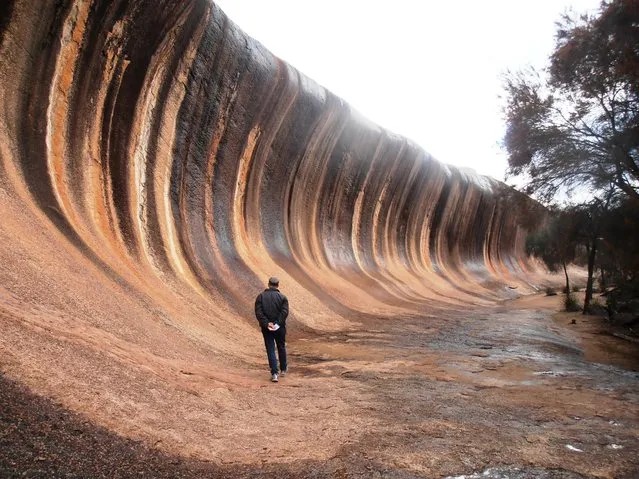
Wave Rock, Arizona

Wave Rock is a natural rock formation that is shaped like a tall breaking ocean wave. The "wave" is about 14 m (46 ft) high and around 110 m (360 ft) long. It forms the north side of a solitary hill, which is known as “Hyden Rock”. This hill, which is a granite inselberg, lies about 3 km (2 mi) east of the small town of Hyden and 296 km (184 mi) east-southeast of Perth, Western Australia. Wave Rock and Hyden Rock are part of a 160 ha (395-acre) nature reserve, Hyden Wildlife Park.
Details
12 Aug 2014 10:21:00
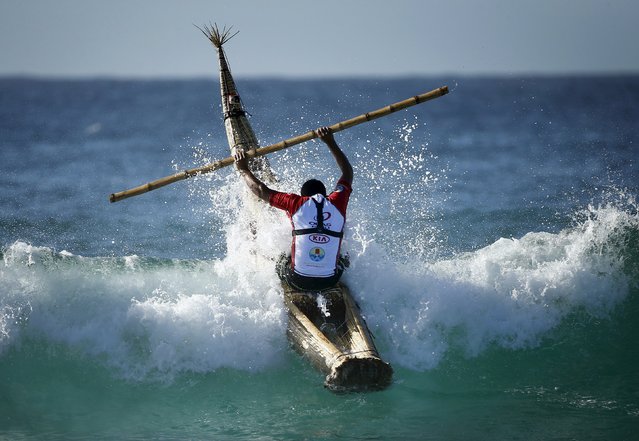
Peruvian surfer Carlos “Huevito” Areola rides a reed board, or “caballito” (little horse), into a wave at Sydney's Bondi Beach, February 24, 2016. (Photo by Jason Reed/Reuters)

Peruvian surfer Carlos “Huevito” Areola rides a reed board, or “caballito” (little horse), into a wave at Sydney's Bondi Beach, February 24, 2016. Areola is part of a group of Peruvian surfers touring Australia’s east coast to promote the use of the “caballito”. The “caballito” is thought to have been invented around 3,000 BC in northern Peru. (Photo by Jason Reed/Reuters)
Details
25 Feb 2016 11:46:00


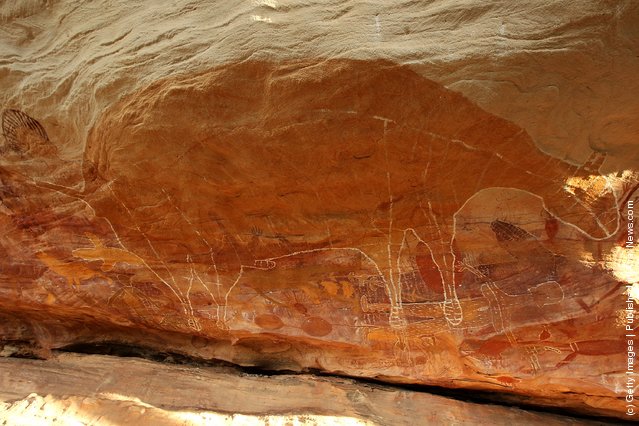
The artwork of Giant Horse Aboriginal rock art galleries in the Quinkan Country is seen on June 19, 2011 in Laura, Australia. The ancient aboriginal rock art in this region is some of the largest and oldest in the world, dating back over 15,000 years. Paintings, stencil art and engravings cover thelands traditionally home to the Kuku, Yalanji, Guugu Yimithirr and Kuku Thaypan people. As a UNESCO-identified top 10 rock art site in the world, international travelers visit the area to learn and understand the aboriginal culture through the artwork. (Photo by Mark Kolbe/Getty Images)
Details
23 Jun 2011 10:12:00
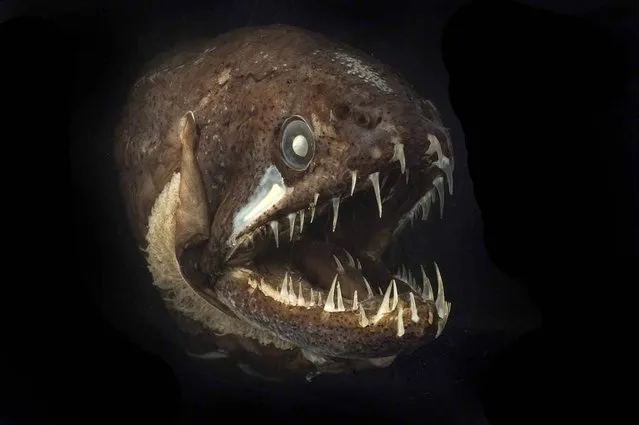
Imagine living in the sea where it is permanently dark, cold, and food is hard to find. For many animals at depth, it may be weeks to months between meals. If you find something to eat, you have to hang on to it

Imagine living in the sea where it is permanently dark, cold, and food is hard to find. For many animals at depth, it may be weeks to months between meals. If you find something to eat, you have to hang on to it. This is why so many deep-sea fishes have lots of big teeth. This dragonfish, spotted off the coast of Australia, even has teeth on its tongue. They would be terrifying animals ... if they weren’t the size of a banana. (Photo by Julian Finn/Museum Victoria)
Details
21 May 2012 12:14:00