Loading...
Done
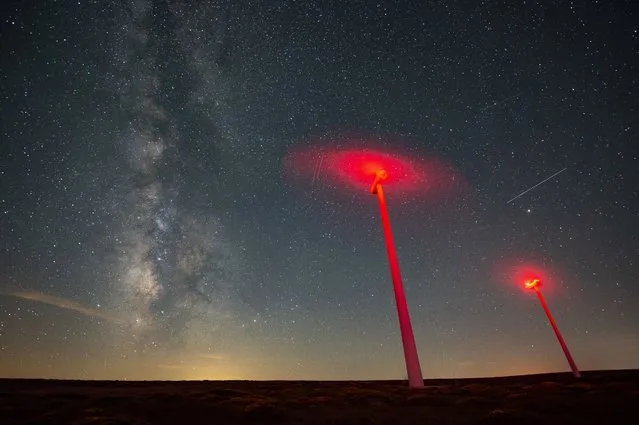
A view of the Milky Way over the windmills at the wasteland of La Lora, in Rocamundo, region of Cantabria, northern Spain, 29 May 2022. (Photo by Pedro Puente Hoyos/EPA/EFE)

A view of the Milky Way over the windmills at the wasteland of La Lora, in Rocamundo, region of Cantabria, northern Spain, 29 May 2022. (Photo by Pedro Puente Hoyos/EPA/EFE)
Details
22 Dec 2022 05:39:00
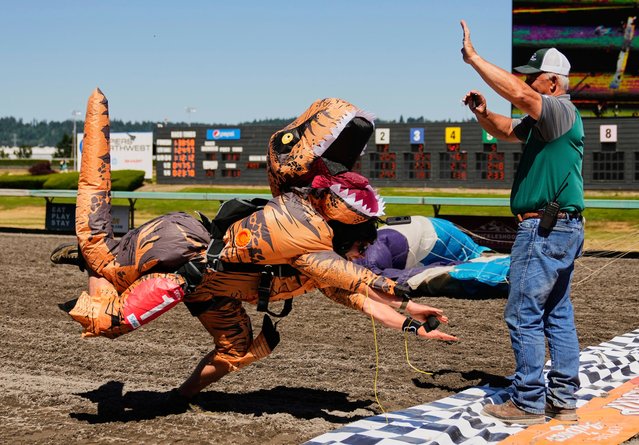
Cody Vancina of Skydive Snohomish dives at the finish line after parachuting down to the track in a t-rex outfit with two colleagues during the “T-Rex World Championship Races” at Emerald Downs, Sunday, June 29, 2025, in Auburn, Wash. (Photo by Lindsey Wasson/AP Photo)

Cody Vancina of Skydive Snohomish dives at the finish line after parachuting down to the track in a t-rex outfit with two colleagues during the “T-Rex World Championship Races” at Emerald Downs, Sunday, June 29, 2025, in Auburn, Wash. (Photo by Lindsey Wasson/AP Photo)
Details
11 Jul 2025 03:27:00
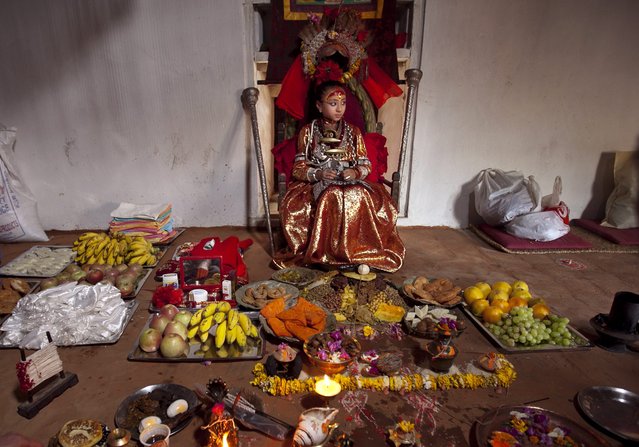
Kumari Samita Bajracharya sits in front of devotees offers during a special puja at Kumari Ghar in Patan, Nepal, 09 April 2011. It is believed that worshipping Kumari and receiving tika from her reduces illness and avoid problems. Kumari, or Kumari Devi, is a “living goddess”. The word literally means virgin in Nepali. The Living Goddesses are young pre-pubescent girls that are considered to be incarnations of the Hindu Goddess of Power, Kali. The Kumari retires when she reaches puberty. (Photo by Narendra Shrestha/EPA)

Kumari Samita Bajracharya sits in front of devotees offers during a special puja at Kumari Ghar in Patan, Nepal, 09 April 2011. It is believed that worshipping Kumari and receiving tika from her reduces illness and avoid problems. Kumari, or Kumari Devi, is a “living goddess”. The word literally means virgin in Nepali. The Living Goddesses are young pre-pubescent girls that are considered to be incarnations of the Hindu Goddess of Power, Kali. The Kumari retires when she reaches puberty. (Photo by Narendra Shrestha/EPA)
Details
18 Jun 2014 12:31:00
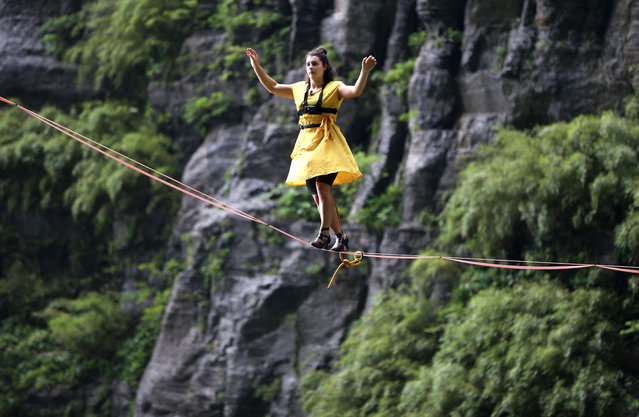
Canadian slackliner Mia Noblet walks on a slackline (25mm wide, 3mm thick and 60m long) during “Tianmen Mountain Female High-Heeled Highline Challenge” at Zhangjiajie National Forest Park on May 27, 2018 in Zhangjiajie, Hunan Province of China. 23-year-old Canadian slackliner Mia Noblet became the first one who finished the challenge in 22 minutes and 36 seconds while 32-year-old French slackliner Mini Guesdon broke the record in 9 minutes and 24 seconds during her second attempt on Sunday. (Photo by VCG/VCG via Getty Images)

Canadian slackliner Mia Noblet walks on a slackline (25mm wide, 3mm thick and 60m long) during “Tianmen Mountain Female High-Heeled Highline Challenge” at Zhangjiajie National Forest Park on May 27, 2018 in Zhangjiajie, Hunan Province of China. 23-year-old Canadian slackliner Mia Noblet became the first one who finished the challenge in 22 minutes and 36 seconds while 32-year-old French slackliner Mini Guesdon broke the record in 9 minutes and 24 seconds during her second attempt on Sunday. (Photo by VCG/VCG via Getty Images)
Details
29 May 2018 07:07:00
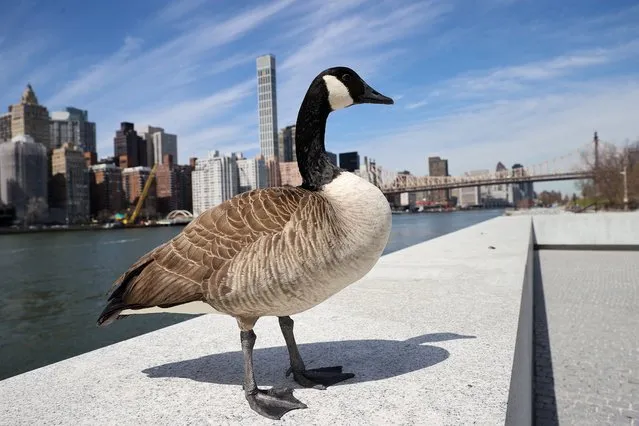
A Canada goose is seen in Roosevelt Island of New York City, United States on April 11, 2022. (Photo by Tayfun Coskun/Anadolu Agency via Getty Images)

A Canada goose is seen in Roosevelt Island of New York City, United States on April 11, 2022. (Photo by Tayfun Coskun/Anadolu Agency via Getty Images)
Details
20 Apr 2022 05:25:00
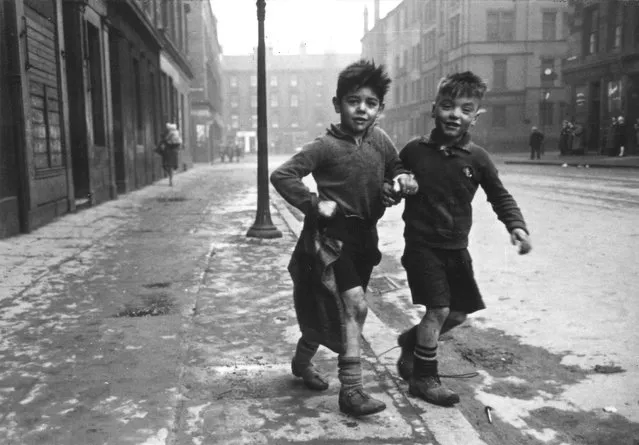
Two boys in the Gorbals area of Glasgow, UK on January 31, 1948. The Gorbals tenements were built quickly and cheaply in the 1840s, providing housing for Glasgow's burgeoning population of industrial workers. Conditions were appalling; overcrowding was standard and sewage and water facilities inadequate. The tenements housed about 40,000 people with up to eight family members sharing a single room, 30 residents sharing a toilet and 40 sharing a tap. By the time this photograph was taken 850 tenements had been demolished since 1920. Redevelopment of the area began in the late 1950s and the tenements were replaced with a modern tower block complex in the sixties. (Photo by Bert Hardy/Getty Images)

Two boys in the Gorbals area of Glasgow, UK on January 31, 1948. The Gorbals tenements were built quickly and cheaply in the 1840s, providing housing for Glasgow's burgeoning population of industrial workers. Conditions were appalling; overcrowding was standard and sewage and water facilities inadequate. The tenements housed about 40,000 people with up to eight family members sharing a single room, 30 residents sharing a toilet and 40 sharing a tap. By the time this photograph was taken 850 tenements had been demolished since 1920. Redevelopment of the area began in the late 1950s and the tenements were replaced with a modern tower block complex in the sixties. (Photo by Bert Hardy/Getty Images)
Details
09 Mar 2017 00:03:00
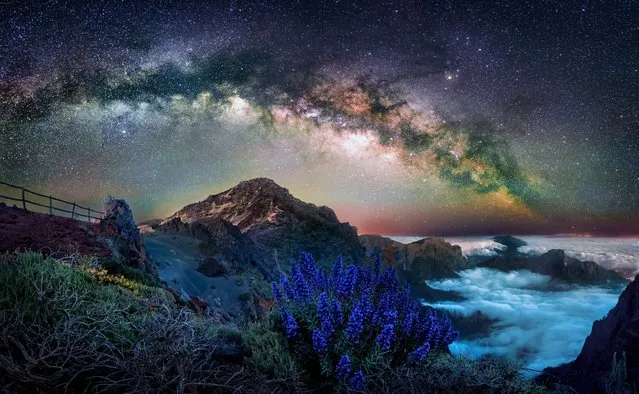
Tony North; First place, Breathing Spaces; Overall Winner; Blue Tajinaste, La Palma, Canary Islands, Spain. “Echium thyrsiflorum is endemic to the mountains of La Palma island – from high up, there was a magnificent view of both the caldera below, and the stars above. The Unesco La Palma biosphere reserve encompasses the entire island, with the Caldera de Taburiente containing mountains with a highest peak of 2,426 metres – the Roque de los Muchachos”. (Photo by Tony North/IGPOTY)

Tony North; First place, Breathing Spaces; Overall Winner; Blue Tajinaste, La Palma, Canary Islands, Spain. “Echium thyrsiflorum is endemic to the mountains of La Palma island – from high up, there was a magnificent view of both the caldera below, and the stars above. The Unesco La Palma biosphere reserve encompasses the entire island, with the Caldera de Taburiente containing mountains with a highest peak of 2,426 metres – the Roque de los Muchachos”. (Photo by Tony North/IGPOTY)
Details
10 Feb 2023 04:41:00
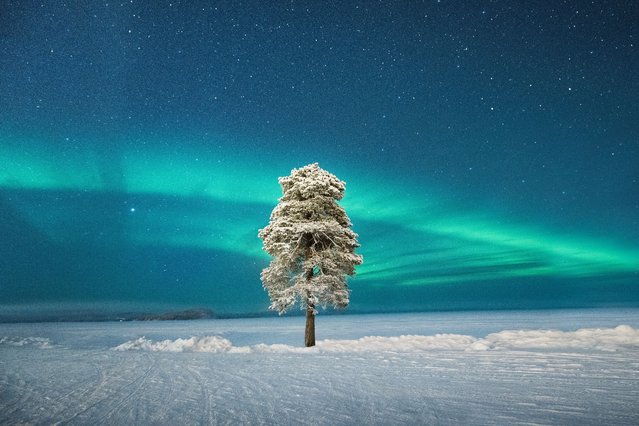
Aurorae category runner-up: Lone Tree under a Scandinavian Aurora by Tom Archer (UK). The photographer decided to explore the area around the hotel on a very crisp -35C evening in Finnish Lapland. When he found this tree, he decided to wait for the misty conditions to change and could not believe his luck when the sky cleared and the aurora came out in the perfect spot. Archer spent about an hour photographing it before his camera started to lock up because of the harsh conditions, but by then he was happy to call it a night. (Photo by Tom Archer/2020 Astronomy Photographer of the Year)

Aurorae category runner-up: Lone Tree under a Scandinavian Aurora by Tom Archer (UK). The photographer decided to explore the area around the hotel on a very crisp -35C evening in Finnish Lapland. When he found this tree, he decided to wait for the misty conditions to change and could not believe his luck when the sky cleared and the aurora came out in the perfect spot. Archer spent about an hour photographing it before his camera started to lock up because of the harsh conditions, but by then he was happy to call it a night. (Photo by Tom Archer/2020 Astronomy Photographer of the Year)
Details
17 Sep 2020 00:03:00