Loading...
Done
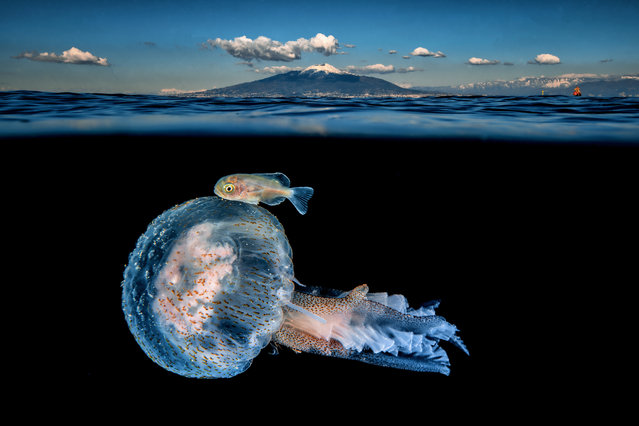
Jellyfish with a juvenile imperial blackfish (Schedophilus ovalis) in Castellammare di Stabia, Naples, Italy, winter 2023. (Photo by Marco Gargiulo/Media Drum Images)

Jellyfish with a juvenile imperial blackfish (Schedophilus ovalis) in Castellammare di Stabia, Naples, Italy, winter 2023. (Photo by Marco Gargiulo/Media Drum Images)
Details
02 Aug 2024 04:20:00
Ellesse Janda welcomes a spring rainbow at Cresswell in Northumberland, United Kingdom on March 17, 2023. (Photo by Ian Sproat/Picture Exclusive)

Ellesse Janda welcomes a spring rainbow at Cresswell in Northumberland, United Kingdom on March 17, 2023. (Photo by Ian Sproat/Picture Exclusive)
Details
19 Jun 2023 02:36:00
A view of northern lights over the skies of Sodankyla, Lapland, Finland, on October 7, 2024. (Photo by Alexander Kuznetsov/Courtesy of All About Lapland/Handout via Reuters)

A view of northern lights over the skies of Sodankyla, Lapland, Finland, on October 7, 2024. (Photo by Alexander Kuznetsov/Courtesy of All About Lapland/Handout via Reuters)
Details
14 Oct 2024 03:20:00
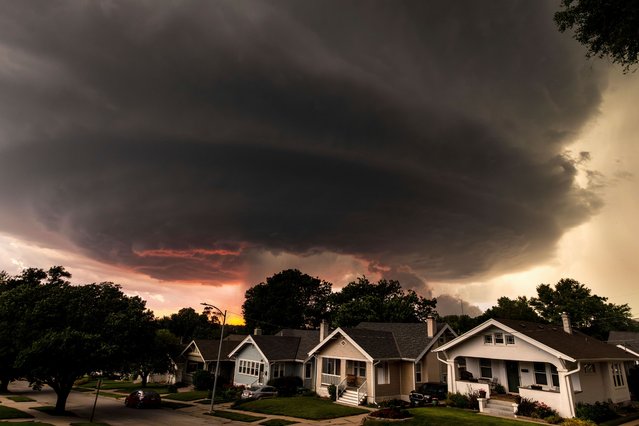
A severe thunderstorm hits Omaha, Neb., on Wednesday, June 12, 2024. (Photo by Chris Machian/Omaha World-Herald via AP Photo)

A severe thunderstorm hits Omaha, Neb., on Wednesday, June 12, 2024. (Photo by Chris Machian/Omaha World-Herald via AP Photo)
Details
10 Sep 2025 04:10:00
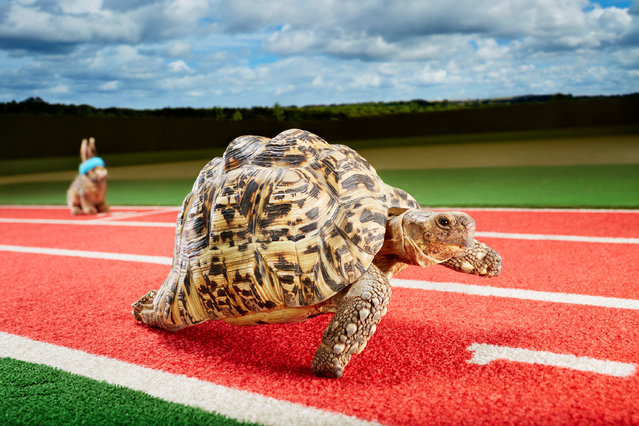
The Guinness World Record for the fastest tortoise in the world is held by Bertie, a South African leopard tortoise, who covered 5.49 metres in 19.59 seconds. (Photo by Paul Michael Hughes/Guinness World Records/PA Wire Press Association)

The Guinness World Record for the fastest tortoise in the world is held by Bertie, a South African leopard tortoise, who covered 5.49 metres in 19.59 seconds. (Photo by Paul Michael Hughes/Guinness World Records/PA Wire Press Association)
Details
16 Sep 2025 04:17:00
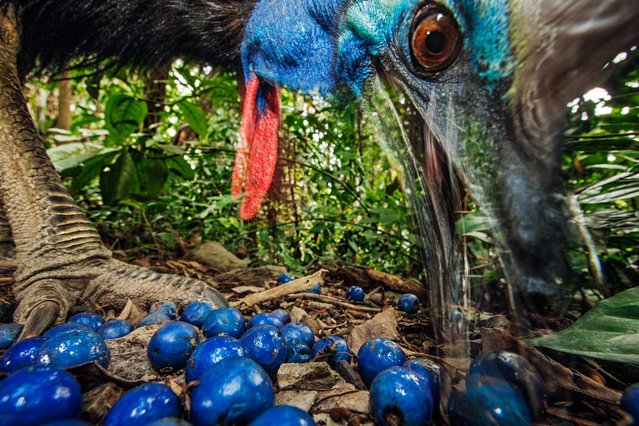
“Cassowaries are large, flightless birds related to emus and (more distantly) to ostriches, rheas, and kiwis”, writes Olivia Judson in the September issue of National Geographic magazine. (Photo by Christian Ziegler/National Geographic)

“Cassowaries are large, flightless birds related to emus and (more distantly) to ostriches, rheas, and kiwis”, writes Olivia Judson in the September issue of National Geographic magazine. How large? People-size: Adult males stand well over five foot five and top 110 pounds. Females are even taller, and can weigh more than 160 pounds. Dangerous when roused, they’re shy and peaceable when left alone. But even birds this big and tough are prey to habitat loss. The dense New Guinea and Australia rain forests where they live have dwindled. Today cassowaries might number 1,500 to 2,000. And because they help shape those same forests – by moving seeds from one place to another – “if they vanish”, Judson writes, “the structure of the forest would gradually change” too. (Photo by Christian Ziegler/National Geographic)
Details
06 Jan 2014 12:21:00
Visitors look up at mock-ups of dinosaur skeletons inside the Museum of Natural History in Pyongyang on September 28, 2016. (Photo by Ed Jones/AFP Photo)

Visitors look up at mock-ups of dinosaur skeletons inside the Museum of Natural History in Pyongyang on September 28, 2016. (Photo by Ed Jones/AFP Photo)
Details
29 Sep 2016 09:28:00
A woman smokes marijuana during a Global March for Marijuana in Medellin, Colombia, May 5, 2018. (Photo by Fredy Builes/Reuters)

A woman smokes marijuana during a Global March for Marijuana in Medellin, Colombia, May 5, 2018. The annual Global Marijuana March is taking place in over 100 cities across the world in an effort to raise awareness of the benefits of medical cannabis and to call for the legalization of marijuana. (Photo by Fredy Builes/Reuters)
Details
07 May 2018 08:28:00