Loading...
Done
Two revelers dressed as toy soldiers gesture toward a police officer in a patrol car during the traditional carnival parade in Wuerzburg, Germany, 15 February 2015. Under the motto “Carnival Parade is cool” about 160 groups with over 3,000 members took part in one of the biggest carnival parades in southern Germany. (Photo by Daniel Karmann/EPA)

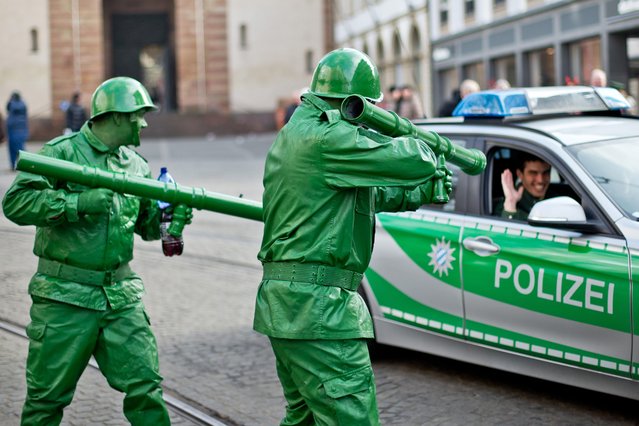
Two revelers dressed as toy soldiers gesture toward a police officer in a patrol car during the traditional carnival parade in Wuerzburg, Germany, 15 February 2015. Under the motto “Carnival Parade is cool” about 160 groups with over 3,000 members took part in one of the biggest carnival parades in southern Germany. (Photo by Daniel Karmann/EPA)
Details
21 Feb 2015 11:31:00
Football Soccer, England vs Wales, EURO 2016, Group B, Stade Bollaert-Delelis, Lens, France on June 16, 2016. Soccer fan Laura Woods from England fixes her makeup near riot police near the Lens stadium before the England vs Wales  game. (Photo by Wolfgang Rattay/Reuters)

Football Soccer, England vs Wales, EURO 2016, Group B, Stade Bollaert-Delelis, Lens, France on June 16, 2016. Soccer fan Laura Woods from England fixes her makeup near riot police near the Lens stadium before the England vs Wales game. (Photo by Wolfgang Rattay/Reuters)
Details
17 Jun 2016 13:57:00
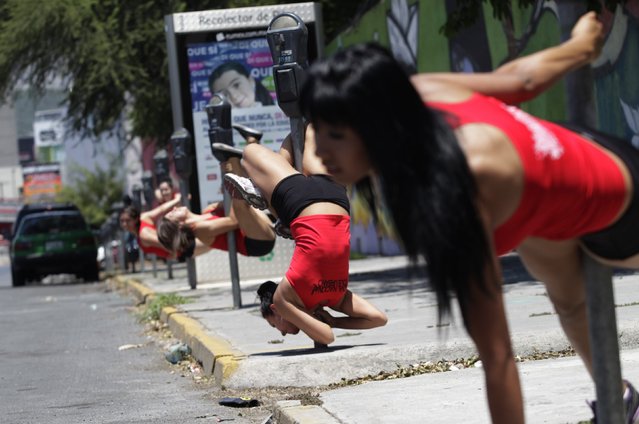
Women perform a pole dancing routine during the national day celebration of “Urban Pole” dance along a street in Monterrey, Mexico, on June 9, 2013. (Photo by Daniel Becerril/Reuters)

Women perform a pole dancing routine during the national day celebration of “Urban Pole” dance along a street in Monterrey, Mexico, on June 9, 2013. (Photo by Daniel Becerril/Reuters)
Details
15 Jun 2013 11:21:00


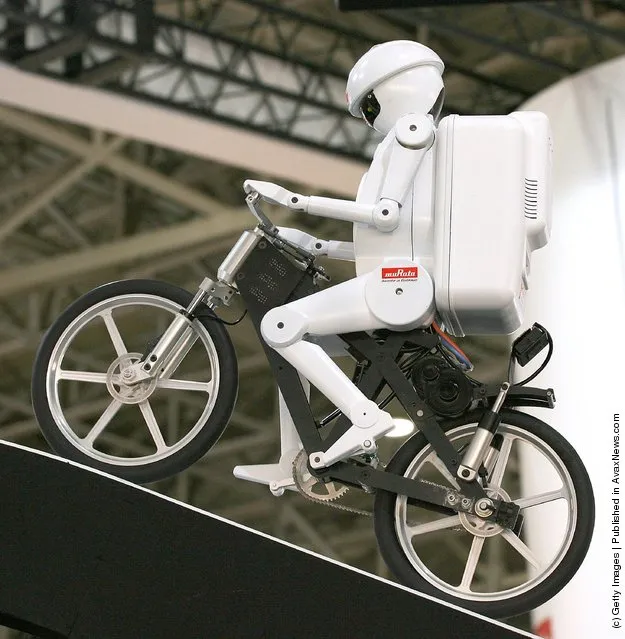
Japan's electronics equipment maker MuRata Manufacturing Co., Ltd's showcased their bicycle-riding robot “MuRata Boy” during the CEATEC Japan 2006 exhibition on October 3, 2006 in Chiba, Japan. The “MuRata Boy” robot can ride up a 25-degree slope, stop without losing its balance and make an S-curve without falling. (Photo by Koichi Kamoshida/Getty Images)
Details
14 May 2011 13:41:00
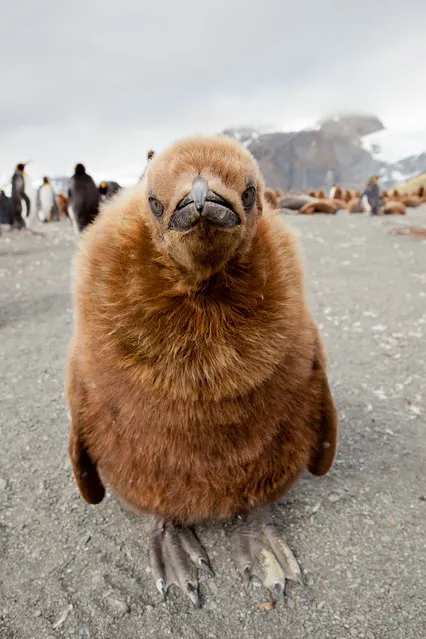
“Cub”. In the colony of penguins in South Georgia. (Photo and caption by Ondrej Zaruba/National Geographic Traveler Photo Contest)

“Cub”. In the colony of penguins in South Georgia. (Photo and caption by Ondrej Zaruba/National Geographic Traveler Photo Contest)

ATTENTION! All pictures are presented in high resolution. To see Hi-Res images – just TWICE click on any picture. In other words, click small picture – opens the BIG picture. Click BIG picture – opens VERY BIG picture.
Details
28 Jun 2013 12:32:00
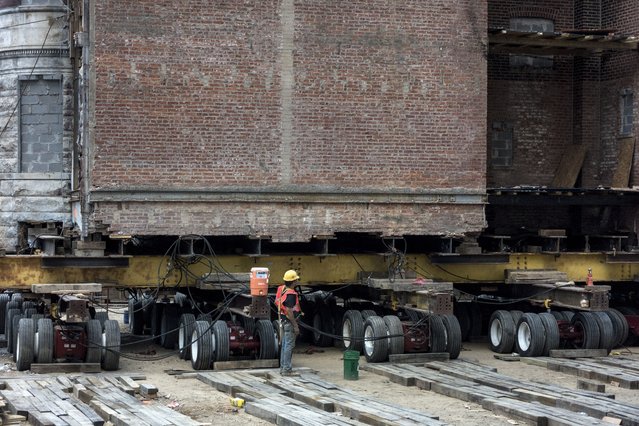
A worker stands by a historic building as it is moved down the block on wheels on New York Avenue to make way for a new construction July 28, 2014 in Washington, DC. (Photo by Brendan Smialowski/AFP Photo)

A worker stands by a historic building as it is moved down the block on wheels on New York Avenue to make way for a new construction July 28, 2014 in Washington, DC. A team from Expert House Movers have been moving the historic building near 4th Street which is one of the largest structures in the DC area to be moved. (Photo by Brendan Smialowski/AFP Photo)
Details
31 Jul 2014 09:48:00
Austrian Boy  And Marmots

AUSTRIA — A nature-loving family says their 8-year-old boy has become friends with some of the Austrian Alps’ shiest creatures.
Details
13 Feb 2013 10:11:00
Soap Bubble Structures by Kym Cox. Bubbles optimise space and minimise their surface area for a given volume of air. This phenomenon makes them a useful tool in many areas of research, in particular, materials science and ‘packing’ – how things fit together. Bubble walls drain under gravity, thin at the top, thick at the bottom, which interferes with travelling lightwaves to create bands of colour. Black spots show the wall is too thin for interference colours, indicating the bubble is about to burst. (Photo by Kym Cox/2019 Science Photographer of the Year/RPS)

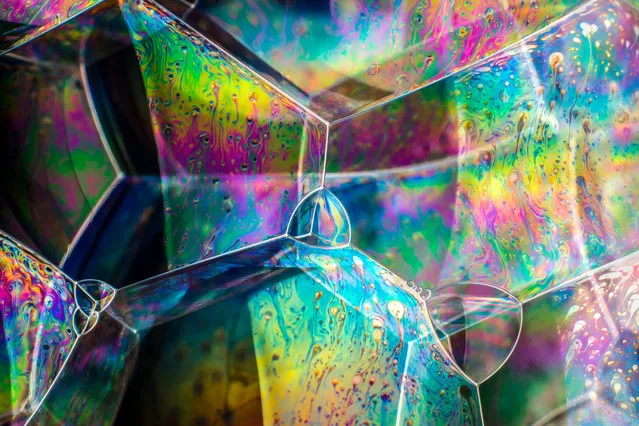
Soap Bubble Structures by Kym Cox. Bubbles optimise space and minimise their surface area for a given volume of air. This phenomenon makes them a useful tool in many areas of research, in particular, materials science and “packing” – how things fit together. Bubble walls drain under gravity, thin at the top, thick at the bottom, which interferes with travelling lightwaves to create bands of colour. Black spots show the wall is too thin for interference colours, indicating the bubble is about to burst. (Photo by Kym Cox/2019 Science Photographer of the Year/RPS)
Details
15 Aug 2019 00:03:00