Loading...
Done
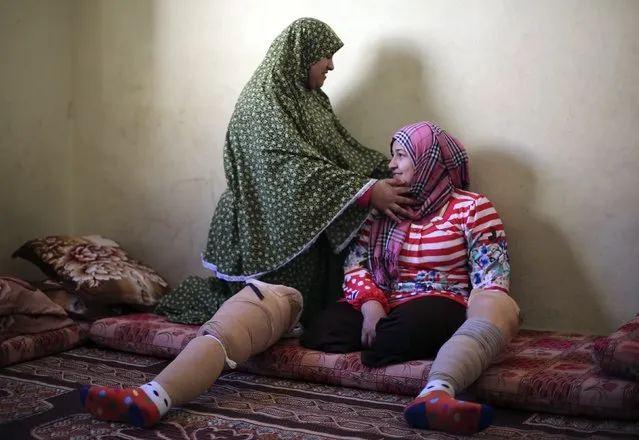
Palestinian girl Manar Al-Shinbari (R), 15, who lost her both legs by what medics said was Israeli shelling at a UN-run school where she was taking refuge during the 50-day war last summer, is helped by her sister to put on her headscarf in an apartment in Jabaliya refugee camp in the northern Gaza Strip January 13, 2015. (Photo by Mohammed Salem/Reuters)

Palestinian girl Manar Al-Shinbari (R), 15, who lost her both legs by what medics said was Israeli shelling at a UN-run school where she was taking refuge during the 50-day war last summer, is helped by her sister to put on her headscarf in an apartment in Jabaliya refugee camp in the northern Gaza Strip January 13, 2015. Manar's mother and three of her brothers were killed in the same incident. The girl's family house was destroyed by Israeli shelling during the war. (Photo by Mohammed Salem/Reuters)
Details
14 Jan 2015 12:34:00
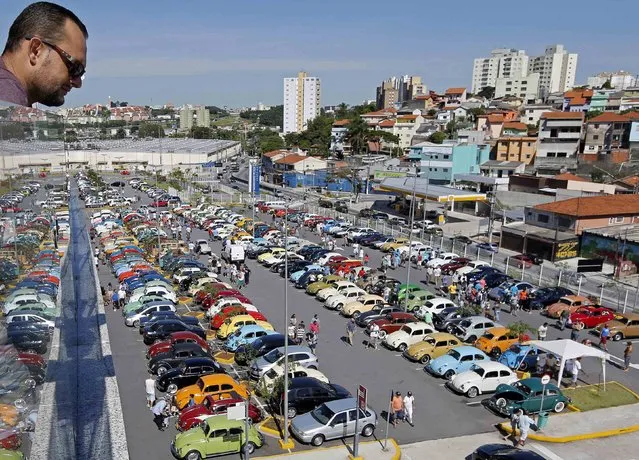
A visitor looks down from a terrace at a Volkswagen Beetle owners' meeting in Sao Bernardo do Campo January 25, 2015. Around 1000 Volkswagen Beetle cars took part in this event as part of celebrations marking Brazil's annual National Volkswagen Beetle day, which falls on January 20. (Photo by Paulo Whitaker/Reuters)

A visitor looks down from a terrace at a Volkswagen Beetle owners' meeting in Sao Bernardo do Campo January 25, 2015. Around 1000 Volkswagen Beetle cars took part in this event as part of celebrations marking Brazil's annual National Volkswagen Beetle day, which falls on January 20. (Photo by Paulo Whitaker/Reuters)
Details
26 Jan 2015 11:36:00
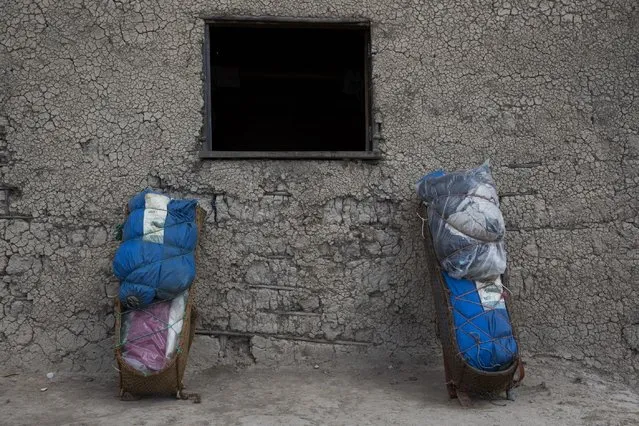
Indigenous woven backpacks called guayare are seen in front of a house in Paraitepui village, before a walking excursion to Mount Roraima, near Venezuela's border with Brazil January 13, 2015. A mysterious table-topped mountain on the Venezuela-Brazil border that perplexed 19th century explorers and inspired “The Lost World” novel is attracting ever more modern-day adventurers. (Photo by Carlos Garcia Rawlins/Reuters)

Indigenous woven backpacks called guayare are seen in front of a house in Paraitepui village, before a walking excursion to Mount Roraima, near Venezuela's border with Brazil January 13, 2015. A mysterious table-topped mountain on the Venezuela-Brazil border that perplexed 19th century explorers and inspired “The Lost World” novel is attracting ever more modern-day adventurers. (Photo by Carlos Garcia Rawlins/Reuters)
Details
04 Feb 2015 12:09:00
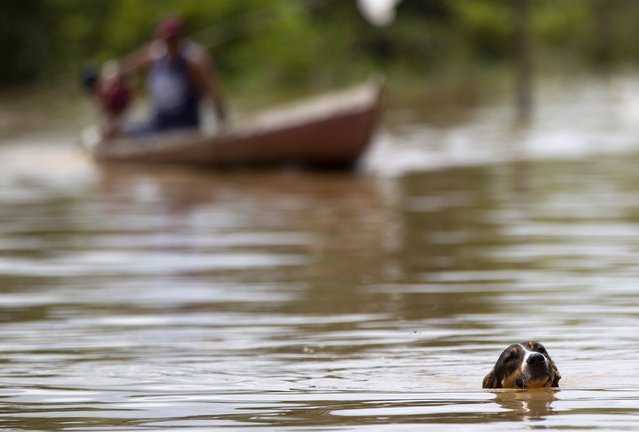
A dog swims as a resident navigates his boat in a neighbourhood flooded by the Purus river, which continues to rise from days of heavy rainfall in the region, in Boca do Acre, Amazonas state March 14, 2015. According the state civil defense, more than 20,000 people have been left homeless along the Purus river, where incessant rains have flooded the area and caused the river to burst their banks. (Photo by Bruno Kelly/Reuters)

A dog swims as a resident navigates his boat in a neighbourhood flooded by the Purus river, which continues to rise from days of heavy rainfall in the region, in Boca do Acre, Amazonas state March 14, 2015. According the state civil defense, more than 20,000 people have been left homeless along the Purus river, where incessant rains have flooded the area and caused the river to burst their banks. (Photo by Bruno Kelly/Reuters)
Details
16 Mar 2015 10:33:00
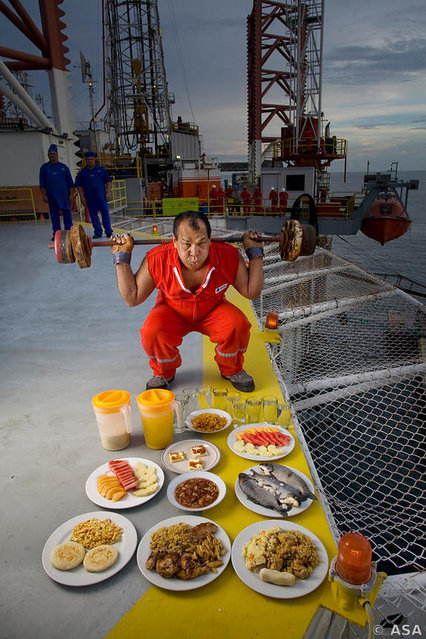
What the World Eats By Peter Menzel And Faith D'Aluisio Part 1

A stunning photographic collection featuring portraits of people from 30 countries and the food they eat in one day. In this fascinating study of people and their diets, 80 profiles are organized by the total number of calories each person puts away in a day. Featuring a Japanese sumo wrestler, a Massai herdswoman, world-renowned Spanish chef Ferran Adria, an American competitive eater, and more, these compulsively readable personal stories also include demographic particulars, including age, activity level, height, and weight. Essays from Harvard primatologist Richard Wrangham, journalist Michael Pollan, and others discuss the implications of our modern diets for our health and for the planet. This compelling blend of photography and investigative reportage expands our understanding of the complex relationships among individuals, culture, and food.
Details
23 Apr 2014 14:34:00
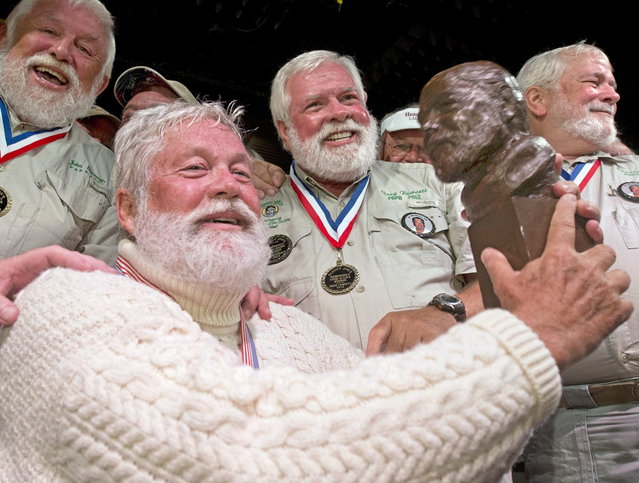
Wally Collins holds a bust of author Ernest Hemingway after winning the 2014 “Papa” Hemingway Look-Alike Contest in this handout photo provided by the Florida Keys News Bureau at Sloppy Joe's Bar in Key West, Florida July 19, 2014. Collins, a Phoenix resident, won the title on his sixth try during the event that was the highlight of Key West's annual Hemingway Days festival. (Photo by Andy Newman/Reuters/Florida Keys News Bureau)

Wally Collins holds a bust of author Ernest Hemingway after winning the 2014 “Papa” Hemingway Look-Alike Contest in this handout photo provided by the Florida Keys News Bureau at Sloppy Joe's Bar in Key West, Florida July 19, 2014. Collins, a Phoenix resident, won the title on his sixth try during the event that was the highlight of Key West's annual Hemingway Days festival. (Photo by Andy Newman/Reuters/Florida Keys News Bureau)
Details
22 Jul 2014 11:48:00
Ebiowei, 48, carries an empty oil container on his head to a place where it would be filled with refined fuel at an illegal refinery site near river Nun in Nigeria's oil state of Bayelsa November 27, 2012. (Photo by Akintunde Akinleye/Reuters)

Ebiowei, 48, carries an empty oil container on his head to a place where it would be filled with refined fuel at an illegal refinery site near river Nun in Nigeria's oil state of Bayelsa November 27, 2012. Locals in the industry say workers can earn $50 to $60 a day. Thousands of people in Nigeria engage in a practice known locally as “oil bunkering” – hacking into pipelines to steal crude then refining it or selling it abroad. The practice, which leaves oil spewing from pipelines for miles around, managed to lift around a fifth of Nigeria's two million barrel a day production last year according to the finance ministry. (Photo by Akintunde Akinleye/Reuters)
Details
18 Jan 2013 14:29:00
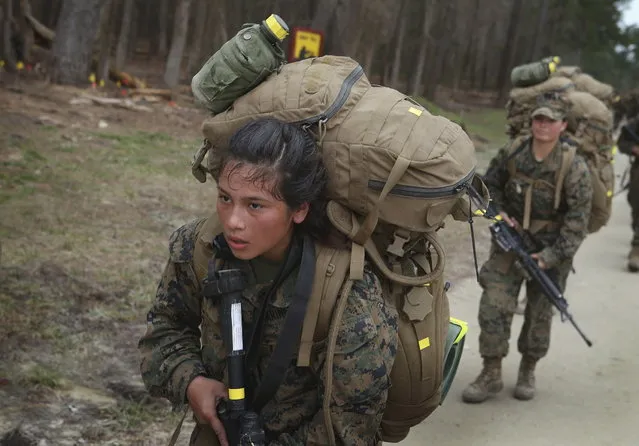
Marines finish a 10 kilometer training hike carrying 55 pound (25 kg) packs during Marine Combat Training (MCT) on February 22, 2013 at Camp Lejeune, North Carolina. Since 1988 all non-infantry enlisted male Marines have been required to complete 29 days of basic combat skills training at MCT after graduating from boot camp. MCT has been required for all enlisted female Marines since 1997. About six percent of enlisted Marines are female. (Photo by Scott Olson/AFP Photo)

Marines finish a 10 kilometer training hike carrying 55 pound (25 kg) packs during Marine Combat Training (MCT) on February 22, 2013 at Camp Lejeune, North Carolina. Since 1988 all non-infantry enlisted male Marines have been required to complete 29 days of basic combat skills training at MCT after graduating from boot camp. MCT has been required for all enlisted female Marines since 1997. About six percent of enlisted Marines are female. (Photo by Scott Olson/AFP Photo)
Details
01 Mar 2013 13:35:00