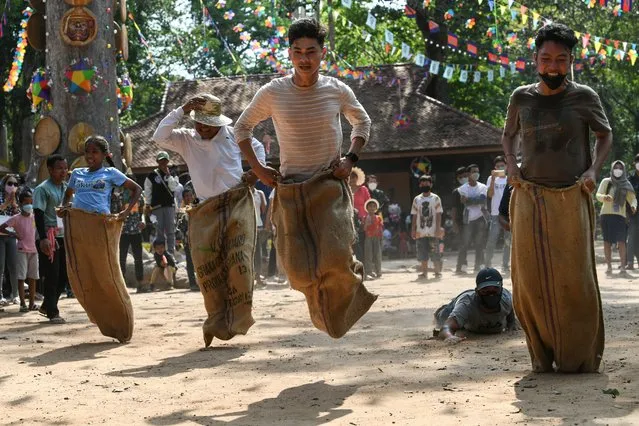
People hop in sacks during Khmer New Year celebrations at Chau Say Tevoda temple in Siem Reap province on April 14, 2022. (Photo by Tang Chhin Sothy/AFP Photo)
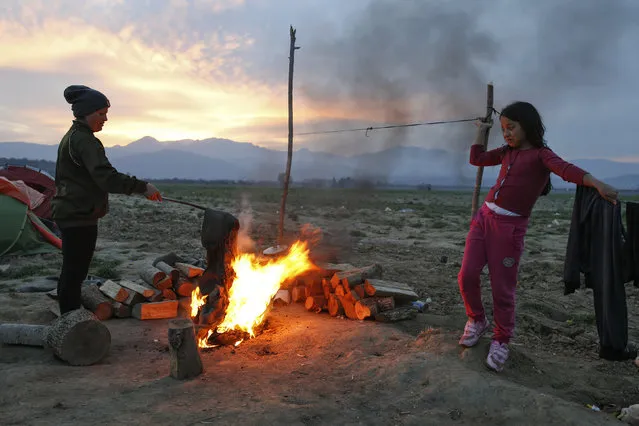
A woman and a child make a bonfire at a makeshift camp for migrants and refugees at the Greek-Macedonian border near the village of Idomeni, Greece, April 1, 2016. (Photo by Marko Djurica/Reuters)
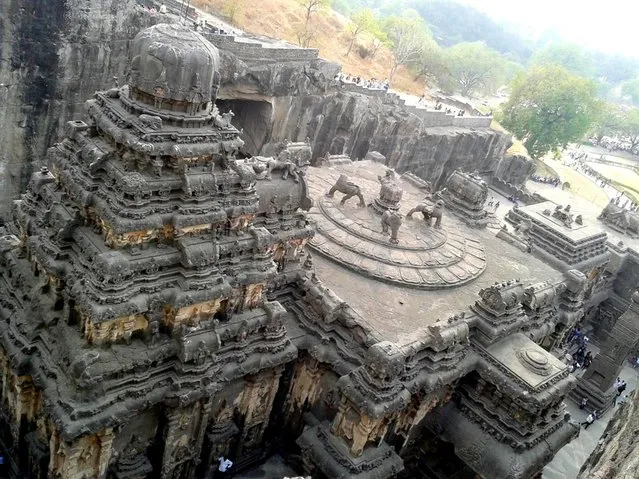
Ellora is an archaeological site, 29 km (18 mi) North-West of the city of Aurangabad in the Indian state of Maharashtra built by the Rashtrakuta dynasty. It is also known as Elapura (in the Rashtrakuta literature-Kannada).
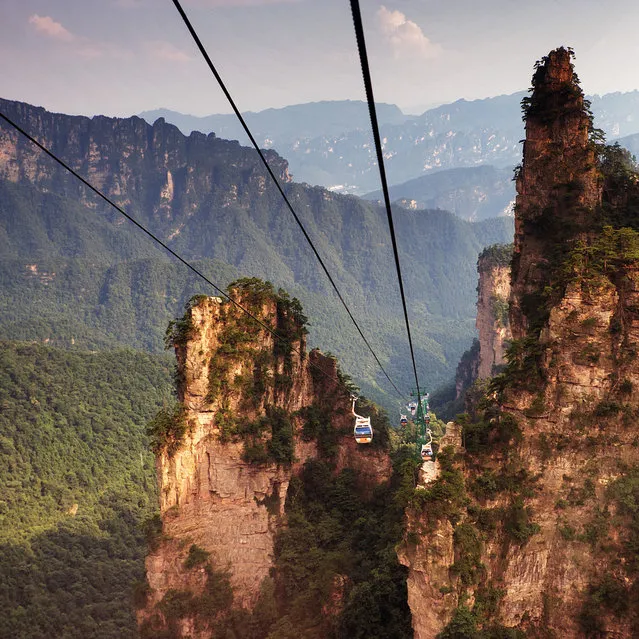
The Zhangjiajie National Forest Park is a unique national forest park located in Zhangjiajie City in northern Hunan Province in the People's Republic of China. It is one of several national parks within the Wulingyuan Scenic Area.
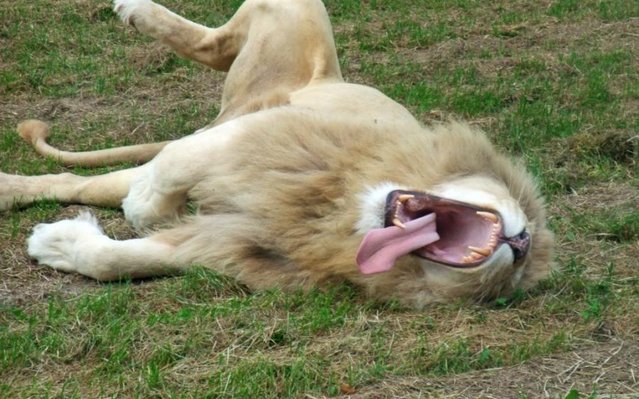
In animals, yawning can serve as a warning signal. For example, Charles Darwin, in his book The Expression of the Emotions in Man and Animals, mentioned that baboons yawn to threaten their enemies, possibly by displaying large canine teeth. Similarly, Siamese fighting fish yawn only when they see a conspecific (same species) or their own mirror-image, and their yawn often accompanies aggressive attack. Guinea pigs also yawn in a display of dominance or anger, displaying their impressive incisor teeth. This is often accompanied by teeth chattering, purring and scent marking.
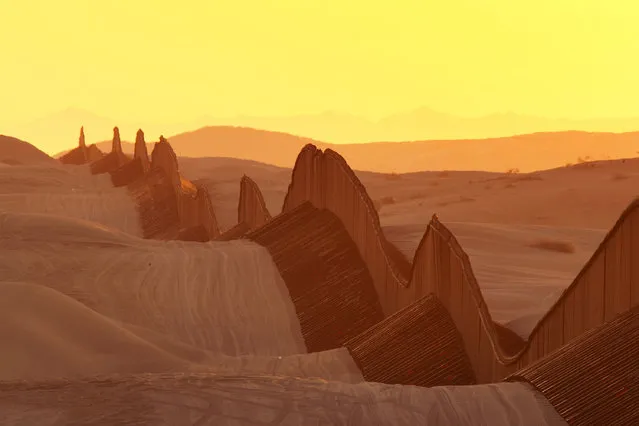
The Mexico – United States barrier – also known in the United States as the border fence, rotted fence or border wall – is actually several separation barriers designed to prevent illegal movement across the Mexico – United States border.
Actress Oh In-Hae and director Ahn Sang-Su arrives for the opening ceremony of the 16th Busan International Film Festival (BIFF) during the press conference at the Busan Cinema Center on October 6, 2011 in Busan, South Korea. The biggest film festival in Asia showcases 307 films from 70 countries and runs from October 6-14. (Photo by Chung Sung-Jun/Getty Images)
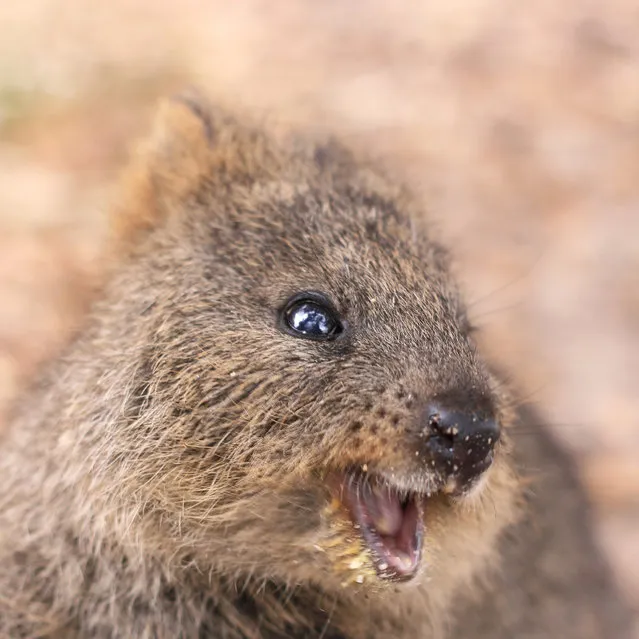
The quokka the only member of the genus Setonix, is a small macropod about the size of a domestic cat. Like other marsupials in the macropod family (such as the kangaroos and wallabies), the quokka is herbivorous and mainly nocturnal.