Loading...
Done


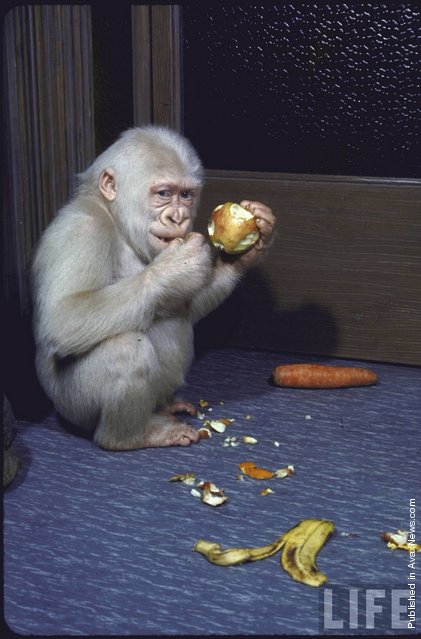
“Snowflake (c. 1964 – November 24, 2003) was an albino gorilla. He was the only known albino gorilla so far, and the most popular resident of the Barcelona Zoo in Catalonia, Spain. Originally named Nfumu Ngui in Fang language ("white gorilla") by his captor, he was then nicknamed Floquet de Neu (Catalan for little snowflake) by his keeper Jordi Sabater Pi. On his arrival to Barcelona where he was given an official reception by the then Mayor of Barcelona, Josep Maria de Porcioles, in November 1966, he was called Blancanieves (“Snow White”) in the newspaper Tele/Exprés. But he became famous with the name given to him by Sabater when National Geographic Magazine featured him on the main page in March 1967, with the English name Snowflake. This name spread among the press (Stern, Life, Paris-Match) and was later translated to Spanish as Copito de Nieve. Sabater himself called the gorilla Floquet or Copi, and in the later years Nfumu. The asteroid 95962 Copito, discovered by Catalan astronomer J. Manteca, is named in his honour”.
Details
07 Mar 2011 15:50:00
Photographers: Jim Fiscus

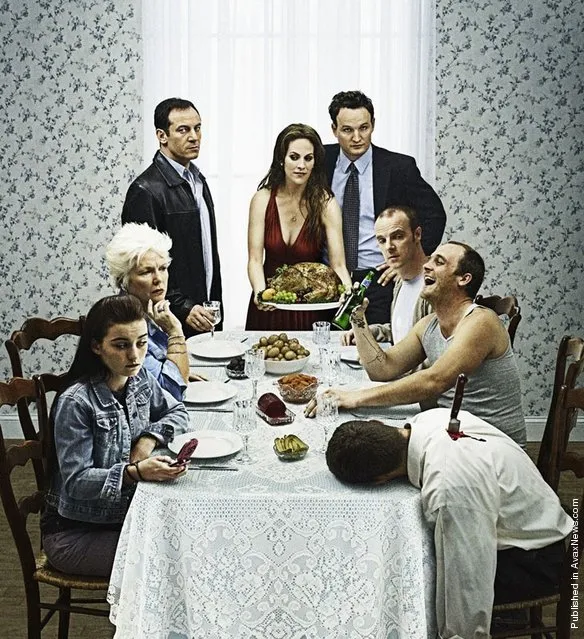
“Jim Fiscus is an American photographer specializing in editorial and advertising photography, including several highly regarded campaigns for the Showtime series Dexter, starring Michael C. Hall. Fiscus, who is based in Athens, Georgia, has won many awards for his work, including at the 2005 International Photo Awards for his portraits of hip-hop and R&B artists Jay-Z, Usher, and Outkast. Also in 2005, he was named International Photographer of the Year at the Lucies, and he is the winner of the 2008 International Aperture Award for his photograph of English chef and best-selling cookbook author Jamie Oliver, commissioned by Channel 4 in the U.K. In 2009, his photographic novella, “The Unfortunate Moment of Misunderstanding”, was displayed at Industrial Color’s M Project Gallery in New York in June 2009”. – Wikipedia
Details
03 Apr 2012 11:05:00
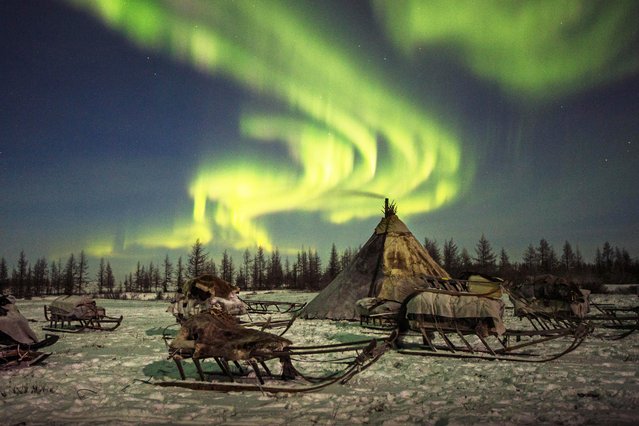
An empty camp is shown beneath a colourful sky in Siberia, December 2016. (Photo by Timothy Allen/Barcroft Productions)

A British photographer has captured life at the “edge of the world”. Timothy Allen, best known for his work on BBC's Human Planet, trekked through the freezing Siberian wilderness for 16 days as he joined part of an 800km migration of reindeer in the Yamal-Nenets region – a name that roughly translates to “edge of the world”. The stunning pictures feature the nomadic Nenets tribe, who drink blood to survive in -45°C temperatures. Timothy's epic journey, which will be revealed in an eight-minute documentary on Animal Planet USA, saw him travel across the bleak terrain of the frozen Ob River with the Nenets people in December last year. Here: An empty camp is shown beneath a colourful sky in Siberia, December 2016. (Photo by Timothy Allen/Barcroft Productions)
Details
19 Sep 2017 07:48:00
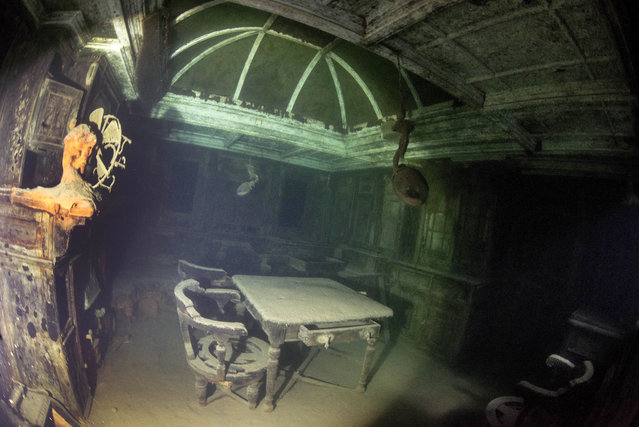
Not many divers visit the Gunilda, due to its remote location, depths of 270 feet, and chilly (38 degrees F/3 degrees C) temperatures. (Photo by Becky Kagan Schott/Caters News Agency)

These stunning images reveal the remains of a more than century-old sunken ship that has been preserved beneath freezing Lake Superior. The ship looks almost exactly the same as it did the day it sunk beneath waves all those years ago. At 60 meters long (approximately 198 feet), the «Gunilda» sunk after it struck some rocks and was not saved. Now, these stunning images have been captured 107 years after the sinking when a small group of divers revisited the vessel. (Photo by Becky Kagan Schott/Caters News Agency)
Details
25 Apr 2018 00:01:00
A worker looks at an old soviet tank T-34 (L) as he fixes military vehicle (R) at a Phaeton museum in Zaporizhia, Ukraine, August 11, 2015. (Photo by Gleb Garanich/Reuters)

A worker looks at an old soviet tank T-34 (L) as he fixes military vehicle (R) at a Phaeton museum in Zaporizhia, Ukraine, August 11, 2015. The museum stopped the restoration works of their collection of about 120 retro autos and motorcycles to help the Ukrainian army to restore military vehicles and equipment which will be used in the conflict in Ukraine eastern regions. (Photo by Gleb Garanich/Reuters)
Details
12 Aug 2015 12:54:00
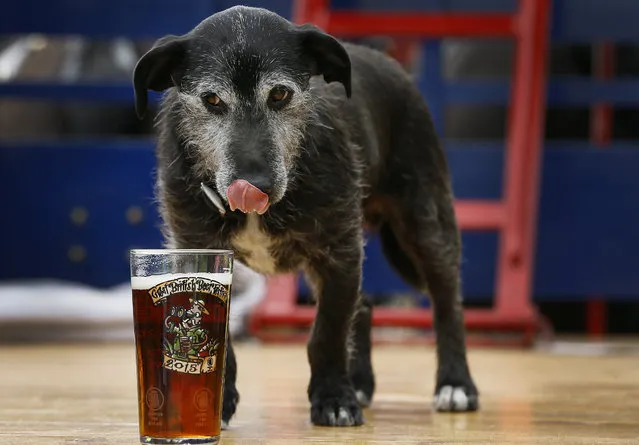
Barny, the Harveys Brewery  dog has a sniff of a pint of beer at the Great British Beer Festival, at Olympia in London, Tuesday, August 11, 2015. The five day event is organised by the Campaign for Real Ale (CAMRA), with over 900 real ales, ciders, perries and international beers on offer. (Photo by Kirsty Wigglesworth/AP Photo)

Barny, the Harveys Brewery dog has a sniff of a pint of beer at the Great British Beer Festival, at Olympia in London, Tuesday, August 11, 2015. The five day event is organised by the Campaign for Real Ale (CAMRA), with over 900 real ales, ciders, perries and international beers on offer. (Photo by Kirsty Wigglesworth/AP Photo)
Details
14 Aug 2015 13:12:00
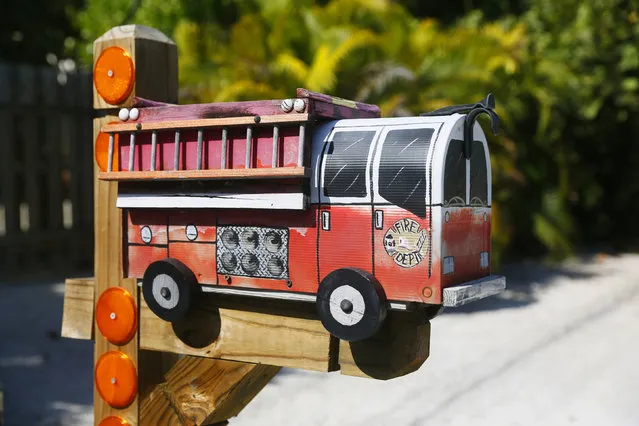
A mailbox in the shape of a fire truck is seen along the highway US-1 in the Lower Keys near Marathon in Florida, July 11, 2014. (Photo by Wolfgang Rattay/Reuters)

The Florida Keys are famous for their diving, but they are less well known for another quirky attraction: the mailboxes residents use to decorate their driveways. From a fiberglass manatee in lipstick to a small white church, Reuters photographer Wolfgang Rattay documented this unusual aspect of local culture as he drove along the Ocean Highway that connects the islands. Photo: A mailbox in the shape of a fire truck is seen along the highway US-1 in the Lower Keys near Marathon in Florida, July 11, 2014. (Photo by Wolfgang Rattay/Reuters)
Details
03 Aug 2014 07:25:00
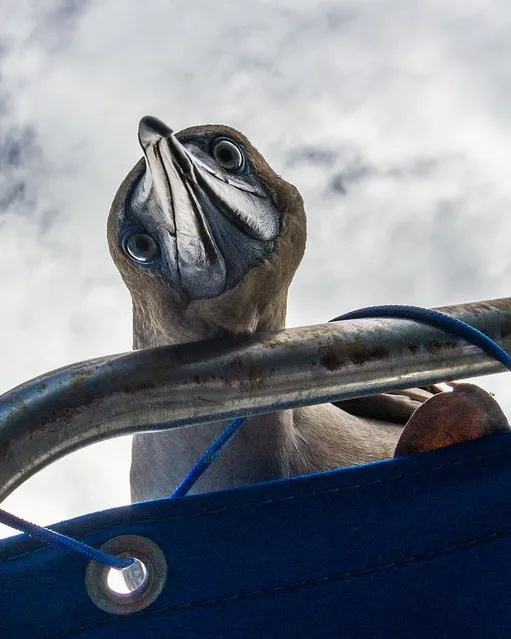
“Close-up. We had a juvenile Red-Footed Booby come visit us on the sun deck. I got some closeups with my ultrawide 11-16mm Tokina”. (Photo by Carl Fredrickson)

Situated in the Pacific Ocean some 620 miles (1,000 km) from the South American continent, these 19 islands and the surrounding marine reserve have been called a unique “living museum and showcase of evolution”. Photo: “Close-up. We had a juvenile Red-Footed Booby come visit us on the sun deck. I got some closeups with my ultrawide 11-16mm Tokina”. (Photo by Carl Fredrickson)
Details
04 Sep 2013 11:49:00