Loading...
Done
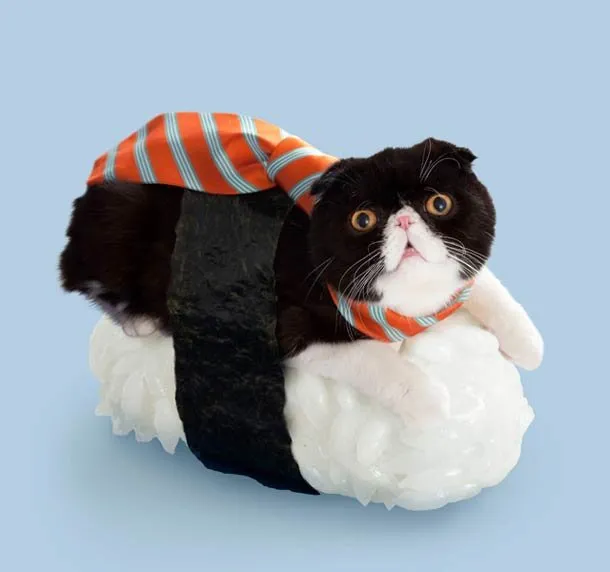
Sushi Cats By Tange & Nakimushi Peanuts

Sushi Cats (originally branded as Neko-Sushi) is a series of photographs created by the Japan-based company Tange & Nakimushi Peanuts. In this series the creators have dressed up a number of cats and placed them on top of oversized balls of sushi rice. The kitties don’t look too happy with what is going on, though they do look adorable in their little outfits. Tange & Nakimushi Peanuts didn’t think that making a set of photos was enough, so they’ve also created an Android and iPhone apps featuring Sushi Cats. Moreover, people living in Japan can visit their website, if they wish to order photo prints, postcards, and other items. (Photo by Tange & Nakimushi Peanuts)
Details
08 Jan 2015 14:14:00
In this photo made late Saturday, August 9, 2014, in Keelung, Taiwan, a traditional Chinese dance troupe performs during a parade marking the beginning of the Chinese folklore's mid-summer's Ghost Month Festival. (Photo by Chiang Ying-ying/AP Photo)

In this photo made late Saturday, August 9, 2014, in Keelung, Taiwan, a traditional Chinese dance troupe performs during a parade marking the beginning of the Chinese folklore's mid-summer's Ghost Month Festival. Fourteen days into the seventh month of the lunar calendar, August 9, in 2014, marks the traditional Chinese Ghost Month where the gates of the underworld are opened and spirits of the deceased are set free to roam the world of the living. The month long festivities are aimed to please the roaming spirits. (Photo by Chiang Ying-ying/AP Photo)
Details
12 Aug 2014 11:57:00
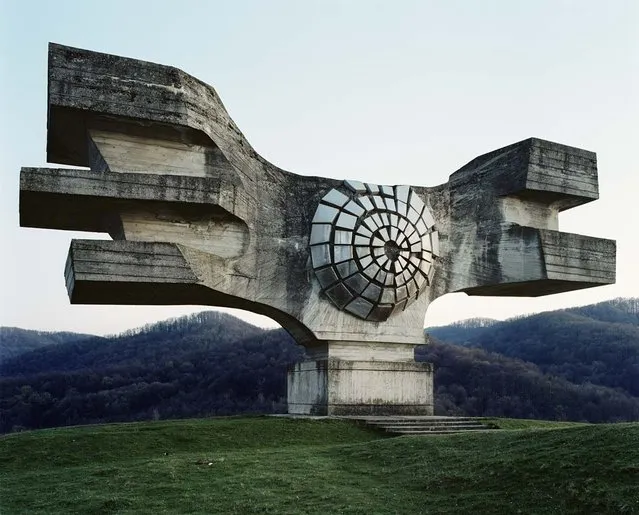
The monument of Ilirska Bistrica was designed by Janez Lenassi and built in 1965. It is dedicated to Slovenian soldiers that fell in World War II. (Photo by Jan Kempenaers)

The brutalist war memorials found throughout the former Yugoslavia were weird enough when they were built in the 1960s and 70s. Today, separated by the end of an architectural movement and the disintegration of the country, they seem almost alien. Belgian photographer Jan Kempenaers treats them purely as artistic objects in his book, “Spomenik”, named for the Serb-Croat word for monument. Known for photographing geographical oddities, Kempenaers was captivated by the spomenik after seeing them in an art encyclopedia. After hearing that many had been destroyed or abandoned, he set out to record what was left. (Photo by Jan Kempenaers)
Details
18 Aug 2014 09:07:00
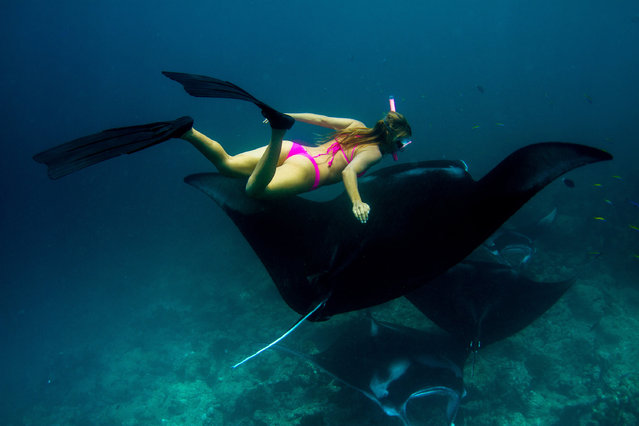
Photos taken by photographer Sarah Lee show the beautiful sight of Manta Rays at night, as they swim with America explorer, Alison Teal. (Photo by Sarah Lee/Caters News Agency)

Photographs show an adventurer swimming with giant Manta Rays at night. In her latest daring adventure, Alison Teal set out in the middle of the night to free dive with Manta Rays off the coast of Hawaii. Using only hand held dive lights, Alison dove over 50 feet down being careful never to touch the mantas as they fed off the plankton in the light streams. Here: Photos taken by photographer Sarah Lee show the beautiful sight of Manta Rays at night, as they swim with America explorer, Alison Teal. (Photo by Sarah Lee/Caters News Agency)
Details
09 Feb 2017 00:01:00
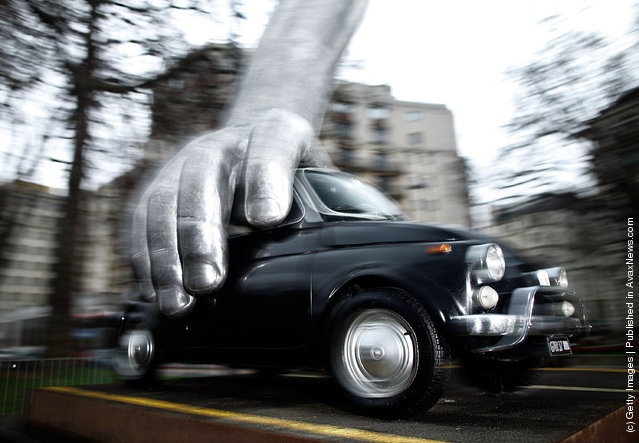
Lorenzo Quinn's Vroom Vroom sculpture

“Lorenzo Quinn (born May 7, 1966) is an Italian artist and sculptor and the fifth son of the actor Anthony Quinn. By the age of 21 he gained the respect of the New York art community when he was commissioned to make an art work for the United Nations of which a stamp was later made. Quinn was later selected to head the Absolut Vodka ad campaign for which only top international artists are chosen”. – Wikipedia

Photo: Lorenzo Quinn's Vroom Vroom sculpture is installed in its new setting on Park Lane on January 23, 2011 in London, England. The four-metre high sculpture, consists of a vintage Fiat 500, the first car that the sculptor ever bought, grasped by an oversized aluminium child's hand modelled from Quinn's son. The exhibition has previously been displayed in Valencia and Abu Dhabi. (Photo by Matthew Lloyd/Getty Images for Halcyon Gallery)
Details
22 Aug 2011 12:30:00
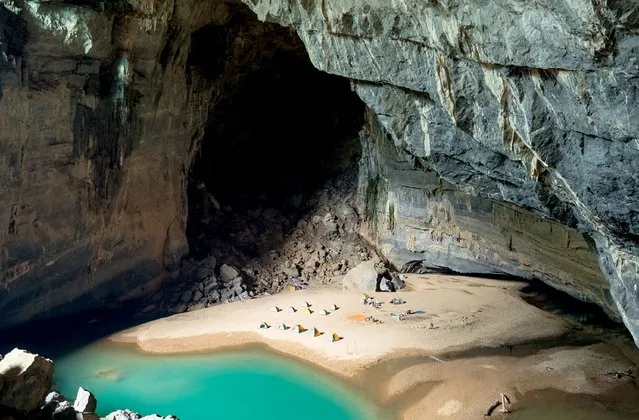
These breathtaking images capture the hidden depths of one of the worlds largest caves, which is so big its home to a beach, a river and a jungle. At more than 130m high, and 150m across, the imposing cave is so big as high as the London Eye and wider than one-and-a-half football pitches. (Photo by Lars Krux/Caters News)

These breathtaking images capture the hidden depths of one of the worlds largest caves, which is so big its home to a beach, a river and a jungle. At more than 130m high, and 150m across, the imposing cave is so big as high as the London Eye and wider than one-and-a-half football pitches. Here: The campers set up inside the cave on the beach. (Photo by Lars Krux/Caters News)
Details
07 May 2015 12:25:00
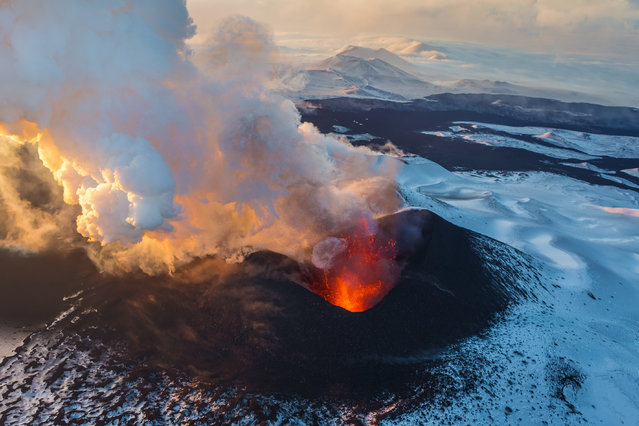
These are the explosive images of some of the world's most ASH-stonishing volcanic eruptions. Spectacular snaps capture lava spewing down the side of Kilauea, ash spitting from craters and plumes of smoke rising thousands of feet in the air. Here: Volcano Plosky Tolbachik, Kamchatcka, Russia. (Photo by Airpano/Caters News)

These are the explosive images of some of the world's most ASH-stonishing volcanic eruptions. Spectacular snaps capture lava spewing down the side of Kilauea, ash spitting from craters and plumes of smoke rising thousands of feet in the air. Russian non-profit AirPano travel the globe taking the breath-taking panoramic images, compiled in this series displaying their most stunning volcanic shoots. Included in the set – which spans four continents – are images from across the United States, Iceland, Russia, Ethiopia and Indonesia. To capture the 360-degree images, AirPano photographers spend around two hours in a helicopter, sending out drones to capture the action below. Here: Volcano Plosky Tolbachik, Kamchatcka, Russia. (Photo by Airpano/Caters News)
Details
15 Jul 2015 10:36:00
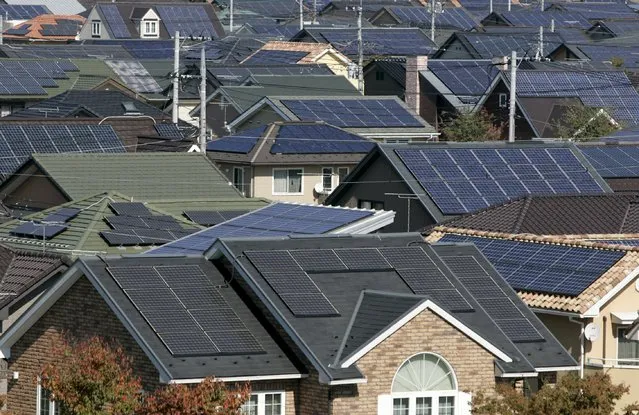
Rooftops of solar powered houses are pictured in Ota, 80 km northwest of Tokyo in this October 28, 2008 file photo. One by one, Japan is turning off the lights at the giant oil-fired power plants that propelled it to the ranks of the world's top industrialised nations. With nuclear power in the doldrums after the Fukushima disaster, it's solar energy that is becoming the alternative. (Photo by Yuriko Nakao/Reuters)

Rooftops of solar powered houses are pictured in Ota, 80 km northwest of Tokyo in this October 28, 2008 file photo. One by one, Japan is turning off the lights at the giant oil-fired power plants that propelled it to the ranks of the world's top industrialised nations. With nuclear power in the doldrums after the Fukushima disaster, it's solar energy that is becoming the alternative. Solar power is set to become profitable in Japan as early as this quarter, according to the Japan Renewable Energy Foundation (JREF), freeing it from the need for government subsidies and making it the last of the G7 economies where the technology has become economically viable. (Photo by Yuriko Nakao/Reuters)
Details
24 Nov 2015 08:04:00