Loading...
Done
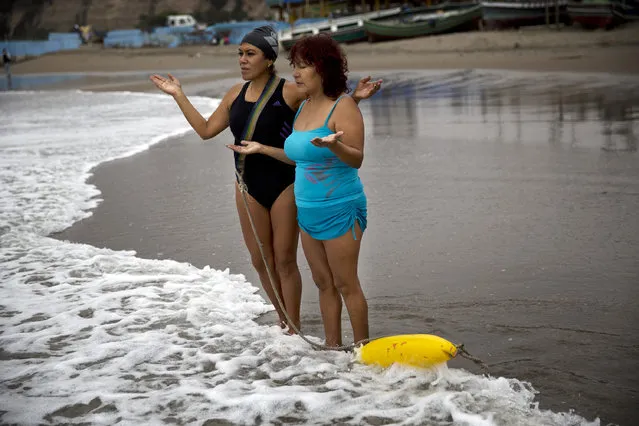
In this May 8, 2015 photo, sisters Zoraida Infante, left, and Graciela Trujillo pray on Fishermen's Beach before therapeutic swimming in the Pacific Ocean in Lima, Peru. Under overcast skies, the bathers practice thalassotherapy, which derives from the Greek “thalasso”, for “sea”, and draws on the ocean's healing properties. (Photo by Rodrigo Abd/AP Photo)

In this May 8, 2015 photo, sisters Zoraida Infante, left, and Graciela Trujillo pray on Fishermen's Beach before therapeutic swimming in the Pacific Ocean in Lima, Peru. Under overcast skies, the bathers practice thalassotherapy, which derives from the Greek “thalasso”, for “sea”, and draws on the ocean's healing properties. (Photo by Rodrigo Abd/AP Photo)
Details
21 May 2015 12:19:00
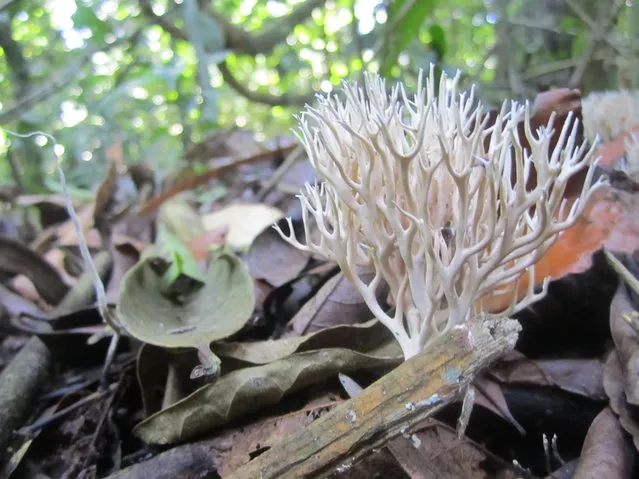
This strange coral-looking specimen is actually a mushroom. The photo, “Beautiful Destroyer”, was taken in the Panamanian tropical rainforest where the mushroom produces nitrogen, an element vital to soil health. (Photo by Sarah A. Batterman)

This strange coral-looking specimen is actually a mushroom. The photo, “Beautiful Destroyer”, was taken in the Panamanian tropical rainforest where the mushroom produces nitrogen, an element vital to soil health. (Photo by Sarah A. Batterman)
Details
13 Aug 2014 09:49:00
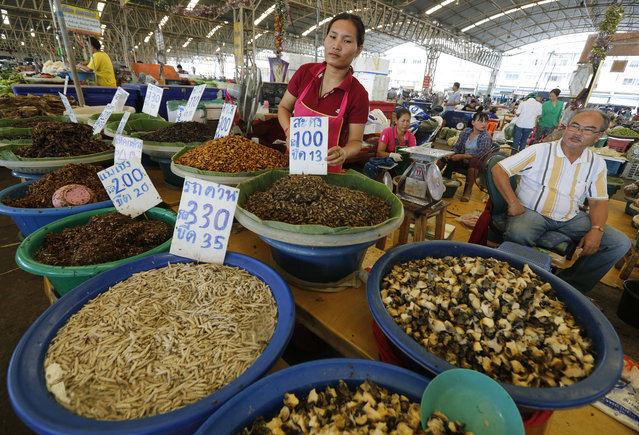
Thai vendors stand next to edible insects for sale at Talad Thai market in Pathum Thani province on the outskirts of Bangkok, Thailand, 15 July 2013. Insects have long been on the menu in Thailand, but academics and the United Nation's Food and Agriculture Organization (FAO) officials are hoping they will become a more common global source of protein and nutrients to meet the need for growing world food requirements in the future. (Photo by Narong Sangnak/EPA)

Thai vendors stand next to edible insects for sale at Talad Thai market in Pathum Thani province on the outskirts of Bangkok, Thailand, 15 July 2013. Insects have long been on the menu in Thailand, but academics and the United Nation's Food and Agriculture Organization (FAO) officials are hoping they will become a more common global source of protein and nutrients to meet the need for growing world food requirements in the future. (Photo by Narong Sangnak/EPA)
Details
22 May 2014 08:51:00
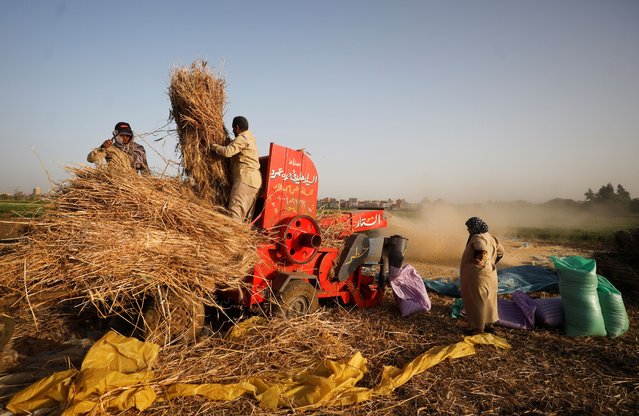
A farmer carries a bundle of wheat after harvesting it from a field in the Gharbia Governorate, as Egypt ramps up efforts to slow the spread of the coronavirus disease (COVID-19), Egypt on May 14, 2020. (Photo by Mohamed Abd El Ghany/Reuters)

A farmer carries a bundle of wheat after harvesting it from a field in the Gharbia Governorate, as Egypt ramps up efforts to slow the spread of the coronavirus disease (COVID-19), Egypt on May 14, 2020. (Photo by Mohamed Abd El Ghany/Reuters)
Details
21 May 2020 00:01:00
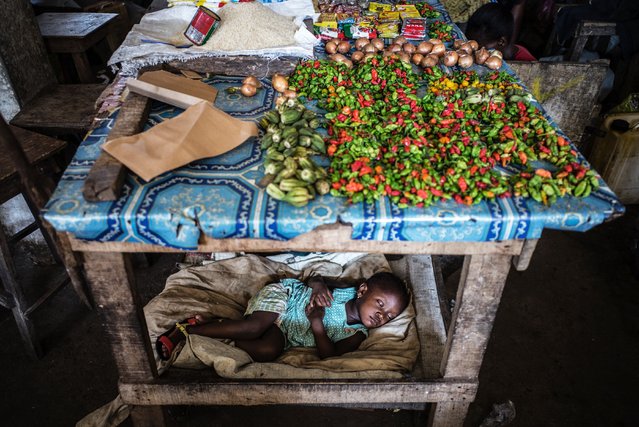
A child sleeps under a table at the Jorkpan market in Sinkor district in Monrovia, on May 2, 2016. (Photo by Marco Longari/AFP Photo)

A child sleeps under a table at the Jorkpan market in Sinkor district in Monrovia, Liberia on May 2, 2016. (Photo by Marco Longari/AFP Photo)
Details
10 May 2016 12:49:00
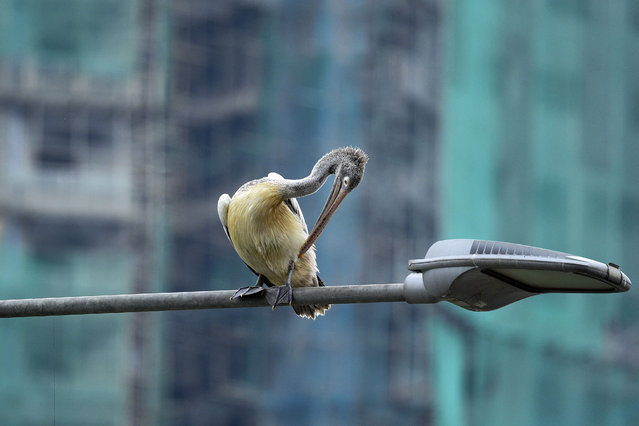
A spot-billed pelican sits on a street light in Colombo on March 16, 2021. (Photo by Ishara S. Kodikara/AFP Photo)

A spot-billed pelican sits on a street light in Colombo on March 16, 2021. (Photo by Ishara S. Kodikara/AFP Photo)
Details
10 Jun 2021 08:11:00
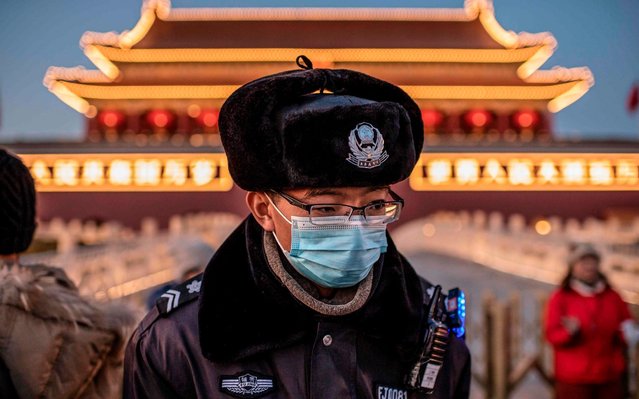
A police officer wearing a protective mask walks past the portrait of late communist leader Mao Zedong (not pictured) at Tiananmen Gate in Beijing on January 23, 2020. Large-scale Lunar New Year events in Beijing have been cancelled as part of national efforts to control the spread of a new SARS-like virus, city authorities announced on January 23. (Photo by Nicolas Asfouri/AFP Photo)

A police officer wearing a protective mask walks past the portrait of late communist leader Mao Zedong (not pictured) at Tiananmen Gate in Beijing on January 23, 2020. Large-scale Lunar New Year events in Beijing have been cancelled as part of national efforts to control the spread of a new SARS-like virus, city authorities announced on January 23. (Photo by Nicolas Asfouri/AFP Photo)
Details
25 Jan 2020 00:03:00
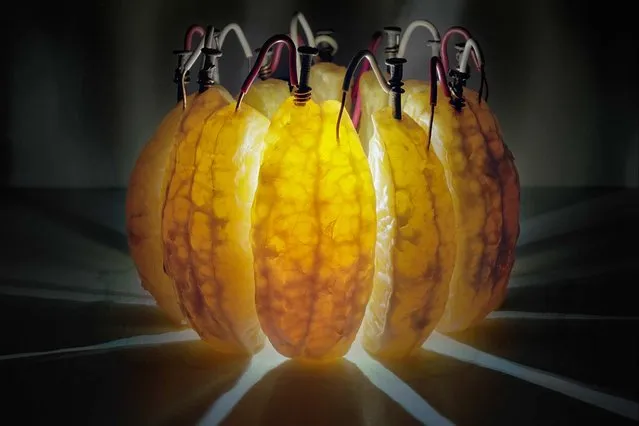
Wedges of an orange generate enough current and electrical juice – 3.5 volts – to power an LED. The fruit’s citric acid helps electrons flow from galvanized nails to copper wire in this 14-hour exposure. This image was published in September’s Visions of Earth, a trio of photos that appear in each issue of National Geographic. (Photo by Caleb Charland/National Geographic)

Wedges of an orange generate enough current and electrical juice – 3.5 volts – to power an LED. The fruit’s citric acid helps electrons flow from galvanized nails to copper wire in this 14-hour exposure. This image was published in September’s Visions of Earth, a trio of photos that appear in each issue of National Geographic. (Photo by Caleb Charland/National Geographic)
Details
06 Jan 2014 12:09:00