Loading...
Done
Taylor's sister, who works in an animal rescue center, found this baby jackdaw who was in need of a little extra love and attention before being released into the wild

Mark Taylor may not have any training as a photographer, but that doesn’t stop him from taking amazing animal photos. From his studio in Southeast England, Taylor has made a big business out of photographing man’s best friends, following in the footsteps of his late mother, Jane Burton. Most of the animals he works with are babies, who are more comfortable in front of the camera than older animals.

Photo: Taylor often uses animals that belonged to friends of his late mother, including this Italian Spinone puppy chewing his tail. Baby animals make ideal subjects, as the older dogs and cats get, the warier they are of spending time in a studio. And his trick for getting this small subject to pose? Dog treats, of course. (Photo by Mark Taylor/Rex Features)
Details
27 Apr 2012 13:45:00
World's Ugliest Dog

It's that time of year again when dogs with unusually large heads, hairless bodies and other oddities compete to be the World's Ugliest Dog. This year's winner? A 2-year-old mutt named Peanut, whose wild white and brown hair, bulging eyes and protruding teeth belie his sweet, energetic personality. Peanut's owner, Holly Chandler of Greenville, North Carolina, says he was seriously burned as a puppy and she wants to use her pet to raise awareness about animal abuse. She plans to use the $1,500 prize to pay for other animals' veterinary bills. The contest, held at the Sonoma-Marin Fairgrounds in Petaluma, California, is in its 26 year. The dogs are scored by a three-judge panel in several categories, including special or unusual attributes, personality and natural ugliness.
Details
24 Jun 2014 10:04:00
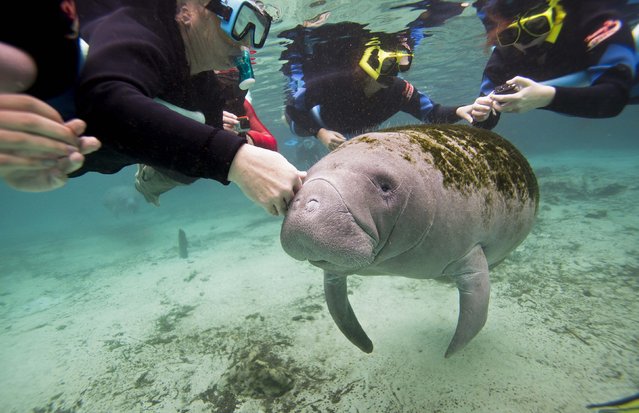
Snorkelers interact with a Florida Manatee inside of the Three Sisters Springs in Crystal River, Florida January 15, 2015. On winter days, Florida manatees flock by the hundreds to the balmy waters of Three Sisters Springs, drawing crowds of snorkelers and kayakers to the U.S. sanctuary, where people may swim with the endangered species. (Photo by Scott Audette/Reuters)

Snorkelers interact with a Florida Manatee inside of the Three Sisters Springs in Crystal River, Florida January 15, 2015. On winter days, Florida manatees flock by the hundreds to the balmy waters of Three Sisters Springs, drawing crowds of snorkelers and kayakers to the U.S. sanctuary, where people may swim with the endangered species. But as tolerant as the gentle, whiskered sea giants can be of the accidental kicks and splashes of delighted tourists, wild life regulators want to ban most canoes and paddle boards and create people-free zones to protect the wintering “sea cow”. Proposed limitations for this winter are awaiting approval by the U.S. Fish and Wildlife Service. (Photo by Scott Audette/Reuters)
Details
22 Jan 2015 13:34:00
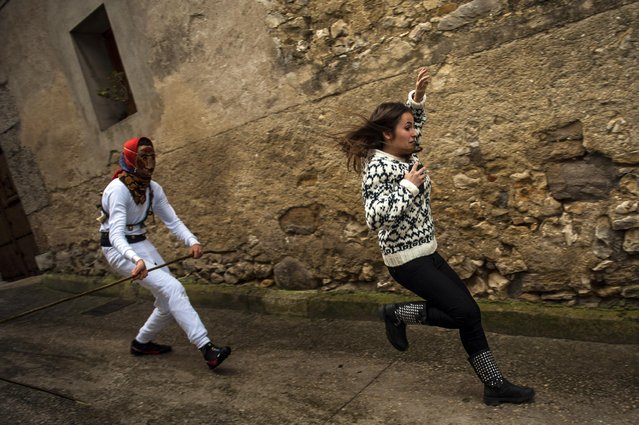
In this photo taken on Sunday, February 15, 2015 a girl runs away from a “Mamuxarro” during the carnival, in the small town of Unanu, northern Spain. While Rio de Janeiro may boast the world’s most famous carnival, the festive period of masquerades and wild and colorful costumes that precedes the Christian religious season of Lent is also a permanent and popular fixture for celebration in Spain and Portugal, with each country having its own strange and unique way of doing it. (Photo by Alvaro Barrientos/AP Photo)

In this photo taken on Sunday, February 15, 2015 a girl runs away from a “Mamuxarro” during the carnival, in the small town of Unanu, northern Spain. In the northern Spanish ancient village of Unamu, people dress up as “Mamuxarro”, folkloric figures in white with a red sash and a metal mask to cover their faces as they pursue townsfolk with sticks. According to custom, their “victims” (usually young women) must kneel and kiss the mamuxarro’s knee after he makes the sign of the cross on their forehead. (Photo by Alvaro Barrientos/AP Photo)
Details
22 Feb 2015 10:51:00
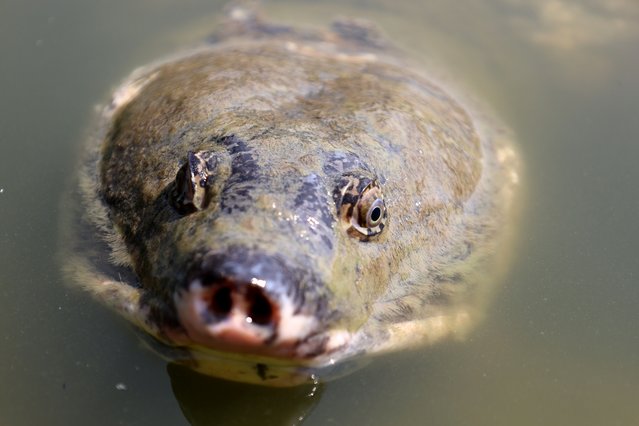
Black softshell turtle or Bostami turtle (Nilssonia nigricans), extremely rare and critically endangered species of tortoise is seen in a pond in Chittagong, Bangladesh on March 1, 2022. For decades, the breeding grounds have shrunk and their habitat has been threatened by habitat pollution. Through conservation methods and protection of the species, some of these turtles can be found today throughout the wild, and scientists and environmental biologists are continuing to work hard to preserve this endangered species and their natural habitat. (Photo by Mohammad Shajahan/Anadolu Agency via Getty Images)

Black softshell turtle or Bostami turtle (Nilssonia nigricans), extremely rare and critically endangered species of tortoise is seen in a pond in Chittagong, Bangladesh on March 1, 2022. For decades, the breeding grounds have shrunk and their habitat has been threatened by habitat pollution. (Photo by Mohammad Shajahan/Anadolu Agency via Getty Images)
Details
26 May 2024 04:02:00
A camel yawns as a tourist checks images on her camera following a ride on a camel safari alongside the Pacific Ocean on Lighthouse Beach, north of Sydney, December 4, 2014. For 25 years camel rides on this beach have given visitors to Australia's holiday coast a rare experience available only in a handful of locations in the country. (Photo by Jason Reed/Reuters)

A camel yawns as a tourist checks images on her camera following a ride on a camel safari alongside the Pacific Ocean on Lighthouse Beach, north of Sydney, December 4, 2014. For 25 years camel rides on this beach have given visitors to Australia's holiday coast a rare experience available only in a handful of locations in the country. Australia's long history with the “ships of the desert” goes back to the 1800s when they were imported from Afghanistan and India for use as transportation across Australia's vast deserts before being released into the wild following their replacement by motorised transport. (Photo by Jason Reed/Reuters)
Details
06 Dec 2014 12:48:00
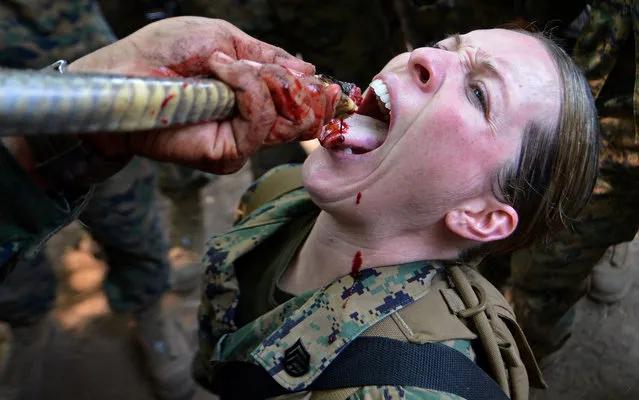
In a military base in the Thai province of Chon Buri February 20 U.S. Marines Navy with Thailand began their studies in jungle survival. The event is held in joint military exercises “Cobra Gold 2013”. During a jungle survival program February 20, 2013 taught by Royal Thai Special Forces in Sannapit, Thailand, U.S. Marines learned to catch cobras and drink their fresh blood, not to mention eat forest insects and pull the heads off of chicken. The training was part of Operation Cobra Gold 13, the 32nd edition of international military exercises hosted by the Thai. According to a U.S. Marines press release, Cobra Gold is the largest exercise of its kind in Asia and incorporates troops from five other nations in addition to the U.S. and Thailand. The Daily Mail reports that the Marines were invited to experience the local custom of drinking cobra blood after being taught to catch and kill cobras in the wild. As CNN notes, Cobra blood is believed to be a panacea and aphrodiasic in parts of Southeast Asia. In Jakarta, vendors can earn over $100 a night selling shots of cobra blood mixed with liquor. (Photo by Pornchai Kittiwongsakul/AFP Photo)

During a jungle survival program February 20, 2013 taught by Royal Thai Special Forces in Sannapit, Thailand, U.S. Marines learned to catch cobras and drink their fresh blood, not to mention eat forest insects and pull the heads off of chicken. The training was part of Operation Cobra Gold 13, the 32nd edition of international military exercises hosted by the Thai. According to a U.S. Marines press release, Cobra Gold is the largest exercise of its kind in Asia and incorporates troops from five other nations in addition to the U.S. and Thailand. The Daily Mail reports that the Marines were invited to experience the local custom of drinking cobra blood after being taught to catch and kill cobras in the wild. As CNN notes, Cobra blood is believed to be a panacea and aphrodiasic in parts of Southeast Asia. In Jakarta, vendors can earn over $100 a night selling shots of cobra blood mixed with liquor. (Photo by Pornchai Kittiwongsakul/AFP Photo)
Details
23 Feb 2013 11:52:00
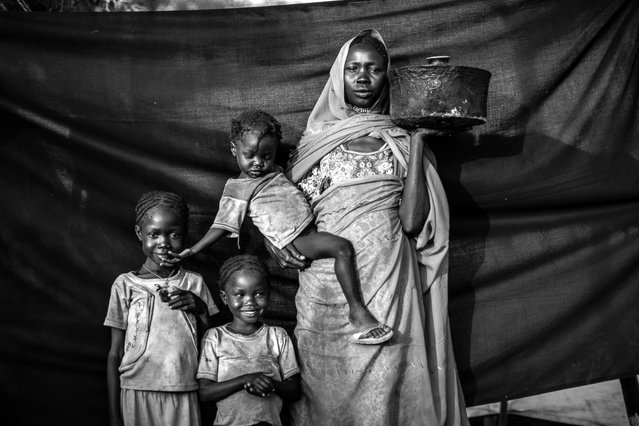
Magbola Alhadi, 20, and her three children pose for a portrait in Jamam refugee camp in Maban County, South Sudan on August 11th, 2012. Magboola and her family weathered aerial bombing raids for several months, but decided it was time to leave their village of Bofe the night that soldiers arrived and opened fire. (Photo by Brian Sokol/Panos Pictures)

Magbola Alhadi, 20, and her three children pose for a portrait in Jamam refugee camp in Maban County, South Sudan on August 11th, 2012. Magboola and her family weathered aerial bombing raids for several months, but decided it was time to leave their village of Bofe the night that soldiers arrived and opened fire. With her three children, she travelled for 12 days from Bofe to the town of El Fudj, on the South Sudanese border. The most important thing that Magboola was able to bring with her is the saucepan she holds in this photograph. It wasn't the largest pot that she had in Bofe, but it was small enough she could travel with it, yet big enough to cook sorghum for herself and her three daughters (from left: Aduna Omar, 6, Halima Omar, 4, and Arfa Omar, 2) during their journey. (Photo by Brian Sokol/Panos Pictures)
Details
18 Sep 2015 15:04:00