Loading...
Done
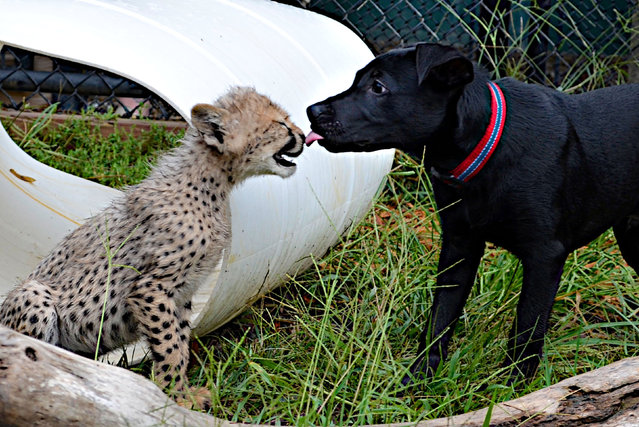
These stunning images could be mistaken for a cheetah ravenously chasing down a dog, but in fact, the pair are best of friends. Savanah, the one-and-a-half-year-old cheetah and Max, who is just a few weeks younger, were put together when Savanah was just 10-weeks-old. (Photo by Caters News Agency)

These stunning images could be mistaken for a cheetah ravenously chasing down a dog, but in fact, the pair are best of friends. Savanah, the one-and-a-half-year-old cheetah and Max, who is just a few weeks younger, were put together when Savanah was just 10-weeks-old. Ever since, their friendship has amazed visitors at Cincinatti Zoo, who are delighted but confused as to why the spotted beast hasnt eaten the dashing hound. So, when it snowed, Savanah and Max just like young children were very excitable and wasted no time playing in the snow. (Photo by Caters News Agency)
Details
21 Dec 2013 13:56:00
“Cassowaries are large, flightless birds related to emus and (more distantly) to ostriches, rheas, and kiwis”, writes Olivia Judson in the September issue of National Geographic magazine. (Photo by Christian Ziegler/National Geographic)

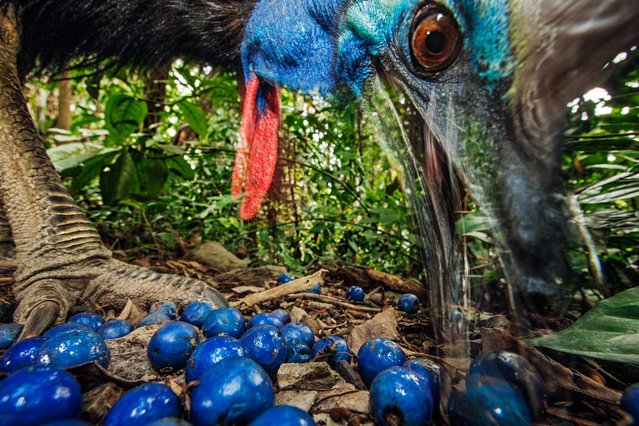
“Cassowaries are large, flightless birds related to emus and (more distantly) to ostriches, rheas, and kiwis”, writes Olivia Judson in the September issue of National Geographic magazine. How large? People-size: Adult males stand well over five foot five and top 110 pounds. Females are even taller, and can weigh more than 160 pounds. Dangerous when roused, they’re shy and peaceable when left alone. But even birds this big and tough are prey to habitat loss. The dense New Guinea and Australia rain forests where they live have dwindled. Today cassowaries might number 1,500 to 2,000. And because they help shape those same forests – by moving seeds from one place to another – “if they vanish”, Judson writes, “the structure of the forest would gradually change” too. (Photo by Christian Ziegler/National Geographic)
Details
06 Jan 2014 12:21:00
“Red Pepperpion. (Photo by Vanessa Dualib)

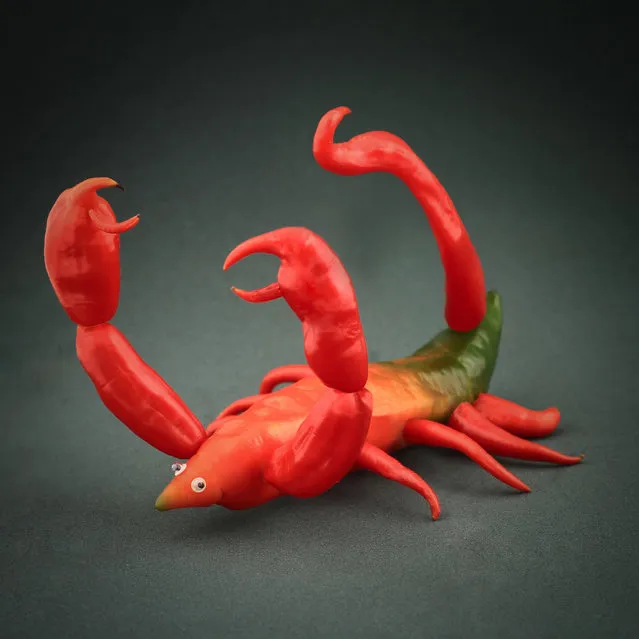
“Red Pepperpion. Red Pepperpions are secretive, nocturnal arachilli which can be spotted in kitchens of arid climates all around the world.

Red Pepperpions are equipped with a delicious (and depending on the quantity...deadly!) stinger at the end of its tail. If you happen to get bitten (or if you bite him!) it will produce a burning sensation on your taste nerves.

However, there is no need to worry, since the fact is that his potent stinger is usually only used when hunting or whenever the Pepperpion feels like he might become part of someones meal...

At daylight or when encountering a larger foe, such as a Saucier Chef, they retreat into burrows inside the fridge or hide beneath the oven”. (Photo and comment by Vanessa Dualib)


Details
08 Feb 2013 09:24:00
The Eiffel Tour-the body language of balance. I came across this group of young adults from Sarajevo, Bosnia, having fun testing their balance two nights ago in on the Esplanade de Trocadero. (Photo and comment by Peter Turnley)

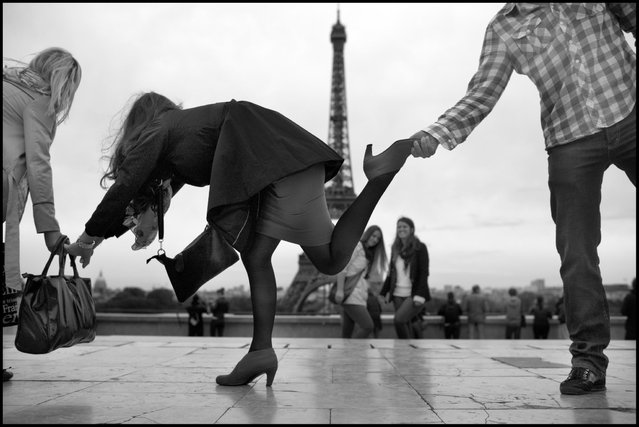
The Eiffel Tour-the body language of balance. I came across this group of young adults from Sarajevo, Bosnia, having fun testing their balance two nights ago in on the Esplanade de Trocadero. (Photo and comment by Peter Turnley)
Details
23 Feb 2013 08:09:00


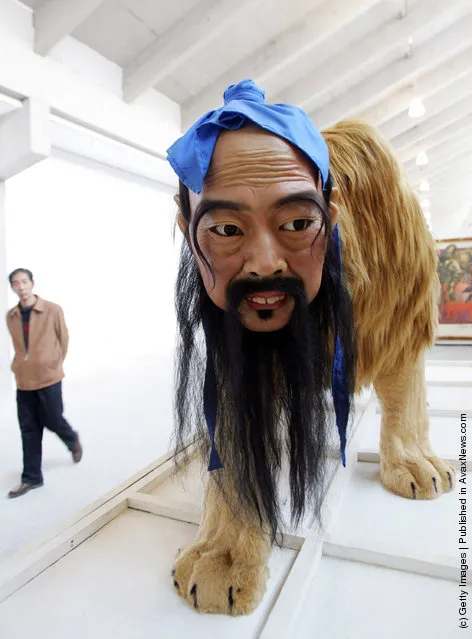
A visitor walks past an installation artwork entitled “Confuciuse” which combines the word “Confucius” and “confuse” in the contemporary art exhibition at “Fun and Art” Festival on December 13, 2008 in Xian of Shaanxi Province, China. (Photo by China Photos/Getty Images)
Details
12 May 2011 08:35:00


A member of the Eton public school O.T.C. (Officers Training Corps) practising shouting out orders during a training session, 20th January 1940. (Photo by Hulton Archive/Getty Images)
Details
04 Jun 2011 06:46:00
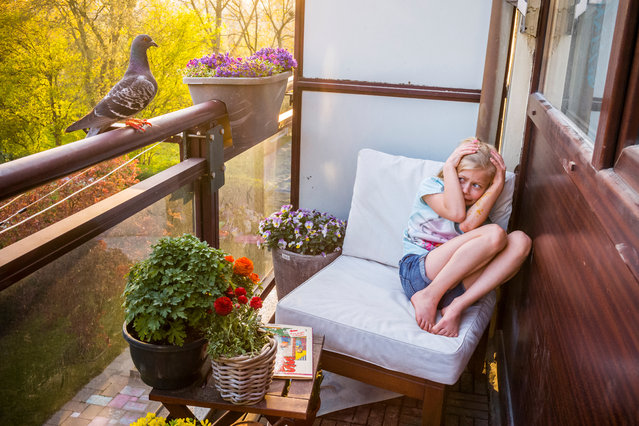
Nature – first prize, stories. Pandemic Pigeons – A Love Story. The photographer’s daughter, Merel, cowers after Dollie flies past and perches on the balcony before entering the house in Vlaardingen in the Netherlands on 6 April 2020. “She’s still frightened when Dollie suddenly lands on the balcony railing. I hide my smile behind the camera, as I try to comfort her by saying they won’t hurt you. “I thought he was going to attack me”, she replies. As the nesting pigeons keep coming back to our place, slowly my girls have started to appreciate them – perhaps not as much as I do, but it’s a start”. (Photo by Jasper Doest/World Press Photo 2021)

Nature – first prize, stories. Pandemic Pigeons – A Love Story. The photographer’s daughter, Merel, cowers after Dollie flies past and perches on the balcony before entering the house in Vlaardingen in the Netherlands on 6 April 2020. “She’s still frightened when Dollie suddenly lands on the balcony railing. I hide my smile behind the camera, as I try to comfort her by saying they won’t hurt you. “I thought he was going to attack me”, she replies. As the nesting pigeons keep coming back to our place, slowly my girls have started to appreciate them – perhaps not as much as I do, but it’s a start”. (Photo by Jasper Doest/World Press Photo 2021)
Details
17 Apr 2021 09:30:00
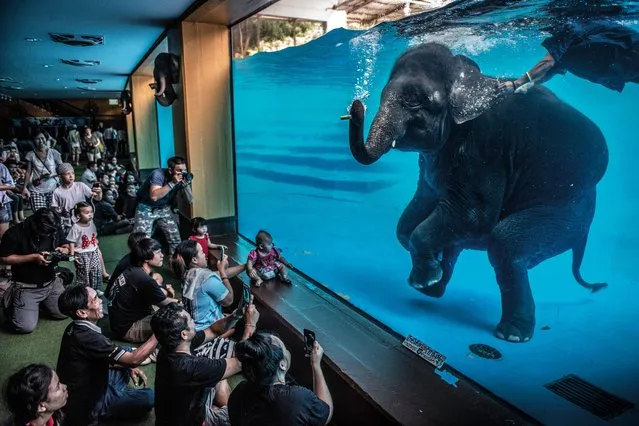
Winner, photojournalism. Elephant in the room, by Adam Oswell, Australia Zoo. Visitors watch a young elephant performing underwater. Oswell was disturbed by this scene, and organisations concerned with the welfare of captive elephants say performances like this encourage unnatural behaviour. In Thailand, there are now more elephants in captivity than in the wild. With the Covid pandemic causing tourism to collapse, elephant sanctuaries are becoming overwhelmed with animals that can no longer be looked after by their owners. (Photo by Adam Oswell/Wildlife Photographer of the Year 2021)

Winner, photojournalism. Elephant in the room, by Adam Oswell, Australia Zoo. Visitors watch a young elephant performing underwater. Oswell was disturbed by this scene, and organisations concerned with the welfare of captive elephants say performances like this encourage unnatural behaviour. In Thailand, there are now more elephants in captivity than in the wild. With the Covid pandemic causing tourism to collapse, elephant sanctuaries are becoming overwhelmed with animals that can no longer be looked after by their owners. (Photo by Adam Oswell/Wildlife Photographer of the Year 2021)
Details
30 Oct 2021 08:40:00