Loading...
Done
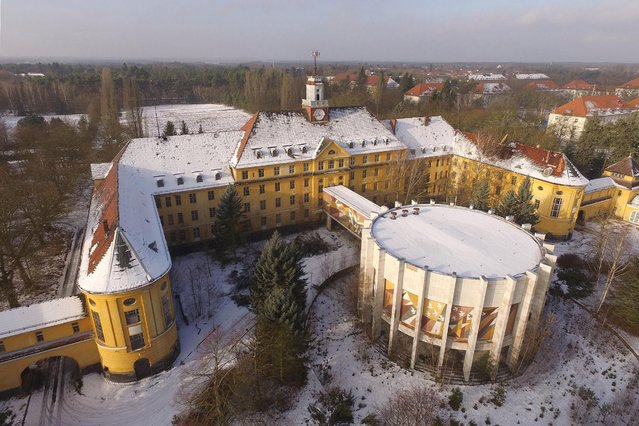
In this aerial view the officers' building and an auditorium stand at the former Soviet military base on January 26, 2017 in Wuensdorf, Germany. (Photo by Sean Gallup/Getty Images)

In this aerial view the officers' building and an auditorium stand at the former Soviet military base on January 26, 2017 in Wuensdorf, Germany. Wuensdorf, once called “The Forbidden City”, was the biggest base for the Soviet armed forces in communist East Germany from 1945 until the last Soviet troops left in the early 1990s following the end of the Cold War and the reunification of Germany. (Photo by Sean Gallup/Getty Images)
Details
01 Feb 2017 06:02:00
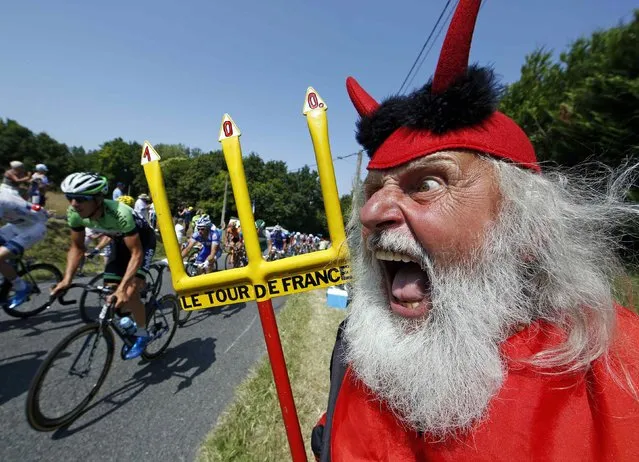
The pack of riders makes its way past Didi Senft, a cycling enthusiast better known as “El Diablo” (The Devil), during the twelfth 218km stage of the centenary Tour de France cycling race from Fougeres to Tours July 11, 2013. (Photo by Eric Gaillard/Reuters)

The pack of riders makes its way past Didi Senft, a cycling enthusiast better known as “El Diablo” (The Devil), during the twelfth 218km stage of the centenary Tour de France cycling race from Fougeres to Tours July 11, 2013. (Photo by Eric Gaillard/Reuters)
Details
24 Apr 2014 11:56:00


“Snowflake (c. 1964 – November 24, 2003) was an albino gorilla. He was the only known albino gorilla so far, and the most popular resident of the Barcelona Zoo in Catalonia, Spain. Originally named Nfumu Ngui in Fang language ("white gorilla") by his captor, he was then nicknamed Floquet de Neu (Catalan for little snowflake) by his keeper Jordi Sabater Pi. On his arrival to Barcelona where he was given an official reception by the then Mayor of Barcelona, Josep Maria de Porcioles, in November 1966, he was called Blancanieves (“Snow White”) in the newspaper Tele/Exprés. But he became famous with the name given to him by Sabater when National Geographic Magazine featured him on the main page in March 1967, with the English name Snowflake. This name spread among the press (Stern, Life, Paris-Match) and was later translated to Spanish as Copito de Nieve. Sabater himself called the gorilla Floquet or Copi, and in the later years Nfumu. The asteroid 95962 Copito, discovered by Catalan astronomer J. Manteca, is named in his honour”.

Details
07 Mar 2011 15:50:00
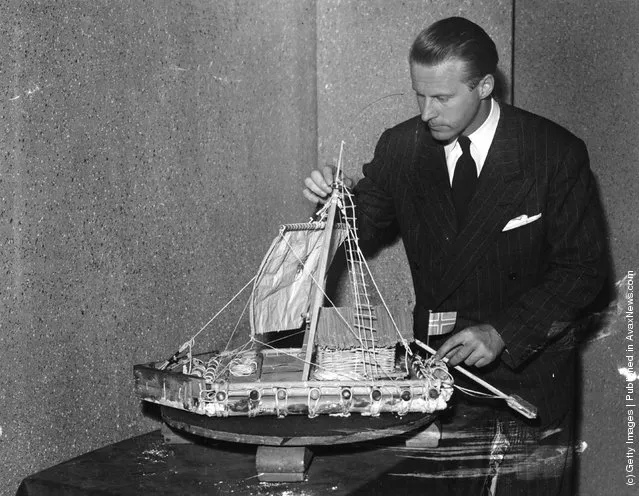
Thor Heyerdahl with a model of the balsa raft Kon Tiki

“Thor Heyerdahl (October 6, 1914, Larvik, Norway – April 18, 2002, Colla Micheri, Italy) was a Norwegian ethnographer and adventurer with a background in zoology and geography. He became notable for his Kon-Tiki expedition, in which he sailed 8,000 km (4,300 miles) by raft from South America to the Tuamotu Islands. All his expeditions are shown in the Kon-Tiki Museum, Oslo”. – Wikipedia

Photo: Norwegian anthropologist Thor Heyerdahl with a model of the balsa raft “Kon-Tiki” on which he drifted 4,300 miles from Peru to the Tuamotu Islands, proving his theory that Polynesia could originally have been populated by South Americans. (Photo by Express/Express/Getty Images). 1950
Details
09 Aug 2011 11:05:00
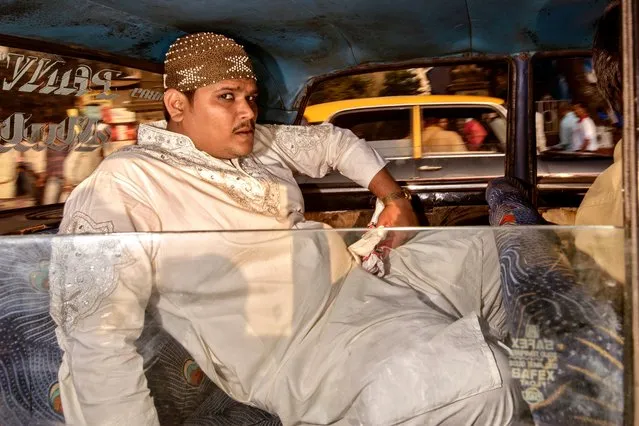
“I’m not scared of breaking the fourth wall”, Wallace has said of the photos where the subject is clearly aware of him taking the shot. “If they are looking at you in a photograph most photographers will think, oh, that’s not a good image. (But) people like to be involved and in the picture. You can see what they are thinking, see them talking”. (Photo by Dougie Wallace/The Guardian)

In Dougie Wallace’s photos of Mumbai taxis, the chatter, yelling, and constant horns of the city are almost audible. A selection of his images is on show at Gayfield Creative Spaces, Edinburgh, as part of the Retina photography festival until 30 July. For four years, the Glasgow-born Wallace focused his photos on one kind of taxi in particular: the Premier Padmini, a 1960s workhorse painted in black and yellow. Locally known as “Kaali-Peeli”, there were once more than 60,000 of them in the Indian city. But thanks to laws restricting pollution, the cars now are fast disappearing from Mumbai’s streets. (Photo by Dougie Wallace/The Guardian)
Details
13 Jul 2016 13:50:00
Drag queens Maude Boate, Anita Wiglit and Kita Mean pose for a photograph before boarding the NSW TrainLink Silver City Stiletto train at Central station in Sydney, Australia, 12 September 2019. Drag queens and kings will travel to the outback NSW town of Broken Hill to attend the annual Broken Heel festival, paying homage to the iconic Australian film “Priscilla, Queen of the Desert”. (Photo by James Gourley/AAP)

Drag queens Maude Boate, Anita Wiglit and Kita Mean pose for a photograph before boarding the NSW TrainLink Silver City Stiletto train at Central station in Sydney, Australia, 12 September 2019. Drag queens and kings will travel to the outback NSW town of Broken Hill to attend the annual Broken Heel festival, paying homage to the iconic Australian film “Priscilla, Queen of the Desert”. (Photo by James Gourley/AAP)
Details
14 Sep 2019 00:07:00
In this January 11, 2017 photo, Erika Martins uses black electrical tape to create a customer's bikini, in order to attain crisp tan lines, on her rooftop Erika Bronze salon in the suburb of Realengo in Rio de Janeiro, Brazil. Martins wears a microphone connected to an open speaker system in order to direct her assistants to clients who need more tanning lotion or a sprinkling of water on their skin. (Photo by Renata Brito/AP Photo)

In this January 11, 2017 photo, Erika Martins uses black electrical tape to create a customer's bikini, in order to attain crisp tan lines, on her rooftop Erika Bronze salon in the suburb of Realengo in Rio de Janeiro, Brazil. Martins wears a microphone connected to an open speaker system in order to direct her assistants to clients who need more tanning lotion or a sprinkling of water on their skin. (Photo by Renata Brito/AP Photo)
Details
25 Jan 2017 11:21:00
(L-R) A man nicknamed "Barcelona", Alexey Bolotov and Alexey Jakushin drink vodka as they travel by a pioneer motorised railcar on their way to Kalach, Sverdlovsk region, Russia October 18, 2015. The "pioneer," a light auxiliary rail vehicle, is a popular form of transport among people who live along the Alapayevsk railway. (Photo by Maxim Zmeyev/Reuters)

(L-R) A man nicknamed "Barcelona", Alexey Bolotov and Alexey Jakushin drink vodka as they travel by a pioneer motorised railcar on their way to Kalach, Sverdlovsk region, Russia October 18, 2015. The "pioneer," a light auxiliary rail vehicle, is a popular form of transport among people who live along the Alapayevsk railway. In a remote corner of the Urals region at the end of a narrow-gauge railway is Kalach, population about a dozen. Three decades ago 600 people called the village home, but the local forestry industry suffered as the former Soviet Union imploded and people moved away in search of work. In Kalach today there are no telephones, no mobile reception and only a few hours of electricity a day. (Photo by Maxim Zmeyev/Reuters)
Details
15 Nov 2015 08:06:00