Loading...
Done
Nightjars And Pooto Bird

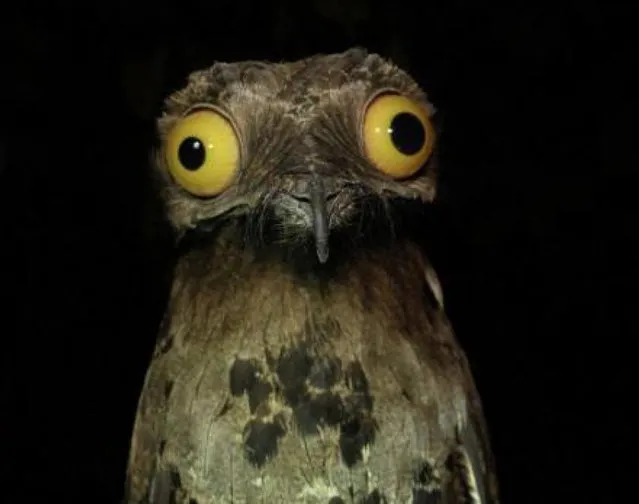
Potoos (family Nyctibiidae) are a group of near passerine birds related to the nightjars and frogmouths. They are sometimes called Poor-me-ones, after their haunting calls. There are seven species in one genus, Nyctibius, in tropical Central and South America.
These are nocturnal insectivores which lack the bristles around the mouth found in the true nightjars. They hunt from a perch like a shrike or flycatcher. During the day they perch upright on tree stumps, camouflaged to look like part of the stump. The single spotted egg is laid directly on the top of a stump.
Details
20 Jan 2014 14:34:00
A car rolls south along the Dalton Highway near Coldfoot, Alaska, USA, 03 September 2017. (Photo by Jim Lo Scalzo/EPA)

A car rolls south along the Dalton Highway near Coldfoot, Alaska, USA, 03 September 2017. Stretching 414 miles (666 kilometers) north from central Alaska to Prudhoe Bay, the Dalton Highway is one of America's northernmost roads and arguably its most remote. (Photo by Jim Lo Scalzo/EPA)
Details
09 Oct 2017 08:01:00
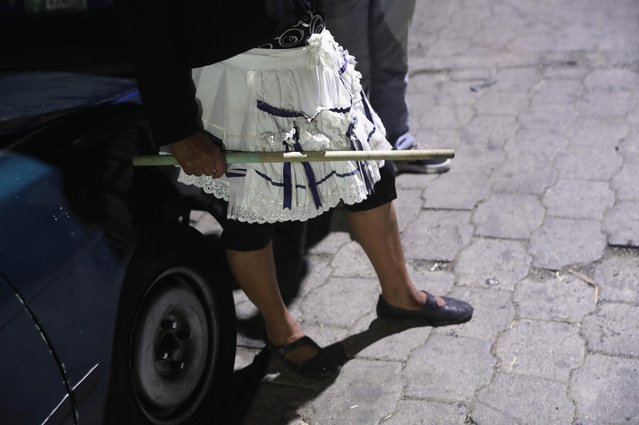
A neighborhood watch volunteer stands guard on her street on February 9, 2017 in Peronia, Guatemala. (Photo by John Moore/Getty Images)

A neighborhood watch volunteer stands guard on her street on February 9, 2017 in Peronia, Guatemala. Residents of Peronia, south of Guatemala City organized block by block to secure their community after ten of their neighbors in January were killed, they say, for refusing to pay extortion money to gangs. Armed with machetes and sticks, residents take turns each night, baring strangers' entry into their neighborhoods. Violence and poverty continue to drive emigration from Central America to the United States, even as the Trump administration moves to tighten border security. (Photo by John Moore/Getty Images)
Details
11 Feb 2017 00:00:00
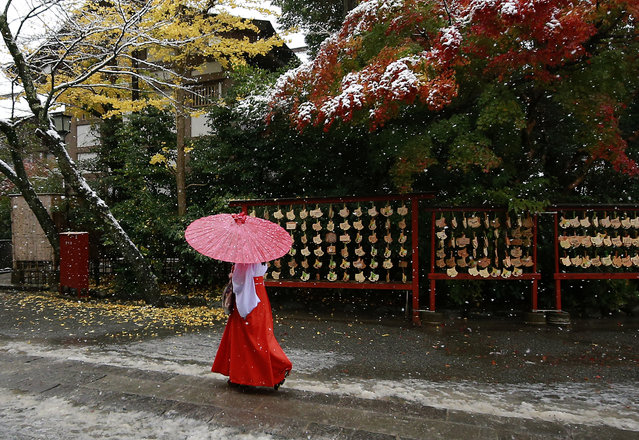
A shrine maiden walks in the snow at the Tsurugaoka Hachimangu Shrine in Kamakura, near Tokyo, Thursday, November 24, 2016. (Photo by Shizuo Kambayashi/AP Photo)

A shrine maiden walks in the snow at the Tsurugaoka Hachimangu Shrine in Kamakura, near Tokyo, Thursday, November 24, 2016. Tokyo residents have woken up to the first November snowfall in more than 50 years. An unusually cold air mass brought wet snow to Japan's capital on Thursday. Above-freezing temperatures kept the snow from sticking, but forecasters said there could be an accumulation of up to 2 centimeters (1 inch). The last time it snowed in central Tokyo in November was in 1962. (Photo by Shizuo Kambayashi/AP Photo)
Details
25 Nov 2016 11:33:00
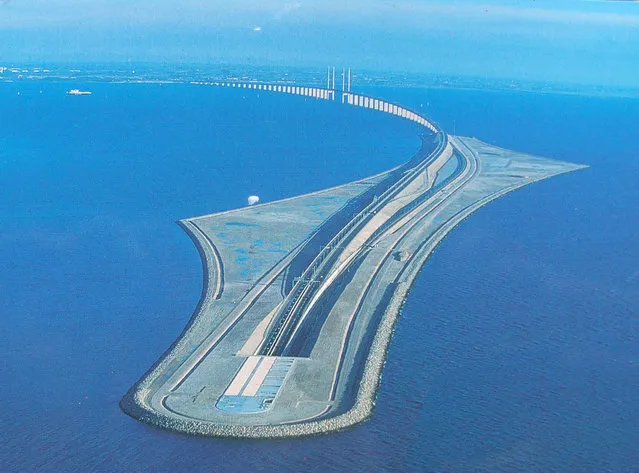
Oresund Bridge

The Öresund or Øresund Bridge is a double-track railway and dual carriageway bridge-tunnel across the Øresund strait between Scania (southernmost Sweden) and Denmark. The bridge runs nearly 8 km (5 miles) from the Swedish coast to the artificial island of Peberholm, which lies in the middle of the strait. The remainder of the link is by a 4 km (2.5 mile) tunnel from Peberholm to the Danish island of Amager. The Øresund Bridge is the longest combined road and rail bridge in Europe, and connects two major metropolitan areas: Copenhagen, the Danish capital city, and the major Swedish city of Malmö. It connects the road and rail networks of Scandinavia with those of Central and Western Europe.
Details
10 Sep 2013 11:23:00
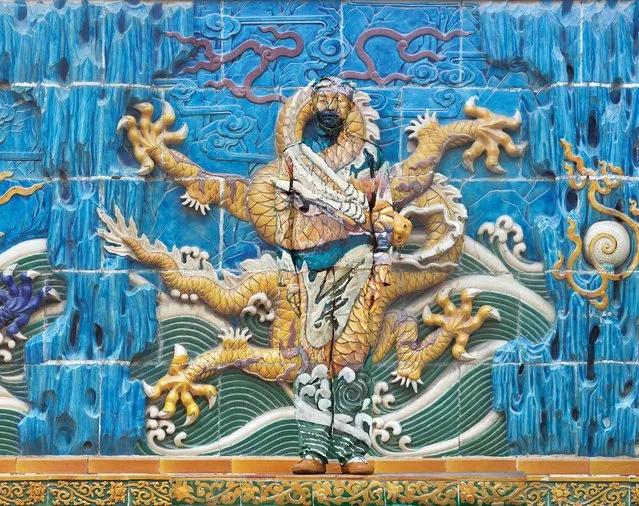
Optical illusions: artist Liu Bolin

“Liu Bolin is an artist born in China’s Shandong province in 1973, and he earned his Bachelor of Fine Arts from the Shandong College of Arts in 1995 and his Master of Fine Arts from the Central Academy of Fine Arts in Beijing in 2001. His work has been exhibited in museums around the world. Also known as “The Invisible Man”, Liu Bolin's most popular works are from his “Hiding in the City” series; photographic works that began as performance art in 2005”. – Wikipedia. (Photo by Reuters/China Daily)
Details
03 Oct 2013 09:29:00
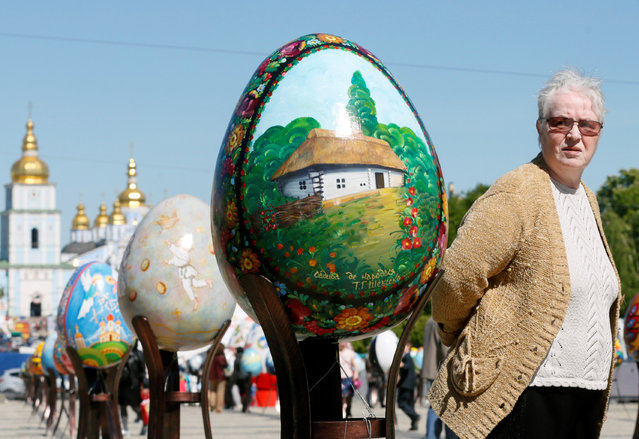
A woman looks at traditional Ukrainian Easter eggs “Pysanka”, installed as part of the upcoming celebrations of Easter, in central Kiev, Ukraine, April 29, 2016. A pysanka is a Ukrainian Easter egg, decorated with traditional Ukrainian folk designs using a wax-resist (batik) method. The word pysanka comes from the verb pysaty, “to write”, as the designs are not painted on, but written with beeswax. Many other eastern European ethnic groups decorate eggs using wax resist for Easter. These include the Belarusians, Bulgarians, Croats, Czechs, Hungarians, Lithuanians, Poles, Romanians, Serbs, Slovaks, Slovenes and Sorbs. (Photo by Valentyn Ogirenko/Reuters)

A woman looks at traditional Ukrainian Easter eggs “Pysanka”, installed as part of the upcoming celebrations of Easter, in central Kiev, Ukraine, April 29, 2016. A pysanka is a Ukrainian Easter egg, decorated with traditional Ukrainian folk designs using a wax-resist (batik) method. The word pysanka comes from the verb pysaty, “to write”, as the designs are not painted on, but written with beeswax. Many other eastern European ethnic groups decorate eggs using wax resist for Easter. These include the Belarusians, Bulgarians, Croats, Czechs, Hungarians, Lithuanians, Poles, Romanians, Serbs, Slovaks, Slovenes and Sorbs. (Photo by Valentyn Ogirenko/Reuters)
Details
30 Apr 2016 09:00:00
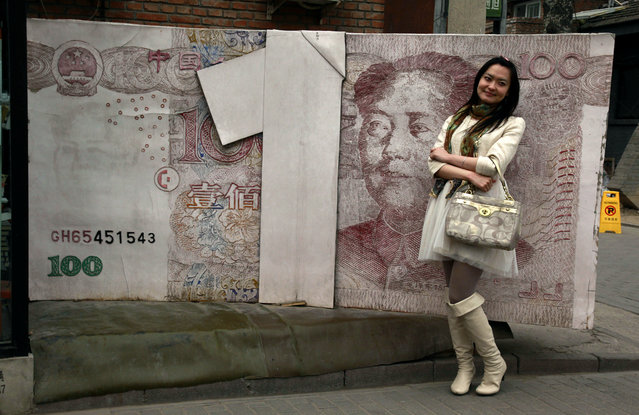
In this March 15, 2012 file photo, a Chinese woman poses for photos near a sculpture depicting a Chinese yuan note at an art district in Beijing, China. China devalued its tightly controlled currency on Tuesday, August 11,2015,  following a slump in trade, triggering the yuan's biggest one-day decline in a decade. The central bank said the yuan's 1.3 percent fall was due to a change aimed at making its exchange rate controls more market-oriented. But any change raises the risk of tensions with China's trading partners. (Photo by Ng Han Guan/AP Photo)

In this March 15, 2012 file photo, a Chinese woman poses for photos near a sculpture depicting a Chinese yuan note at an art district in Beijing, China. China devalued its tightly controlled currency on Tuesday, August 11,2015, following a slump in trade, triggering the yuan's biggest one-day decline in a decade. The central bank said the yuan's 1.3 percent fall was due to a change aimed at making its exchange rate controls more market-oriented. But any change raises the risk of tensions with China's trading partners. (Photo by Ng Han Guan/AP Photo)
Details
12 Aug 2015 13:11:00