Loading...
Done
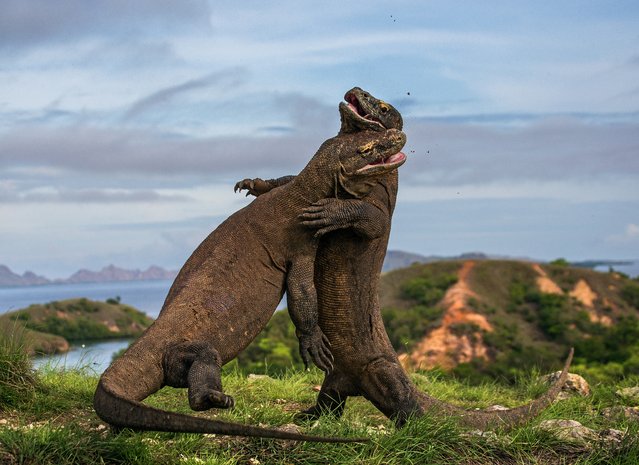
Komodo Judo by Andrey Gudkov. Finalist, Amphibians & Reptiles. Two large male Komodo dragons hissing angrily at each other in Indonesia’s Komodo national park. Komodo dragons can grow up to 8ft. (Photo by Andrey Gudkov/Wildlife Photographer of the Year 2015)

Komodo Judo by Andrey Gudkov. Finalist, Amphibians & Reptiles. Two large male Komodo dragons hissing angrily at each other in Indonesia’s Komodo national park. Komodo dragons can grow up to 8ft. (Photo by Andrey Gudkov/Wildlife Photographer of the Year 2015)
Details
16 Nov 2015 08:15:00
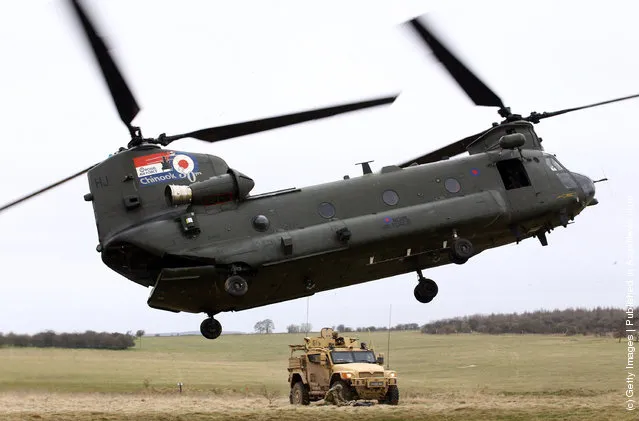
Soldiers from 12 Mechanized Brigade perform a simulated casualty evacuation at the Ministry of Defence training area at Copehill Down on Salisbury Plain on March 9, 2012 in Wiltshire, England. The Defence Secretary Philip Hammond visited the military facility to meet soldiers from the Brigade who are shortly to deploy to Afghanistan for Operation Herrick 16, and troops from the 3rd Battalion, the Yorkshire regiment which lost five of the six men who died this week in the deadliest single attack in Afghanistan since 2001

Soldiers from 12 Mechanized Brigade perform a simulated casualty evacuation at the Ministry of Defence training area at Copehill Down on Salisbury Plain on March 9, 2012 in Wiltshire, England. The Defence Secretary Philip Hammond visited the military facility to meet soldiers from the Brigade who are shortly to deploy to Afghanistan for Operation Herrick 16, and troops from the 3rd Battalion, the Yorkshire regiment which lost five of the six men who died this week in the deadliest single attack in Afghanistan since 2001. (Photo by Matt Cardy/Getty Images)
Details
10 Mar 2012 12:55:00
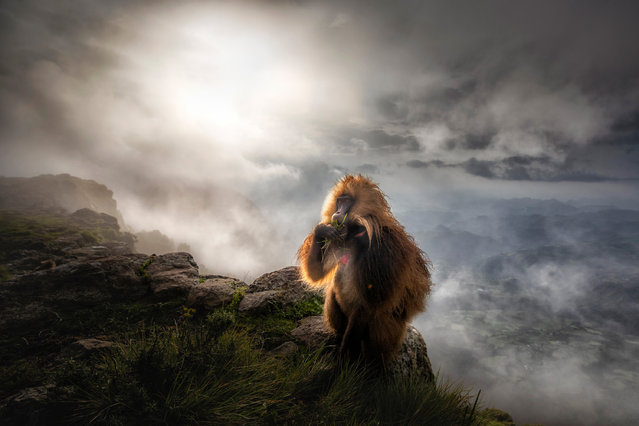
Highly commended, mammals: Gelada after the storm – Marco Gaiotti (Italy). “Gelada baboons are the only monkey species in the world that feed on grasses. They are native to the tableland of Ethiopia. Every morning large family groups wander from their sleeping places in the steep rock face, up to 1,000 metres high, to the feeding grounds at the tablelands. This image clearly depicts their feeding strategy: they pull out bunches of grass, sort the stalks and then lift them to their mouth. This shot was taken towards the end of the rainy season after a heavy storm”. (Photo by Marco Gaiotti/2019 GDT European Wildlife Photographer of the Year)

Highly commended, mammals: Gelada after the storm – Marco Gaiotti (Italy). “Gelada baboons are the only monkey species in the world that feed on grasses. They are native to the tableland of Ethiopia. Every morning large family groups wander from their sleeping places in the steep rock face, up to 1,000 metres high, to the feeding grounds at the tablelands. This image clearly depicts their feeding strategy: they pull out bunches of grass, sort the stalks and then lift them to their mouth. This shot was taken towards the end of the rainy season after a heavy storm”. (Photo by Marco Gaiotti/2019 GDT European Wildlife Photographer of the Year)
Details
31 Oct 2019 00:03:00
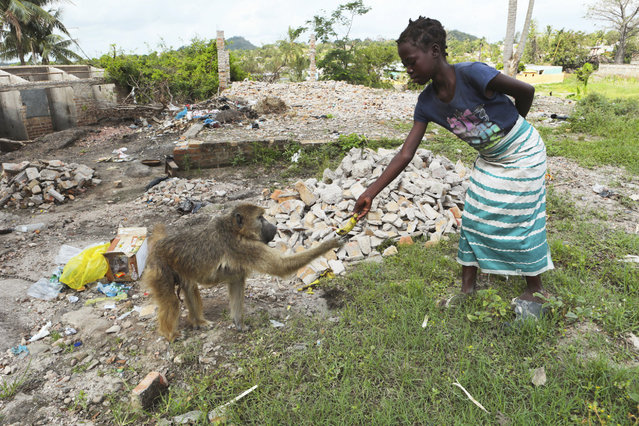
A young girl gives a banana to a tamed baboon on the outskirts of Beira, Mozambique, Sunday, March, 31, 2019. Cholera cases among cyclone survivors in Mozambique have jumped to 271, authorities said. So far no cholera deaths have been confirmed. (Photo by Tsvangirayi Mukwazhi/AP Photo)

A young girl gives a banana to a tamed baboon on the outskirts of Beira, Mozambique, Sunday, March, 31, 2019. Cholera cases among cyclone survivors in Mozambique have jumped to 271, authorities said. So far no cholera deaths have been confirmed. (Photo by Tsvangirayi Mukwazhi/AP Photo)
Details
07 Apr 2019 00:03:00
A Kenya Wildlife Services (KWS) veterinarian and security personnel back away from a tranquilised black-Rhino calf August 30, 2017 after she appeared to prematurely overcome the sedative at the Nairobi National Park, during an identification-tagging excercise to ease quick identification of resident rhino during anti-poaching patrols. (Photo by Tony Karumba/AFP Photo)

A Kenya Wildlife Services (KWS) veterinarian and security personnel back away from a tranquilised black-Rhino calf August 30, 2017 after she appeared to prematurely overcome the sedative at the Nairobi National Park, during an identification-tagging excercise to ease quick identification of resident rhino during anti-poaching patrols. (Photo by Tony Karumba/AFP Photo)
Details
31 Aug 2017 11:03:00
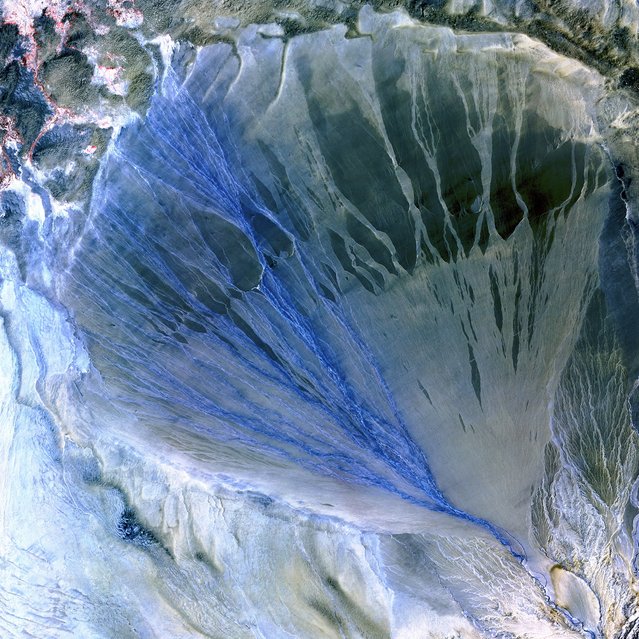
Alluvial Fan, China. A vast alluvial fan blossoms across the desolate landscape between the Kunlun and Altun mountain ranges that form the southern border of the Taklimakan Desert in China’s XinJiang Province. Image taken by the ASTER instrument on NASA’s Terra satellite on May 2nd, 2002. (Photo by NASA/GSFC/USGS EROS Data Center)

Alluvial Fan, China. A vast alluvial fan blossoms across the desolate landscape between the Kunlun and Altun mountain ranges that form the southern border of the Taklimakan Desert in China’s XinJiang Province. Image taken by the ASTER instrument on NASA’s Terra satellite on May 2nd, 2002. (Photo by NASA/GSFC/USGS EROS Data Center)
Details
07 Jan 2013 09:27:00
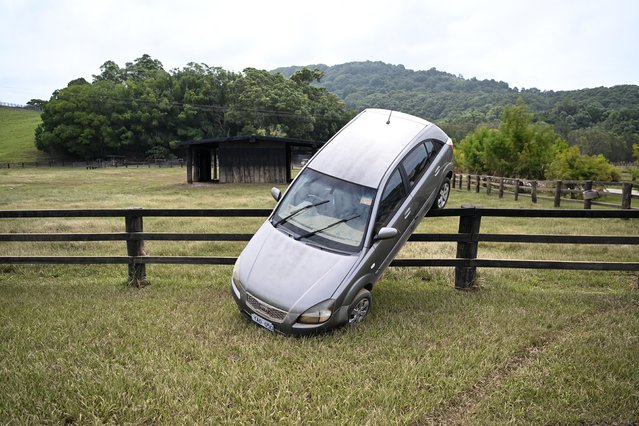
A car rests on a fence after it was carried there by floodwater on March 06, 2022 in Tumbulgum, Australia. Residents of southeast Queensland and northern New South Wales are still cleaning up following unprecedented storms and the worst flooding in a decade. (Photo by Dan Peled/Getty Images)

A car rests on a fence after it was carried there by floodwater on March 06, 2022 in Tumbulgum, Australia. Residents of southeast Queensland and northern New South Wales are still cleaning up following unprecedented storms and the worst flooding in a decade. (Photo by Dan Peled/Getty Images)
Details
16 Apr 2022 05:32:00
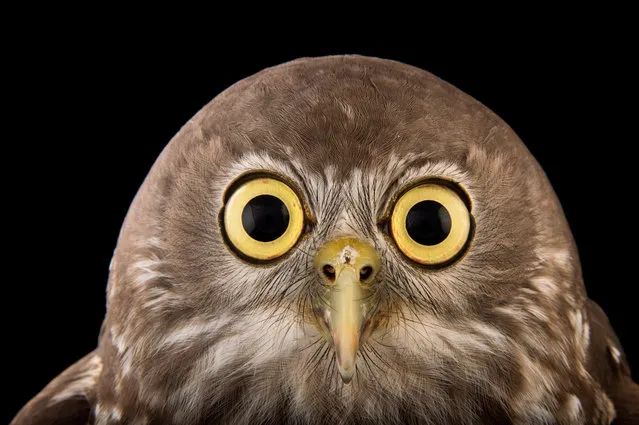
The National Geographic Photo Ark is a travelling exhibition of photographer Joel Sartore’s quest to create a photo archive of biodiversity around the world. So far, Sartore has captured studio portraits of more than 6,000 species – a number that he hopes to double. On 1 July, the ark will open at Melbourne zoo – the first time it has been exhibited in the southern hemisphere. More than 50 portraits will be on display, including many of Australian endangered animals being protected by programs at the zoo itself. These captions have been edited from text supplied by Melbourne zoo. Here: Barking owl. So-named because its call sounds like a barking dog, these birds are native to Australia, Indonesia and Papua New Guinea. In Victoria they are listed as an endangered species, and in 2003 there were estimated to be fewer than 50 breeding pairs. The main threat to the species in Victoria is loss of habitat, especially large trees with hollows in which they can nest and on which many of their prey depend. Apart from a bark, they may utter a chilling scream when they feel threatened. (Photo by Joel Sartore/National Geographic Photo Ark/The Guardian)

The National Geographic Photo Ark is a travelling exhibition of photographer Joel Sartore’s quest to create a photo archive of biodiversity around the world. So far, Sartore has captured studio portraits of more than 6,000 species – a number that he hopes to double. On 1 July, the ark will open at Melbourne zoo – the first time it has been exhibited in the southern hemisphere. More than 50 portraits will be on display, including many of Australian endangered animals being protected by programs at the zoo itself. These captions have been edited from text supplied by Melbourne zoo. Here: Barking owl. (Photo by Joel Sartore/National Geographic Photo Ark/The Guardian)
Details
01 Jul 2017 07:45:00