Loading...
Done
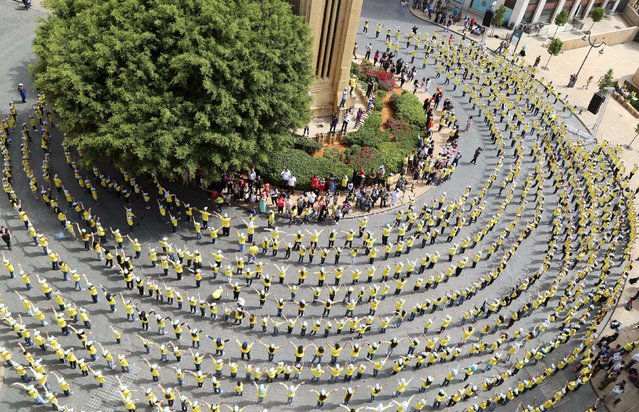
Lebanese students dance during “The Big Dance” event in downtown Beirut, near the parliament May 9, 2015. Around 900 students took part in the annual event organised by British Council's global project, which aims to develop connections between schools in Britain and Lebanon. (Photo by Aziz Taher/Reuters)

Lebanese students dance during “The Big Dance” event in downtown Beirut, near the parliament May 9, 2015. About 1000 students from all over Lebanon gather and take part in a joint dance with the aim of encouraging people to get into dance and increase fitness levels. This initiative is part of the British Council's project, Connecting Classrooms which aims at building links between schools in the UK and Lebanon. (Photo by Aziz Taher/Reuters)
Details
10 May 2015 11:29:00
A boy walks past boats docked at the entrance gate of the fishermen's village in the El Max area of the Mediterranean city of Alexandria September 12, 2014.  El Max, where hundreds of boats dart through the canals, has been called the “Venice of Egypt” for its waterways and relaxed atmosphere. Its fishermen, however, worry about how they will make ends meet on meagre earnings they  say are being reduced further by polluted waters that are making fishing more difficult. (Photo by Amr Abdallah Dalsh/Reuters)

A boy walks past boats docked at the entrance gate of the fishermen's village in the El Max area of the Mediterranean city of Alexandria September 12, 2014. El Max, where hundreds of boats dart through the canals, has been called the “Venice of Egypt” for its waterways and relaxed atmosphere. Its fishermen, however, worry about how they will make ends meet on meagre earnings they say are being reduced further by polluted waters that are making fishing more difficult. While the government has tried to fix the state's bloated finances by cutting subsidies and reining in spending, some argue the reforms hurt Egypt's most vulnerable who have long relied on a generous system of fuel and food subsidies to supplement low incomes. (Photo by Amr Abdallah Dalsh/Reuters)
Details
12 Dec 2014 12:42:00
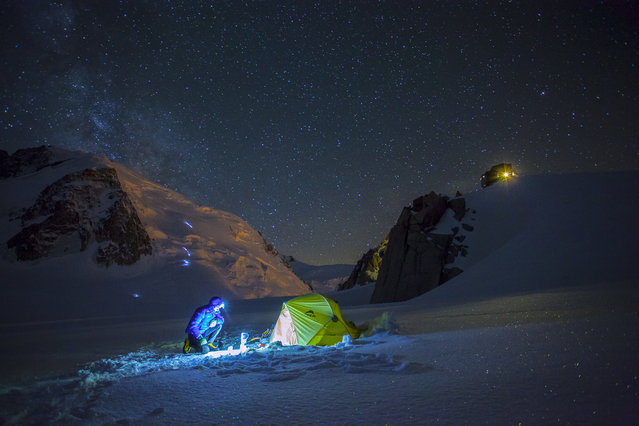
“A snapshot from mountaineer's life”. Have you ever wondered how does a mountaineer's day start? (Photo and caption by Kamil Tamiola/National Geographic Traveler Photo Contest)

“A snapshot from mountaineer's life”. Have you ever wondered how does a mountaineer's day start? I will give you a hint: you wake up at 3 am, set the stove, wake up your partner, pretend it is warm, quickly consume a high-calorie breakfast, watch your friends slowly ascending the icy slopes of your dream summit with their tiny head torches glimmering against perfectly blue ice, and hope for the good weather. One would ask: why all this trouble? The answer is easy: for the love of the adventure and the unknown. Location: Chamonix, Haute Savoye, France. (Photo and caption by Kamil Tamiola/National Geographic Traveler Photo Contest)

ATTENTION! All pictures are presented in high resolution. To see Hi-Res images – just TWICE click on any picture. In other words, click small picture – opens the BIG picture. Click BIG picture – opens VERY BIG picture.
Details
27 Jun 2013 12:47:00
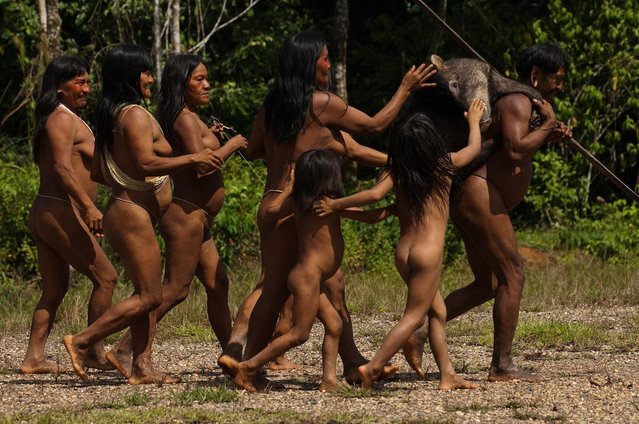
Spectacular images offering insight into the lives of the Huaorani people in the Ecuadorian Amazon have been revealed showing how they use traditional methods to hunt monkeys for food. The stunning pictures were taken by conservation photographer Pete Oxford from Torquay, Devon in the Ecuadorian Amazon. “The Huaorani Indians are a forest people highly in tune with their environment. Many are now totally acculturated since the 1950s by missionaries”, said Pete. “Today they face radical change to their culture to the proximity of oil exploration within their territory and the Yasuni National Park and Biosphere Reserve, they are vastly changed. Some still live very traditionally and for this shoot, through my Huaorani friend, a direct relative of those photographed he wanted to depict them as close to their original culture as possible. They still largely hunt with blow pipes and spears eating a lot of monkeys and peccaries”. The Huaorani are also known as the Waorani, Waodani or the Waos and are native Amerindians. Their lands are located between the Curaray and Napo rivers and speak the Huaorani language. Pete says that during his visit he was welcomed into the group and hopes that ancient cultures can be saved. Here: The tribe were seen celebrating after a hunter returned to camp with a wild pig. (Photo by Pete Oxford/Mediadrumworld.com)

Spectacular images offering insight into the lives of the Huaorani people in the Ecuadorian Amazon have been revealed showing how they use traditional methods to hunt monkeys for food. The stunning pictures were taken by conservation photographer Pete Oxford from Torquay, Devon in the Ecuadorian Amazon. Here: The tribe were seen celebrating after a hunter returned to camp with a wild pig. (Photo by Pete Oxford/Mediadrumworld.com)
Details
20 Jan 2017 07:58:00
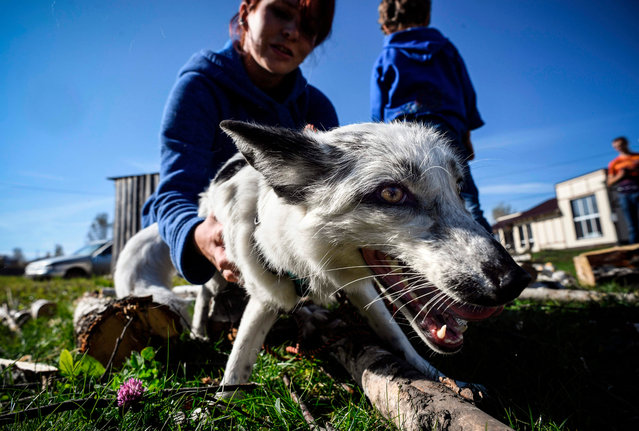
Tatyana Abramova, 33, plays with her home fox Plombir at her countryside house outside Siberian city of Novosibirsk on September 12, 2020. The official start of the Soviet experiment to better understand the domestication of animals by humans began in 1959, and was initiated by geneticists Dmitri Beliaiev and Lioudmila Trout on a farm in Akademgorodok, the scientific center of excellence in Siberia. Their primary objective was to domesticate foxes, to understand how the ancestor of wolves, another canine, evolved into a loyal and loving dog. And understand what this domestication tells us about the genetic evolution of species. (Photo by Alexander Nemenov/AFP Photo)

Tatyana Abramova, 33, plays with her home fox Plombir at her countryside house outside Siberian city of Novosibirsk on September 12, 2020. The official start of the Soviet experiment to better understand the domestication of animals by humans began in 1959, and was initiated by geneticists Dmitri Beliaiev and Lioudmila Trout on a farm in Akademgorodok, the scientific center of excellence in Siberia. Their primary objective was to domesticate foxes, to understand how the ancestor of wolves, another canine, evolved into a loyal and loving dog. And understand what this domestication tells us about the genetic evolution of species. (Photo by Alexander Nemenov/AFP Photo)
Details
25 Oct 2020 00:05:00


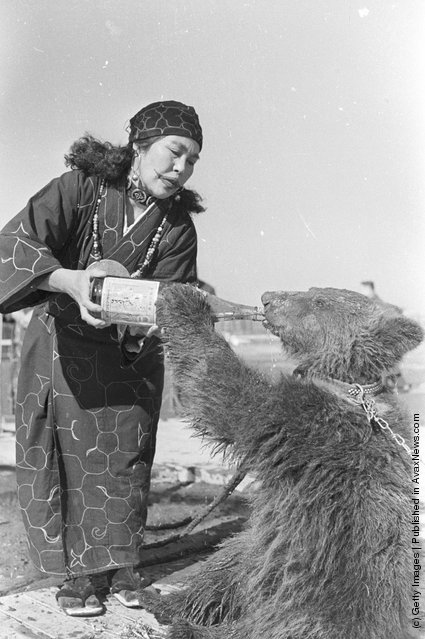
“The Ainu (アイヌ?), also called Aynu, Aino (アイノ), and in historical texts Ezo (蝦夷), are indigenous people or groups in Japan and Russia. Historically they spoke the Ainu language and related varieties and lived in Hokkaidō, the Kuril Islands, and much of Sakhalin. Most of those who identify themselves as Ainu still live in this same region, though the exact number of living Ainu is unknown. This is due to ethnic issues in Japan resulting in those with Ainu backgrounds hiding their identities and confusion over mixed heritages. In Japan, because of intermarriage over many years with Japanese, the concept of a 'pure Ainu' ethnic group is no longer feasible. Official estimates of the population are of around 25,000, while the unofficial number is upwards of 200,000 people”. – Wkipedia

Photo: A captive bear drinking from a large bottle held by an Ainu tribeswoman. (Photo by Evans/Three Lions/Getty Images). Circa 1955
Details
24 Mar 2011 14:01:00
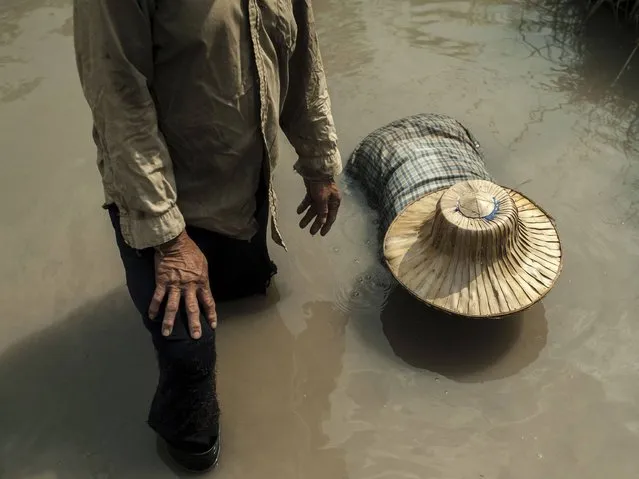
The workers begin to search for gold at 10 am and work until sunset, often working second jobs in the day in order to survive. (Photo by Borja Sanchez-Trillo/Getty Images)

Two workers shovel mud from the river as they look for gold on March 25, 2014 in Lampang, Thailand. Thai villagers from Wang Nuea, North of Thailand, look for gold in the river every year during the drought season. They are able to make an average around USD 15 per day, however two years ago they reached USD 200 in one day due to the river level dropping so much. The workers begin to search for gold at 10 AM and work until sunset, often working second jobs in the day in order to survive. (Photo by Borja Sanchez-Trillo/Getty Images)
Details
27 Mar 2014 06:09:00
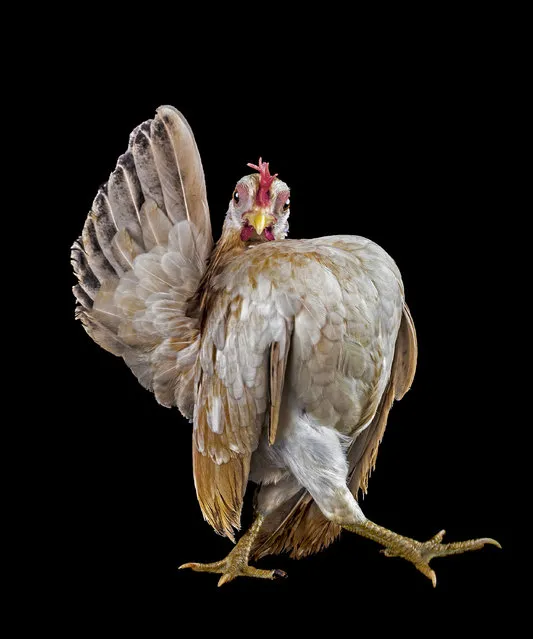
Ornamental chicken breeding clubs have emerged in Indonesia, Thailand, North America and even European countries such as the UK and France. Malaysia is however the epicenter of this cultural phenomenon. (Photo by Ernest Goh/2013 Sony World Photography Awards)

Ornamental chicken breeding clubs have emerged in Indonesia, Thailand, North America and even European countries such as the UK and France. Malaysia is however the epicenter of this cultural phenomenon. These chickens are prized for their build, size, behavior and showmanship by their owners and competitions or beauty contests as they are often described are held almost every week in at least one village in Malaysia. Judges sit around a square table inspecting each chicken for a few minutes trying to determine a champion specimen in its own weight class based on its stance, temperament and physical assets like wings, tails and comb. The walk or strut by an ornamental chicken in a beauty contest, much like a runway model, constitutes a large part of the scoring system. (Photo by Ernest Goh/2013 Sony World Photography Awards)
Details
28 Apr 2013 08:32:00