Loading...
Done
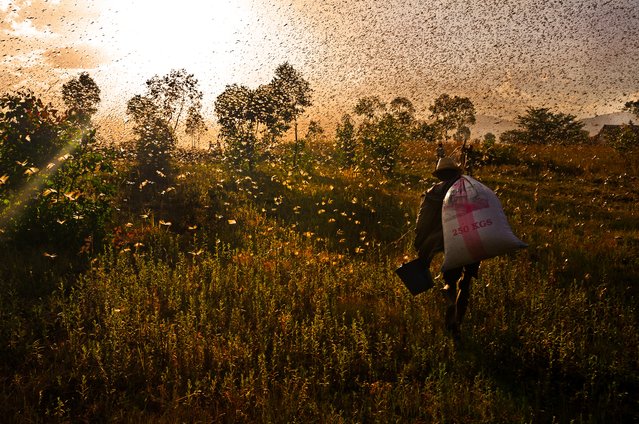
“Locusts & Men”. Oppression, interaction, collaboration. In the life cycle of nature nothing is lost, but the coexistence of different species is sometimes difficult. In Madagascar periodically returns the archaic antagonism between man and the migratory locust, in a circle of life where the two species are looking for space and food for their survival. Photo location: Madagascar, 2013. (Photo and caption by Michele Martinelli/National Geographic Photo Contest)

“Locusts & Men”. Oppression, interaction, collaboration. In the life cycle of nature nothing is lost, but the coexistence of different species is sometimes difficult. In Madagascar periodically returns the archaic antagonism between man and the migratory locust, in a circle of life where the two species are looking for space and food for their survival. At the end of the day a man walks home carrying on his shoulders the heavy bag which contains the locusts captured during the day. The insects provide nutritious meals for the man and his family. Photo location: Madagascar, 2013. (Photo and caption by Michele Martinelli/National Geographic Photo Contest)

ATTENTION! All pictures are presented in high resolution. To see Hi-Res images – just TWICE click on any picture. In other words, click small picture – opens the BIG picture. Click BIG picture – opens VERY BIG picture.
Details
03 Dec 2013 10:59:00
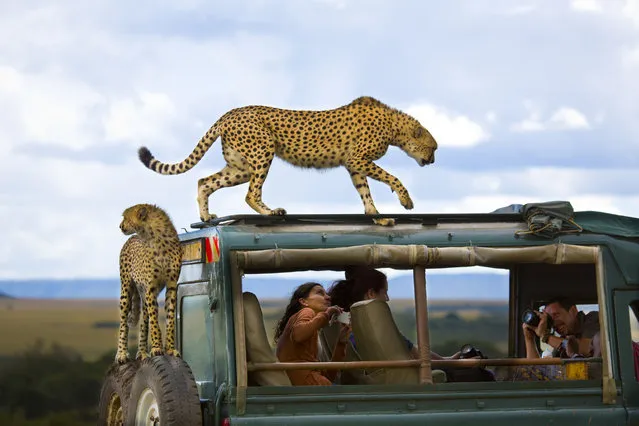
“Say cheese”. Cheetahs jumped on the vehicle of tourists in Masai Mara national park, Kenya. (Photo and caption by Yanai Bonneh/National Geographic Traveler Photo Contest)

“Say cheese”. Cheetahs jumped on the vehicle of tourists in Masai Mara national park, Kenya. (Photo and caption by Yanai Bonneh/National Geographic Traveler Photo Contest)

ATTENTION! All pictures are presented in high resolution. To see Hi-Res images – just TWICE click on any picture. In other words, click small picture – opens the BIG picture. Click BIG picture – opens VERY BIG picture.
Details
26 Jun 2013 06:33:00
Two brides kiss during their wedding ceremony to each other at the wedding registry office in St. Petersburg November 7, 2014. The two St. Petersburg women married in the official city ceremony last week, seemingly circumventing Russia's ban on same-s*x marriages. Petersburg lawmaker has vowed to nullify their wedding. (Photo by Reuters/Stringer)

Two brides kiss during their wedding ceremony to each other at the wedding registry office in St. Petersburg November 7, 2014. The two St. Petersburg women married in the official city ceremony last week, seemingly circumventing Russia's ban on same-s*x marriages. One of the brides was born a man but is undergoing hormone therapy and considers herself a woman. Though her male passport identity ensured the marriage was legal by Russian law, a St. Petersburg lawmaker has vowed to nullify their wedding. (Photo by Reuters/Stringer)
Details
12 Nov 2014 14:22:00
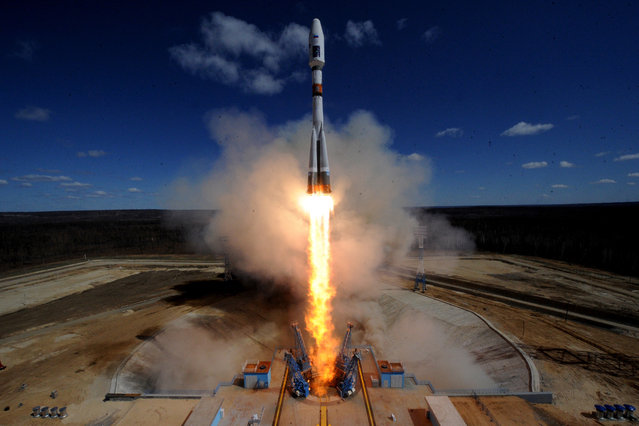
A Russian Soyuz 2.1a rocket carrying Lomonosov, Aist-2D and SamSat-218 satellites lifts off from the launch pad at the new Vostochny Cosmodrome outside the city of Uglegorsk, about 200 kilometers (125 miles) from the city of Blagoveshchensk in the far eastern Amur region Thursday, April 28, 2016. (Photo by Kirill Kudryavtsev/Pool Photo via AP Photo)

A Russian Soyuz 2.1a rocket carrying Lomonosov, Aist-2D and SamSat-218 satellites lifts off from the launch pad at the new Vostochny Cosmodrome outside the city of Uglegorsk, about 200 kilometers (125 miles) from the city of Blagoveshchensk in the far eastern Amur region Thursday, April 28, 2016. The launch of the first rocket from Russia's new space facility has been delayed after a last-minute problem. (Photo by Kirill Kudryavtsev/Pool Photo via AP Photo)
Details
28 Apr 2016 12:20:00
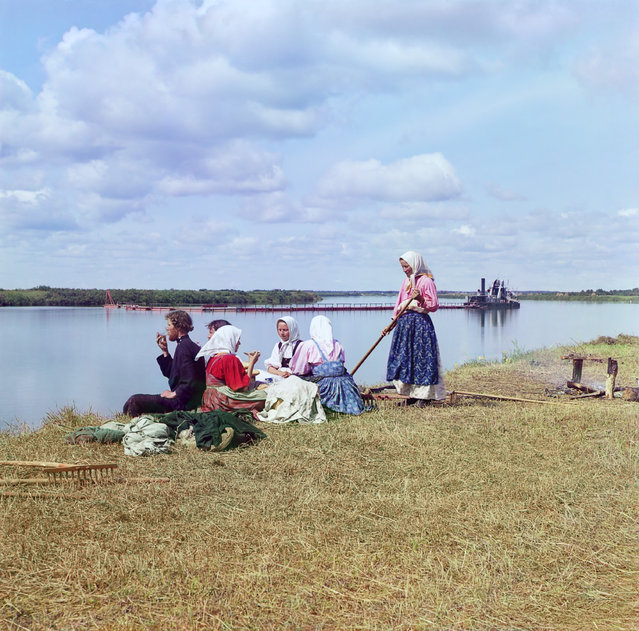
Photos by Sergey Prokudin-Gorsky. Dinner during haying. Russian Empire, Novgorod province, county Cherepovets, 1909

“Sergey Mikhaylovich Prokudin-Gorsky (August 30 1863 Russian Empire – September 27, 1944 Paris, France) was a Russian chemist and photographer. He is best known for his pioneering work in color photography of early 20th-century Russia”. – Wikipedia

Photo: Dinner during haying. Russian Empire, Novgorod province, county Cherepovets, 1909. (Photos by Sergey Prokudin-Gorsky via US Library of Congress and Prokudin-Gorsky.org)

P.S. All pictures are presented in high resolution. To see Hi-Res images – just TWICE click on any picture. In other words, click small picture – opens the BIG picture. Click BIG picture – opens VERY BIG picture (if available; this principle works anywhere on the site AvaxNews). Enjoy.
Details
24 Jul 2012 12:03:00


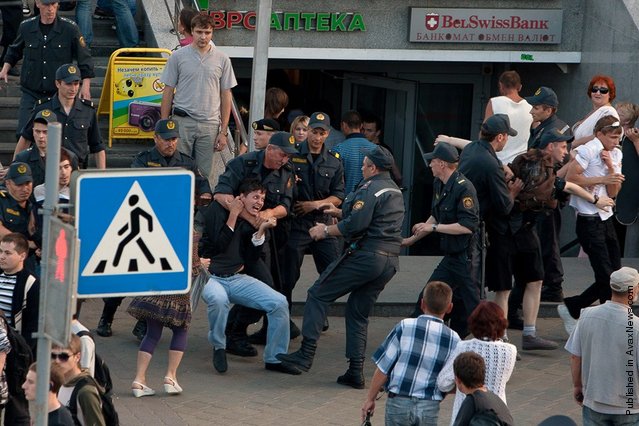
“Belarus riot police detained scores of demonstrators at a protest rally against President Alexander Lukashenko. Rallies against Lukashenko's rule are rare in the tightly-policed ex-Soviet republic, but protest calls on social networking sites have multiplied in recent weeks as a severe currency crisis has brought economic hardship. Demonstrators gathered peacefully, simply applauding in a coordinated act of protest”. – Af.Reuters.com (Photo by Anton Motolko; Belarus, Minsk; June 22, 2011)
Details
23 Jun 2011 10:28:00
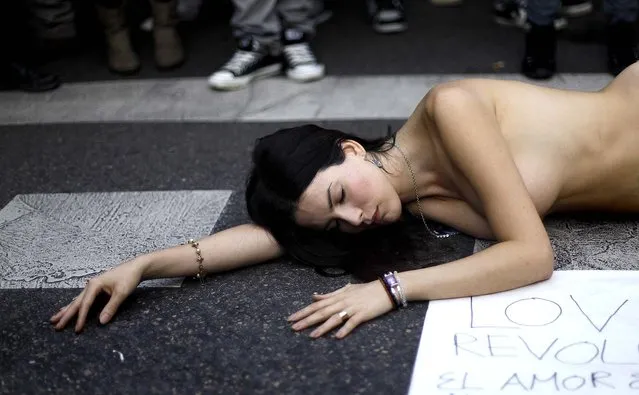
A protestor performs outside the parliament during a demonstration against austerity measures announced by the Spanish government in Madrid, Spain. (Andres Kudacki/Associated Press)

A protestor performs outside the parliament during a demonstration against austerity measures announced by the Spanish government in Madrid, Spain on September 29, 2012. (Photo by Andres Kudacki/Associated Press)
Details
26 Sep 2012 08:57:00
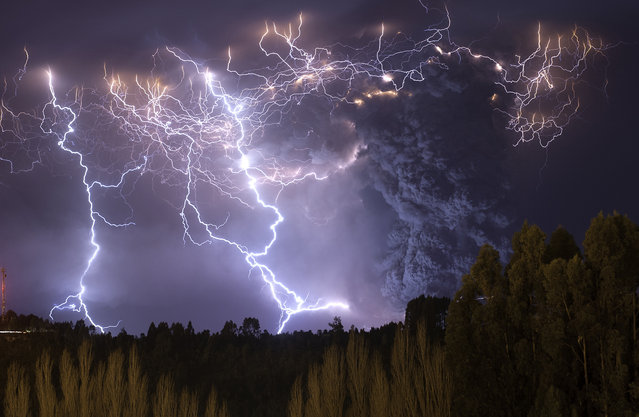
The eruption of Cordon Caulle began on June 4, 2011, located in the Region of Los Rios in Chile. For about 12 months, people and animals became accustomed to living with the daily fall of ash, which also caused problems in the air traffic in South America. The explosions and lightning during first days of the eruption could be seen from hundreds of miles around. This photograph was taken on the second night of eruption from the town of Lago Ranco. (Photo and caption by Francisco Negroni/National Geographic Traveler Photo Contest)

The eruption of Cordon Caulle began on June 4, 2011, located in the Region of Los Rios in Chile. For about 12 months, people and animals became accustomed to living with the daily fall of ash, which also caused problems in the air traffic in South America. The explosions and lightning during first days of the eruption could be seen from hundreds of miles around. This photograph was taken on the second night of eruption from the town of Lago Ranco. (Photo and caption by Francisco Negroni/National Geographic Traveler Photo Contest)

ATTENTION! All pictures are presented in high resolution. To see Hi-Res images – just TWICE click on any picture. In other words, click small picture – opens the BIG picture. Click BIG picture – opens VERY BIG picture.
Details
23 Jun 2013 11:24:00