Loading...
Done
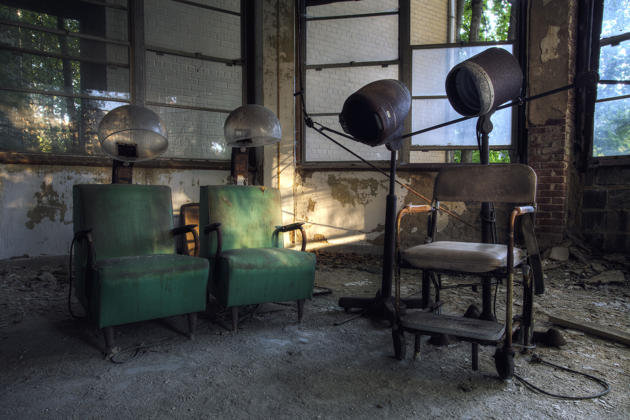
Salon equipment inside a sanatorium in New York. Daniel said: “We visited five states and several major cities, from New York City to Pittsburgh. It got pretty wild at times, so much so that in the more destitute areas, our guide carried a Glock”. (Photo by Daniel Barter/Caters News)

“These creepy pictures of abandoned asylums, prisons and schools give a sense of what life was like in institutions of 20th century America. Photographer Daniel Barter, 30, captured on film bowling alleys, theatres and hairdressing salons all completely intact. The Londoner was on travelling through Americas north eastern states when he had the chance to explore the derelict public buildings left untouched since their last inhabitants shut the doors”. – Caters News. Photo: Salon equipment inside a sanatorium in New York. (Photo by Daniel Barter/Caters News)
Details
09 May 2014 09:25:00
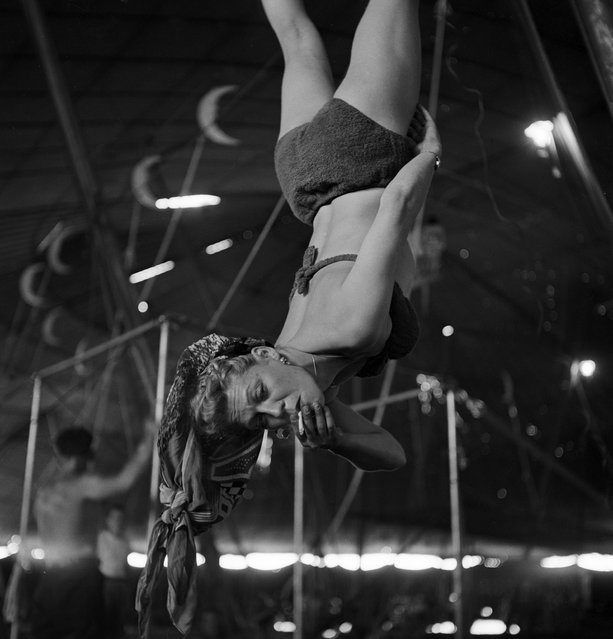
An aerialist smoking while rehearsing for the Ringling Bros. and Barnum & Bailey Circus in Sarasota, FL in 1949. (Photo By Nina Leen/Time Life Pictures/Getty Images)

In 1949, LIFE magazine sent famed photographer Nina Leen to document the daily life of a sassy troupe of young women who had run off and joined the famous Barnum & Bailey Circus in Sarasota, Fla. What developed was a portrait of a sisterhood formed over acrobatics that mixed high-flying wire acts with fashionable high-waisted shorts. Sarasota was once considered “the home of the American circus”. Here: an aerialist smoking while rehearsing for the Ringling Bros. and Barnum & Bailey Circus in Sarasota, FL in 1949. (Photo By Nina Leen/Time Life Pictures/Getty Images)
Details
06 Sep 2015 14:22:00
Inside the new Digital Art Museum in Tokyo, Japan on June 21, 2018. (Photo by South West News Service)

Inside the new Digital Art Museum in Tokyo, Japan on June 21, 2018. These incredible photos show what it looks like inside a groundbreaking new digital art museum in Japan. A trip to the Mori Building Digital Art Museum: teamLab Borderless in Tokyo, which opened last week, can make you feel like they you are dreaming and aims to fully immerse visitors in the art. Spanning a spacious 10,000 square metres, 520 computers and 470 high-tech projectors create the illusion that the visitor is wandering through rice fields, following shoals of fish or even bouncing on a galaxy of planets. (Photo by South West News Service)
Details
29 Jun 2018 00:01:00
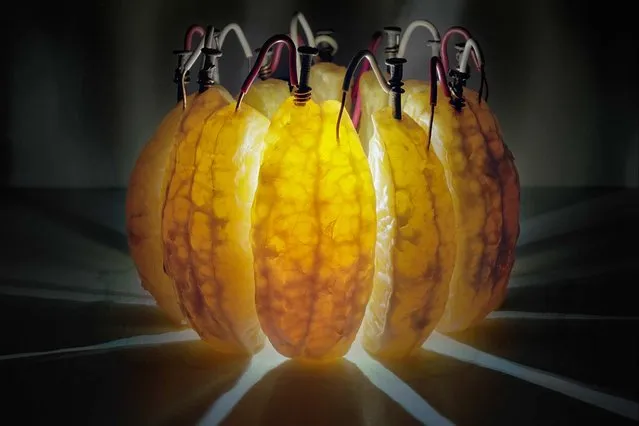
Wedges of an orange generate enough current and electrical juice – 3.5 volts – to power an LED. The fruit’s citric acid helps electrons flow from galvanized nails to copper wire in this 14-hour exposure. This image was published in September’s Visions of Earth, a trio of photos that appear in each issue of National Geographic. (Photo by Caleb Charland/National Geographic)

Wedges of an orange generate enough current and electrical juice – 3.5 volts – to power an LED. The fruit’s citric acid helps electrons flow from galvanized nails to copper wire in this 14-hour exposure. This image was published in September’s Visions of Earth, a trio of photos that appear in each issue of National Geographic. (Photo by Caleb Charland/National Geographic)
Details
06 Jan 2014 12:09:00
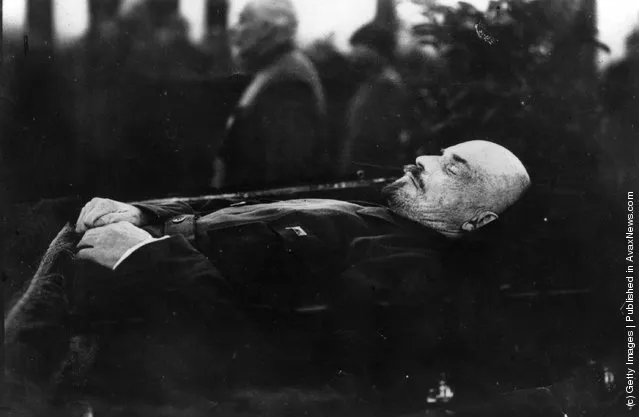
1924:  Vladimir Ilyich Lenin lying in state in the Kremlin

Photo: Vladimir Ilyich Lenin (1870 – 1924) lying in state in the Kremlin. (Photo by Hulton Archive/Getty Images). 1924

Important! For the same article in Russian language click here.

Something quite intriguing is happening within Russian-speaking internet during the last few – should you type a fully academic inquiry (at least, according to Russian academic requirements) in national search engines for "Lenin's mausoleum" – the first thing you get (even in top 10 searches) is website pages talking about black magic and occult. Website authors view this construction differently, but unconditionally agree on one thing: the mausoleum of the "leader of the world proletariat” – the essence of a magical artifact, a sort of “energy vampire”. It was built with a certain purpose: to drain the energy out of miserable Soviet citizens on one hand; and to poison the anthroposphere of one-sixth part of the earth with its vibes (the exact territory that was occupied by the former Soviet Union), depriving the Russian people of will to resist on the other hand. Complete nonsense? No doubt. Nevertheless, an intriguing one. Well, probably because some oddities do exist in mausoleum's history. These oddities are the thing we are going to discuss this time. First, let me refresh you memory on the subject.
Details
16 Oct 2011 11:27:00
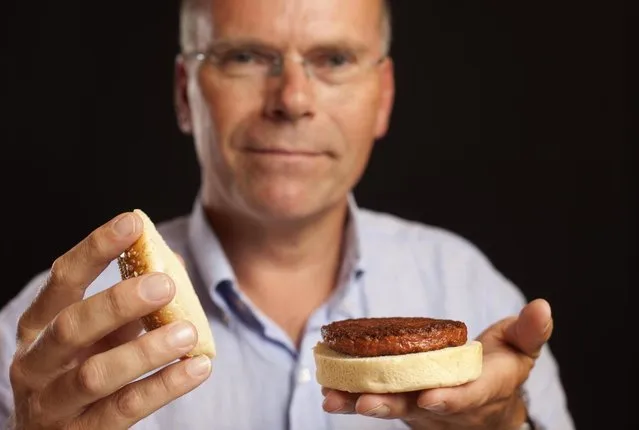
In this handout image provided by Ogilvy, a burger made from cultured beef, which has been developed by Professor Mark Post of Maastricht University in the Netherlands (pictured) is shown to the media during a press conference on August 5, 2013 in London, England. Cultured Beef could help solve the coming food crisis and combat climate change with commercial production of Cultured Beef beginning within ten to twenty years. (Photo by David Parry via Getty Images)

In this handout image provided by Ogilvy, a burger made from cultured beef, which has been developed by Professor Mark Post of Maastricht University in the Netherlands (pictured) is shown to the media during a press conference on August 5, 2013 in London, England. The in-vitro burger, cultured from cattle stem cells, the first example of what its creator says could provide an answer to global food shortages and help combat climate change, was fried in a pan and tasted by two volunteers. The burger is the result of years of research by Dutch scientist Mark Post, a vascular biologist at the University of Maastricht, who is working to show how meat grown in petri dishes might one day be a true alternative to meat from livestock.The meat in the burger has been made by knitting together around 20,000 strands of protein that has been cultured from cattle stem cells in Post's lab. (Photo by David Parry)
Details
06 Aug 2013 08:48:00
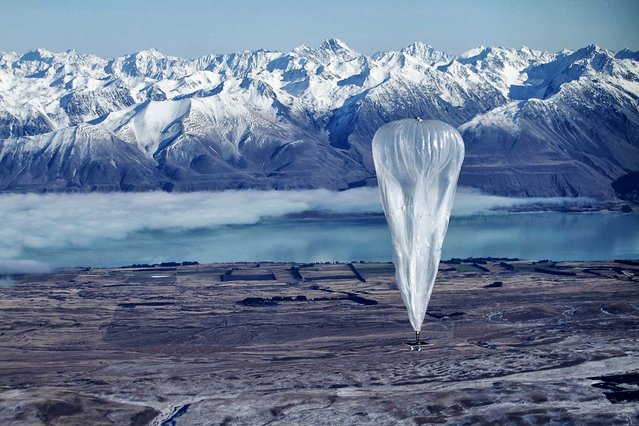
A Google balloon sails through the air with the Southern Alps mountains in the background, in Tekapo, New Zealand. (Photo by Jon Shenk/Associated Press)

“Google is launching balloons into near space to provide internet access to buildings below on the ground. About 30 of the superpressure balloons are being launched from New Zealand from where they will drift around the world on a controlled path. Attached equipment will offer 3G-like speeds to 50 testers in the country”. – BBC News. Photo: A Google balloon sails through the air with the Southern Alps mountains in the background, in Tekapo, New Zealand. (Photo by Jon Shenk/Associated Press)
Details
16 Jun 2013 10:54:00
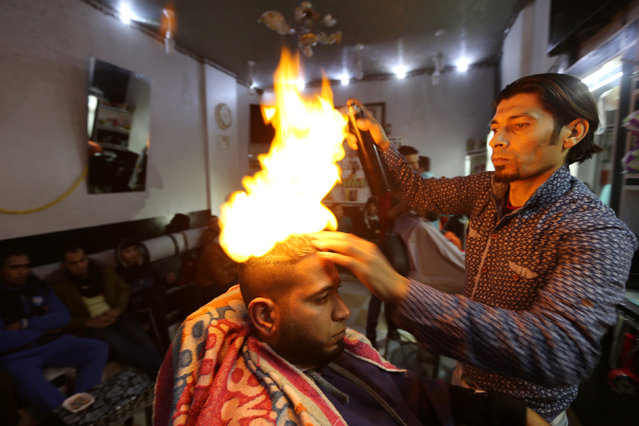
Palestinian barber Ramadan Odwan styles and straightens the hair of a customer with fire at his salon in Rafah, in the southern Gaza Strip February 2, 2017. In Ramadan Odwan's barbershop in Gaza, hair isn't just blow-dried, it's blowtorch-dried. “People have gone crazy about it, many people are curious to go through the experience and they are not afraid”, he told Reuters. “People here love adventures”. Odwan, 37, is not the first stylist in the world to use flame to straighten hair, but his craft is unique in the Gaza Strip. In his salon in the southern Gaza town of Rafah, Odwan applied what he described as a protective liquid coating to a customer's hair – he declined to disclose its contents – before aiming for the head and pressing the button on a small blowtorch. “I control how long I apply fire, I keep it on and off for 10 seconds or 15 seconds. It is completely safe and I have not encountered any accident since I started it two months ago”, Odwan added. Odwan charges 20 shekels ($5.20) for a haircut and fire-straightening. A barber for the past 18 years, he said part of the reason he uses the technique is to show that Palestinian barbers are as “professional as those out there around the world”. (Photo by Ibraheem Abu Mustafa/Reuters)

Palestinian barber Ramadan Odwan styles and straightens the hair of a customer with fire at his salon in Rafah, in the southern Gaza Strip February 2, 2017. In Ramadan Odwan's barbershop in Gaza, hair isn't just blow-dried, it's blowtorch-dried. “People have gone crazy about it, many people are curious to go through the experience and they are not afraid”, he told Reuters. “People here love adventures”. (Photo by Ibraheem Abu Mustafa/Reuters)
Details
11 Feb 2017 00:05:00