Loading...
Done
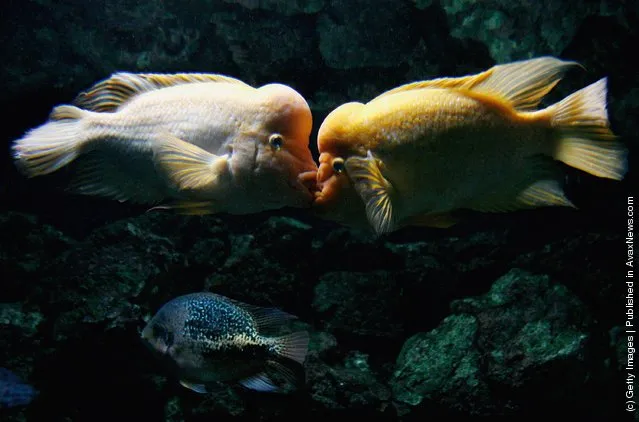
Midas Cichlid a.k.a. Amphilophus Citrinellus

“Amphilophus citrinellus is a large cichlid fish endemic to the San Juan River and adjacent watersheds in Costa Rica and Nicaragua. In the aquarium trade A. citrinellus is often sold under the trade name of Midas cichlid. A. citrinellus are omnivorous and their diet consists of plant material, molluscs and smaller fish”. – Wikipedia

Photo: Two Midas Cichlid (lat: amphilophus citrinellus) fish are seen in an aquarium at Hellabrunn zoo on December 23, 2009 in Munich, Germany. (Photo by Alexandra Beier/Getty Images)
Details
17 Aug 2011 11:29:00
Competitors release their hens during the World Championship Hen Racing Championships in Bonsall, Britain August 1, 2015. (Photo by Darren Staples/Reuters)

Competitors release their hens during the World Championship Hen Racing Championships in Bonsall, Britain August 1, 2015. (Photo by Darren Staples/Reuters)
Details
02 Aug 2015 13:16:00
These hyper realistic drawings are so lifelike they could pass for photographs. The incredibly detailed works of art were created by self-taught artist Ivan Hoo, from Singapore, who earns a living from his realistic drawings and paintings. Here: Ivan Hoos drawing of a pug. (Photo by Ivan Hoo/Caters News)

These hyper realistic drawings are so lifelike they could pass for photographs. The incredibly detailed works of art were created by self-taught artist Ivan Hoo, from Singapore, who earns a living from his realistic drawings and paintings. The 31-year-old takes up to three days to complete the impressive pieces, which include animal portraits and still life drawings of everyday items such as a Starbucks cup. The A3 sketches are completed using a range of soft pastel pencils and are drawn from still life, or a photograph taken by Ivan himself. Here: Ivan Hoos drawing of a pug. (Photo by Ivan Hoo/Caters News)
Details
18 Nov 2014 11:42:00
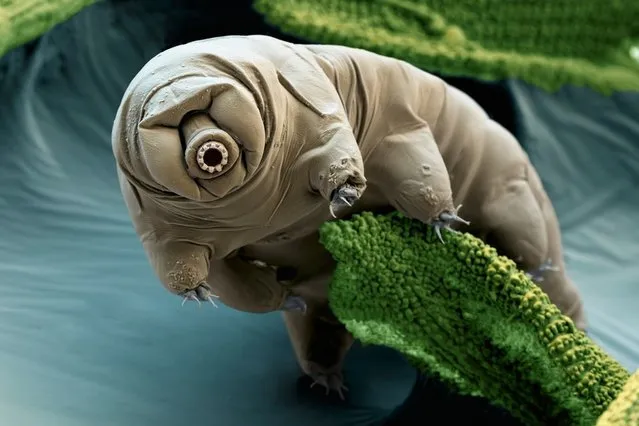
Tardigrades (commonly known as waterbears or moss piglets). (Photo by SPL/East News)

“Tardigrades (commonly known as waterbears or moss piglets) are small, water-dwelling, segmented animals with eight legs. Tardigrades were first discovered in 1773 by Johann August Ephraim Goeze, who called them kleiner Wasserbär, meaning “little water bear” in German. The name Tardigrada means “slow walker” and was given by Lazzaro Spallanzani in 1777. The name water bear comes from the way they walk, reminiscent of a bear's gait. The biggest adults may reach a body length of 1.5 millimetres (0.059 in), the smallest below 0.1 mm. Freshly hatched tardigrades may be smaller than 0.05 mm”. – Wikipedia. Photo: Tardigrades. (Photo by SPL/East News)
Details
26 Sep 2012 09:55:00
“Romantic”. A brown bear in Martinselkonen, Finland. (Photo by Valtteri Mulkahainen/Comedy Wildlife Photography Awards)

“Romantic”. A brown bear in Martinselkonen, Finland. (Photo by Valtteri Mulkahainen/Comedy Wildlife Photography Awards)
Details
22 Oct 2022 04:44:00
Liberty Vader

Liberty Vader
Details
06 Jun 2012 10:01:00
A marcher helps carrying a multicolor flag during the annual gay pride parade in Warsaw, Poland, Saturday, June 13, 2015. Gay rights activists held their 15th yearly "Equality Parade" as Poland slowly grows more accepting of gays and lesbians, but where gay marriage, and even legal partnerships, still appear to be a far-off dream. This year's parade comes amid a right-wing political shift, a possible setback for the LGBT community. (AP Photo/Alik Keplicz)

A marcher helps carrying a multicolor flag during the annual gay pride parade in Warsaw, Poland, Saturday, June 13, 2015. Gay rights activists held their 15th yearly "Equality Parade" as Poland slowly grows more accepting of gays and lesbians, but where gay marriage, and even legal partnerships, still appear to be a far-off dream. This year's parade comes amid a right-wing political shift, a possible setback for the LGBT community. (AP Photo/Alik Keplicz)
Details
15 Jun 2015 13:27:00
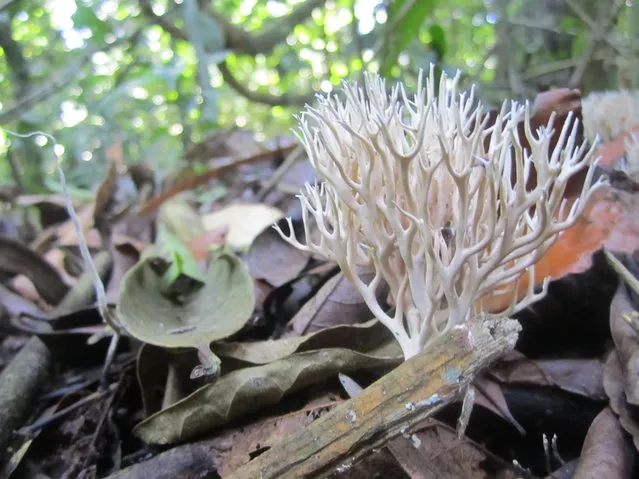
This strange coral-looking specimen is actually a mushroom. The photo, “Beautiful Destroyer”, was taken in the Panamanian tropical rainforest where the mushroom produces nitrogen, an element vital to soil health. (Photo by Sarah A. Batterman)

This strange coral-looking specimen is actually a mushroom. The photo, “Beautiful Destroyer”, was taken in the Panamanian tropical rainforest where the mushroom produces nitrogen, an element vital to soil health. (Photo by Sarah A. Batterman)
Details
13 Aug 2014 09:49:00