Loading...
Done
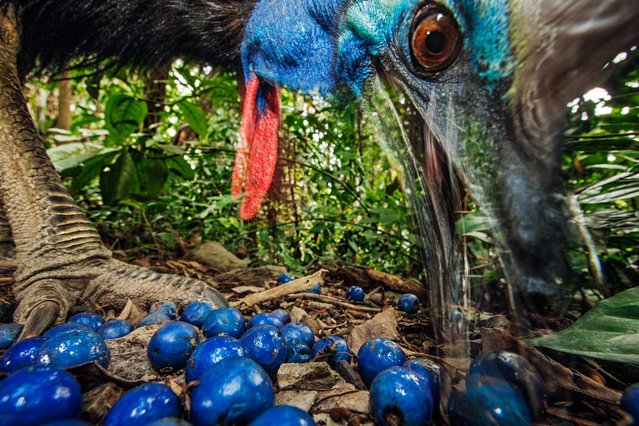
“Cassowaries are large, flightless birds related to emus and (more distantly) to ostriches, rheas, and kiwis”, writes Olivia Judson in the September issue of National Geographic magazine. (Photo by Christian Ziegler/National Geographic)

“Cassowaries are large, flightless birds related to emus and (more distantly) to ostriches, rheas, and kiwis”, writes Olivia Judson in the September issue of National Geographic magazine. How large? People-size: Adult males stand well over five foot five and top 110 pounds. Females are even taller, and can weigh more than 160 pounds. Dangerous when roused, they’re shy and peaceable when left alone. But even birds this big and tough are prey to habitat loss. The dense New Guinea and Australia rain forests where they live have dwindled. Today cassowaries might number 1,500 to 2,000. And because they help shape those same forests – by moving seeds from one place to another – “if they vanish”, Judson writes, “the structure of the forest would gradually change” too. (Photo by Christian Ziegler/National Geographic)
Details
06 Jan 2014 12:21:00
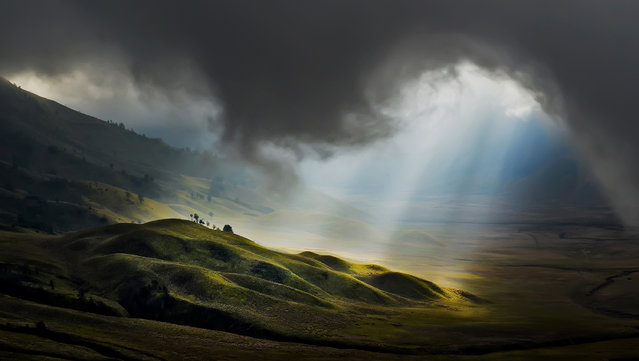
“Light From Heaven”. Taken around Mount Bromo, East Java, Indonesia in the morning. Photo location: East Java, Indonesia. (Photo and caption by Pimpin Nagawan/National Geographic Photo Contest)

“Light From Heaven”. Taken around Mount Bromo, East Java, Indonesia in the morning. Photo location: East Java, Indonesia. (Photo and caption by Pimpin Nagawan/National Geographic Photo Contest)

ATTENTION! All pictures are presented in high resolution. To see Hi-Res images – just TWICE click on any picture. In other words, click small picture – opens the BIG picture. Click BIG picture – opens VERY BIG picture.
Details
29 Nov 2013 12:36:00
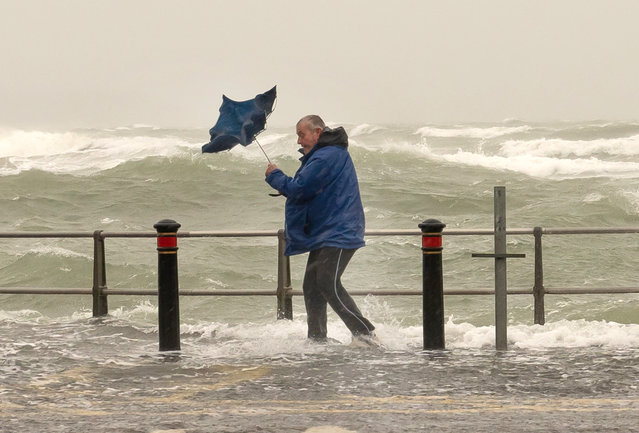
Someone struggles with an umbrella on Mudeford Quay seafront in Dorset, UK during storm Nelson on March 28, 2024. (Photo by Steve Hogan/Picture Exclusive)

Someone struggles with an umbrella on Mudeford Quay seafront in Dorset, UK during storm Nelson on March 28, 2024. (Photo by Steve Hogan/Picture Exclusive)
Details
14 May 2024 05:02:00
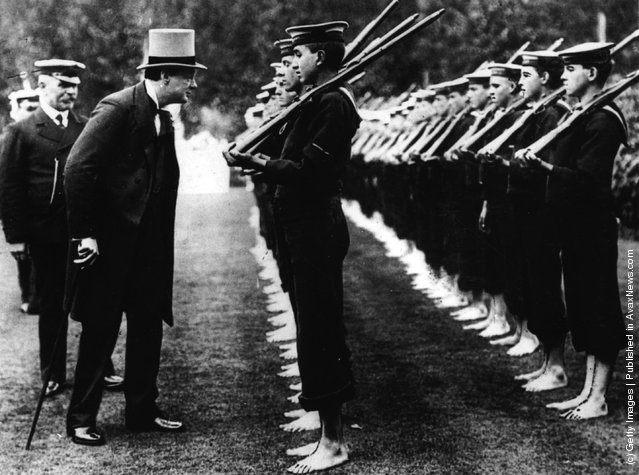
1912:  Winston Leonard Spencer Churchill (1874 - 1965), British Statesman and Prime Minister inspecting the boys from a training ship

Winston Leonard Spencer Churchill (1874–1965), British Statesman and Prime Minister inspecting the boys from a training ship. (Photo by Hulton Archive/Getty Images). 1912
Details
17 Feb 2012 12:51:00
Pham Thi Thanh drinks a glass of water used as a treatment during a medium ritual at a Hau Dong ceremony at Phu Day temple in Nam Dinh province, Vietnam, May 7, 2017. (Photo by Reuters/Kham)

Pham Thi Thanh drinks a glass of water used as a treatment during a medium ritual at a Hau Dong ceremony at Phu Day temple in Nam Dinh province, Vietnam, May 7, 2017. Dating to the 16th century, Hau Dong centres on a belief in the Mother Goddesses of three realms – forest, water and heaven. It draws from elements of Taoism, Buddhism and other religions. (Photo by Reuters/Kham)
Details
27 May 2017 08:03:00
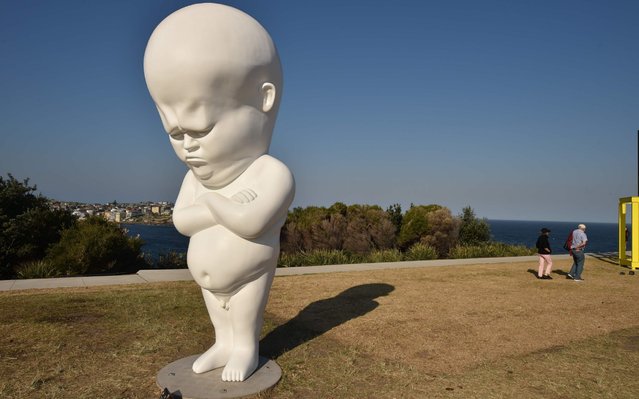
Visitors walk past sculptures on display as part of the Sculpture by the Sea exhibition in Sydney on October 29, 2019. Sculpture by the Sea is the world's largest annual, free-to-the-public, outdoor sculpture exhibition. (Photo by Peter Parks/AFP Photo)

Visitors walk past sculptures on display as part of the Sculpture by the Sea exhibition in Sydney on October 29, 2019. Sculpture by the Sea is the world's largest annual, free-to-the-public, outdoor sculpture exhibition. (Photo by Peter Parks/AFP Photo)
Details
26 Dec 2019 00:05:00
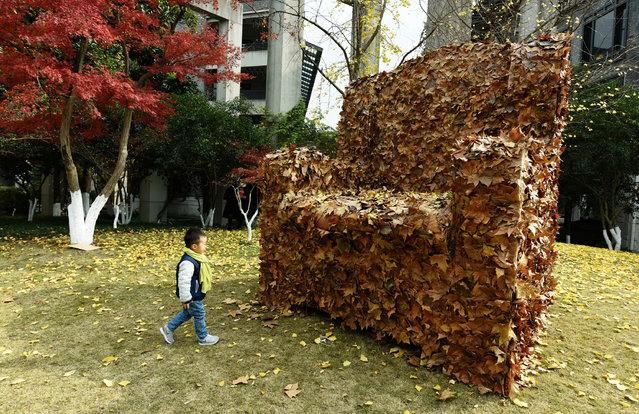
A child walks to an installation made from fallen leaves by college students, in shape of a sofa, to call for people's attention to environment protection, in Hangzhou, Zhejiang province, China, December 6, 2016. (Photo by Reuters/China Daily)

A child walks to an installation made from fallen leaves by college students, in shape of a sofa, to call for people's attention to environment protection, in Hangzhou, Zhejiang province, China, December 6, 2016. (Photo by Reuters/China Daily)
Details
07 Dec 2016 12:36:00
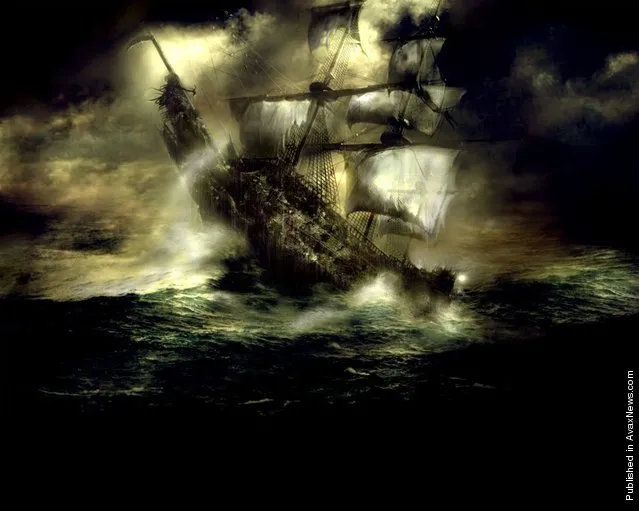
Ocean voyage

Do you think that history is a science? Well, not exactly. First, and foremost, history is the state's “legend of wars”, it’s official regalia. Of course, public historians are not interested in scientific truth – quite the opposite. In this respect, any attempt to present a state’s history as altruistic and benevolent as possible is welcomed and encouraged – as opposed to any revisionism attempts that may be more accurate. In this matter, Chinese have surpassed us all – they revised in highly creative manner (but rather shamelessly) the technology already invented by Europeans, a process that resulted in oldest state on the planet. Here is an interesting paradox: ask any sinologist about the Middle Kingdom during second century B.C., and he will describe it to you in such a vivid manner as if he has been living there all his life – but as soon as you will ask him to describe Chinese history in the 19-20th centuries… let's say, his eagerness will be greatly diminished. However, we will discuss China in a different article, and in the meantime we will try to understand how exactly historic “legend of wars” is formed and functions – based on a specific and well-known example. A great example is Ferdinand Magellan's first voyage around the world.
Details
14 Nov 2011 09:11:00