Loading...
Done
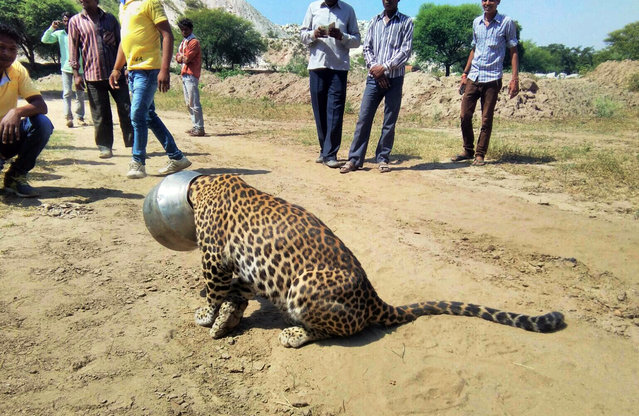
People stand around a leopard with its head stuck in a vessel in Rajsamand district of Rajasthan state, India, Wednesday, September 30, 2015. The leopard's head got stuck when it attempted to drink water from the pot, according to news reports. Forest officials tranquilized the animal and sawed off the vessel later in the day. (Photo by Kabir Jethi/AP Photo)

People stand around a leopard with its head stuck in a vessel in Rajsamand district of Rajasthan state, India, Wednesday, September 30, 2015. The leopard's head got stuck when it attempted to drink water from the pot, according to news reports. Forest officials tranquilized the animal and sawed off the vessel later in the day. (Photo by Kabir Jethi/AP Photo)
Details
31 Dec 2015 08:00:00
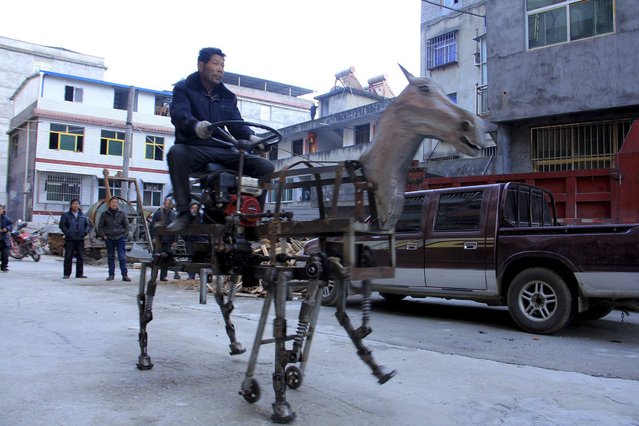
Su Daocheng rides his home-made mechanical horse vehicle on a street in Shiyan, Hubei province January 18, 2015. Su spent 2 months making this 1.5 metre high and 2 metre long horse, which weighed 250 kilograms with 4 legs and 2 supportive wheels, local media reported. (Photo by Reuters/Stringer)

Su Daocheng rides his home-made mechanical horse vehicle on a street in Shiyan, Hubei province January 18, 2015. Su spent 2 months making this 1.5 metre high and 2 metre long horse, which weighed 250 kilograms with 4 legs and 2 supportive wheels, local media reported. (Photo by Reuters/Stringer)
Details
23 Jan 2015 12:48:00
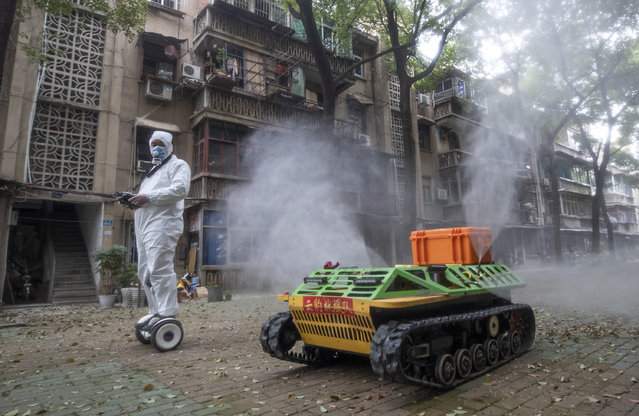
A volunteer operates a remote controlled disinfection robot to disinfect a residental area amid the COVID-19 coronavirus outbreak in Wuhan in China's central Hubei province on March 16, 2020. China tightened quarantine measures for international arrivals on March 16 as the country worries about a rise in imported cases of the deadly coronavirus and anger rages online at how Europe and the United States are handling the pandemic. (Photo by AFP Photo/China Stringer Network)

A volunteer operates a remote controlled disinfection robot to disinfect a residental area amid the COVID-19 coronavirus outbreak in Wuhan in China's central Hubei province on March 16, 2020. China tightened quarantine measures for international arrivals on March 16 as the country worries about a rise in imported cases of the deadly coronavirus and anger rages online at how Europe and the United States are handling the pandemic. (Photo by AFP Photo/China Stringer Network)
Details
18 Mar 2020 00:07:00
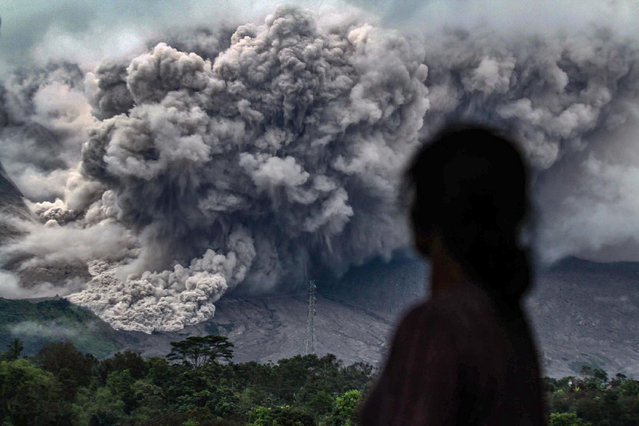
An Indonesian woman watches an eruption from the Mount Sinabung volcano from Tiga Pancur village, in Karo in North Sumatra on November 3, 2017. Sinabung roared back to life in 2010 for the first time in 400 years. After another period of inactivity it erupted once more in 2013, and has remained highly active since. (Photo by Ivan Damanik/AFP Photo)

An Indonesian woman watches an eruption from the Mount Sinabung volcano from Tiga Pancur village, in Karo in North Sumatra on November 3, 2017. Sinabung roared back to life in 2010 for the first time in 400 years. After another period of inactivity it erupted once more in 2013, and has remained highly active since. (Photo by Ivan Damanik/AFP Photo)
Details
13 Nov 2017 07:31:00
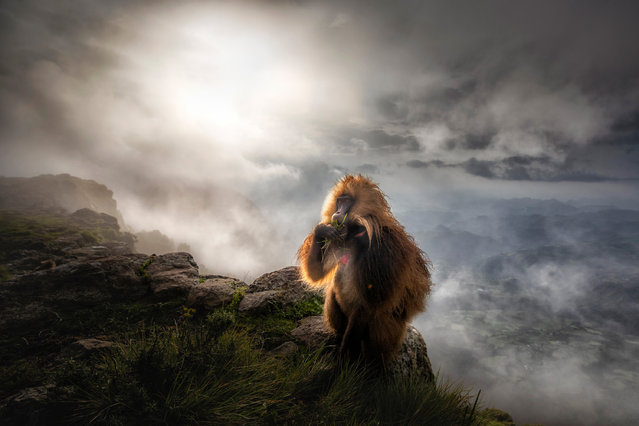
Highly commended, mammals: Gelada after the storm – Marco Gaiotti (Italy). “Gelada baboons are the only monkey species in the world that feed on grasses. They are native to the tableland of Ethiopia. Every morning large family groups wander from their sleeping places in the steep rock face, up to 1,000 metres high, to the feeding grounds at the tablelands. This image clearly depicts their feeding strategy: they pull out bunches of grass, sort the stalks and then lift them to their mouth. This shot was taken towards the end of the rainy season after a heavy storm”. (Photo by Marco Gaiotti/2019 GDT European Wildlife Photographer of the Year)

Highly commended, mammals: Gelada after the storm – Marco Gaiotti (Italy). “Gelada baboons are the only monkey species in the world that feed on grasses. They are native to the tableland of Ethiopia. Every morning large family groups wander from their sleeping places in the steep rock face, up to 1,000 metres high, to the feeding grounds at the tablelands. This image clearly depicts their feeding strategy: they pull out bunches of grass, sort the stalks and then lift them to their mouth. This shot was taken towards the end of the rainy season after a heavy storm”. (Photo by Marco Gaiotti/2019 GDT European Wildlife Photographer of the Year)
Details
31 Oct 2019 00:03:00
Lv Mengmeng, who was born in 1995, poses for a photograph in Shanghai August 22, 2014. When asked if she would like siblings, Mengmeng said: “Maybe brothers, because I think they could protect me”. (Photo by Carlos Barria/Reuters)

Reuters Photographer Carlos Barria photographed a person born in each year China's one child policy has been in existence; from a man born in 1979, to a baby born in 2014, and asked them if they would have like to have siblings. Here: Lv Mengmeng, who was born in 1995, poses for a photograph in Shanghai August 22, 2014. When asked if she would like siblings, Mengmeng said: “Maybe brothers, because I think they could protect me”. (Photo by Carlos Barria/Reuters)
Details
06 Oct 2014 08:20:00
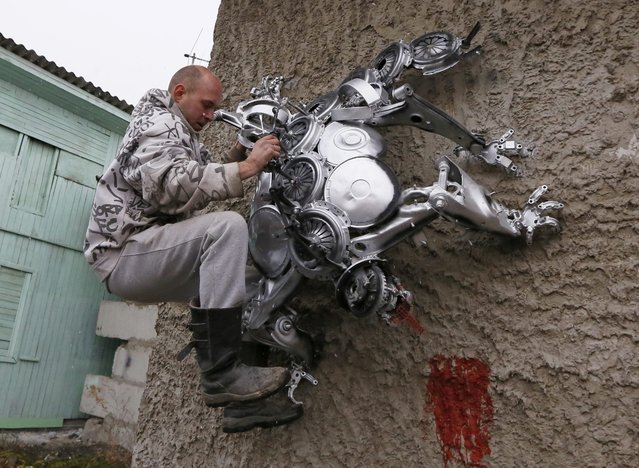
Mechanic and welder Sergei Kulagin, 32, strengthens the bracing of a spider sculpture, made by Kulagin, during a demonstration on the wall of an automobile repair workshop in the town of Divnogorsk outside Krasnoyarsk, Siberia, October 15, 2014. Enthusiast Kulagin, who works as a mechanic of an automobile service station, created about 20 sculptures made of used car parts and components during his non-working hours. (Photo by Ilya Naymushin/Reuters)

Mechanic and welder Sergei Kulagin, 32, strengthens the bracing of a spider sculpture, made by Kulagin, during a demonstration on the wall of an automobile repair workshop in the town of Divnogorsk outside Krasnoyarsk, Siberia, October 15, 2014. Enthusiast Kulagin, who works as a mechanic of an automobile service station, created about 20 sculptures made of used car parts and components during his non-working hours. (Photo by Ilya Naymushin/Reuters)
Details
18 Oct 2014 10:36:00
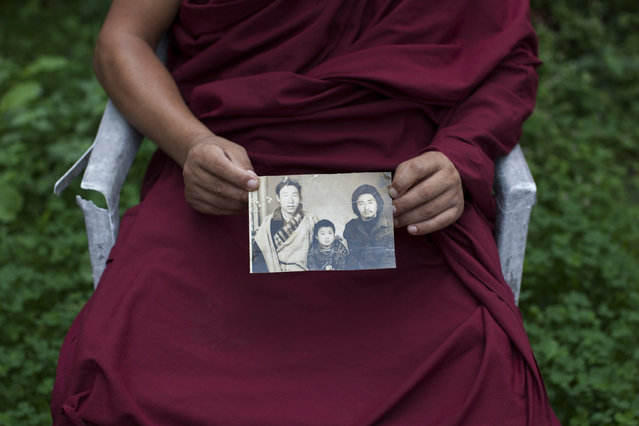
In this Saturday, September 27, 2014 photo, Tibetan monk Dorjee, 38, displays a photograph of his father, left, and himself, center, taken in Tibet, in Dharamsala, India. Dorjee said he held back his tears when he spoke with his parents on the phone after a separation period of 27 years. He exchanged a few words with his father but said his mother fainted on hearing his voice. (Photo by Tsering Topgyal/AP Photo)

“When I was 8 years old, my parents paid a smuggler to take me across the Himalayas, a weekslong walk over the mountains from Tibet to India. It was a trek that tens of thousands of other Tibetans have taken since the Dalai Lama fled a failed 1959 uprising against Chinese rule. My parents must have had their reasons to send me here; they must have had the best of intentions. But 18 years later, I still don't know why they did it. They are not political people. They are small farmers who raise barley and a few yak in a rural area not far from Lhasa, the Tibetan capital. I have not seen them since I left...”. – Tsering Topgyal via The Associated Press. (Photo by Tsering Topgyal/AP Photo)
Details
05 Nov 2014 12:27:00