Loading...
Done
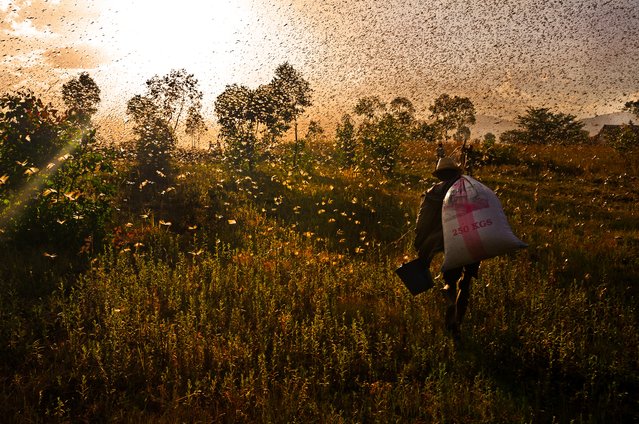
“Locusts & Men”. Oppression, interaction, collaboration. In the life cycle of nature nothing is lost, but the coexistence of different species is sometimes difficult. In Madagascar periodically returns the archaic antagonism between man and the migratory locust, in a circle of life where the two species are looking for space and food for their survival. Photo location: Madagascar, 2013. (Photo and caption by Michele Martinelli/National Geographic Photo Contest)

“Locusts & Men”. Oppression, interaction, collaboration. In the life cycle of nature nothing is lost, but the coexistence of different species is sometimes difficult. In Madagascar periodically returns the archaic antagonism between man and the migratory locust, in a circle of life where the two species are looking for space and food for their survival. At the end of the day a man walks home carrying on his shoulders the heavy bag which contains the locusts captured during the day. The insects provide nutritious meals for the man and his family. Photo location: Madagascar, 2013. (Photo and caption by Michele Martinelli/National Geographic Photo Contest)

ATTENTION! All pictures are presented in high resolution. To see Hi-Res images – just TWICE click on any picture. In other words, click small picture – opens the BIG picture. Click BIG picture – opens VERY BIG picture.
Details
03 Dec 2013 10:59:00
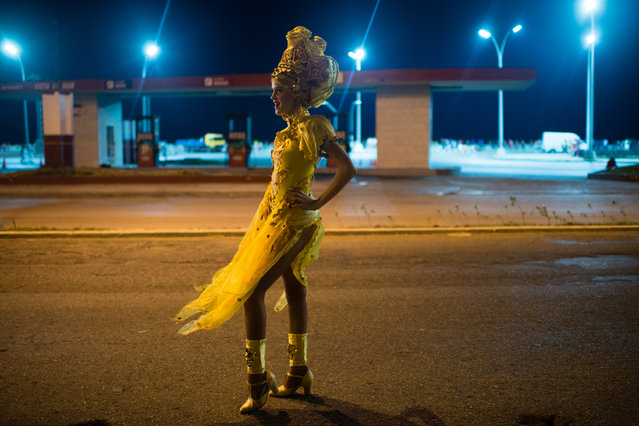
Yakelin Hernandez, 18, poses for a photograph near The Malecon where The Carnival was held, on August 14, 2015. Colorful costumes, dancing, parades and street parties on the Malecon in Havana, Cuba are all part of Havana Carnival 2015 which was held in August. (Photo by Sarah L. Voisin/The Washington Post)

Yakelin Hernandez, 18, poses for a photograph near The Malecon where The Carnival was held, on August 14, 2015. Colorful costumes, dancing, parades and street parties on the Malecon in Havana, Cuba are all part of Havana Carnival 2015 which was held in August. (Photo by Sarah L. Voisin/The Washington Post)
Details
16 Dec 2015 08:02:00
Harry Potter collectible busts are displayed in the home of Menahem Asher Silva Vargas, after he was presented with a Guinness World Record title certificate for the largest collection of Harry Potter memorabilia, in Mexico City, Monday, September 29, 2014. Silva's collection consists of more than 3000 individual items, including trading cards, wands, and books in multiple languages. (Photo by Rebecca Blackwell/AP Photo)

Harry Potter collectible busts are displayed in the home of Menahem Asher Silva Vargas, after he was presented with a Guinness World Record title certificate for the largest collection of Harry Potter memorabilia, in Mexico City, Monday, September 29, 2014. Silva's collection consists of more than 3000 individual items, including trading cards, wands, and books in multiple languages. (Photo by Rebecca Blackwell/AP Photo)
Details
01 Oct 2014 11:06:00
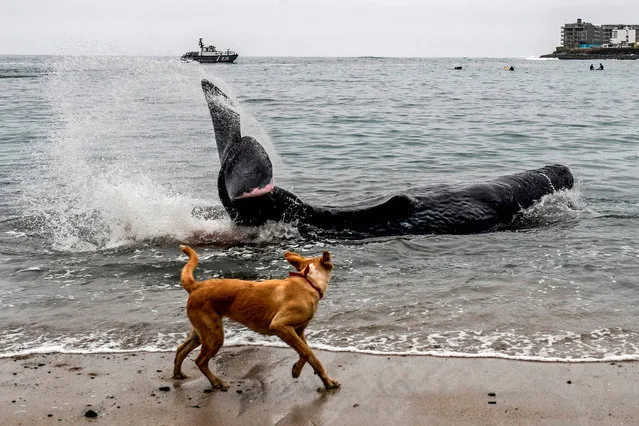
A dog looks at a five-meter-long sperm whale stranded at San Bartolo beach, in Lima, on August 20, 2019. Surfers and policemen saved Tuesday an injured whale which remained stranded some hours at a beach in southern Lima, police informed. (Photo by Ernesto Benavides/AFP Photo)

A dog looks at a five-meter-long sperm whale stranded at San Bartolo beach, in Lima, on August 20, 2019. Surfers and policemen saved Tuesday an injured whale which remained stranded some hours at a beach in southern Lima, police informed. (Photo by Ernesto Benavides/AFP Photo)
Details
25 Aug 2019 00:03:00
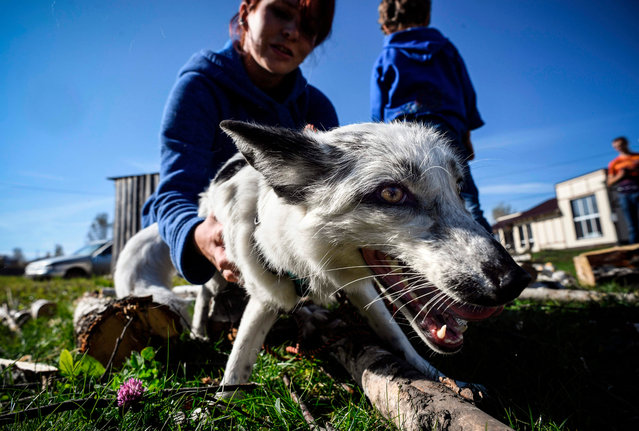
Tatyana Abramova, 33, plays with her home fox Plombir at her countryside house outside Siberian city of Novosibirsk on September 12, 2020. The official start of the Soviet experiment to better understand the domestication of animals by humans began in 1959, and was initiated by geneticists Dmitri Beliaiev and Lioudmila Trout on a farm in Akademgorodok, the scientific center of excellence in Siberia. Their primary objective was to domesticate foxes, to understand how the ancestor of wolves, another canine, evolved into a loyal and loving dog. And understand what this domestication tells us about the genetic evolution of species. (Photo by Alexander Nemenov/AFP Photo)

Tatyana Abramova, 33, plays with her home fox Plombir at her countryside house outside Siberian city of Novosibirsk on September 12, 2020. The official start of the Soviet experiment to better understand the domestication of animals by humans began in 1959, and was initiated by geneticists Dmitri Beliaiev and Lioudmila Trout on a farm in Akademgorodok, the scientific center of excellence in Siberia. Their primary objective was to domesticate foxes, to understand how the ancestor of wolves, another canine, evolved into a loyal and loving dog. And understand what this domestication tells us about the genetic evolution of species. (Photo by Alexander Nemenov/AFP Photo)
Details
25 Oct 2020 00:05:00
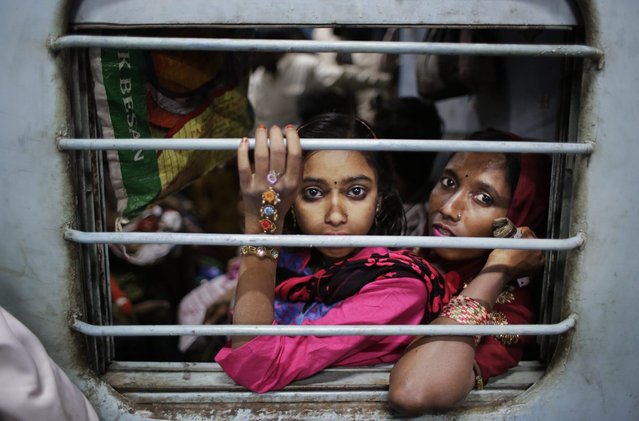
In this November 18, 2014 photo, Murshida, 12, sits on the lap of her mother Marjina as the train leaves for their village in West Bengal, at a railway station in New Delhi, India. Six months ago, Marjina stepped off a train in New Delhi with her two children, hoping to find a better life after her husband abandoned them without so much as a goodbye. (Photo by Altaf Qadri/AP Photo)

In this November 18, 2014 photo, Murshida, 12, sits on the lap of her mother Marjina as the train leaves for their village in West Bengal, at a railway station in New Delhi, India. Six months ago, Marjina stepped off a train in New Delhi with her two children, hoping to find a better life after her husband abandoned them without so much as a goodbye. The family spent their days at a landfill picking through other people’s garbage to find salvageable bits to resell or recycle. After six months of poverty, illness and shame, they returned to that train station in New Delhi, headed back to an uncertain future to their hometown in West Bengal. (Photo by Altaf Qadri/AP Photo)
Details
09 Dec 2014 09:47:00
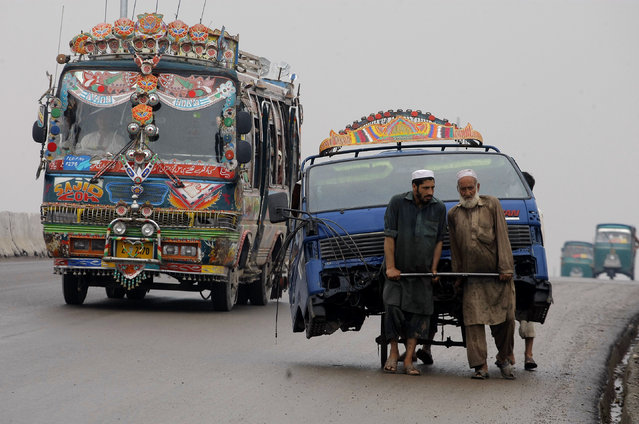
Pakistani laborers transport the front portion of a vehicle using a handcart at a road in Peshawar, Pakistan, Monday, August 3, 2015. (Photo by Mohammad Sajjad/AP Photo)

Pakistani laborers transport the front portion of a vehicle using a handcart at a road in Peshawar, Pakistan, Monday, August 3, 2015. (Photo by Mohammad Sajjad/AP Photo)
Details
04 Aug 2015 12:09:00
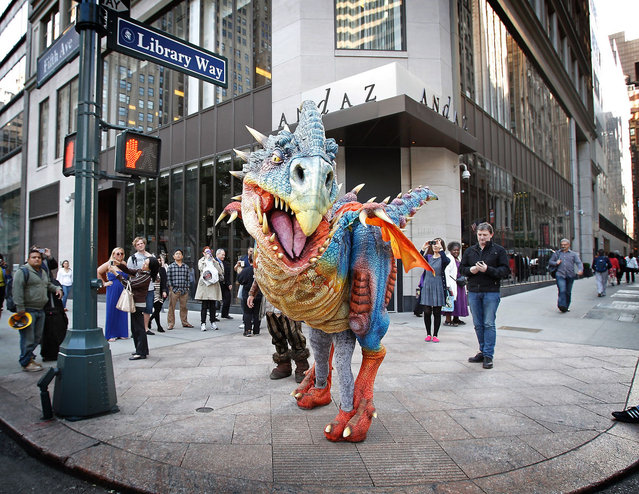
The Baby Nager dragon, from DreamWorks’ new “How to Train Your Dragon” Live Spectacular touring musical, shows off it’s colors outside of the New York Public Library

The Baby Nager dragon, from DreamWorks’ new “How to Train Your Dragon” Live Spectacular touring musical, shows off it’s colors outside of the New York Public Library. (Photo by Mark Von Holden)
Details
19 May 2012 13:05:00