Loading...
Done
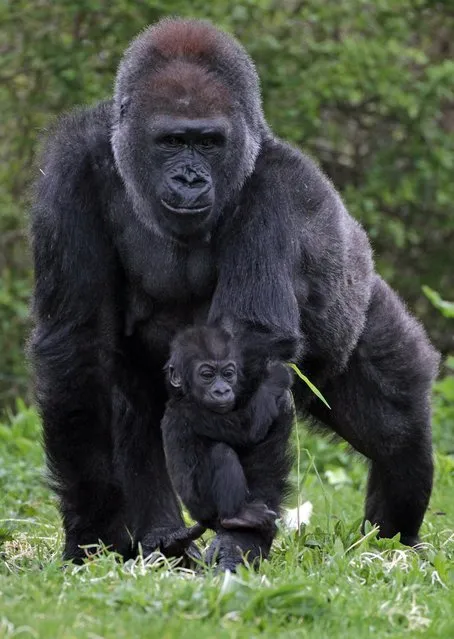
Bristol Zoo's baby gorilla Kukena

Bristol Zoo's baby gorilla Kukena holds onto his mother's arm as he ventures out of his enclosure at Bristol Zoo's Gorilla Island on May 4, 2012 in Bristol, England. The seven-month-old western lowland gorilla is starting to find his feet as he learns to walk having been born at the zoo in September. Kukena joins a family of gorillas at the zoo that are part of an international conservation breeding programme for the western lowland gorilla, which is a critically endangered species. (Photo by Matt Cardy)
Details
09 May 2012 02:26:00
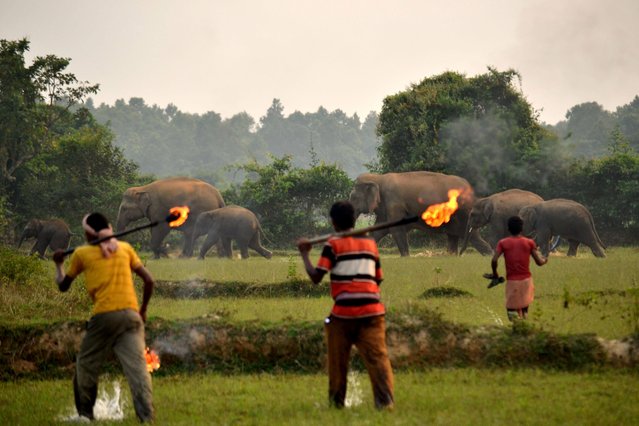
These heartbreaking photo show a confused family of elephants attempting to navigate a railway line built straight through their habitat on October 16, 2012. Taken by Biplab Hazra in Bishnupur, India, the images show the extreme lengths the inhabitants of the town go to to deter elephants from damaging their crops and property. As the images show, villagers often resort to extreme tactics in an effort to drive the elephants out  with one shocking photograph revealing firebombs being launched at a mother and calf as they cross the road. Elephants encroaching out of their habitats is an increasingly common occurrence with deforestation in much of India. (Photo by Biplab Hazra/Caters News Agency)

These heartbreaking photo show a confused family of elephants attempting to navigate a railway line built straight through their habitat on October 16, 2012. Taken by Biplab Hazra in Bishnupur, India, the images show the extreme lengths the inhabitants of the town go to to deter elephants from damaging their crops and property. As the images show, villagers often resort to extreme tactics in an effort to drive the elephants out with one shocking photograph revealing firebombs being launched at a mother and calf as they cross the road. Elephants encroaching out of their habitats is an increasingly common occurrence with deforestation in much of India. (Photo by Biplab Hazra/Caters News Agency)
Details
26 Jan 2019 00:05:00
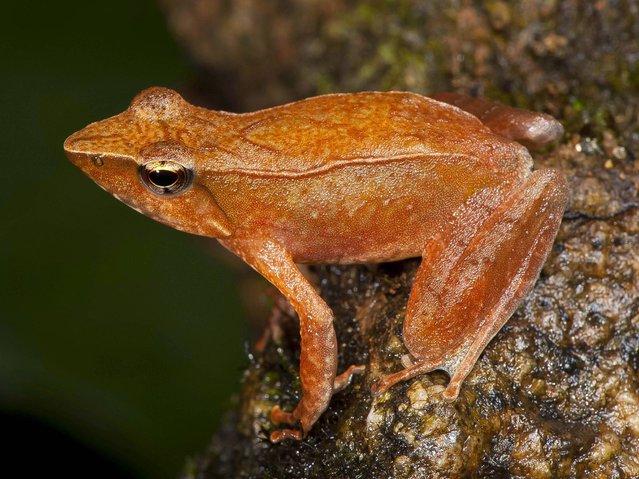
Orange dancing frog discovered by a team headed by University of Delhi professor Sathyabhama Das Biju in the jungle mountains of southern India. (Photo by Satyabhama Das Biju/AP Photo)

This undated photograph shows one of the 14 new species of so-called dancing frogs discovered by a team headed by University of Delhi professor Sathyabhama Das Biju in the jungle mountains of southern India. The study listing the new species brings the number of known Indian dancing frogs to 24 and attempts the first near-complete taxonomic sampling of the single-genus family found exclusively in southern India's lush mountain range called the Western Ghats, which stretches 1,600 kilometers (990 miles) from the west state of Maharashtra down to the country's southern tip. (Photo by Satyabhama Das Biju/AP Photo)
Details
09 May 2014 08:50:00


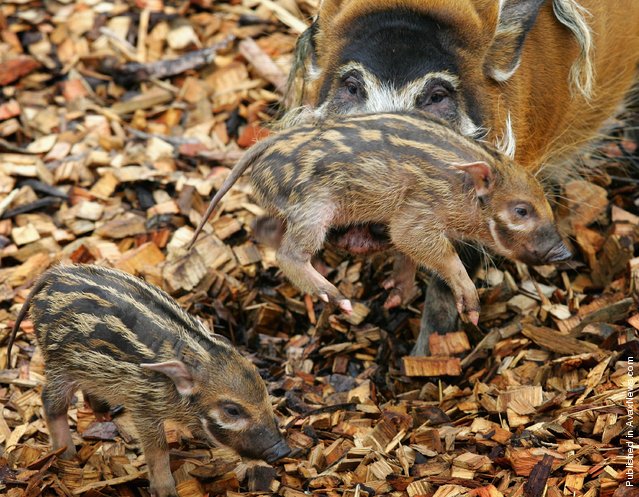
“The Red River Hog (Potamochoerus porcus), also known as the Bush Pig (but not to be confused with P. larvatus, common name “Bushpig”), is a wild member of the pig family living in Africa, with most of its distribution in the Guinean and Congolian forests. It is rarely seen away from rainforests, and generally prefers areas near rivers or swamps.

Red River Hogs eat grass, berries, roots, insects, molluscs, small vertebrates and carrion. They are capable of causing damage to plantations. Red River Hogs typically live in herds of 6-20 members led by a dominant boar. Sows rear 3-6 piglets at a time.”

Photo: Two 17 day old red river hoglet twins forage for food next to their mother Bahiti at London Zoo on August 23, 2007 in London, England. Red River hoglets inhabit the forests and swamps of West and Central Africa. The recent additions to the London Zoo pig pen have been eagerly awaited by zoo keepers. (Photo by Chris Jackson/Getty Images)
Details
18 Mar 2011 15:15:00
Palestinian girl Manar Al-Shinbari (R), 15, who lost her both legs by what medics said was Israeli shelling at a UN-run school where she was taking refuge during the 50-day war last summer, is helped by her sister to put on her headscarf in an apartment in Jabaliya refugee camp in the northern Gaza Strip January 13, 2015. (Photo by Mohammed Salem/Reuters)

Palestinian girl Manar Al-Shinbari (R), 15, who lost her both legs by what medics said was Israeli shelling at a UN-run school where she was taking refuge during the 50-day war last summer, is helped by her sister to put on her headscarf in an apartment in Jabaliya refugee camp in the northern Gaza Strip January 13, 2015. Manar's mother and three of her brothers were killed in the same incident. The girl's family house was destroyed by Israeli shelling during the war. (Photo by Mohammed Salem/Reuters)
Details
14 Jan 2015 12:34:00
1948年3月,外滩,便衣警察棒打偷拿棉花的老太。 (In March 1948, the Bund, plainclothes police officers wreck stole cotton Granny)

Photos from 虹桥故事's photostream. Attention! From Chinese to English translated by Google!

Photo: 1948年3月,外滩,便衣警察棒打偷拿棉花的老太。 (In March 1948, the Bund, plainclothes police officers wreck stole cotton Granny)
Details
12 Aug 2012 08:41:00
Newborn White-Cheeked Gibbon Nomascus

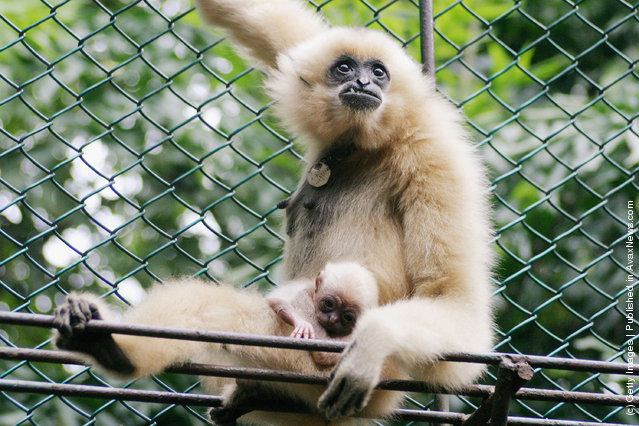
“Nomascus is the second most speciose genus of gibbons (family Hylobatidae). Originally this genus was a subgenus of Hylobates, and all individuals were considered one species, Hylobates concolor. Species within Nomascus are characterized by 52 chromosomes. Some species are all black, some light with a distinct black tuft of crown fur, and some by distinct, light-colored cheek patches. Nomascus is found from southern China (Yunnan) to southern Vietnam, and also on Hainan Island. One of the genus' species, Nomascus nasutus, has been deemed “the most critically endangered ape species in the world”. All of the species in this genus are endangered or critically endangered”. – Wikipedia

Photo: A newborn White-Cheeked Gibbon clings to its mother in the Nanning Zoo on April 12, 2004 in Nanning, Guangxi province, China. The White-Cheeked Gibbon's natural habitat is Southern China as well as Vietnam and Laos. They are classified as highly endangered and are on the brink of extinction due to poaching and reduction of natural rainforests. (Photo by Getty Images)
Details
12 Aug 2011 11:51:00
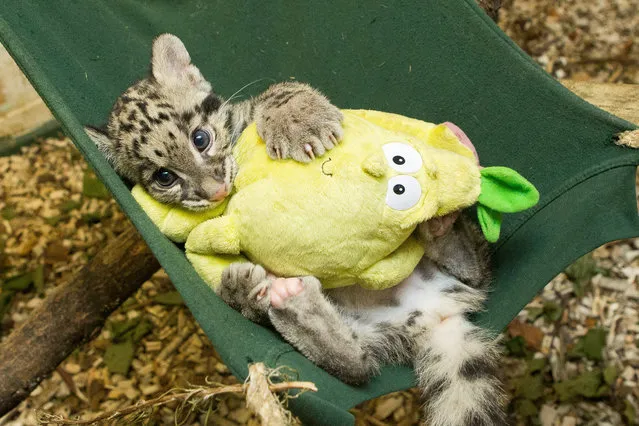
Nimbus, the 2 month old clouded leopard cub, who was hand reared at the home of curator Jamie Craig. Photographed sitting in her hammock at Cotswold Wildlife Park, Burford, Oxfordshire, UK on September 2014. (Photo by SWNS/ABACAPress)

Nimbus, the 2 month old clouded leopard cub, who was hand reared at the home of curator Jamie Craig. Photographed sitting in her hammock at Cotswold Wildlife Park, Burford, Oxfordshire, UK on September 2014. Jamie Craig the curator of the Cotswold Wildlife park has hand reared the baby clouded leopard in his family bathroom after he was rejected by his mother. Now two months old Nimbus is been fed a cat milk replacement diet by bottle and is given soft toys to play with. It is hoped that the leopard will re-join others at the park and eventually join their breeding program. (Photo by SWNS/ABACAPress)
Details
03 Oct 2014 11:43:00