Loading...
Done
Underwater photographer of the year – winner. Dancing Octopus by Gabriel Barathieu (France). Location: Island of Mayotte, off the coast of south-east Africa. “Balletic and malevolent”, one judge said of this octopus, hunting in a lagoon. Barathieu waited until spring tides when there was just 30cm of water on the flats and plenty of light in the shallows. (Photo by Gabriel Barathieu/UPY2017)

Underwater photographer of the year – winner. Dancing Octopus by Gabriel Barathieu (France). Location: Island of Mayotte, off the coast of south-east Africa. “Balletic and malevolent”, one judge said of this octopus, hunting in a lagoon. Barathieu waited until spring tides when there was just 30cm of water on the flats and plenty of light in the shallows. (Photo by Gabriel Barathieu/UPY2017)
Details
16 Feb 2017 00:06:00
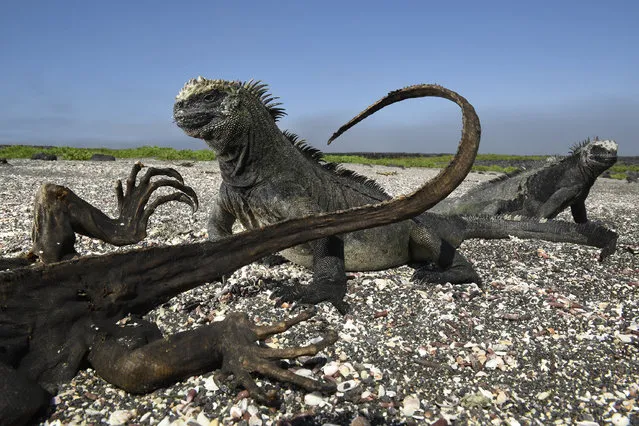
Galapagos – Rocking the Cradle: Four major ocean currents converge along the Galapagos archipelago, creating the conditions for an extraordinary diversity of animal life, April 25, 2016. The islands are home to at least 7,000 flora and fauna species, of which 97 percent of the reptiles, 80 percent of the land birds, 50 percent of the insects and 30 percent of the plants are endemic. The local ecosystem is highly sensitive to the changes in temperature, rainfall and ocean currents that characterize the climatic events known as El Niño and La Niña. These changes cause marked fluctuations in weather and food availability. Many scientists expect the frequency of El Niño and La Niña to increase as a result of climate change, making the Galapagos a possible early-warning location for its effects. (Photo by Thomas P. Peschak for National Geographic/World Press Photo)

Galapagos – Rocking the Cradle: Four major ocean currents converge along the Galapagos archipelago, creating the conditions for an extraordinary diversity of animal life, April 25, 2016. The islands are home to at least 7,000 flora and fauna species, of which 97 percent of the reptiles, 80 percent of the land birds, 50 percent of the insects and 30 percent of the plants are endemic. (Photo by Thomas P. Peschak for National Geographic/World Press Photo)
Details
16 Apr 2018 00:01:00
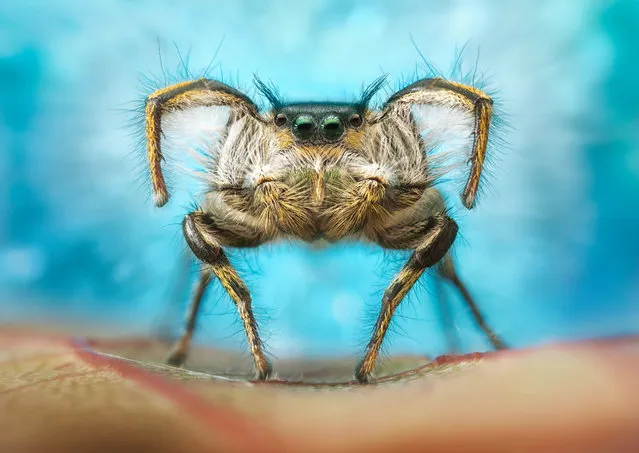
Arachnids category 3rd place: dancing spider by Raed Ammari. Male jumping spiders (in this case a Phidippus insignarius) perform a courtship dance in which they almost form a heart shape with their legs. This one was shot in Colorado. (Photo by Raed Ammari/Luminar Bug Photographer of the Year 2020)

Arachnids category 3rd place: dancing spider by Raed Ammari. Male jumping spiders (in this case a Phidippus insignarius) perform a courtship dance in which they almost form a heart shape with their legs. This one was shot in Colorado. (Photo by Raed Ammari/Luminar Bug Photographer of the Year 2020)
Details
24 Oct 2020 00:03:00
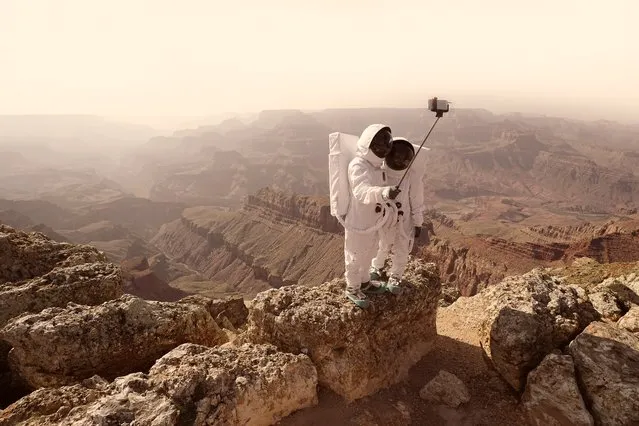
Professional conceptual category winner. Greetings from Mars, by Julien Mauve, France. Mauve says: “I have always wondered what it would be like to discover a totally different world ... and to photograph it for the first time as if I was Ansel Adams. So I came up with this project, which is about space exploration and discovery. But it’s also about our behavior in front of landscapes and how we create pictures that will share our personal story with the world”. (Photo by Julien Mauve)

Professional conceptual category winner. Greetings from Mars, by Julien Mauve, France. Mauve says: “I have always wondered what it would be like to discover a totally different world ... and to photograph it for the first time as if I was Ansel Adams. So I came up with this project, which is about space exploration and discovery. But it’s also about our behavior in front of landscapes and how we create pictures that will share our personal story with the world”. (Photo by Julien Mauve)
Details
23 Apr 2016 13:57:00
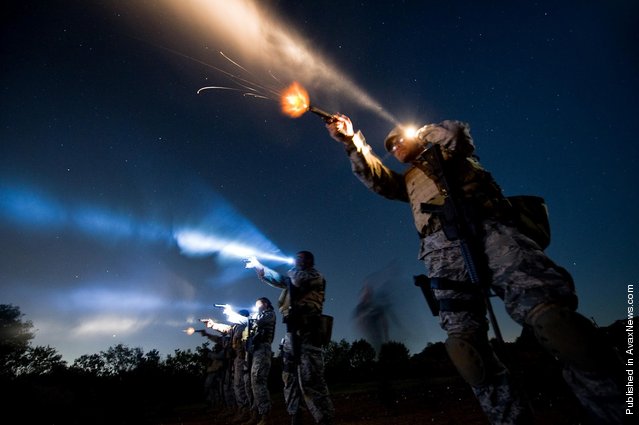
Tech. Sgt. Milo Hinson, 3rd Combat Camera Squadron, uses a flashlight while shooting a Berretta 9mm during the night-fire portion of Advance Weapons, Tactics and Techniques training in San Antonio. During night-fire training, airmen learn how to tactically illuminate targets with flashlights and practice using night vision goggles

Tech. Sgt. Milo Hinson, 3rd Combat Camera Squadron, uses a flashlight while shooting a Berretta 9mm during the night-fire portion of Advance Weapons, Tactics and Techniques training in San Antonio. During night-fire training, airmen learn how to tactically illuminate targets with flashlights and practice using night vision goggles. (Photo by Staff Sgt. Jonathan Snyder/U.S. Air Force). 2011
Details
12 Apr 2012 12:53:00
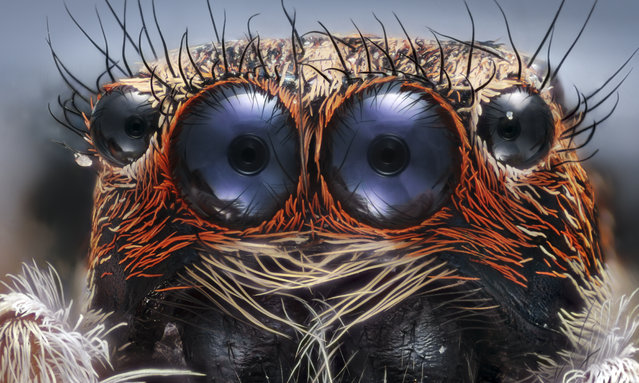
Honorable Mention by Emre Can Alagöz, Istanbul, Turkey: The eyes of a jumping spider, magnified 6x. (Photo by Emre Can Alagöz/2017 Nikon Small World Photomicrography Competition)

A competition, now in its 43rd year, dedicated to showcasing the beautiful and bizarre as seen under a light microscope attracted over 2,000 entries from 88 countries. Here: Honorable Mention by Emre Can Alagöz, Istanbul, Turkey: The eyes of a jumping spider, magnified 6x. (Photo by Emre Can Alagöz/2017 Nikon Small World Photomicrography Competition)
Details
09 Oct 2017 07:52:00
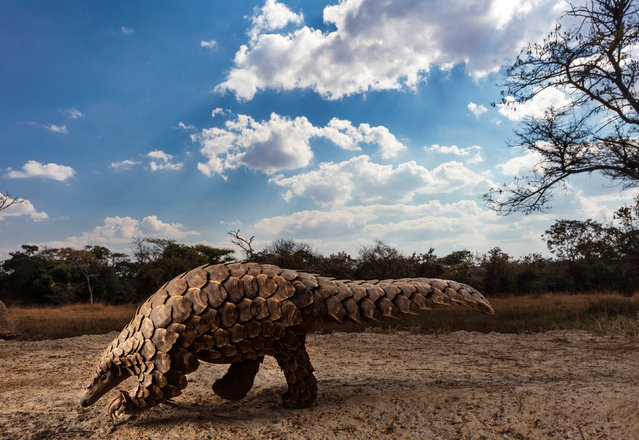
Pangolins in Crisis: Brent Stirton, South Africa; 1st place, Natural world and wildlife. “Pangolins are the world’s most illegally trafficked mammals, with an estimated one million trafficked to Asia in the last 10 years. Their scales are used in traditional Chinese and Vietnamese medicine, and their meat is sold as a high-priced delicacy. As a result, pangolins are listed as critically endangered and anyone who trades or consumes them is breaking the law. This body of work exposes the trade, while exploring aspects of illegality and celebrating the people who are trying to save these animals”. (Photo by Brent Stirton/Sony World Photography Awards 2020)

Pangolins in Crisis: Brent Stirton, South Africa; 1st place, Natural world and wildlife. “Pangolins are the world’s most illegally trafficked mammals, with an estimated one million trafficked to Asia in the last 10 years. Their scales are used in traditional Chinese and Vietnamese medicine, and their meat is sold as a high-priced delicacy. As a result, pangolins are listed as critically endangered and anyone who trades or consumes them is breaking the law. This body of work exposes the trade, while exploring aspects of illegality and celebrating the people who are trying to save these animals”. (Photo by Brent Stirton/Sony World Photography Awards 2020)
Details
11 Jun 2020 00:05:00
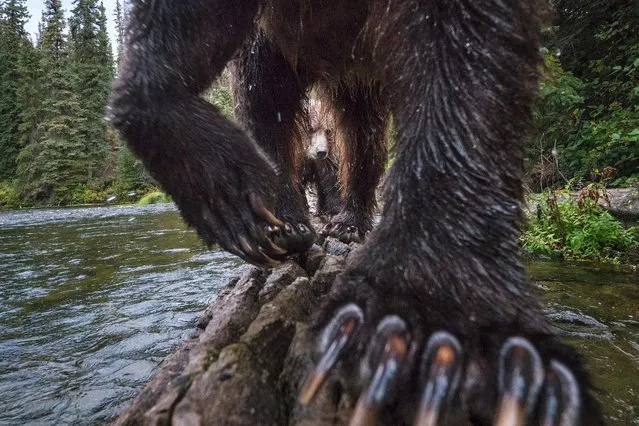
“The Salmon Catchers”. Terrestrial Wildlife. To capture this view of a mother grizzly bear and her cub, photographer Peter Mather set up a camera trap on a log that he knew the bears tended to traverse while fishing for salmon, in the Yukon River watershed in Canada. (Photo by Peter Mather/BigPicture Natural World Photography Competition 2017)

The fourth annual BigPicture Natural World Photography Competition aims to celebrate the diversity of life on Earth, and encourages people to protect and conserve it. Here: “The Salmon Catchers”. Terrestrial Wildlife. To capture this view of a mother grizzly bear and her cub, photographer Peter Mather set up a camera trap on a log that he knew the bears tended to traverse while fishing for salmon, in the Yukon River watershed in Canada. (Photo by Peter Mather/BigPicture Natural World Photography Competition 2017)
Details
02 Jul 2017 07:25:00