Loading...
Done
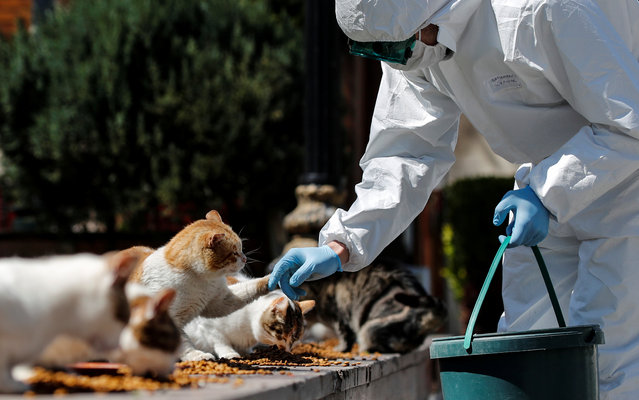
Van cats, relatively large, have a chalky white coat, sometimes with ruddy coloration on the head and hindquarters, and have blue or amber eyes or have heterochromia, are seen at “Cat Villa”, established to protect the cats in Van, Turkey on January 20, 2021. Internationally valid “health certificate” is prepared for Van cats, visited by local and foreign tourists, within a project to protect their generations and increasing their numbers. Health certificates with information such as name, breed, gender, eye color, date of birth, tail feature, color, hearing status and identity are given to people who want to adopt cats. (Photo by Mesut Varol/Anadolu Agency via Getty Images)

Van cats, relatively large, have a chalky white coat, sometimes with ruddy coloration on the head and hindquarters, and have blue or amber eyes or have heterochromia, are seen at “Cat Villa”, established to protect the cats in Van, Turkey on January 20, 2021. Internationally valid “health certificate” is prepared for Van cats, visited by local and foreign tourists, within a project to protect their generations and increasing their numbers. Health certificates with information such as name, breed, gender, eye color, date of birth, tail feature, color, hearing status and identity are given to people who want to adopt cats. (Photo by Mesut Varol/Anadolu Agency via Getty Images)
Details
29 Jan 2021 09:43:00
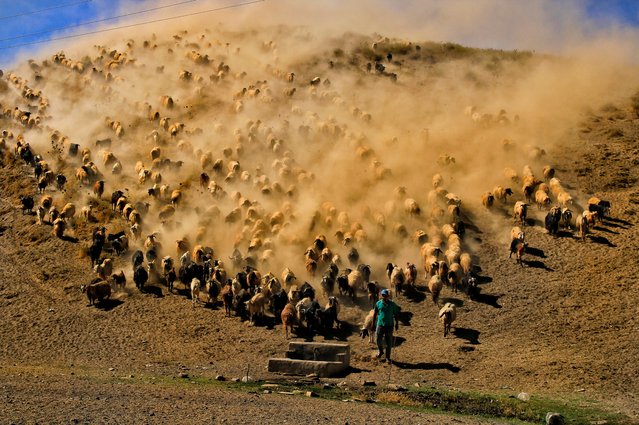
A shepherd and his flock in the Bitlis province of eastern Turkey in the first decade of April 2024. Shepherds regularly embark on gruelling journeys through the dusty outback, as they take their sheep to the high plateaus needed for grazing and then back to villages for milking. (Photo by Kahraman Kaya/Solent News)

A shepherd and his flock in the Bitlis province of eastern Turkey in the first decade of April 2024. Shepherds regularly embark on gruelling journeys through the dusty outback, as they take their sheep to the high plateaus needed for grazing and then back to villages for milking. (Photo by Kahraman Kaya/Solent News)
Details
21 May 2024 13:44:00
Dogs are seen at the 2021 Pawlidays celebration at Sofitel Hotel Los Angeles on December 18, 2021 in Los Angeles, California. (Photo by Emma McIntyre/Getty Images)

Dogs are seen at the 2021 Pawlidays celebration at Sofitel Hotel Los Angeles on December 18, 2021 in Los Angeles, California. (Photo by Emma McIntyre/Getty Images)
Details
26 Dec 2021 05:22:00
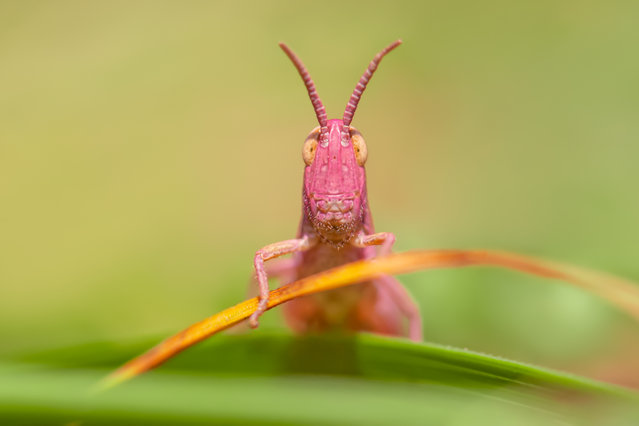
A rare grasshopper shines bright against its leafy background in North Holland, Netherlands in the first decade of October 2024. The insects are usually brown or green but turn pink due to a genetic mutation. (Photo by Roeselien Raimond/Media Drum Images)

A rare grasshopper shines bright against its leafy background in North Holland, Netherlands in the first decade of October 2024. The insects are usually brown or green but turn pink due to a genetic mutation. (Photo by Roeselien Raimond/Media Drum Images)
Details
09 Feb 2025 04:34:00
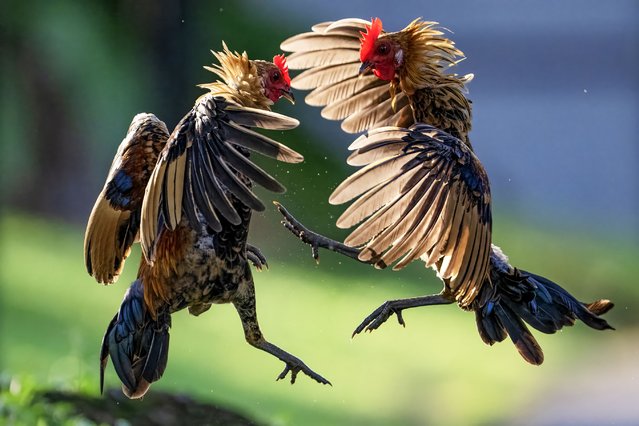
A pair of red junglefowl fight over territory in Pasir Ris Park, Singapore in the second decade of February 2025. (Photo by Liew Tong Leng/Solent News)

A pair of red junglefowl fight over territory in Pasir Ris Park, Singapore in the second decade of February 2025. (Photo by Liew Tong Leng/Solent News)
Details
23 Feb 2025 03:16:00
A smiling gecko bursts through a gap in the bark to surprise photographer in West Java, Indonesia in the last decade of March 2025. (Photo by Dzul Duzulfikri/Animal News Agency)

A smiling gecko bursts through a gap in the bark to surprise photographer in West Java, Indonesia in the last decade of March 2025. (Photo by Dzul Duzulfikri/Animal News Agency)
Details
06 Apr 2025 03:52:00
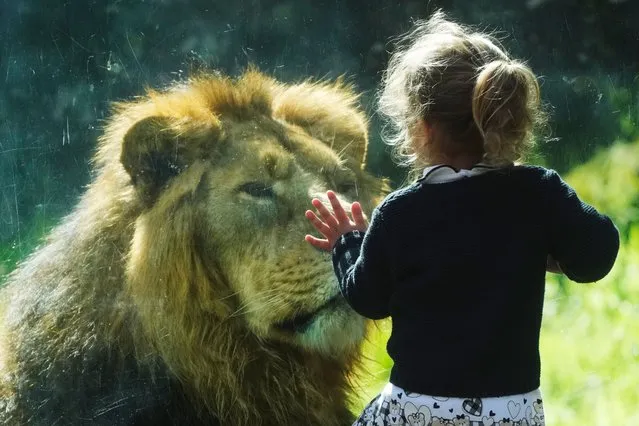
A child and any Asiatic Lion look at each other through a glass at Rome's Zoo, Thursday, March 7, 2024. (Photo by Gregorio Borgia/AP Photo)

A child and any Asiatic Lion look at each other through a glass at Rome's Zoo, Thursday, March 7, 2024. (Photo by Gregorio Borgia/AP Photo)
Details
17 Mar 2024 06:08:00
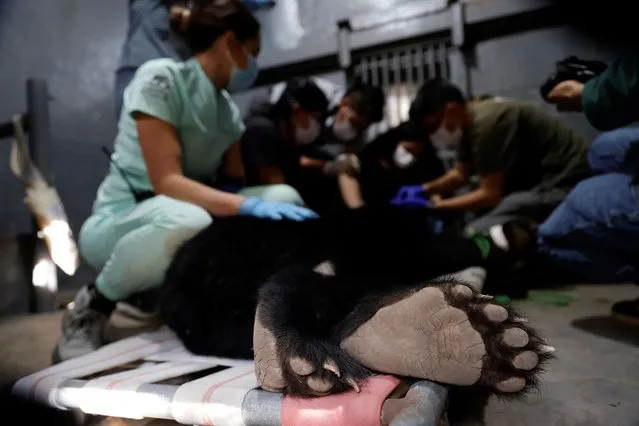
Veterinarians and biologists from the Quito Zoo and the Andean Condor Foundation fit a tracking collar that juvenile Andean bear Tupak will wear for the next four years, prior to his reintroduction into the wild, after the bear's life was deemed in danger due to proximity to humans, in Quito, Ecuador on March 31, 2024. (Photo by Karen Toro/Reuters)

Veterinarians and biologists from the Quito Zoo and the Andean Condor Foundation fit a tracking collar that juvenile Andean bear Tupak will wear for the next four years, prior to his reintroduction into the wild, after the bear's life was deemed in danger due to proximity to humans, in Quito, Ecuador on March 31, 2024. (Photo by Karen Toro/Reuters)
Details
07 Apr 2024 02:58:00