Loading...
Done
Women's Freestyle 50kg wrestling gold medalist Sarah Hildebrandt of Team United States carries Men's Greco-Roman 77kg wrestling gold medalist Nao Kusaka of Team Japan on stage on day thirteen of the Olympic Games Paris 2024 at Champions Park on August 08, 2024 in Paris, France. (Photo by Luke Hales/Getty Images)

Women's Freestyle 50kg wrestling gold medalist Sarah Hildebrandt of Team United States carries Men's Greco-Roman 77kg wrestling gold medalist Nao Kusaka of Team Japan on stage on day thirteen of the Olympic Games Paris 2024 at Champions Park on August 08, 2024 in Paris, France. (Photo by Luke Hales/Getty Images)
Details
17 Aug 2024 04:44:00
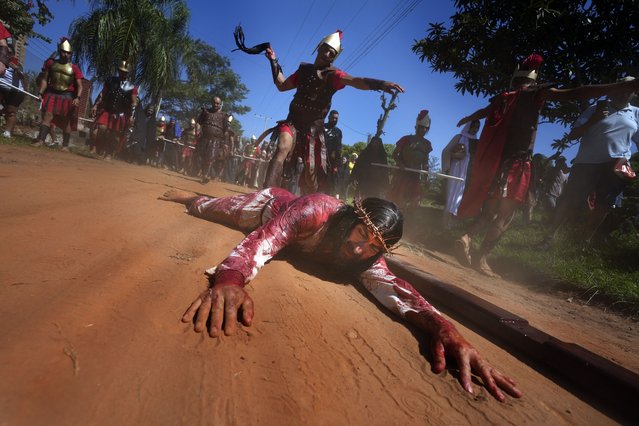
An actor, playing the role of Jesus Christ, is whipped by a Roman soldier as he falls during a Way of the Cross reenactment, as part of Holy Week celebrations, in Atyra, Paraguay, Friday, March 29, 2024. Holy Week commemorates the last week of Jesus' earthly life which culminates with his crucifixion on Good Friday and his resurrection on Easter Sunday. (Photo by Jorge Saenz/AP Photo)

An actor, playing the role of Jesus Christ, is whipped by a Roman soldier as he falls during a Way of the Cross reenactment, as part of Holy Week celebrations, in Atyra, Paraguay, Friday, March 29, 2024. Holy Week commemorates the last week of Jesus' earthly life which culminates with his crucifixion on Good Friday and his resurrection on Easter Sunday. (Photo by Jorge Saenz/AP Photo)
Details
13 Jun 2025 03:28:00
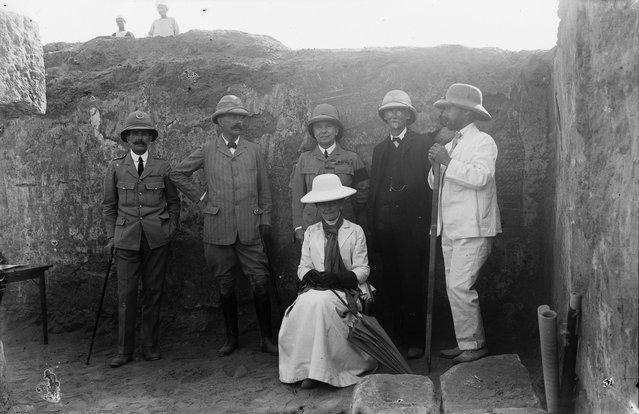
Remarkable discoveries were made, like the decapitated head of a bronze statue of Roman emperor Augustus, sacked from a raid on Roman garrisons further north in Egypt. Here: A group visiting the excavations at Meroë, including (from left) Midwinter Bey, director of Sudan Railways; Lord Kitchener; General Sir Francis Reginald Wingate, Sirdar of the Egyptian Army; Professor Archibald Sayce; John Garstang; and Lady Catherine Wingate, 1911. (Photo by Garstang Museum of Archaeology)

The city of Meroë laid undiscovered for two millennia before British archaeologist John Garstang excavated it in the early 20th century. Garstang took the radical decision to document his discoveries with photography – and immortalised an ancient world. “Meroë: Africa’s Forgotten Empire” is being shown until 14 September at Garstang Museum of Archaeology, Liverpool. Here: A group visiting the excavations at Meroë, including (from left) Midwinter Bey, director of Sudan Railways; Lord Kitchener; General Sir Francis Reginald Wingate, Sirdar of the Egyptian Army; Professor Archibald Sayce; John Garstang; and Lady Catherine Wingate, 1911. (Photo by Garstang Museum of Archaeology)
Details
15 Jun 2016 14:49:00
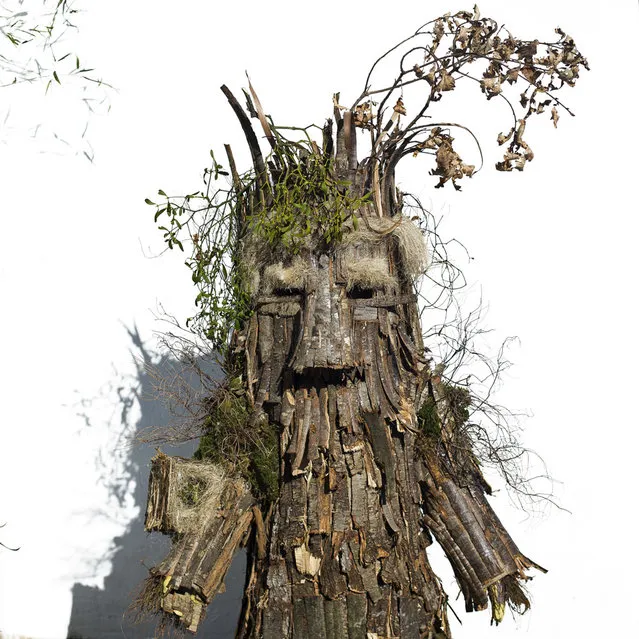
A man dressed as a  “Trapajon”, representing entities of nature, poses for a picture after taking part in the Vijanera Festival in Silio, northern Spain, Sunday, Jan. 6, 2013. The Vijanera masquerade, of pre-Roman origin, is the first carnival of the year in Europe symbolizing the triumph of good over evil and involving the participation of crowds of residents wearing different masks, animal skins and brightly colored clothing with its own complex function and symbolism and becoming the living example of the survival of archaic cults to nature. (Photo by Daniel Ochoa de Olza/AP Photo)

A man dressed as a “Trapajon”, representing entities of nature, poses for a picture after taking part in the Vijanera Festival in Silio, northern Spain, Sunday, Jan. 6, 2013. The Vijanera masquerade, of pre-Roman origin, is the first carnival of the year in Europe symbolizing the triumph of good over evil and involving the participation of crowds of residents wearing different masks, animal skins and brightly colored clothing with its own complex function and symbolism and becoming the living example of the survival of archaic cults to nature. (Photo by Daniel Ochoa de Olza/AP Photo)
Details
19 Jan 2013 13:01:00
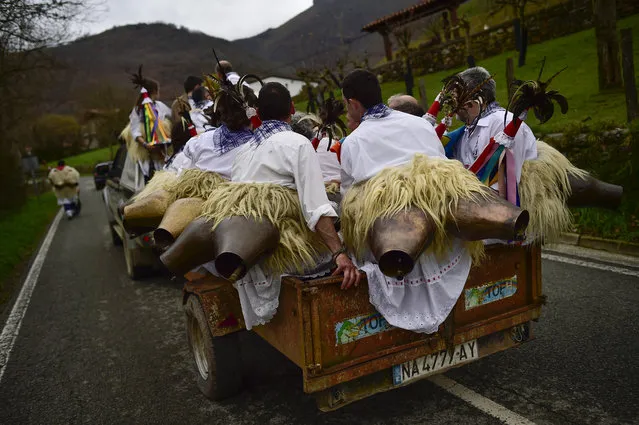
Joaldunaks return in a trailer to their town at the end of Carnival between of the Pyrenees villages of Ituren and Zubieta, northern Spain, Monday, February 1, 2016. In one of the most ancient carnivals in Europe, dating from before the Roman empire, companies of Joaldunak (cowbells) made up of residents of two towns, Ituren and Zubieta, parade the streets costumed in sandals, lace petticoats, sheepskins around the waist and shoulders, coloured neckerchiefs, conical caps with ribbons and a hyssop of horsehair in their right hands and cowbells hung across their lower back. (Photo by Alvaro Barrientos/AP Photo)

Joaldunaks return in a trailer to their town at the end of Carnival between of the Pyrenees villages of Ituren and Zubieta, northern Spain, Monday, February 1, 2016. In one of the most ancient carnivals in Europe, dating from before the Roman empire, companies of Joaldunak (cowbells) made up of residents of two towns, Ituren and Zubieta, parade the streets costumed in sandals, lace petticoats, sheepskins around the waist and shoulders, coloured neckerchiefs, conical caps with ribbons and a hyssop of horsehair in their right hands and cowbells hung across their lower back. (Photo by Alvaro Barrientos/AP Photo)
Details
02 Feb 2016 13:07:00
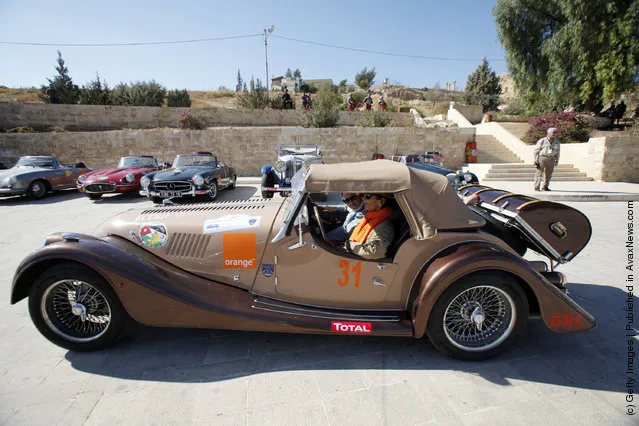
Classic Car Owners In Jordan For The «2011 Jordan Classic»

Classic car owners taking part in the “2011 Jordan Classic” arrive at the ancient Roman city of Jerash on October 31, 2011 in Jerash, Jordan. The 2011 Jordan Classic takes in world famous sites such as the Dead Sea and Petra. (Photo by Salah Malkawi/ Getty Images)
Details
01 Nov 2011 11:00:00
A woman touches a robot at the 2018 World Robot Conference in Beijing on August 15, 2018. (Photo by Wang Zhao/AFP Photo)

A woman touches a robot at the 2018 World Robot Conference in Beijing on August 15, 2018. The conference will be held from 15 to 19 August and will include a conference on robotics, an exhibition and a robot competition with the participation of robotics enterprises to showcase their robot products. (Photo by Wang Zhao/AFP Photo)
Details
17 Aug 2018 00:01:00
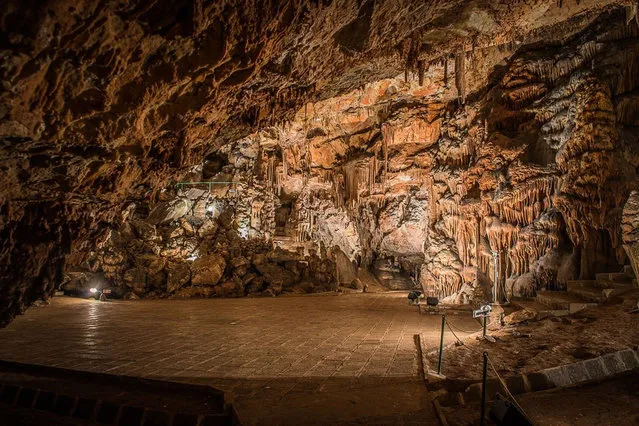
Saeva Dupka Cave

Saeva dupka (Bulgarian: Съева дупка) is a cave in Northern Bulgaria near the village of Brestnitsa, Lovech Province (43°2′N 24°11′E). Its five halls and 400 metres of corridors offer some of the most beautiful cave formations in the country. Besides that the cave has hosted many Choral music performances, thanks to the excellent acoustic conditions. Saeva dupka was named after two brothers Seyu and Sae who used it as a hiding place during the Ottoman occupation of Bulgaria. Recent excavations have showed the cave was inhabited since Roman times. Currently Saeva dupka is one of the 100 Tourist Sites of Bulgaria.
Details
20 Feb 2013 11:30:00