Loading...
Done
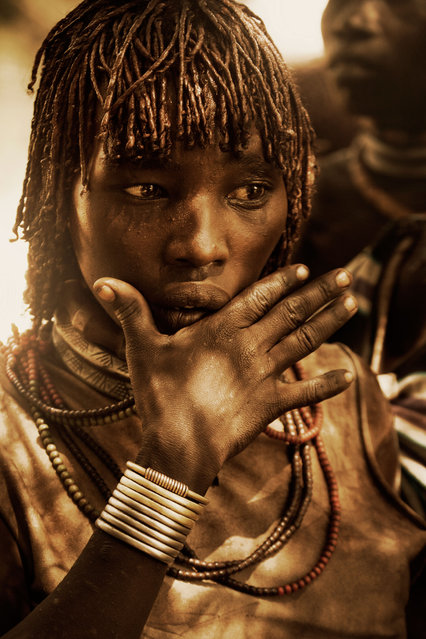
The Hamar people traditionally use red ocher clay to braid the hair of their women. (Photo by Diego Arroyo)

During his time in Ethiopia, New York-based art director and photographer Diego Arroyo spent time with the Hamar, Mursi, Dassanech, and Arbore Tribes. They, along with several others tribes, make up the 200,000 people situated in Africa’s Great Rift Valley. The people of the Omo Valley are still primarily herders and farmers, living an isolated and simple life. While they have yet to be truly touched by globalization, they could soon disappear. Their way of life is being threatened by a massive hydroelectric dam. (Photo by Diego Arroyo)
Details
13 Aug 2014 10:00:00
Face Painting By Elsa Rhae

Elsa Rhae Pageler, otherwise known as just Elsa Rhae, has the unbelievable knack for transforming her beautiful face into something incredibly scary. Although she began her career in video editing, and still works as one to this day, she has become infamous for her amazing makeup transformations. She took a stage makeup class as an elective to graduate from her film degree in college and soon realized that it was a passion she didn’t even know she had at first.
Details
27 Aug 2014 13:53:00
Sprout A Pencil That Grows

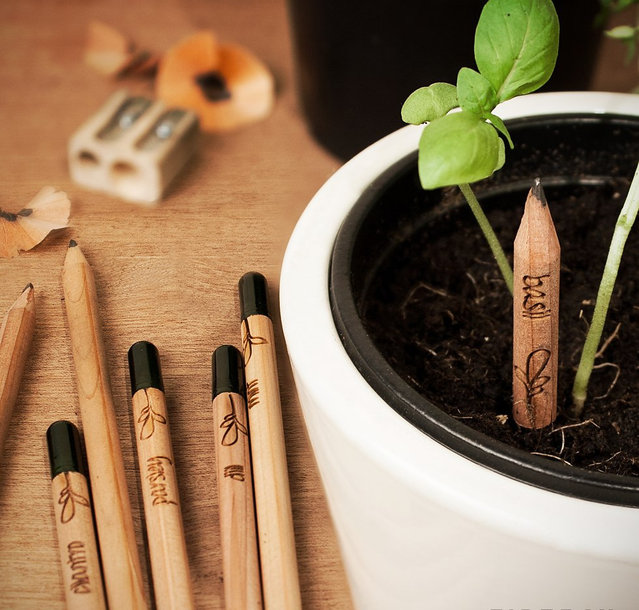
Sprout A Pencil That Grows is a very simple but excellent concept. We all know that as soon as a pencil gets down to the point where there’s only an inch or so left it’s pretty much useless. The Sprout lets you put that little stub to get use. The end of the Sprout has a seed capsule that is water activated, after you plant your pencil and water it a few times the capsule dissolves and the seed’s start germinating. The plants usually take about a week to sprout. The Sprout pencils come in a number of varieties including vegetables, herbs and flowers like rosemary, tomato, marigold, and many more.
Details
23 Mar 2014 10:59:00
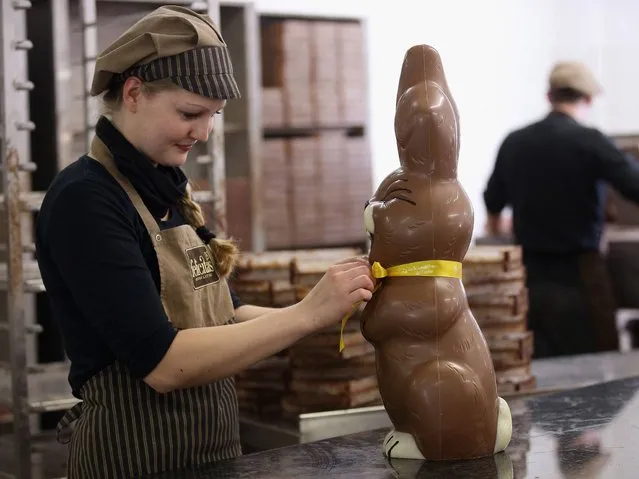
Employee Sandra Jaeckel adjusts a ribbon around the neck of a giant chocolate Easter bunny at the production facility at Confiserie Felicitas chocolates maker in Hornow. (Photo by Sean Gallup/Getty Images)

Employee Sandra Jaeckel, at the photographer's request, adjusts a ribbon around the neck of a giant chocolate Easter bunny at the production facility at Confiserie Felicitas chocolates maker on April 9, 2014 in Hornow, Germany. Easter is among the busiest times of year for the chocolatier, which produces Easter bunnies and eggs in a wide variety of sizes and styles. Founded by Belgian expats Goedele Matthyssen and Peter Bientsman the company will soon celebrate its 21st year. (Photo by Sean Gallup/Getty Images)
Details
14 Apr 2014 08:32:00
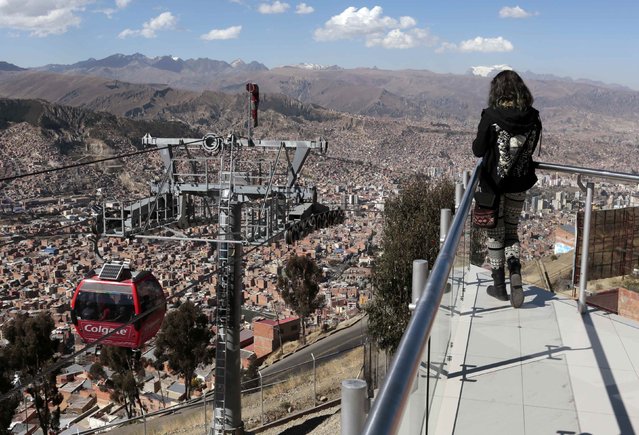
A woman looks at La Paz city from the Jacha Qhatu cable car station in El Alto, July 23, 2015. (Photo by David Mercado/Reuters)

A woman looks at La Paz city from the Jacha Qhatu cable car station in El Alto, July 23, 2015. Bolivia already has the largest urban cable car system in the world. Now the booming country is tripling the size of the network and will soon have nine lines whizzing above the administrative capital of La Paz. (Photo by David Mercado/Reuters)
Details
28 Jul 2015 12:50:00
Ethnic Cham Muslim people pass the time near their boats on banks of Mekong river in Phnom Penh July 29, 2013. (Photo by Damir Sagolj/Reuters)

Ethnic Cham Muslim people pass the time near their boats on banks of Mekong river in Phnom Penh July 29, 2013. About 100 ethnic Cham families, made up of nomads and fishermen without houses or land who arrived at the Cambodian capital in search of better lives, live on their small boats on a peninsula where the Mekong and Tonle Sap rivers meet, just opposite the city's centre. The community has been forced to move several times from their locations in Phnom Penh as the land becomes more valuable. They fear that their current home, just behind a new luxurious hotel under construction at the Chroy Changva district is only temporary and that they would have to move again soon. (Photo by Damir Sagolj/Reuters)
Details
31 Jul 2013 06:34:00
In this Thursday, March 28, 2019, photo, a “golden giant burger” is served at a restaurant of Hotel Grand Hyatt Tokyo in Tokyo. The $900 wagyu (Japanese-produced beef) burger was unveiled to commemorate the era change. What’s in a name? Quite a lot if you’re a Japanese citizen awaiting the official announcement Monday, April 1, 2019 of what the soon-to-be-installed new emperor’s next era will be called. It’s a proclamation that has happened only twice in nearly a century, and the new name will follow Emperor Naruhito, after his May 1 investiture, for the duration of his rule, attaching itself to much of what happens in Japan. (Photo by Kyodo News via AP Photo)

In this Thursday, March 28, 2019, photo, a “golden giant burger” is served at a restaurant of Hotel Grand Hyatt Tokyo in Tokyo. The $900 wagyu (Japanese-produced beef) burger was unveiled to commemorate the era change. What’s in a name? Quite a lot if you’re a Japanese citizen awaiting the official announcement Monday, April 1, 2019 of what the soon-to-be-installed new emperor’s next era will be called. It’s a proclamation that has happened only twice in nearly a century, and the new name will follow Emperor Naruhito, after his May 1 investiture, for the duration of his rule, attaching itself to much of what happens in Japan. (Photo by Kyodo News via AP Photo)
Details
02 Apr 2019 00:05:00
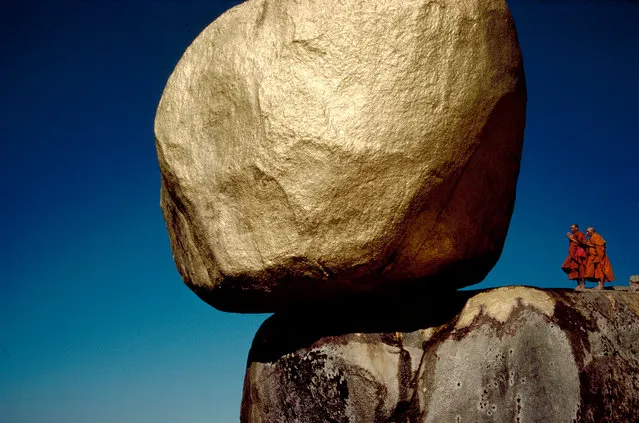
Kyaiktiyo, Burma, 1978. The Golden Rock at Shwe Pyi Daw (the Golden Country), the Buddhist holy place. Hiroji Kubota writes: “I was desperate to keep a distance from America for a while; luckily, I found Burma and its gentle and compassionate people. In the spring of 1978, on the top of the hill where I took this photo, I had two Leica bodies: the one with Tri-X and the other with Kodachrome 64. Soon after, I realised that the colour one looked very colourful and was more powerful. That was my decisive moment, to become a colour photographer”. (Photo by Hiroji Kubota/Magnum Photos)

Kyaiktiyo, Burma, 1978. The Golden Rock at Shwe Pyi Daw (the Golden Country), the Buddhist holy place. Hiroji Kubota writes: “I was desperate to keep a distance from America for a while; luckily, I found Burma and its gentle and compassionate people. In the spring of 1978, on the top of the hill where I took this photo, I had two Leica bodies: the one with Tri-X and the other with Kodachrome 64. Soon after, I realised that the colour one looked very colourful and was more powerful. That was my decisive moment, to become a colour photographer”. (Photo by Hiroji Kubota/Magnum Photos)
Details
10 Jun 2016 13:30:00