Loading...
Done
Elephant

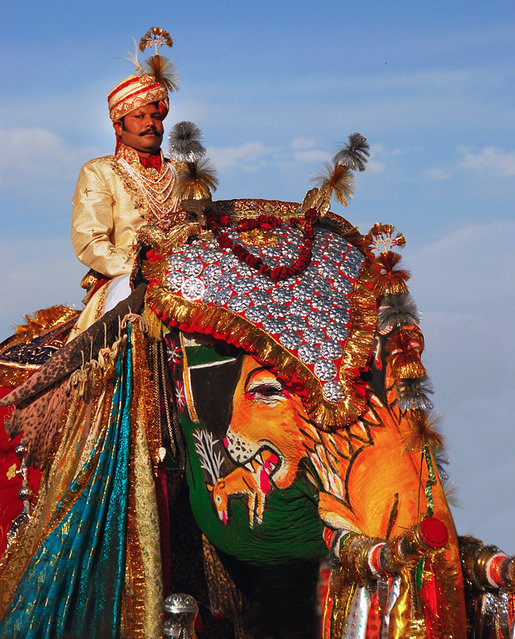
Elephant Festival is a festival celebrated in Jaipur city in Rajasthan state in India. It is held on the day of Holi festival, usually in the month of March.The festival features Elephant polo and Elephant Dance. The Elephant Festival begins with a beautiful procession of bedecked elephants, camels, horses and folk dancers. The owners proudly embellish their elephants with vibrant colors, jhools (saddle cloth) and heavy jewellery. It is quite a treat to see female elephants wearing anklets, which tinkle as they walk. One can see people sprinkling 'gulaal' (colored powder) perched on top of the elephant. The most beautifully decorated elephant is awarded. Elephant polo, Elephant race, the tug-of-war between Elephant and 19 men and women are the featured events of the festival.
Details
30 Apr 2015 16:55:00
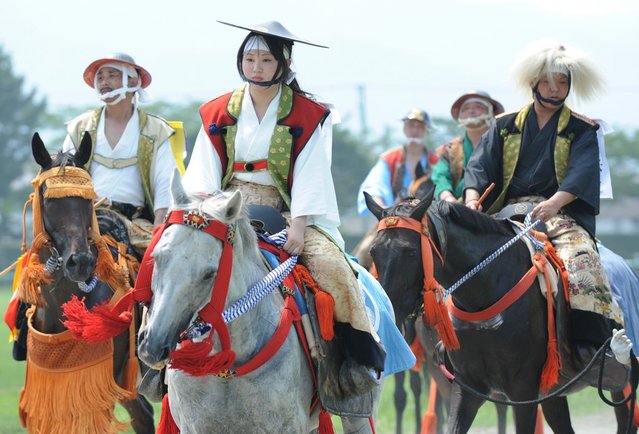
A young woman (C) clad in samurai costume leads other local poeple as she rides her horse during a parade at the annual Soma Nomaoi festival in Minamisoma, Fukushima Prefecture, on July 28, 2012.  The traditional full-scale festival kicked off for the first time after the accident of the Fukushima Dai-ichi Nuclear Power Plant following the massive earthquake and the tsunami on March 11, 2011. (Photo by Toru Yamanaka/AFP Photo)

Soma-Nomaoi is a festival that recreates a battle scene from more than 1,000 years ago. It is annually held for 4 days from July 22 to 25 in Haramachi City, Fukushima Prefecture, in the eastern part of Japan. In this historical event, 600 mounted samurai in traditional Japanese armor, with long swords at their side and ancestral flagstaffs streaming from their backs, ride across open fields. Soma-Nomaoi has been designated an Important Intangible Folk Cultural Property.

Photo: A young woman (C) clad in samurai costume leads other local poeple as she rides her horse during a parade at the annual Soma Nomaoi festival in Minamisoma, Fukushima Prefecture, on July 28, 2012. The traditional full-scale festival kicked off for the first time after the accident of the Fukushima Dai-ichi Nuclear Power Plant following the massive earthquake and the tsunami on March 11, 2011. (Photo by Toru Yamanaka/AFP Photo)
Details
02 Aug 2012 12:59:00
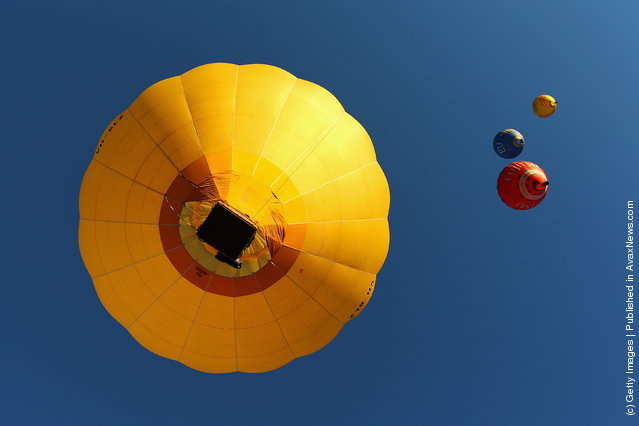
Balloons participate in the Balloon Spectacular during Canberra Festival on 2012 in Canberra, Australia

Balloons participate in the Balloon Spectacular during Canberra Festival on March 10, 2012 in Canberra, Australia. The annual balloon festival in Canberra is considered one of the best in the world, and is unique in allowing patrons to float above Parliament, embassies and other government buildings. Canberra is celebrating its 99th birthday in 2012, with over 50 events in the 17 day Canberra Festival. (Photo by Cameron Spencer/Getty Images)
Details
10 Mar 2012 12:09:00
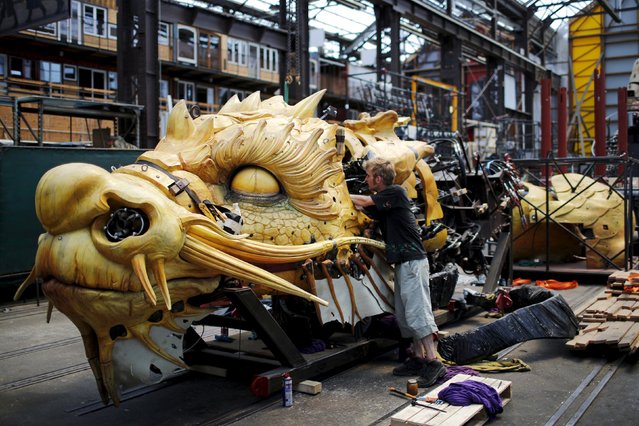
A man works on “Long Ma”, a creation by La Machine production company, during a media visit to “A Journey to Nantes” (Le Voyage a Nantes) art festival in Nantes, France, June 30, 2015. The art festival will run from July 3 to August 30. (Photo by Stephane Mahe/Reuters)

A man works on “Long Ma”, a creation by La Machine production company, during a media visit to “A Journey to Nantes” (Le Voyage a Nantes) art festival in Nantes, France, June 30, 2015. The art festival will run from July 3 to August 30. (Photo by Stephane Mahe/Reuters)
Details
02 Jul 2015 13:37:00
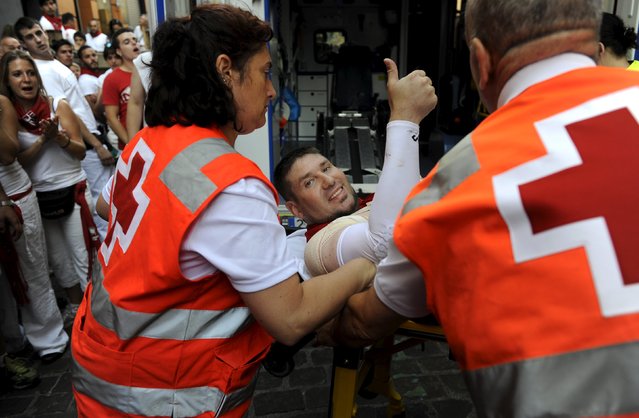
An unidentified runner gestures while being attended by medical services following the first running of the bulls of the San Fermin festival in Pamplona, northern Spain, July 7, 2015. (Photo by Eloy Alonso/Reuters)

An unidentified runner gestures while being attended by medical services following the first running of the bulls of the San Fermin festival in Pamplona, northern Spain, July 7, 2015. Two runners were gored in the run that lasted 2 minutes and 23 seconds, according to local media. (Photo by Eloy Alonso/Reuters)
Details
08 Jul 2015 11:41:00
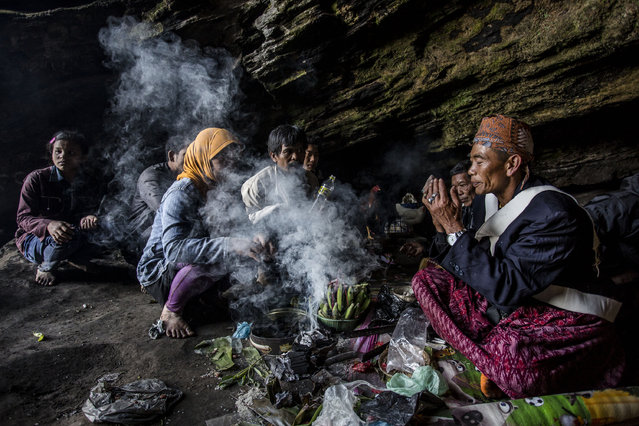
A Tenggerese shaman praying for worshippers at Widodaren cave during the Tenggerese Hindu Yadnya Kasada festival on July 31, 2015 in Probolinggo, East Java, Indonesia. The festival is the main festival of the Tenggerese people and lasts about a month. On the fourteenth day, the Tenggerese make the journey to Mount Bromo to make offerings of rice, fruits, vegetables, flowers and livestock to the mountain gods by throwing them into the volcano's caldera. (Photo by Ulet Ifansasti/Getty Images)

A Tenggerese shaman praying for worshippers at Widodaren cave during the Tenggerese Hindu Yadnya Kasada festival on July 31, 2015 in Probolinggo, East Java, Indonesia. The festival is the main festival of the Tenggerese people and lasts about a month. On the fourteenth day, the Tenggerese make the journey to Mount Bromo to make offerings of rice, fruits, vegetables, flowers and livestock to the mountain gods by throwing them into the volcano's caldera. The origin of the festival lies in the 15th century when a princess named Roro Anteng started the principality of Tengger with her husband Joko Seger, and the childless couple asked the mountain Gods for help in bearing children. The legend says the Gods granted them 24 children but on the provision that the 25th must be tossed into the volcano in sacrifice. The 25th child, Kesuma, was finally sacrificed in this way after initial refusal, and the tradition of throwing sacrifices into the caldera to appease the mountain Gods continues today. (Photo by Ulet Ifansasti/Getty Images)
Details
01 Aug 2015 12:07:00
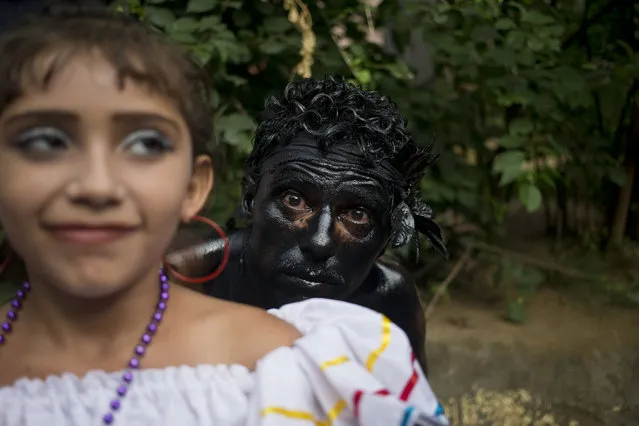
A man covered in motor oil, poses for a picture next to a girl dress a traditional clothes during a festivities in honor of Santo Domingo de Guzman in Managua, Nicaragua, Saturday, August 1, 2015. (Photo by Esteban Felix/AP Photo)

A man covered in motor oil, poses for a picture next to a girl dress a traditional clothes during a festivities in honor of Santo Domingo de Guzman in Managua, Nicaragua, Saturday, August 1, 2015. Some of the faithful coat their bodies in a black motor oil, red paint and wear traditional clothes as a promise for a prayer or miracle they believe was performed or answered by Managua's patron saint, Santo Domingo de Guzman. (Photo by Esteban Felix/AP Photo)
Details
02 Aug 2015 12:41:00
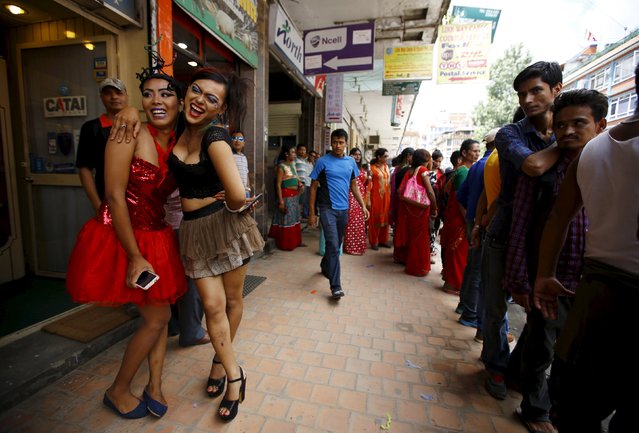
People look at revellers (L) waiting to take part in a LGBT (lesbian, gay, bisexual and transgender) pride parade to mark Gaijatra Festival, also known as the festival of cows, in Kathmandu, Nepal, August 30, 2015. (Photo by Navesh Chitrakar/Reuters)

People look at revellers (L) waiting to take part in a LGBT (lesbian, gay, bisexual and transgender) pride parade to mark Gaijatra Festival, also known as the festival of cows, in Kathmandu, Nepal, August 30, 2015. Hundreds of lesbians, gays, bisexuals and transvestites paraded through Nepal's capital Sunday to demand that rights for sexual minorities be included in the country's new constitution that is being finalized. (Photo by Navesh Chitrakar/Reuters)
Details
31 Aug 2015 12:26:00