Loading...
Done
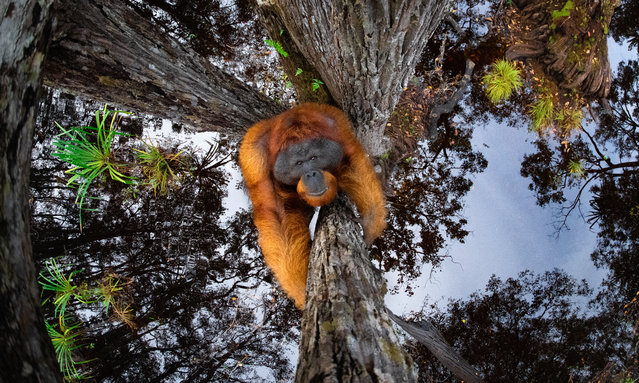
Bornean orangutan (Pongo pygmaeus). Tanjung Puting National Park, Borneo – winner of the gold and grand prizes in the 2020 world nature photography awards. (Photo by Thomas Vijayan/World Nature Photography Awards)

Bornean orangutan (Pongo pygmaeus). Tanjung Puting National Park, Borneo – winner of the gold and grand prizes in the 2020 world nature photography awards. (Photo by Thomas Vijayan/World Nature Photography Awards)
Details
18 Mar 2021 09:28:00
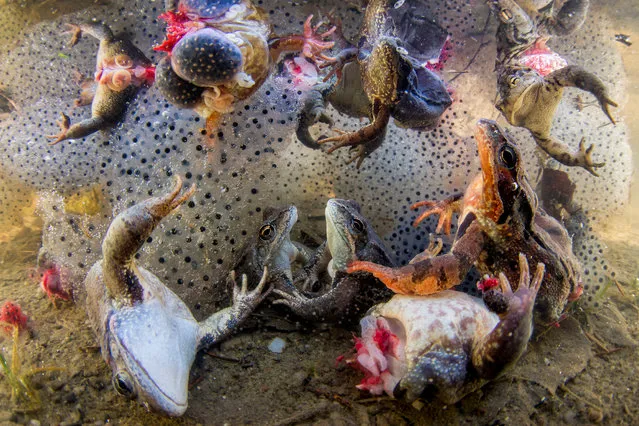
Nature, singles winner: Frogs with their legs severed struggle to the surface, surrounded by frogspawn, after being thrown back into the water in Covasna, Romania. (Photo by Bence Mate/World Press Photo 2019)

Nature, singles winner: Frogs with their legs severed struggle to the surface, surrounded by frogspawn, after being thrown back into the water in Covasna, Romania. (Photo by Bence Mate/World Press Photo 2019)
Details
13 Apr 2019 00:03:00
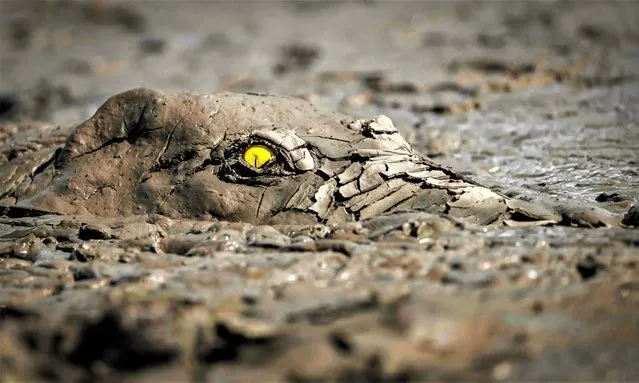
“Danger in the mud” – a crocodile at Mana Pools National Park, Zimbabwe. The grand prize winner. (Photo by Jens Cullmann/World Nature Photography Awards 2022)

“Danger in the mud” – a crocodile at Mana Pools National Park, Zimbabwe. The grand prize winner. (Photo by Jens Cullmann/World Nature Photography Awards 2022)
Details
08 Mar 2023 04:28:00
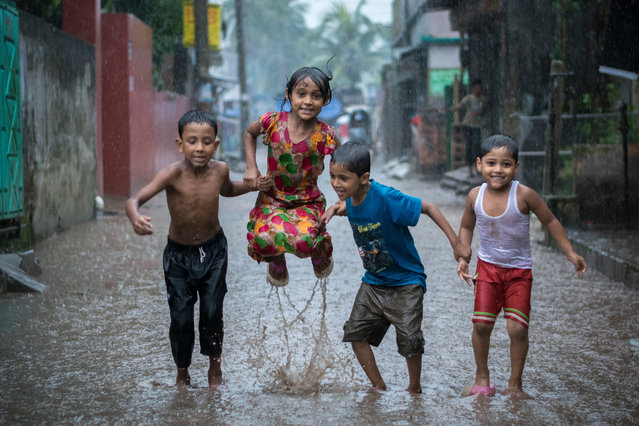
Happiness on a Rainy Day by Fardin Oyan, Bangladesh. Winner of the young environmental photographer of the year. Many children in Bangladesh love to bathe and play in the rain. The country, which is flat and occupied by the huge Ganges-Brahmaputra Delta, is exposed to floods, especially during monsoon season. (Photo by Fardin Oyan/2018 Ciwem environmental photographer of the year 2018)

Happiness on a Rainy Day by Fardin Oyan, Bangladesh. Winner of the young environmental photographer of the year. Many children in Bangladesh love to bathe and play in the rain. The country, which is flat and occupied by the huge Ganges-Brahmaputra Delta, is exposed to floods, especially during monsoon season. (Photo by Fardin Oyan/2018 Ciwem environmental photographer of the year 2018)
Details
24 Sep 2018 00:03:00
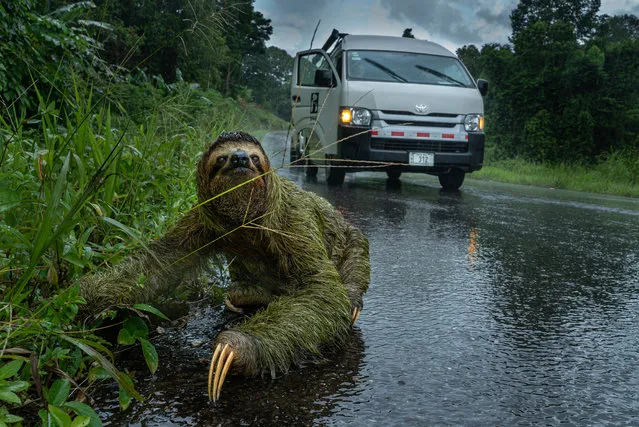
People and Nature category winner: Why did the sloth cross the road? by Andrew Whitworth (Osa Conservation and University of Glasgow), taken in Osa Peninsula, Costa Rica. “I was driving out from the Osa Peninsula, located on the southern Pacific coast of Costa Rica on a dark, stormy day. This female three-toed sloth (Bradypus variegatus) had luckily just about made it across the road, and the drivers of the Toyota on this occasion had spotted her in good time”. (Photo by Andrew Whitworth/2019 British Ecological Society Photography Competition)

People and Nature category winner: Why did the sloth cross the road? by Andrew Whitworth (Osa Conservation and University of Glasgow), taken in Osa Peninsula, Costa Rica. “I was driving out from the Osa Peninsula, located on the southern Pacific coast of Costa Rica on a dark, stormy day. This female three-toed sloth (Bradypus variegatus) had luckily just about made it across the road, and the drivers of the Toyota on this occasion had spotted her in good time”. (Photo by Andrew Whitworth/2019 British Ecological Society Photography Competition)
Details
30 Nov 2019 00:05:00
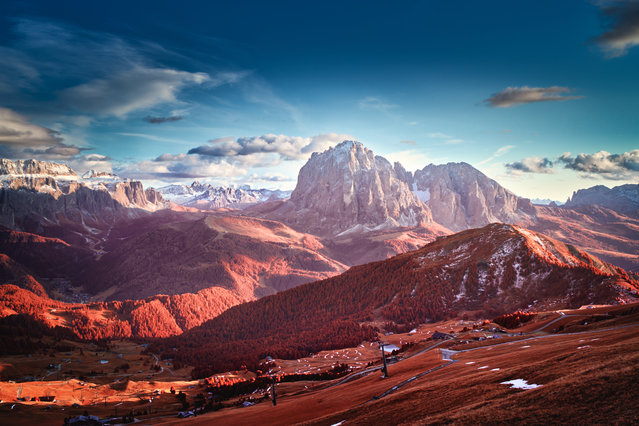
Lights and Shadows in the Dolomites, in the landscape infrared category. (Photo by Tomasz Grzyb/Kolari Vision)

A selection of winning images from the Life in Another Light photo contest 2020, from Kolari Vision. Here: Lights and Shadows in the Dolomites, in the landscape infrared category. (Photo by Tomasz Grzyb/Kolari Vision)
Details
29 Jan 2021 09:48:00
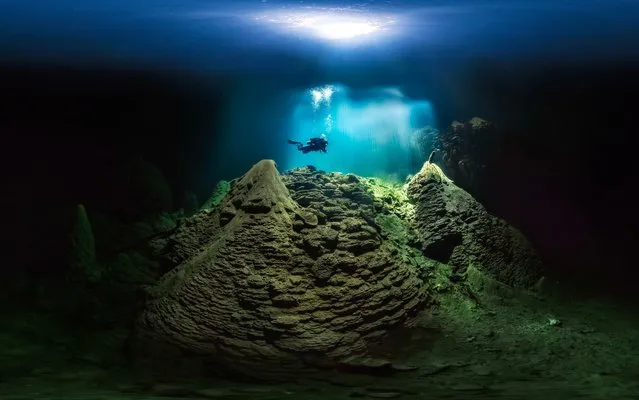
Cave Diver, Anhumas Abyss, Bonito, Brazil: The Anhumas Abyss is an underground cavern with a crystal-clear lake below, more than 260 feet (79 m) deep. A visitor must enter through a narrow opening at the top of the chamber and rappel into the cave. Snorkeling and scuba diving in the lake reveal amazing scenery. Distinctive, conical limestone stalagmites and stalactites occupy the lake and the surrounding area, some reaching 65 feet (20 m) high. “One must rappel about 235 feet (72 m) to get down into this deep lake. The photo was taken at a depth of 50 feet (15 m). It was a challenge to create the image because of the high contrast, plus the diver could not see into the darkness, making communication impossible”. (Photo by Marcio Cabral/Nature’s Best Photography Awards 2017)

Cave Diver, Anhumas Abyss, Bonito, Brazil: The Anhumas Abyss is an underground cavern with a crystal-clear lake below, more than 260 feet (79 m) deep. A visitor must enter through a narrow opening at the top of the chamber and rappel into the cave. Snorkeling and scuba diving in the lake reveal amazing scenery. Distinctive, conical limestone stalagmites and stalactites occupy the lake and the surrounding area, some reaching 65 feet (20 m) high. (Photo by Marcio Cabral/Nature’s Best Photography Awards 2017)
Details
26 Oct 2017 08:10:00
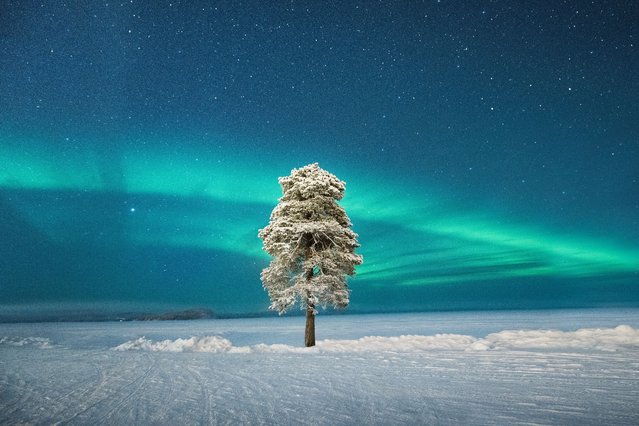
Aurorae category runner-up: Lone Tree under a Scandinavian Aurora by Tom Archer (UK). The photographer decided to explore the area around the hotel on a very crisp -35C evening in Finnish Lapland. When he found this tree, he decided to wait for the misty conditions to change and could not believe his luck when the sky cleared and the aurora came out in the perfect spot. Archer spent about an hour photographing it before his camera started to lock up because of the harsh conditions, but by then he was happy to call it a night. (Photo by Tom Archer/2020 Astronomy Photographer of the Year)

Aurorae category runner-up: Lone Tree under a Scandinavian Aurora by Tom Archer (UK). The photographer decided to explore the area around the hotel on a very crisp -35C evening in Finnish Lapland. When he found this tree, he decided to wait for the misty conditions to change and could not believe his luck when the sky cleared and the aurora came out in the perfect spot. Archer spent about an hour photographing it before his camera started to lock up because of the harsh conditions, but by then he was happy to call it a night. (Photo by Tom Archer/2020 Astronomy Photographer of the Year)
Details
17 Sep 2020 00:03:00