Loading...
Done
People gather as a crowd of sea lions lay on floating docks at Pier 39 in San Francisco, California May 4, 2015. (Photo by Robert Galbraith/Reuters)

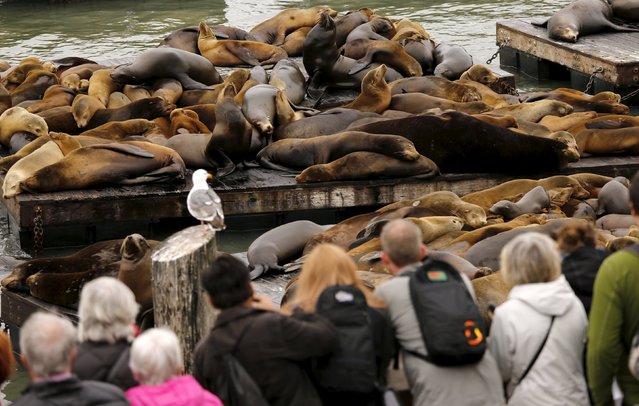
People gather as a crowd of sea lions lay on floating docks at Pier 39 in San Francisco, California May 4, 2015. Hundreds of sea lions began hauling out on the docks following the Loma Prieta earthquake of 1989, and face no natural predators at the pier. (Photo by Robert Galbraith/Reuters)
Details
05 May 2015 10:59:00
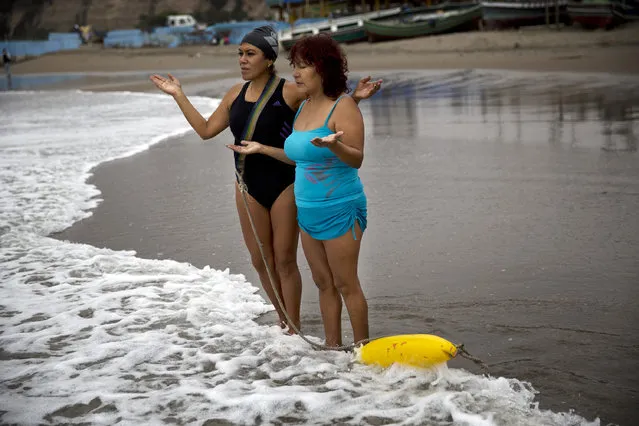
In this May 8, 2015 photo, sisters Zoraida Infante, left, and Graciela Trujillo pray on Fishermen's Beach before therapeutic swimming in the Pacific Ocean in Lima, Peru. Under overcast skies, the bathers practice thalassotherapy, which derives from the Greek “thalasso”, for “sea”, and draws on the ocean's healing properties. (Photo by Rodrigo Abd/AP Photo)

In this May 8, 2015 photo, sisters Zoraida Infante, left, and Graciela Trujillo pray on Fishermen's Beach before therapeutic swimming in the Pacific Ocean in Lima, Peru. Under overcast skies, the bathers practice thalassotherapy, which derives from the Greek “thalasso”, for “sea”, and draws on the ocean's healing properties. (Photo by Rodrigo Abd/AP Photo)
Details
21 May 2015 12:19:00
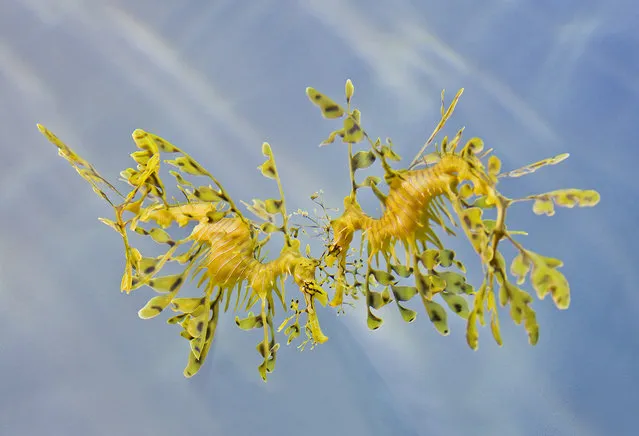
Leafy sea dragon

The leafy seadragon or Glauert's seadragon, Phycodurus eques, is a marine fish in the family Syngnathidae, which also includes the seahorses. It is the only member of the genus Phycodurus. It is found along the southern and western coasts of Australia. The name is derived from the appearance, with long leaf-like protrusions coming from all over the body. These protrusions are not used for propulsion; they serve only as camouflage. The leafy seadragon propels itself by means of a pectoral fin on the ridge of its neck and a dorsal fin on its back closer to the tail end. These small fins are almost completely transparent and difficult to see as they undulate minutely to move the creature sedately through the water, completing the illusion of floating seaweed.
Details
05 Sep 2012 08:51:00
Marcello Di Francesco took third place in the Macro category for this picture of an Emperor shrimp (Periclimenes imperator), taken in the waters near Indonesia's Ambon Island

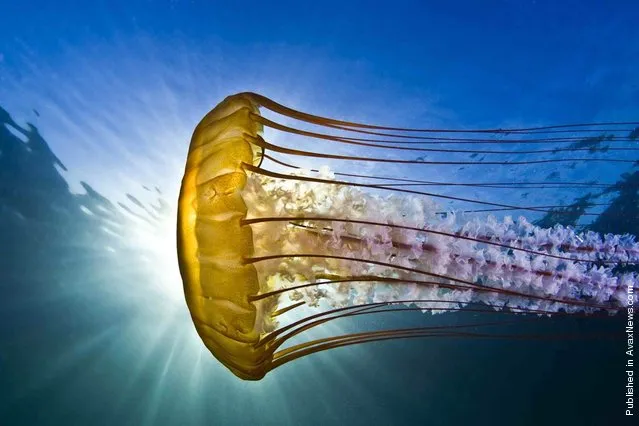
More than 700 underwater images were submitted for the 2012 Annual Underwater Photography Contest, hosted by the University of Miami's Rosenstiel School of Marine & Atmospheric Science. This year, for the first time, the University of Miami set up a “Fan Favorite” category for its underwater photo competition. Internet users could vote for their favorite among five pictures. Todd Aki's photo of a jellyfish took the prize, snaring 599 of the 1,221 votes cast. (Photo by Todd Aki)
Details
22 Apr 2012 12:47:00
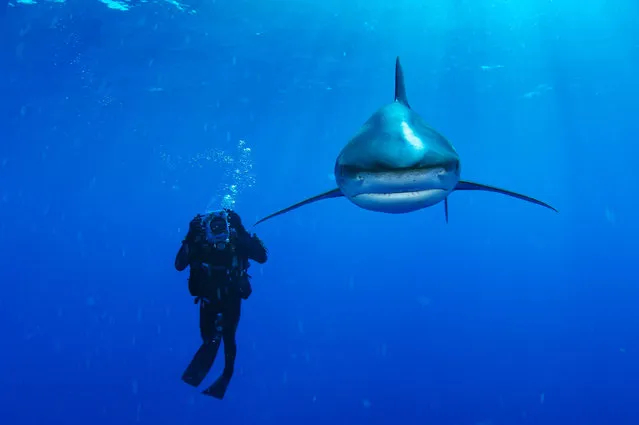
This Bahamian oceanic whitetip shark, known for the distinctive coloring on its white-tipped, rounded extremities, is part of a globally threatened species due to overfishing demands, primarily for its fins. (Photo by Brian Skerry)

Brian Skerry can be called many things – explorer, journalist, conservation advocate – but he is first and foremost a photographer. His journeys to capture amazing underwater photographs have taken him across the world’s oceans. Photo: This Bahamian oceanic whitetip shark, known for the distinctive coloring on its white-tipped, rounded extremities, is part of a globally threatened species due to overfishing demands, primarily for its fins. (Photo by Brian Skerry)
Details
08 Sep 2013 07:26:00
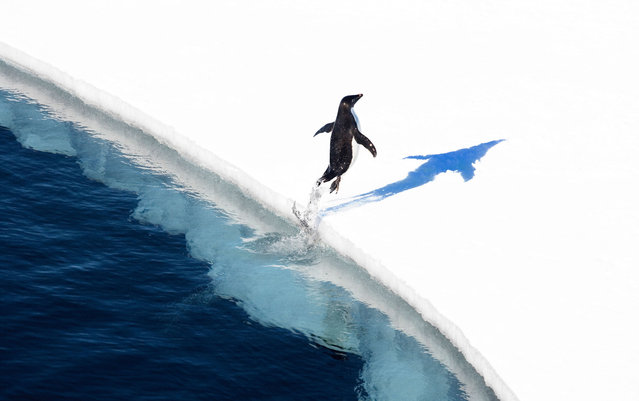
This undated handout photo received from the Antarctic Ocean Alliance on October 28, 2016 shows a adelie penguin jumping onto the ice in the Ross Sea in Antarctica. The world's largest marine reserve aimed at protecting the pristine wilderness of Antarctica will be created after a “momentous” agreement was finally reached on October 28, 2016 with Russia dropping its long-held opposition. A remote and largely pristine stretch of ocean off Antarctica received international protection on Friday, becoming the world's largest marine reserve as a broad coalition of countries came together to protect 598,000 square miles of water. The new marine protected area in the Ross Sea was created by a unanimous decision of the international body that oversees the waters around Antarctica – the Commission for the Conservation of Antarctic Marine Living Resources – and was announced at the commission's annual meeting in Tasmania. The commission comprises 24 countries, including the United States, and the European Union. (Photo by John Weller/AFP Photo/Antarctic Ocean Alliance)

This undated handout photo received from the Antarctic Ocean Alliance on October 28, 2016 shows a adelie penguin jumping onto the ice in the Ross Sea in Antarctica. The world's largest marine reserve aimed at protecting the pristine wilderness of Antarctica will be created after a “momentous” agreement was finally reached on October 28, 2016 with Russia dropping its long-held opposition. (Photo by John Weller/AFP Photo/Antarctic Ocean Alliance)
Details
29 Oct 2016 11:43:00
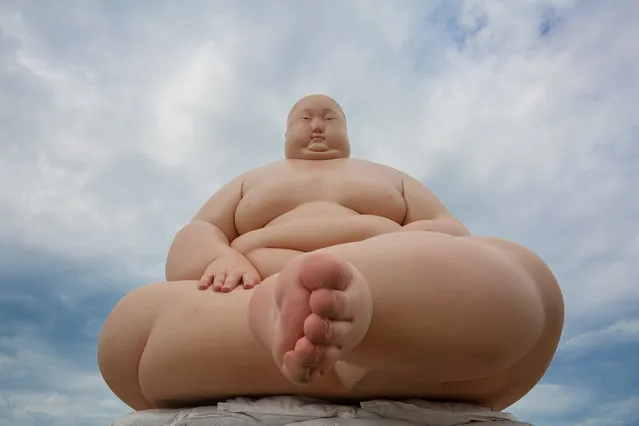
The Sculpture Bank (2017) by Chinese artist Mu Boyan is exhibited along the Bondi to Tamarama Coastal walk as part of the Sculpture by the Sea exhibition in Sydney, Australia, October 18, 2018. (Photo by Charlotte Curd/The Guardian)

The Sculpture Bank (2017) by Chinese artist Mu Boyan is exhibited along the Bondi to Tamarama Coastal walk as part of the Sculpture by the Sea exhibition in Sydney, Australia, October 18, 2018. (Photo by Charlotte Curd/The Guardian)
Details
23 Oct 2018 21:39:00
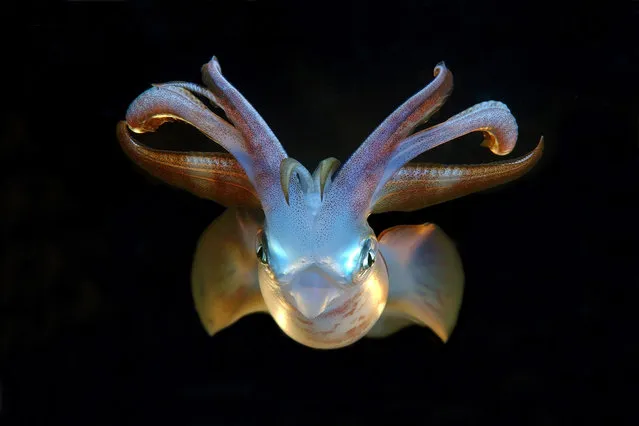
Squid. A squid in the Red Sea. Underwater photographer Andrey Nekrasov, 42, photographed bigfin reef squid in the pitch black Red Sea putting on an extraordinary light show when the sun goes down. (Photo by  Andrey Nekrasov/Medavia/ABACAPress)

A squid in the Red Sea. Underwater photographer Andrey Nekrasov, 42, photographed bigfin reef squid in the pitch black Red Sea putting on an extraordinary light show when the sun goes down. (Photo by Andrey Nekrasov/Medavia/ABACAPress)
Details
18 Sep 2014 11:39:00