Loading...
Done


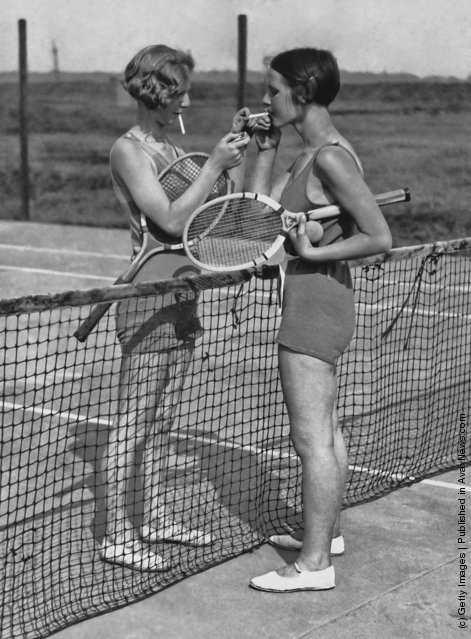
Two women lighting cigarettes on a tennis court in Essex, England circa 1930's. (Photo by Keystone View/FPG/Getty Images)
Details
15 Apr 2011 08:54:00
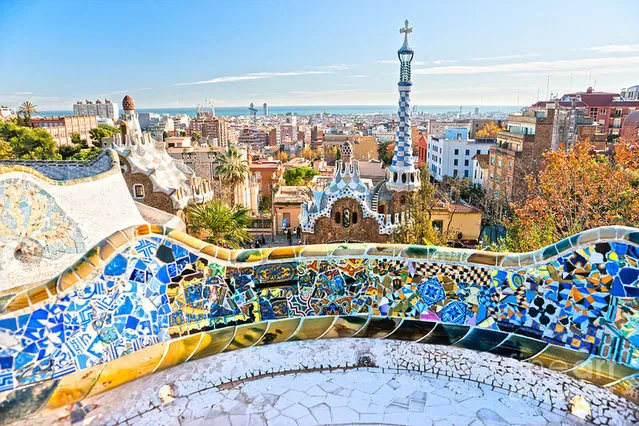
Barcelona in ParK Güell

Park Güell is a garden complex with architectural elements situated on the hill of El Carmel in the Gràcia district of Barcelona, Catalonia, Spain. It was designed by the Catalan architect Antoni Gaudí and built in the years 1900 to 1914. It has an extension of 17.18 ha (0.1718 km²), which makes it one of the largest architectural works in south Europe. It is part of the UNESCO World Heritage Site "Works of Antoni Gaudí".
Details
24 Apr 2013 10:58:00


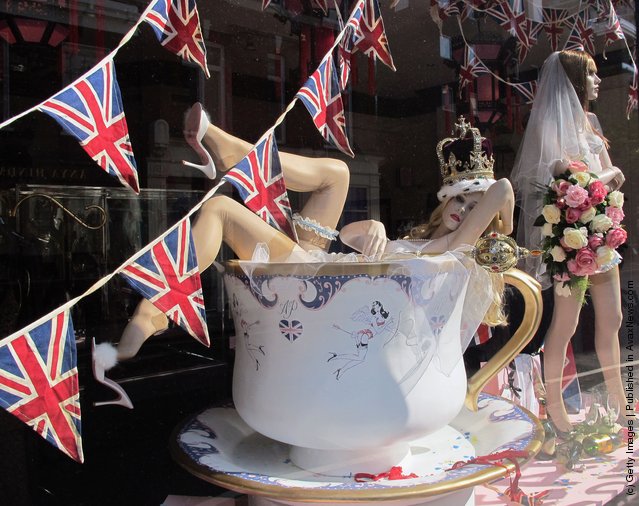
A general view of a royal wedding themed window display at Agent Provocateur in Pont Street, Chelsea on April 29, 2011 in London, England. The marriage of the second in line to the British throne is to be led by the Archbishop of Canterbury and will be attended by 1900 guests, including foreign Royal family members and heads of state. Thousands of well-wishers from around the world have also flocked to London to witness the spectacle and pageantry of the Royal Wedding. (Photo by Adrian Murrell/Getty Images)
Details
29 Apr 2011 09:08:00


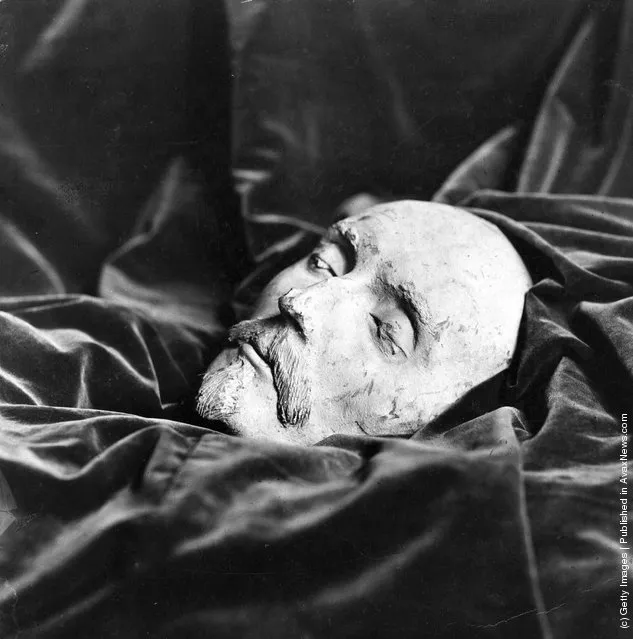
A death mask thought to be that of English dramatist William Shakespeare (1566–1616). Found by Dr. Ludwig Becker in Mainz in 1849, the mask was linked to Shakespeare because of its 1616 date and its supposed facial resemblance to the writer. A rival theory, however, maintains that the mask is more likely to be that of English poet Ben Johnson. (Photo by Hulton Archive/Getty Images). Circa 1900
Details
23 Jun 2011 10:19:00
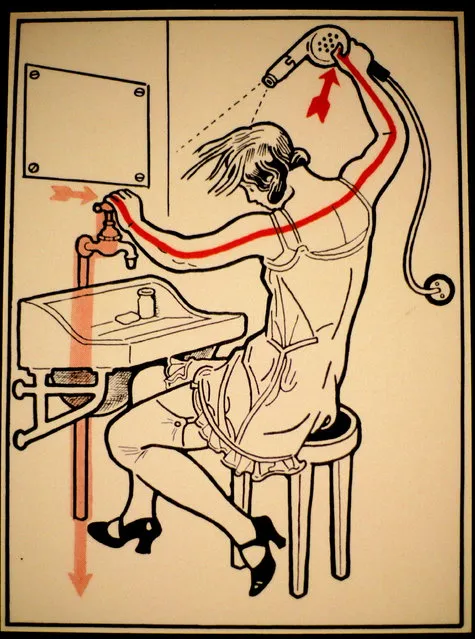
The book “Elektroschutz in 132 Bildern” (Electrical Protection in 132 Pictures) was published in Vienna in the early 1900s by a Viennese physician named Stefan Jellinek (1878-1968, a founder of the Electro-Pathological Museum). The pictures are nice and direct and unambiguous; they teach, graphically, that the surest way to kill yourself with electricity is to form a complete path from source (usually the bright red arrow) to ground (the screened back, pink arrow). Arrowheads provide the path for current flow. (Photo by The Vienna Technical Museum)

The book “Elektroschutz in 132 Bildern” (Electrical Protection in 132 Pictures) was published in Vienna in the early 1900s by a Viennese physician named Stefan Jellinek (1878-1968, a founder of the Electro-Pathological Museum). The pictures are nice and direct and unambiguous; they teach, graphically, that the surest way to kill yourself with electricity is to form a complete path from source (usually the bright red arrow) to ground (the screened back, pink arrow). Arrowheads provide the path for current flow. (Photo by The Vienna Technical Museum)
Details
11 Aug 2014 11:10:00
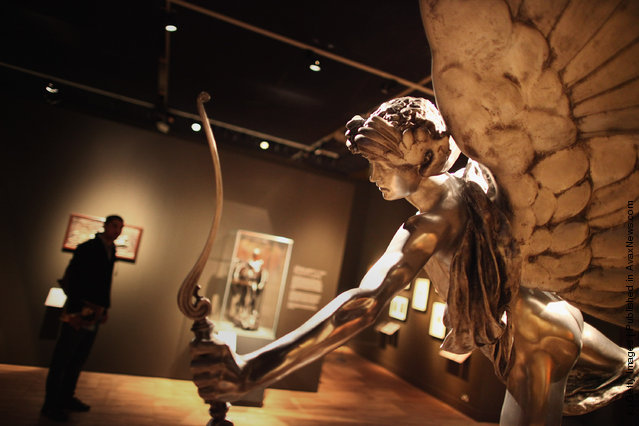
Aesthetic Movement

A visitor to ''The Cult of Beauty: The Aesthetic Movement 1860-1900'' exhibition at The V&A Museum looks at sculptures by Thornycroft (L) and Watts on March 30, 2011 in London, England. This exhibition brings together for the first time many masterpieces in painting, sculpture, design and furniture as well as fashion and literature and runs from April 2nd to July 17th 2011.
Details
30 Mar 2011 17:10:00
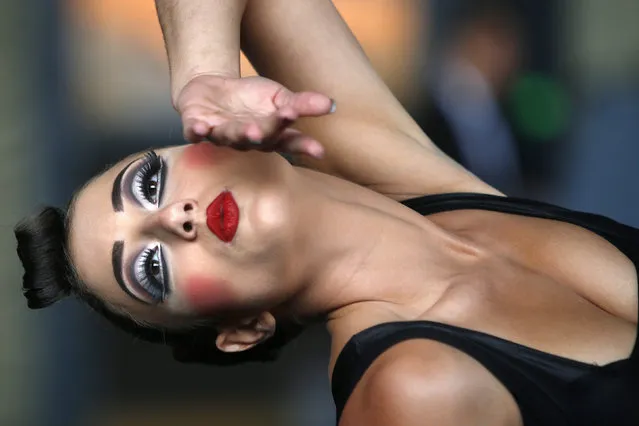
An actor performs during the show “Paris de Nuit” in Santiago, Chile, 20 September 2016. The show is a combination of cabaret and circus, produced by the Recirquel Contemporary Circus Company from Budapest, and will be performed at the Mapocho Cultural station from 20 to 25 September. (Photo by Mario Ruiz/EPA)

An actor performs during the show “Paris de Nuit” in Santiago, Chile, 20 September 2016. The show is a combination of cabaret and circus, produced by the Recirquel Contemporary Circus Company from Budapest, and will be performed at the Mapocho Cultural station from 20 to 25 September. (Photo by Mario Ruiz/EPA)
Details
22 Sep 2016 10:17:00
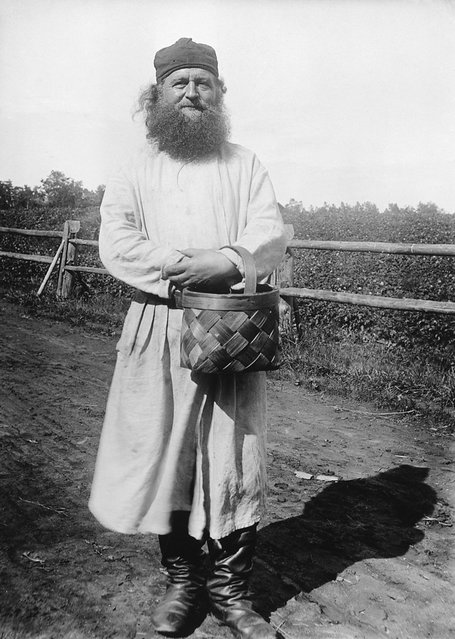
Priest, Valamo Monastery, Karelia, Russia (then Finland), 1930s. Father Venerius with a birchbark basket. (Photo by Einar Erici)

“Einar Erici (1885–1965) was a physician by profession, working at a tuberculosis hospital in Stockholm, even running a private medical practice. He was by then the most renowned Swedish expert of church organs and organ builders, and his archival collection is today held by the Swedish National Heritage Board. This archive includes mostly writings, such as letters and manuscripts for published articles and essays, but also more than 2 000 black and white photos – original prints, glass plates and film negatives”. – Swedish National Heritage Board

Photo: Priest, Valamo Monastery, Karelia, Russia (then Finland), 1930s. Father Venerius with a birchbark basket. (Photo by Einar Erici)
Details
09 Dec 2012 11:41:00