Loading...
Done
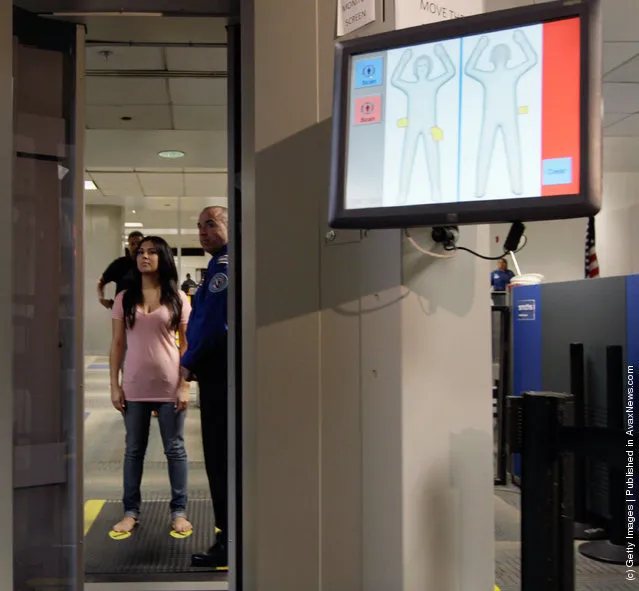
TSA, New Automated Target Recognition software

A screen shows the new Automated Target Recognition software as a TSA employee, who couldn't provide her name, waits to walk into the advanced imaging technology unit to demostrate the new software that has been installed at Miami International Airport on August 23, 2011 in Miami, Florida. The new software is designed to enhance passenger privacy by eliminating passenger-specific images and instead auto-detecting potential threat items and indicating their location on a screen which shows a generic outline of a person. (Photo by Joe Raedle/Getty Images)
Details
24 Aug 2011 09:58:00
What 200 Calories Looks Like In Different Foods Part 1

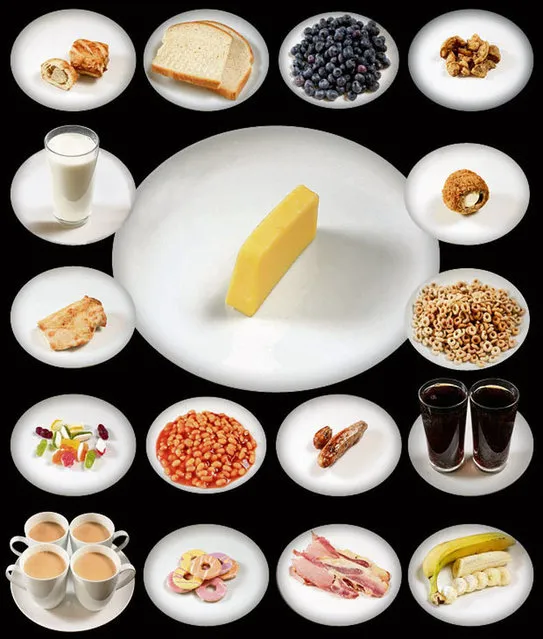
Some foods have significantly more Calories than others but what does the difference actually look like. Each of the photographs below represents 200 Calories of the particular type of food; the images are sorted from low to high calorie density. When you consider that an entire plate of broccoli contains the same number of Calories as a small spoonful of peanut butter, you might think twice the next time you decide what to eat. According to the U.S. Department of Agriculture, the average adult needs to consume about 2000 - 2500 Calories to maintain their weight. In other words, you have a fixed amount of Calories to "spend" each day; based on the following pictures, which would you eat?


See Also: Ppart 2 _ Part 3
Details
30 Jul 2014 10:18:00
What 200 Calories Looks Like In Different Foods Part 3

Some foods have significantly more Calories than others but what does the difference actually look like. Each of the photographs below represents 200 Calories of the particular type of food; the images are sorted from low to high calorie density. When you consider that an entire plate of broccoli contains the same number of Calories as a small spoonful of peanut butter, you might think twice the next time you decide what to eat. According to the U.S. Department of Agriculture, the average adult needs to consume about 2000 – 2500 Calories to maintain their weight. In other words, you have a fixed amount of Calories to "spend" each day; based on the following pictures, which would you eat?


See Also: Ppart 1 _ Part 2
Details
02 Aug 2014 09:53:00
What 200 Calories Looks Like In Different Foods Part 2

Some foods have significantly more Calories than others but what does the difference actually look like. Each of the photographs below represents 200 Calories of the particular type of food; the images are sorted from low to high calorie density. When you consider that an entire plate of broccoli contains the same number of Calories as a small spoonful of peanut butter, you might think twice the next time you decide what to eat. According to the U.S. Department of Agriculture, the average adult needs to consume about 2000 – 2500 Calories to maintain their weight. In other words, you have a fixed amount of Calories to “spend” each day; based on the following pictures, which would you eat?


See Also: Ppart 1 _ Part 3
Details
01 Aug 2014 11:30:00
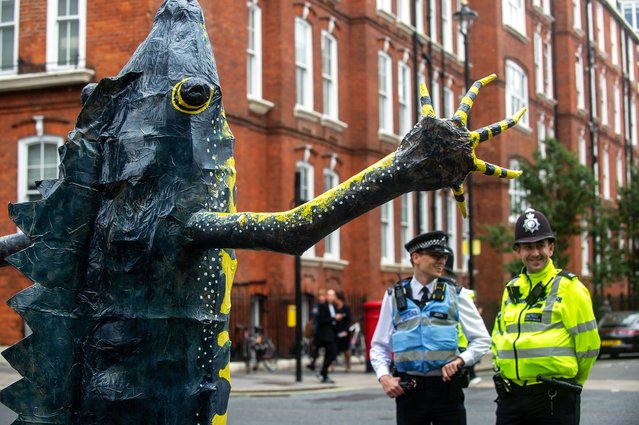
Hundreds of people from a range of NGOs and campaign groups protest to demand the immediate restoration of nature at DEFRA – Department for Environment Food & Rural Affairs on September 28, 2023 in London, England. The 2023 State of Nature Report revealed that approximately one in six species in Great Britain, including turtle doves and hazel dormice, are at risk of extinction, citing climate change, intensive farming, and pollution as major threats, with a 19% average decline in monitored plant and animal populations since 1970. (Photo by Guy Smallman/Getty Images)

Hundreds of people from a range of NGOs and campaign groups protest to demand the immediate restoration of nature at DEFRA – Department for Environment Food & Rural Affairs on September 28, 2023 in London, England. The 2023 State of Nature Report revealed that approximately one in six species in Great Britain, including turtle doves and hazel dormice, are at risk of extinction, citing climate change, intensive farming, and pollution as major threats, with a 19% average decline in monitored plant and animal populations since 1970. (Photo by Guy Smallman/Getty Images)
Details
09 Dec 2024 04:11:00
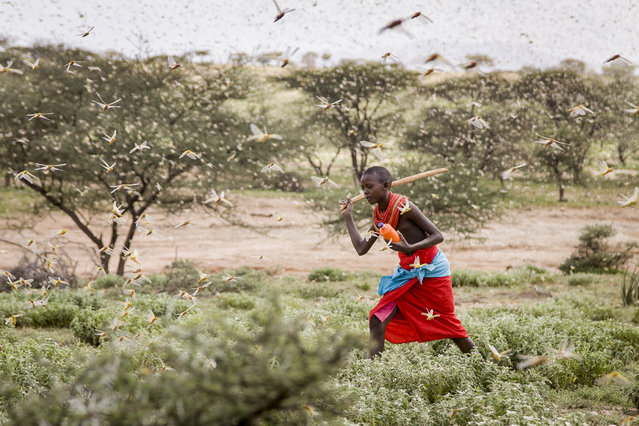
In this photo taken Thursday, January 16, 2020, a Samburu boy uses a wooden stick to try to swat a swarm of desert locusts filling the air, as he herds his camel near the village of Sissia, in Samburu county, Kenya. The most serious outbreak of desert locusts in 25 years is spreading across East Africa and posing an unprecedented threat to food security in some of the world's most vulnerable countries, authorities say, with unusual climate conditions partly to blame. (Photo by Patrick Ngugi/AP Photo)

In this photo taken Thursday, January 16, 2020, a Samburu boy uses a wooden stick to try to swat a swarm of desert locusts filling the air, as he herds his camel near the village of Sissia, in Samburu county, Kenya. The most serious outbreak of desert locusts in 25 years is spreading across East Africa and posing an unprecedented threat to food security in some of the world's most vulnerable countries, authorities say, with unusual climate conditions partly to blame. (Photo by Patrick Ngugi/AP Photo)
Details
19 Jan 2020 00:07:00
Climate change activist Greta Thunberg reacts during a news conference during COP25 climate summit in Madrid, Spain, December 9, 2019. (Photo by Juan Medina/Reuters)

Climate change activist Greta Thunberg reacts during a news conference during COP25 climate summit in Madrid, Spain, December 9, 2019. (Photo by Juan Medina/Reuters)
Details
12 Feb 2020 00:05:00
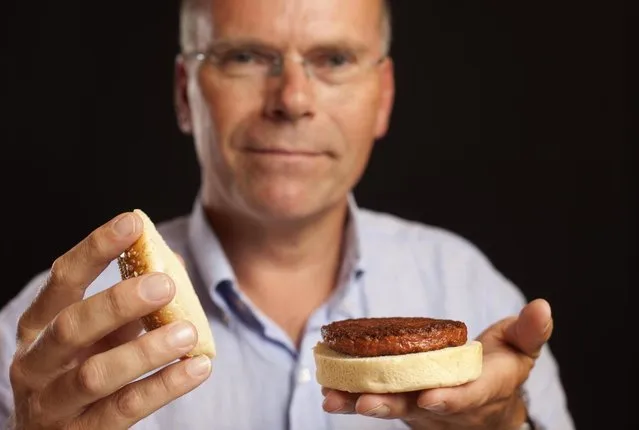
In this handout image provided by Ogilvy, a burger made from cultured beef, which has been developed by Professor Mark Post of Maastricht University in the Netherlands (pictured) is shown to the media during a press conference on August 5, 2013 in London, England. Cultured Beef could help solve the coming food crisis and combat climate change with commercial production of Cultured Beef beginning within ten to twenty years. (Photo by David Parry via Getty Images)

In this handout image provided by Ogilvy, a burger made from cultured beef, which has been developed by Professor Mark Post of Maastricht University in the Netherlands (pictured) is shown to the media during a press conference on August 5, 2013 in London, England. The in-vitro burger, cultured from cattle stem cells, the first example of what its creator says could provide an answer to global food shortages and help combat climate change, was fried in a pan and tasted by two volunteers. The burger is the result of years of research by Dutch scientist Mark Post, a vascular biologist at the University of Maastricht, who is working to show how meat grown in petri dishes might one day be a true alternative to meat from livestock.The meat in the burger has been made by knitting together around 20,000 strands of protein that has been cultured from cattle stem cells in Post's lab. (Photo by David Parry)
Details
06 Aug 2013 08:48:00