Loading...
Done
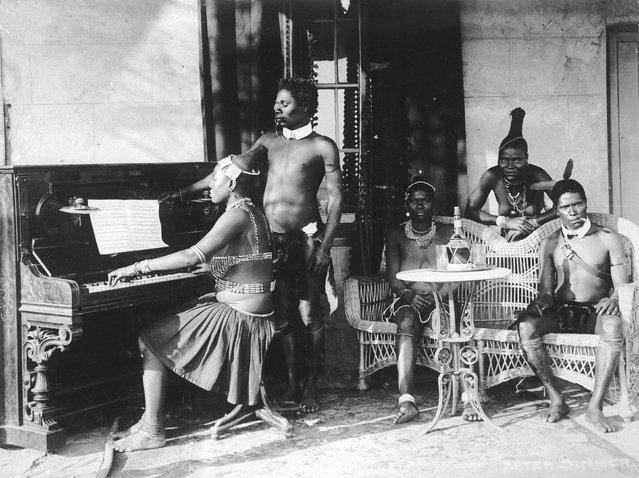
circa 1925:  A Zulu woman playing the piano while a group of others sit and listen.  (Photo by General Photographic Agency/Getty Images)

“The Zulu are the largest South African ethnic group, with an estimated 10–11 million people living mainly in the province of KwaZulu-Natal. Small numbers also live in Zimbabwe, Zambia, and Mozambique. Their language, Zulu, is a Bantu language; more specifically, part of the Nguni subgroup. The Zulu Kingdom played a major role in South African history during the 19th and 20th centuries. Under apartheid, Zulu people were classed as third-class citizens and suffered from state-sanctioned discrimination. They remain today the most numerous ethnic group in South Africa, and now have equal rights along with all other citizens”. – Wikipedia.

Photo: A Zulu woman playing the piano while a group of others sit and listen (to put it briefly, Englishmen scoff over Zulu). South Africa, circa 1925. (Photo by General Photographic Agency)

Details
03 Feb 2014 09:40:00
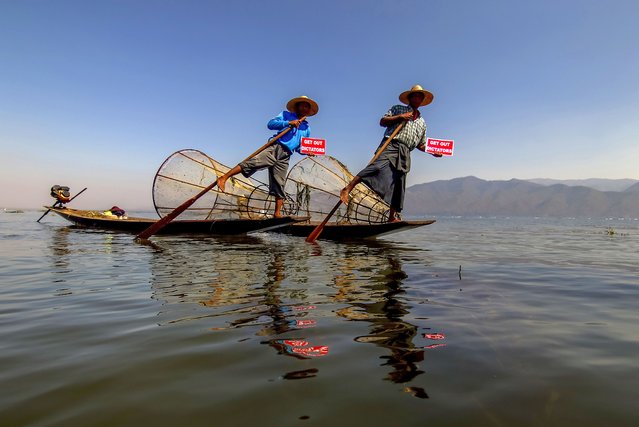
Ethnic Entha fishermen display placards during a protest against the military coup on Inle Lake, Taunggyi, Myanmar Thursday, February 11, 2021. Large crowds demonstrating against the military takeover in Myanmar again defied a ban on protests Thursday, even after security forces ratcheted up the use of force against them and raided the headquarters of the political party of ousted leader Aung San Suu Kyi a day earlier. (Photo by Aung Ko San/AP Photo)

Ethnic Entha fishermen display placards during a protest against the military coup on Inle Lake, Taunggyi, Myanmar Thursday, February 11, 2021. Large crowds demonstrating against the military takeover in Myanmar again defied a ban on protests Thursday, even after security forces ratcheted up the use of force against them and raided the headquarters of the political party of ousted leader Aung San Suu Kyi a day earlier. (Photo by Aung Ko San/AP Photo)
Details
05 Mar 2021 10:35:00
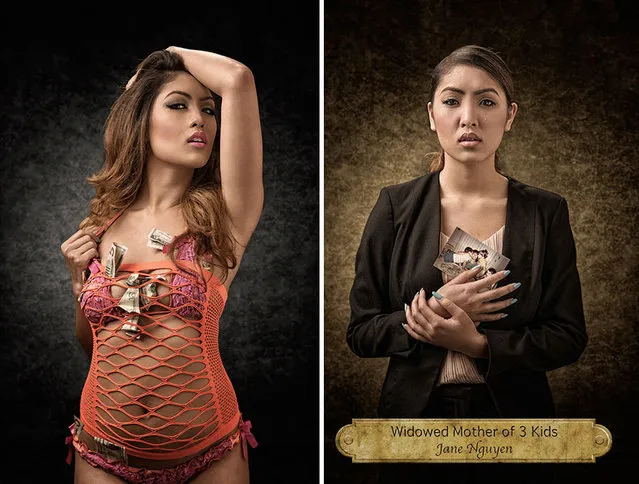
Judging America By Joel Pares

In his new powerful photo series "Judging America," photographer Joel Pares seamlessly fades photos of an unfounded ethnic stereotype with people's real professions. Starting with a simple photo that's based on the stereotypes associated with a person's appearance, Pares fades to their real profession to make us realize how deceiving looks can truly be.
Details
13 Oct 2014 20:03:00
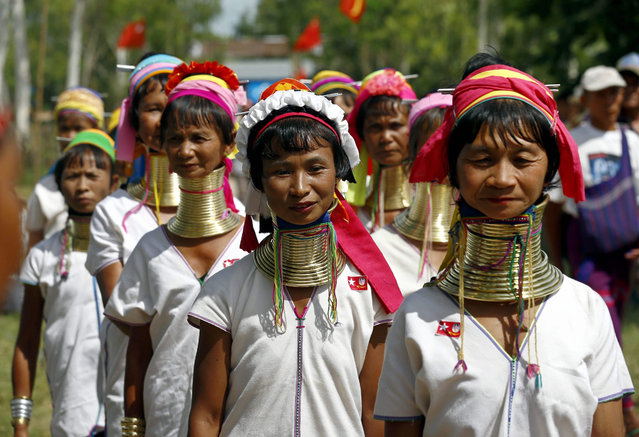
Padaung ethnic women arrive to listen to the speech of Myanmar opposition leader Aung San Suu Kyi (not in picture), Chairwoman of the National League for Democracy (NLD) party, during Suu Kyi's first official election campaign at Demoso township of Kayah State, eastern Myanmar, 10 September 2015. (Photo by Lynn Bo Bo/EPA)

Padaung ethnic women arrive to listen to the speech of Myanmar opposition leader Aung San Suu Kyi (not in picture), Chairwoman of the National League for Democracy (NLD) party, during Suu Kyi's first official election campaign at Demoso township of Kayah State, eastern Myanmar, 10 September 2015. Suu Kyi is on a three-day visit to Kayah State near the Thai-Myanmar border, as part of her first official election campaign. Myanmar political parties and candidates started their campaigns on 08 September ahead of the upcoming general election, which will be held on 08 November 2015. (Photo by Lynn Bo Bo/EPA)
Details
12 Sep 2015 13:44:00
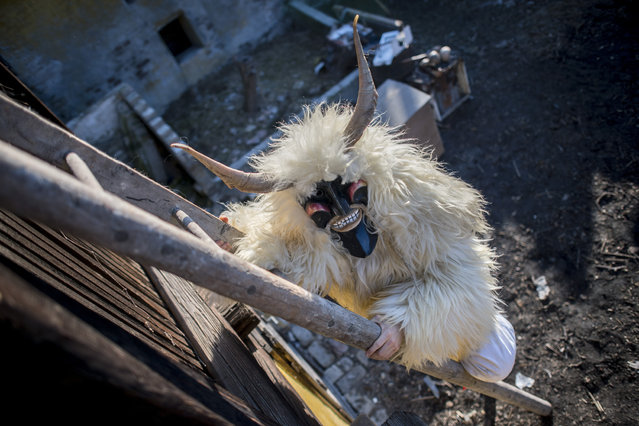
A man wears a busho mask and a costume made of sheep pelt while climbing up a ladder outside a barn in Mohacs, Hungary, 20 February 2020, on the first day of carnival. The traditional Busho carnival, which marks the end of winter, dates back to the 16th century. According to local legend, members of an ethnic South Slavic group living in Mohacs at the time dressed up in similar costumes and wore wooden masks to scare away Ottoman invaders, who mistook them for demons. (Photo by Tamas Soki/EPA/EFE)

A man wears a busho mask and a costume made of sheep pelt while climbing up a ladder outside a barn in Mohacs, Hungary, 20 February 2020, on the first day of carnival. The traditional Busho carnival, which marks the end of winter, dates back to the 16th century. According to local legend, members of an ethnic South Slavic group living in Mohacs at the time dressed up in similar costumes and wore wooden masks to scare away Ottoman invaders, who mistook them for demons. (Photo by Tamas Soki/EPA/EFE)
Details
23 Feb 2020 00:07:00


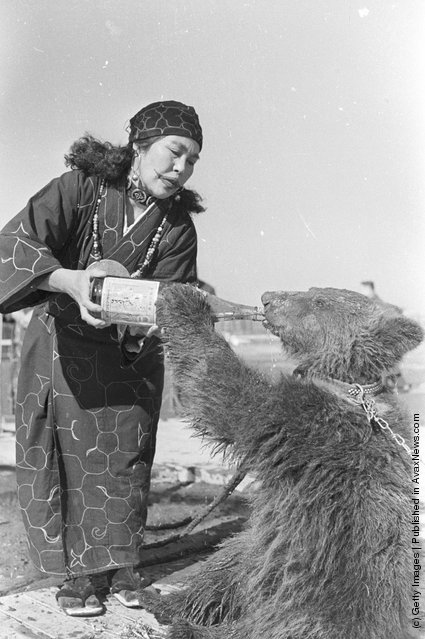
“The Ainu (アイヌ?), also called Aynu, Aino (アイノ), and in historical texts Ezo (蝦夷), are indigenous people or groups in Japan and Russia. Historically they spoke the Ainu language and related varieties and lived in Hokkaidō, the Kuril Islands, and much of Sakhalin. Most of those who identify themselves as Ainu still live in this same region, though the exact number of living Ainu is unknown. This is due to ethnic issues in Japan resulting in those with Ainu backgrounds hiding their identities and confusion over mixed heritages. In Japan, because of intermarriage over many years with Japanese, the concept of a 'pure Ainu' ethnic group is no longer feasible. Official estimates of the population are of around 25,000, while the unofficial number is upwards of 200,000 people”. – Wkipedia

Photo: A captive bear drinking from a large bottle held by an Ainu tribeswoman. (Photo by Evans/Three Lions/Getty Images). Circa 1955
Details
24 Mar 2011 14:01:00
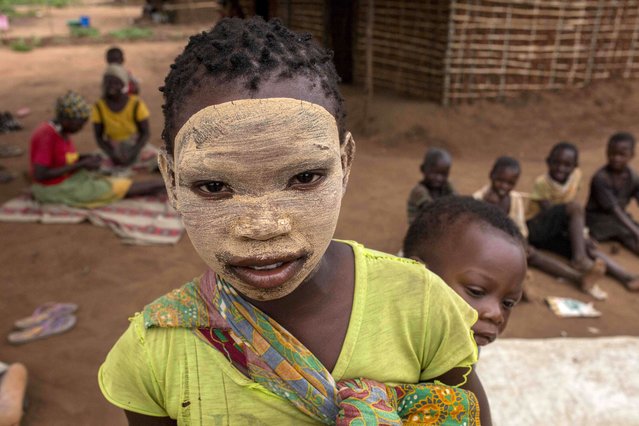
A young girl from the Makonde ethnic group wearing earth makeup on her facen, a beauty symbol, carries a baby on her back as she poses for pictures in the community of Marupa, a relocation center for internally displaced families in the Chiure district, on February 23, 2021. Thousands of families from different districts of the Cabo Delgado province who have been displaced have been located by the government in different areas of the province. (Photo by Alfredo Zuniga/AFP Photo)

A young girl from the Makonde ethnic group wearing earth makeup on her facen, a beauty symbol, carries a baby on her back as she poses for pictures in the community of Marupa, a relocation center for internally displaced families in the Chiure district, on February 23, 2021. Thousands of families from different districts of the Cabo Delgado province who have been displaced have been located by the government in different areas of the province. (Photo by Alfredo Zuniga/AFP Photo)
Details
04 Mar 2021 08:40:00
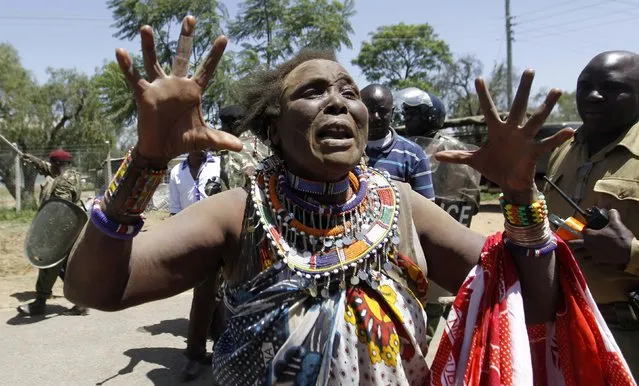
A woman cries after riot police dispersed demonstrators during protests to oust Narok county Governor Samuel Tunai in Narok, Kenya, January 26, 2015. At least seven people were injured on Monday in clashes between Kenyan police and protesters from the Maasai ethnic group. (Photo by Thomas Mukoya/Reuters)

A woman cries after riot police dispersed demonstrators during protests to oust Narok county Governor Samuel Tunai in Narok, Kenya, January 26, 2015. At least seven people were injured on Monday in clashes between Kenyan police and protesters from the Maasai ethnic group who accuse a local governor of corrupt handling of tourism funds from the Maasai Mara game reserve, the Kenya Red Cross said. (Photo by Thomas Mukoya/Reuters)
Details
27 Jan 2015 11:58:00