Loading...
Done


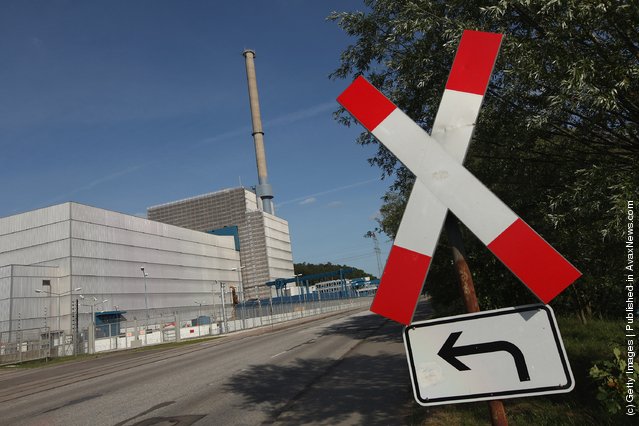
A sign marks a railway crossing next to the troubled Kruemmel nuclear power plant on June 2, 2011 in Geesthacht, Germany. The German government recently announced it will phase out the country's 17 remaining nuclear reactors by 2022 in a policy initiative that represents a radical reversal from its previous policy and was sparked by the disaster at Fukushima. Kruemmel went into operation in 1983 but was taken offline following a fire in 2007. (Photo by Sean Gallup/Getty Images)
Details
03 Jun 2011 09:12:00
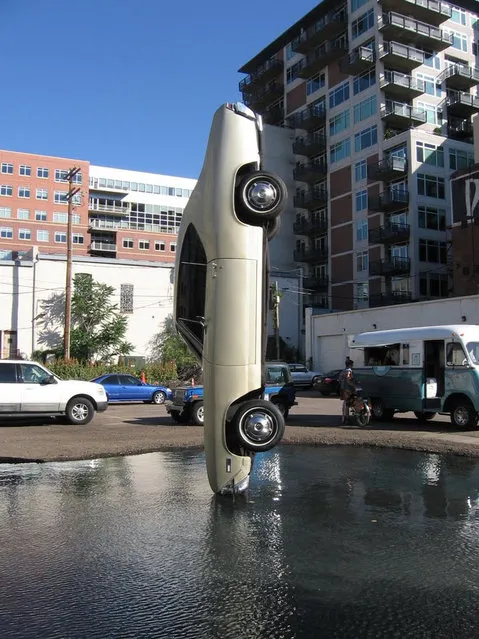
History of Suspended Time By Gonzalo Lebrija

Guadalajara-based artist Gonzalo Lebrija created a public art installation in the parking lot (1430 Delgany Street, Denver, CO 80202) across from the Museum of Contemporary Art Denver (MCA Denver) in the summer of 2010. The installation, entitled History of Suspended Time: Monument for the Impossible, was developed as a dual collaboration with MCA Denver's museum-wide exhibition, Energy Effects: Art & Artifacts from the Landscape of Glorious Excess, as well as Denver's inaugural 2010 Biennial of the Americas, an international event that celebrated the culture, ideas and people of the Western Hemisphere.
Details
31 Aug 2014 13:37:00
Talents Yasmina Hunzinger, Lisa Martine Weller, Kim Sanders and Sharron Levy pose during a photocall to the TV show The Voice of Germany

(L-R) Talents Yasmina Hunzinger, Lisa Martine Weller, Kim Sanders and Sharron Levy pose during a photocall to the TV show “The Voice of Germany” on January 3, 2012 in Berlin, Germany. (Photo by Andreas Rentz/Getty Images)
Details
04 Jan 2012 14:28:00
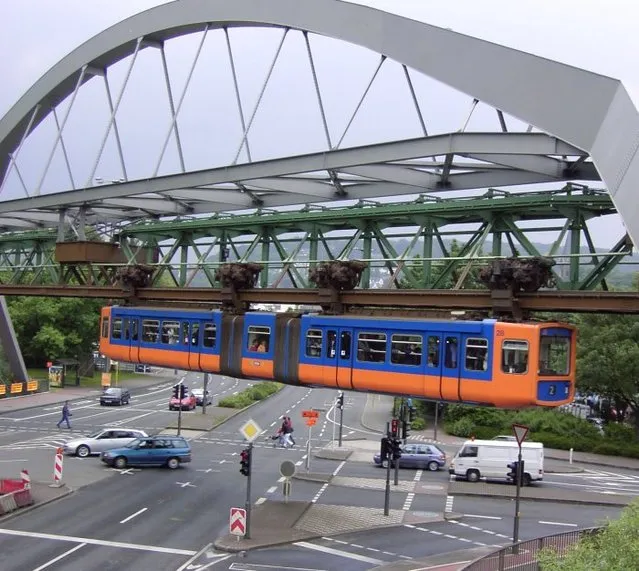
The Wuppertal Suspension Railway in Wuppertal, Germany

The Wuppertal Suspension Railways is one a kind elevated railway located in Wuppertak, Germany. It is the oldest elevated railway in the world, though it doesn’t look like it. It is kept in great condition by the government and provides for a great attraction for the tourists. It provides a great overview, as it runs above a number of city streets and a small river. Moreover, since it is powered by electricity, it proves an ecologically clean method of travel for the residents of the city.
Details
03 Apr 2015 11:38:00
“Jessica”, a silicon s*x doll for sexual encounters lies on a bed at the “Bordoll” brothel on April 17, 2019 in Dortmund, Germany. (Photo by Lukas Schulze/Bongarts/Getty Images)

“Jessica”, a silicon sеx doll for sexual encounters lies on a bed at the “Bordoll” brothel on April 17, 2019 in Dortmund, Germany. Bordoll is Germany's first brothel to specialize in sеx dolls. It currently offers 13 female dolls and one male doll and will soon be expanding its female line-up. Schwarz says “sеx dolls are so popular because the client can do what he wants to and nobody complains”. (Photo by Lukas Schulze/Bongarts/Getty Images)
Details
19 Apr 2018 00:03:00
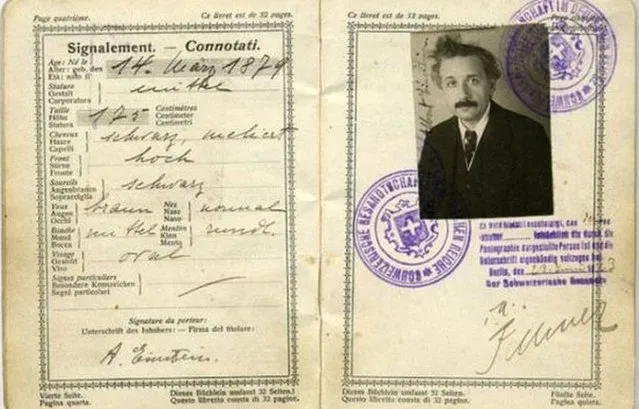
Passport Photos of Iconic Figures in History

Here is an awesome collection passport photos of iconic figures in the past
Details
24 Oct 2013 09:36:00
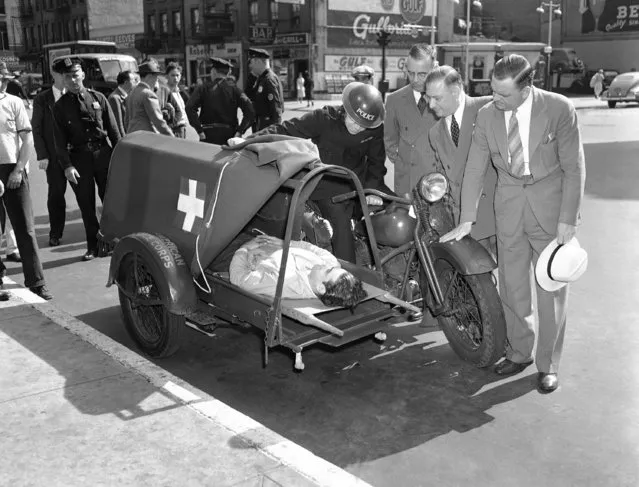
Developed for the British American Ambulance Corps, this new motorcycle ambulance is capable of speeding wounded soldiers 90 miles an hour from the front lines to field hospitals. Its springs are synchronized with the patient?s heartbeat to avoid increasing fever when traveling over various Terrain. Viewing it in New York  August 27, 1941, are left to right: constable Herbert Scott of England, driver; William E. Detlor, whose firm developed the vehicle; M. W. Stand, inspector-general of Civilian Defense, and Maj. Edward Riekert, also. (Photo by AP Photo)

Developed for the British American Ambulance Corps, this new motorcycle ambulance is capable of speeding wounded soldiers 90 miles an hour from the front lines to field hospitals. Its springs are synchronized with the patient's heartbeat to avoid increasing fever when traveling over various Terrain. Viewing it in New York August 27, 1941, are left to right: constable Herbert Scott of England, driver; William E. Detlor, whose firm developed the vehicle; M. W. Stand, inspector-general of Civilian Defense, and Maj. Edward Riekert, also. (Photo by AP Photo)
Details
28 Aug 2015 11:51:00
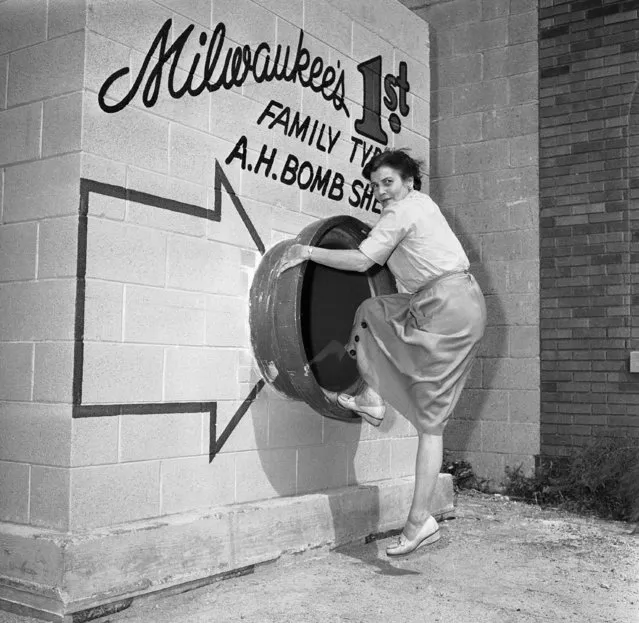
Mrs. Marie Graskamp of Milwaukee shows the different positions one might assume when entering the bomb shelter in Milwaukee  September 3, 1958. This circular entrance is about three feet in diameter. This is the entrance (according to the builders) that would connect to the cellar of a home assuming the shelter was in the ground for added protection. (Photo by AP Photo)

Mrs. Marie Graskamp of Milwaukee shows the different positions one might assume when entering the bomb shelter in Milwaukee September 3, 1958. This circular entrance is about three feet in diameter. This is the entrance (according to the builders) that would connect to the cellar of a home assuming the shelter was in the ground for added protection. If a bombing should occur, all members of family would proceed to the cellar and then through the circular port into the shelter. (Photo by AP Photo)
Details
04 Sep 2015 12:44:00