Loading...
Done
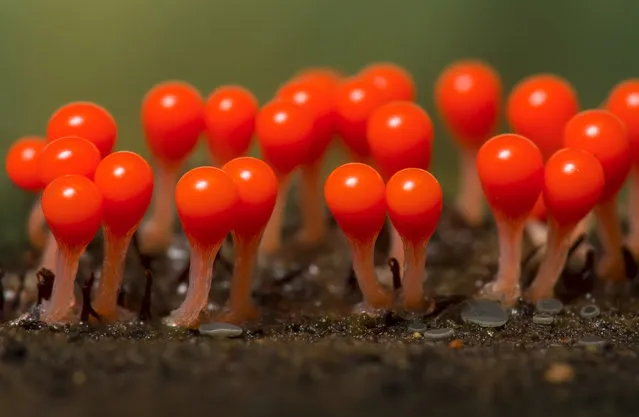
These may look like alien creatures from another planet, but the odd organisms are, in fact, colorful, microscopic life forms found in our forests. The bizarre slime molds, known as mycetozoa or fungus animals, were captured by geologist Valeriya Zvereva. (Photo by Valeriya Zvereva/Caters News)

These may look like alien creatures from another planet, but the odd organisms are, in fact, colorful, microscopic life forms found in our forests. The bizarre slime molds, known as mycetozoa or fungus animals, were captured by geologist Valeriya Zvereva. She spent months documenting the common life forms that are found beneath our feet – but are rarely seen. Incredibly, the organisms can move and hunt for other microscopic life forms on which to feed. Zvereva, who is from Moscow, used a special macro lens to capture the vibrant and up-close shots, which show off the organisms’ unlikely beauty. (Photo by Valeriya Zvereva/Caters News)
Details
20 Apr 2015 13:27:00
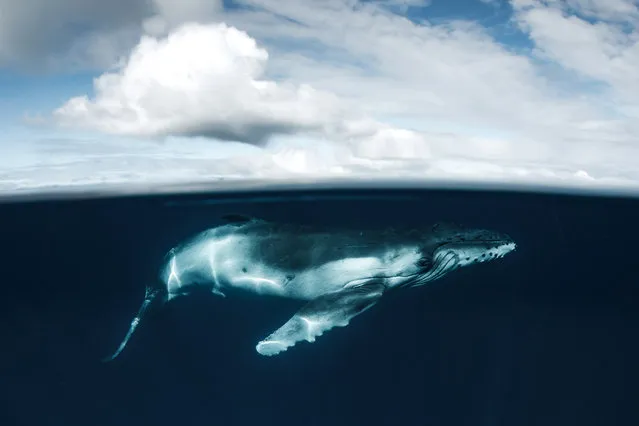
The images were taken off the coast of Tonga in the South Pacific. Photographer Grant Thomas said: “Through my images I aim to show off the amazing life we have on our planet in hope of inspiring more people to experience it for themselves and, most importantly, care for it. There is nothing to be afraid of with the humpback whales, as these animals are some of the most majestic and peaceful creatures in the sea. They will often be very curious of people in the water and will even seek out interactions with us”. (Photo by Grant Thomas/Caters News Agency)

The images were taken off the coast of Tonga in the South Pacific. Photographer Grant Thomas said: “Through my images I aim to show off the amazing life we have on our planet in hope of inspiring more people to experience it for themselves and, most importantly, care for it”. (Photo by Grant Thomas/Caters News Agency)
Details
28 Nov 2019 00:03:00
A woman takes part in a global March for marijuana in Medellin, Colombia, May 7, 2016. The Global Marijuana March (GMM) is an annual rally held at different locations across the planet. It refers to cannabis-related events that occur on the first Saturday in May, or thereabouts, and may include marches, meetings, rallies, raves, concerts, festivals and information tables. The Global Marijuana March also goes by the name of the Million Marijuana March (MMM). It began in 1999. (Photo by Fredy Builes/Reuters)

A woman takes part in a global March for marijuana in Medellin, Colombia, May 7, 2016. The Global Marijuana March (GMM) is an annual rally held at different locations across the planet. It refers to cannabis-related events that occur on the first Saturday in May, or thereabouts, and may include marches, meetings, rallies, raves, concerts, festivals and information tables. (Photo by Fredy Builes/Reuters)
Details
09 May 2016 09:05:00
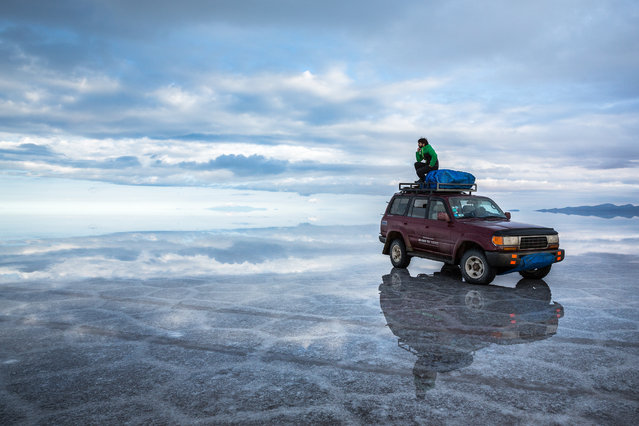
At 10,582 square kilometres, the Bolivian salt flats – otherwise known as Salar de Uyuni – are the largest on the planet and contain between 50 and 70% of the world’s lithium reserves. After exploring Chile and Argentina, photographer Joel Santos decided to travel to Bolivia in January 2017 to check the salt flats off his bucket list. With an electrical storm rolling in, Joel and his two travelling companions were the only souls left on the vast flats and captured the eerie flats without a person in sight. (Photo by Joel Santos/Barcroft Images)

At 10,582 square kilometres, the Bolivian salt flats – otherwise known as Salar de Uyuni – are the largest on the planet and contain between 50 and 70% of the world’s lithium reserves. After exploring Chile and Argentina, photographer Joel Santos decided to travel to Bolivia in January 2017 to check the salt flats off his bucket list. With an electrical storm rolling in, Joel and his two travelling companions were the only souls left on the vast flats and captured the eerie flats without a person in sight. (Photo by Joel Santos/Barcroft Images)
Details
12 Aug 2019 00:03:00
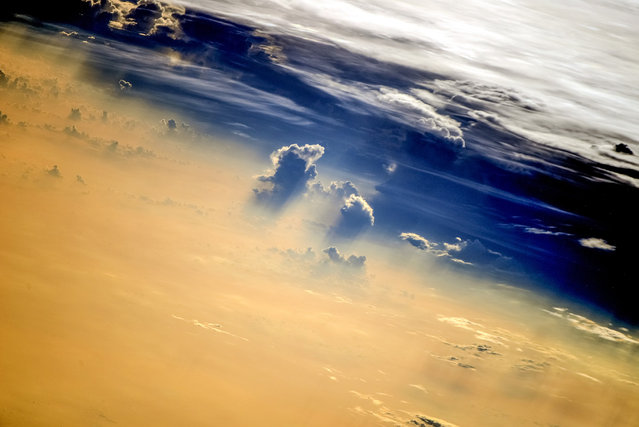
Image of the Clouds taken in August 2014 by astronauts on board the International Space Station (ISS).  A year from space photographs of hurricanes, typhoons and meteorite craters show an astronauts-eye view of our planet from hundreds of miles above the earth. The illuminating images were taken by astronauts onboard the International Space Station (ISS) over the course of 2014. (Photo by NASA/SPL/Barcroft Media)

Image of the Clouds taken in August 2014 by astronauts on board the International Space Station (ISS). A year from space photographs of hurricanes, typhoons and meteorite craters show an astronauts-eye view of our planet from hundreds of miles above the earth. The illuminating images were taken by astronauts onboard the International Space Station (ISS) over the course of 2014. (Photo by NASA/SPL/Barcroft Media)
Details
31 Dec 2014 14:47:00


If you are interested, the Korean call this style Trot (ppongjjak); a very simple life story is told with three guitar chords – quite a typical situation for our planet. Long-legged dolls from LPG (by the way, “Lovely Pretty Girls” could be “Long Pretty Girls”) are certainly smiling, though it would have been more logical for them to cry their hearts out, but that's what the Korean are like; who has seen doramas, will understand.
Details
08 Jan 2019 00:03:00
Miss USA, Olivia Culpo, appears on stage during the Miss Universe Pageant at Planet Hollywood in Las Vegas, Nevada on December 19, 2012. Olivia Culpo was crowned Miss Universe 2012,  beating out beauties from around the world to claim the coveted title.  The title of first runner-up title went to the contestant from the Philippines, Janine Tugonon. (Photo by Joe Klamar/AFP Photo)

Miss USA, Olivia Culpo, appears on stage during the Miss Universe Pageant at Planet Hollywood in Las Vegas, Nevada on December 19, 2012. Olivia Culpo was crowned Miss Universe 2012, beating out beauties from around the world to claim the coveted title. The title of first runner-up title went to the contestant from the Philippines, Janine Tugonon. (Photo by Joe Klamar/AFP Photo)
Details
20 Dec 2012 10:18:00
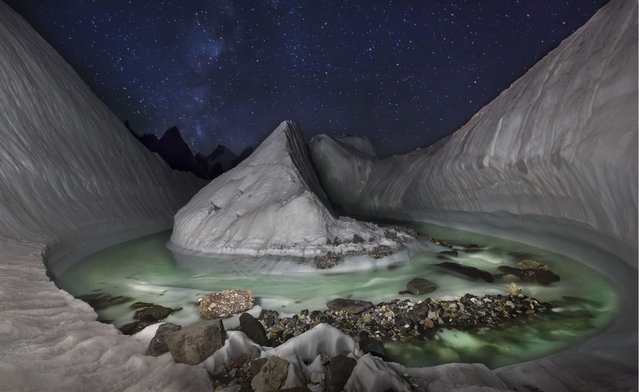
Polish photographer David Kaszlikowski took a series of stunning photographs of a glacier in the Karakoram region of Pakistan while on a film expedition. At the Baltoro and Godwin-Austen glaciers near K2, the second highest mountain in the world, he sent his drone on flights to scout the surrounding landscape. Here: at the heart of Karakoram, a glacier formation found at Concordia at the very beginning of one of the longest glaciers on the planet, Baltoro. (Photo by David Kaszlikowski/Rex Features)

Polish photographer David Kaszlikowski took a series of stunning photographs of a glacier in the Karakoram region of Pakistan while on a film expedition. At the Baltoro and Godwin-Austen glaciers near K2, the second highest mountain in the world, he sent his drone on flights to scout the surrounding landscape. Here: at the heart of Karakoram, a glacier formation found at Concordia at the very beginning of one of the longest glaciers on the planet, Baltoro. (Photo by David Kaszlikowski/Rex Features)
Details
17 Nov 2015 08:02:00