Loading...
Done
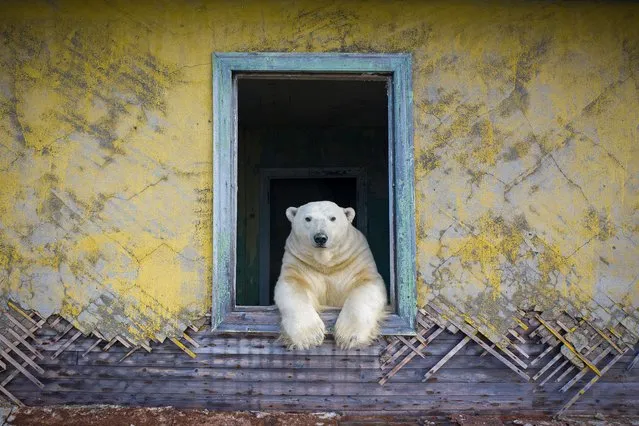
Polar frame, by Dmitry Kokh, Russia. When Kokh’s boat approached the small island of Kolyuchin in the Russian High Arctic, which had been abandoned by humans since 1992, he was surprised to spot movement in one of the houses. Binoculars revealed polar bears – more than 20 in total – exploring the ghost town. Dmitry used a low-noise drone to document them. (Photo by Dmitry Kokh/Wildlife Photographer of the Year 2022)

Polar frame, by Dmitry Kokh, Russia. When Kokh’s boat approached the small island of Kolyuchin in the Russian High Arctic, which had been abandoned by humans since 1992, he was surprised to spot movement in one of the houses. Binoculars revealed polar bears – more than 20 in total – exploring the ghost town. Dmitry used a low-noise drone to document them. (Photo by Dmitry Kokh/Wildlife Photographer of the Year 2022)
Details
03 Sep 2022 05:43:00
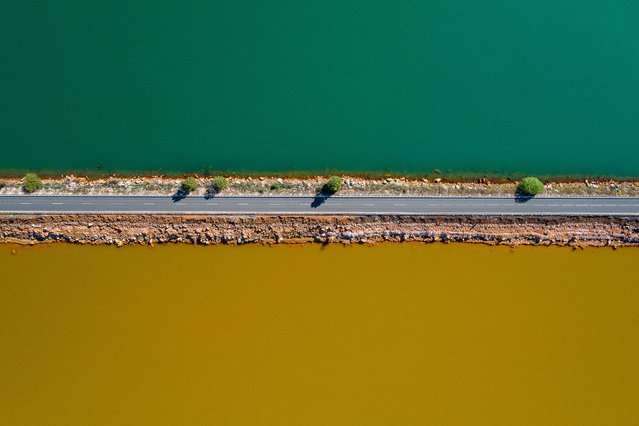
Shortlisted: The Life: A narrow strip, Río Tinto, Huelva, Spain. A narrow strip of road divides ochre-coloured and fresh waters. Trees wait on the fresh side of the road opposite the toxic waters of a nearby mine reservoir. (Photo by Roberto Bueno/CIWEM Environmental Photographer of the Year 2021)

Shortlisted: The Life: A narrow strip, Río Tinto, Huelva, Spain. A narrow strip of road divides ochre-coloured and fresh waters. Trees wait on the fresh side of the road opposite the toxic waters of a nearby mine reservoir. (Photo by Roberto Bueno/CIWEM Environmental Photographer of the Year 2021)
Details
10 Nov 2021 08:04:00
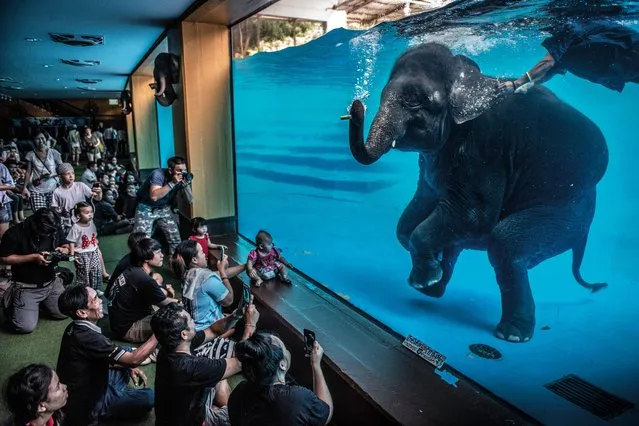
Winner, photojournalism. Elephant in the room, by Adam Oswell, Australia Zoo. Visitors watch a young elephant performing underwater. Oswell was disturbed by this scene, and organisations concerned with the welfare of captive elephants say performances like this encourage unnatural behaviour. In Thailand, there are now more elephants in captivity than in the wild. With the Covid pandemic causing tourism to collapse, elephant sanctuaries are becoming overwhelmed with animals that can no longer be looked after by their owners. (Photo by Adam Oswell/Wildlife Photographer of the Year 2021)

Winner, photojournalism. Elephant in the room, by Adam Oswell, Australia Zoo. Visitors watch a young elephant performing underwater. Oswell was disturbed by this scene, and organisations concerned with the welfare of captive elephants say performances like this encourage unnatural behaviour. In Thailand, there are now more elephants in captivity than in the wild. With the Covid pandemic causing tourism to collapse, elephant sanctuaries are becoming overwhelmed with animals that can no longer be looked after by their owners. (Photo by Adam Oswell/Wildlife Photographer of the Year 2021)
Details
30 Oct 2021 08:40:00
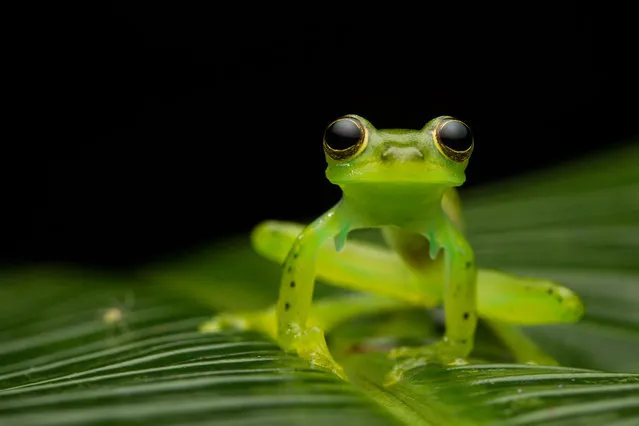
An image captured by Jasmine Vink, the winner of the wildlife and animal category and overall winner in Australian Photography’s 2018 Photographer of the Year competition. (Photo by Jasmine Vink/Australia's 2018 Photographer of the Year by Panasonic)

An image captured by Jasmine Vink, the winner of the wildlife and animal category and overall winner in Australian Photography’s 2018 Photographer of the Year competition. (Photo by Jasmine Vink/Australia's 2018 Photographer of the Year by Panasonic)
Details
06 Feb 2019 00:03:00
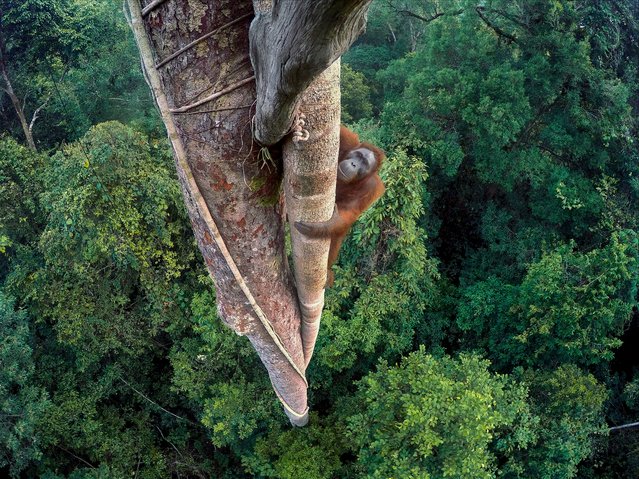
“Entwined Lives”. Tim Laman, US Winner, Wildlife photographer of the year. A young male orangutan makes the 30-metre climb up the thickest root of the strangler fig high above the canopy in Gunung Palung national park, one of the few protected orangutan strongholds in Indonesian Borneo. Laman had to do three days of climbing to position several GoPro cameras that he could trigger remotely. This shot was the one he had long visualised, looking down on the orangutan within its forest home. (Photo by Tim Laman/2016 Wildlife Photographer of the Year)

“Entwined Lives”. Tim Laman, US Winner, Wildlife photographer of the year. A young male orangutan makes the 30-metre climb up the thickest root of the strangler fig high above the canopy in Gunung Palung national park, one of the few protected orangutan strongholds in Indonesian Borneo. Laman had to do three days of climbing to position several GoPro cameras that he could trigger remotely. This shot was the one he had long visualised, looking down on the orangutan within its forest home. (Photo by Tim Laman/2016 Wildlife Photographer of the Year)
Details
19 Oct 2016 12:08:00
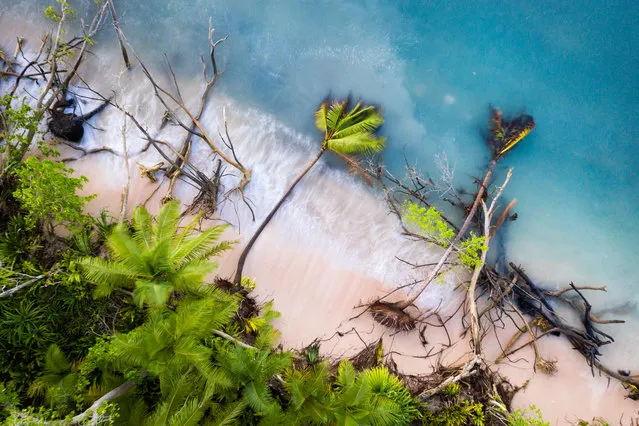
Tuvalu Beneath the Rising Tide by Sean Gallagher, Tuvalu. Changing environments prize: Fallen trees lie on a beach as the waves from the Funafuti lagoon in Tuvalu lap around them. Land erosion has always been a problem for the South Pacific country but problems are intensifying as sea levels rise. Rising seas are on the verge of completely submerging the tiny archipelago’s islands. (Photo by Sean Gallagher/CIWEM Environmental Photographer of the Year 2019)

Tuvalu Beneath the Rising Tide by Sean Gallagher, Tuvalu. Changing environments prize: Fallen trees lie on a beach as the waves from the Funafuti lagoon in Tuvalu lap around them. Land erosion has always been a problem for the South Pacific country but problems are intensifying as sea levels rise. Rising seas are on the verge of completely submerging the tiny archipelago’s islands. (Photo by Sean Gallagher/CIWEM Environmental Photographer of the Year 2019)
Details
26 Sep 2019 00:03:00
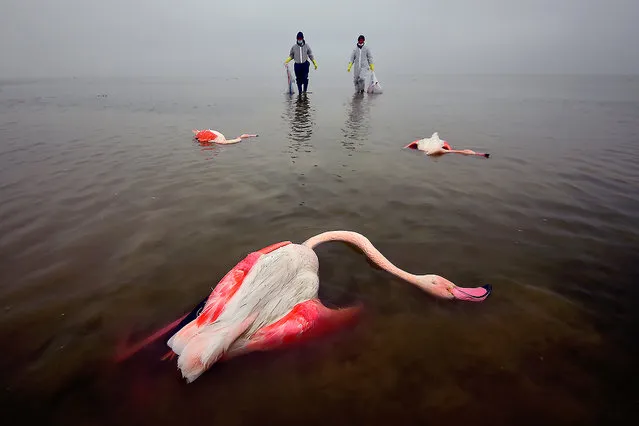
Grand title winner: Environmental photographer of the year. The Bitter Death Of Birds by Mehdi Mohebi Pour. This photo shows the efforts of the environmental forces to collect the bodies and prevent the spread of this disease. The Miankaleh wetland is being destroyed by changes in the climate and it is my duty as a photographer to highlight these problems and create a record for history. I want to prevent the complete destruction of the wetland and the potential environmental disaster by showing the issues and threats to these beautiful natural places. (Photo by Mehdi Mohebi Pour/Environmental Photographer of the Year)

Grand title winner: Environmental photographer of the year. The Bitter Death Of Birds by Mehdi Mohebi Pour. This photo shows the efforts of the environmental forces to collect the bodies and prevent the spread of this disease. The Miankaleh wetland is being destroyed by changes in the climate and it is my duty as a photographer to highlight these problems and create a record for history. I want to prevent the complete destruction of the wetland and the potential environmental disaster by showing the issues and threats to these beautiful natural places. (Photo by Mehdi Mohebi Pour/Environmental Photographer of the Year)
Details
05 Dec 2022 04:27:00
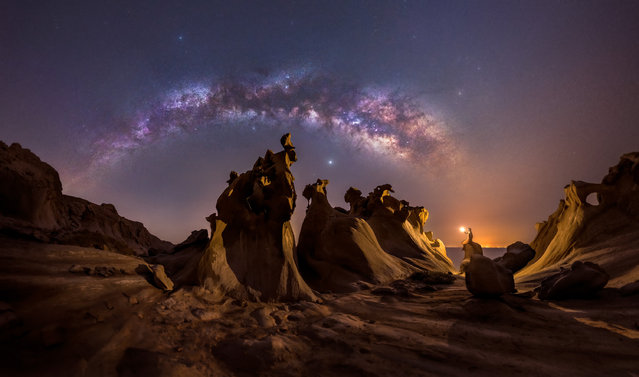
Night lovers; Hormozgan province, Iran. “In this picture, you can see the Milky Way rising on a fascinating spring night on the Persian Gulf coast. The stunning cliffs of this area make every viewer imagine and even talk to them! The light pollution from a faraway city was quite strong, so it was a challenging post-processing process. I’m a nightscaper who tries to achieve an artistic look in my images, and in this image, I tried to convey and capture the magic of this location”. (Photo by Mohammad Hayati/Milky Way Photographer of the Year)

Night lovers; Hormozgan province, Iran. “In this picture, you can see the Milky Way rising on a fascinating spring night on the Persian Gulf coast. The stunning cliffs of this area make every viewer imagine and even talk to them! The light pollution from a faraway city was quite strong, so it was a challenging post-processing process. I’m a nightscaper who tries to achieve an artistic look in my images, and in this image, I tried to convey and capture the magic of this location”. (Photo by Mohammad Hayati/Milky Way Photographer of the Year)
Details
01 Jun 2021 09:42:00