Loading...
Done
Cave Diver, Anhumas Abyss, Bonito, Brazil: The Anhumas Abyss is an underground cavern with a crystal-clear lake below, more than 260 feet (79 m) deep. A visitor must enter through a narrow opening at the top of the chamber and rappel into the cave. Snorkeling and scuba diving in the lake reveal amazing scenery. Distinctive, conical limestone stalagmites and stalactites occupy the lake and the surrounding area, some reaching 65 feet (20 m) high. “One must rappel about 235 feet (72 m) to get down into this deep lake. The photo was taken at a depth of 50 feet (15 m). It was a challenge to create the image because of the high contrast, plus the diver could not see into the darkness, making communication impossible”. (Photo by Marcio Cabral/Nature’s Best Photography Awards 2017)

Cave Diver, Anhumas Abyss, Bonito, Brazil: The Anhumas Abyss is an underground cavern with a crystal-clear lake below, more than 260 feet (79 m) deep. A visitor must enter through a narrow opening at the top of the chamber and rappel into the cave. Snorkeling and scuba diving in the lake reveal amazing scenery. Distinctive, conical limestone stalagmites and stalactites occupy the lake and the surrounding area, some reaching 65 feet (20 m) high. (Photo by Marcio Cabral/Nature’s Best Photography Awards 2017)
Details
26 Oct 2017 08:10:00
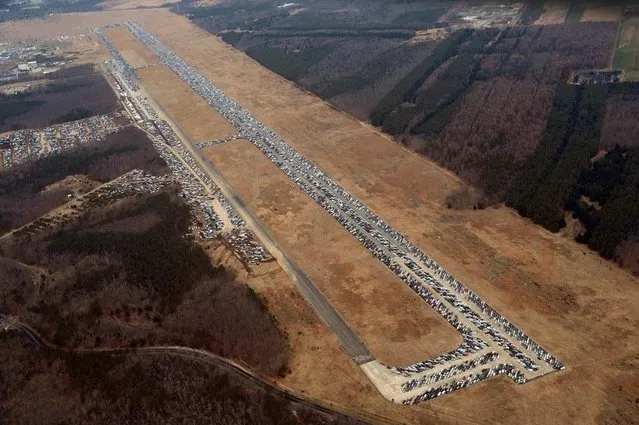
Tens of thousands of vehicles damaged by super storm Sandy are being temporarily stored on runways and taxiways at Calverton Executive Airpark in Calverton, New York, on January 9, 2013. (Photo by Stan  Honda/AFP Photo)

Tens of thousands of vehicles damaged by super storm Sandy are being temporarily stored on runways and taxiways at Calverton Executive Airpark in Calverton, New York, on January 9, 2013 in this aerial view. Insurance Auto Auctions Inc, a salvage auto auction company specializing in total-loss vehicles, acquired the cars and trucks that were damaged, destroyed or flooded by the storm and needed a place to store them. The company made a deal with the Town of Riverhead to lease the airport land and then the vehicles are auctioned online. (Photo by Stan Honda/AFP Photo)
Details
12 Jan 2013 10:57:00
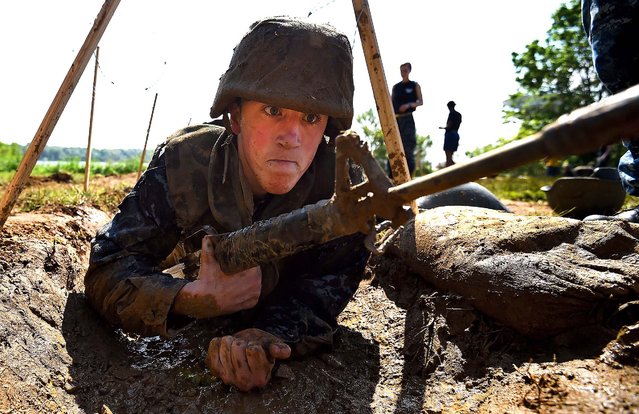
A member of the United States Naval Academy freshman class crawls through trenches at the wet and sandy station during the annual Sea Trials training exercise at the U.S. Naval Academy on May 13, 2014 in Annapolis, Maryland. (Photo by Patrick Smith/Getty Images)

A member of the United States Naval Academy freshman class crawls through trenches at the wet and sandy station during the annual Sea Trials training exercise at the U.S. Naval Academy on May 13, 2014 in Annapolis, Maryland. For 14 hours, the United States Naval Academy freshman class, also known as Plebes, worked as a team to complete many grueling physical and mental challenges that help prepare them for real-world experiences and reinforce leadership, bonds, trust, and teamwork. Of the challenges, they endured: a two-mile regimental run, ground fights, water tactics, aquatics challenges, and survival skills, amongst many others. (Photo by Patrick Smith/Getty Images)
Details
14 May 2014 07:52:00
In this Monday, July 20, 2015 photo, Bill Lattin, the Southern California Timing Association president and Speed Week race director, stands in the Bonneville Salt Flats in Utah. (Photo by Rick Bowmer/AP Photo)

In this Monday, July 20, 2015 photo, Bill Lattin, the Southern California Timing Association president and Speed Week race director, stands in the Bonneville Salt Flats in Utah. A small city of tents, trailers and thousands of visitors appears almost every August in the Utah desert to watch cars, motorcycles and anything with wheels rocket across gleaming white sheets of salt at speeds of 400 mph. But wet weather has forced the cancellation of Speed Week for the second straight year and revived a debate about whether nearby mining is depleting the Bonneville Salt Flats of their precious resource. (Photo by Rick Bowmer/AP Photo)
Details
28 Jul 2015 13:01:00
What the World Eats By Peter Menzel And Faith D'Aluisio Part 2

A stunning photographic collection featuring portraits of people from 30 countries and the food they eat in one day. In this fascinating study of people and their diets, 80 profiles are organized by the total number of calories each person puts away in a day. Featuring a Japanese sumo wrestler, a Massai herdswoman, world-renowned Spanish chef Ferran Adria, an American competitive eater, and more, these compulsively readable personal stories also include demographic particulars, including age, activity level, height, and weight. Essays from Harvard primatologist Richard Wrangham, journalist Michael Pollan, and others discuss the implications of our modern diets for our health and for the planet. This compelling blend of photography and investigative reportage expands our understanding of the complex relationships among individuals, culture, and food.
Details
02 May 2014 09:20:00
What 200 Calories Looks Like In Different Foods Part 3

Some foods have significantly more Calories than others but what does the difference actually look like. Each of the photographs below represents 200 Calories of the particular type of food; the images are sorted from low to high calorie density. When you consider that an entire plate of broccoli contains the same number of Calories as a small spoonful of peanut butter, you might think twice the next time you decide what to eat. According to the U.S. Department of Agriculture, the average adult needs to consume about 2000 – 2500 Calories to maintain their weight. In other words, you have a fixed amount of Calories to "spend" each day; based on the following pictures, which would you eat?


See Also: Ppart 1 _ Part 2
Details
02 Aug 2014 09:53:00
Last US Military Convoy Departs Iraq

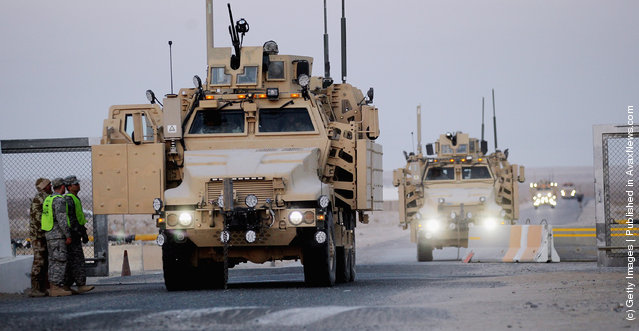
The last American military convoy to depart Iraq from the 3rd Brigade, 1st Cavalry Division crosses over the border into Kuwait on December 18, 2011 in Khabari Al Awazeem, Kuwait. (Photo by Mario Tama/Getty Images)
Details
18 Dec 2011 12:23:00
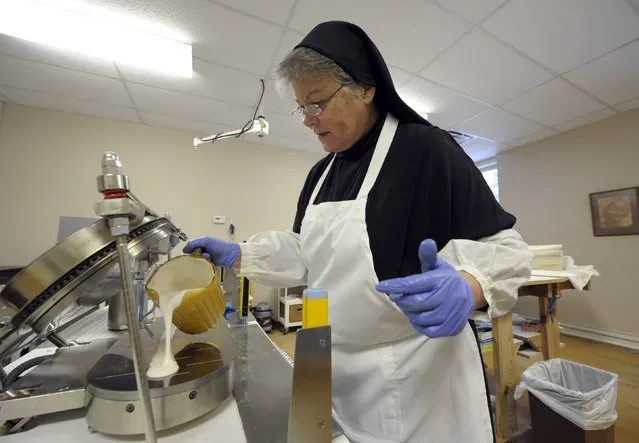
Sister Rebecca Leis pours low-gluten alter bread batter into a machine that bakes the thin bread at the Benedictine Sisters of Perpetual Adoration monastery in Clyde, Missouri, December 18, 2014. The Sisters have made communion wafers since 1910 and began making a low-gluten version in 2003 and have gone from 143 customers in 2004 to more than 11,000 customers from around the world. (Photo by Dave Kaup/Reuters)

Sister Rebecca Leis pours low-gluten alter bread batter into a machine that bakes the thin bread at the Benedictine Sisters of Perpetual Adoration monastery in Clyde, Missouri, December 18, 2014. The Sisters have made communion wafers since 1910 and began making a low-gluten version in 2003 and have gone from 143 customers in 2004 to more than 11,000 customers from around the world. (Photo by Dave Kaup/Reuters)
Details
25 Dec 2014 13:21:00