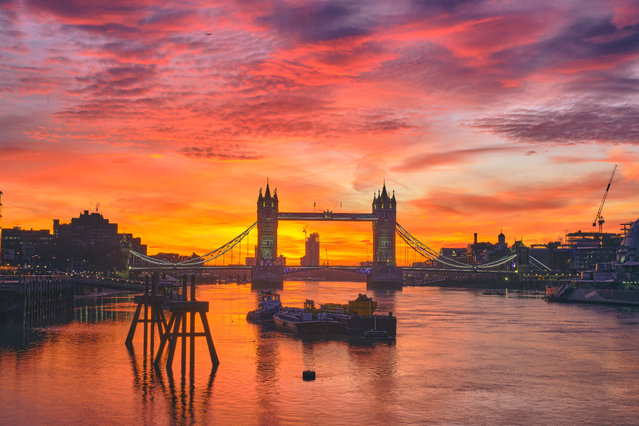
Sunrise over the River Thames and Tower Bridge in London today morning on January 28, 2024. It has been forecast that Sahara dust will be in the atmosphere. (Photo by Alister Gooding/Picture Exclusive)
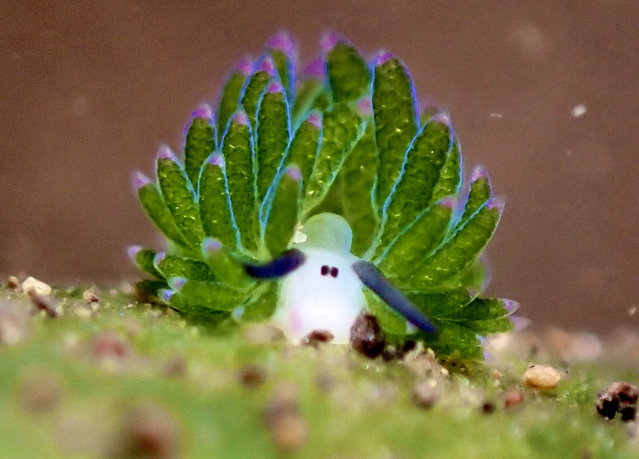
Keen diver Yusuke Fukami fulfilled a personal dream by snapping a cartoon-like Costasiella sea slug while in Bali in the last decade of December 2024. (Photo by Yusuke Fukami/South West News Service)
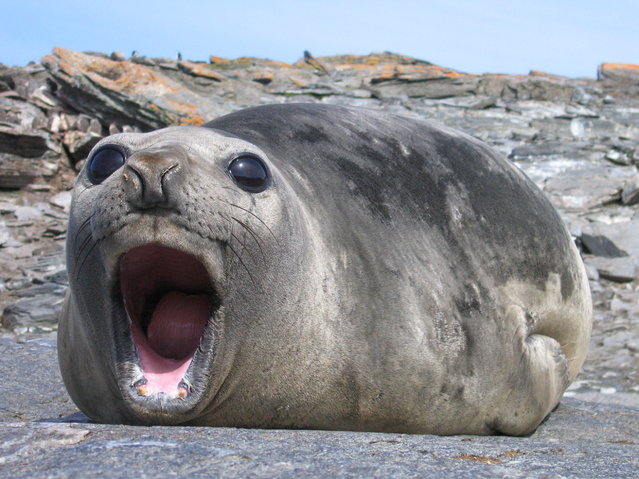
Weddell seal numbers in 2025 have declined sharply on Signy Island, part of the South Orkney Islands in the Southern Ocean, where British Antarctic Survey researchers have tracked seal populations for nearly 50 years to understand the impact of melting sea ice. (Photo by Michael Dunn/The Times)
An England fan poses for a photo outside the stadium before their international friendly match against Bosnia and Herzegovina in Newcastle, Britain on June 3, 2024. (Photo by Lee Smith/Action Images via Reuters)
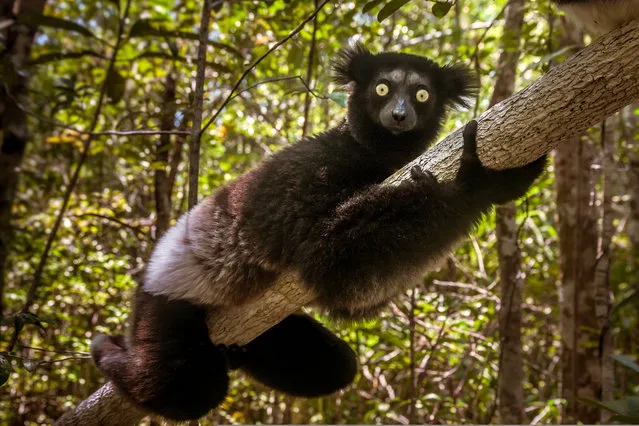
The secretive indri (Indri indri) of Madagascar, the largest living lemur. It is also critically endangered and highly evolutionarily distinct with no close relatives, which makes its branch one of most precarious on the mammal evolutionary tree. In the likely event that the indri goes extinct, we will lose 19m years of unique evolutionary history from the mammal tree of life. (Photo by Pierre-Yves Babelon/Aarhus University)
Two men look at the sea while taking part in the annual New Year's dive into the North Sea in Scheveningen, Netherlands on January 1, 2020. (Photo by Piroschka van de Wouw/Reuters)
A flight crew from China Airlines, wearing protective masks, stand in the international terminal after arriving on a flight from Taipei at Los Angeles International Airport (LAX) on February 28, 2020 in Los Angeles, California. The World Health Organization (WHO) has raised the global coronavirus risk level to “very high”. (Photo by Mario Tama/Getty Images)