Loading...
Done
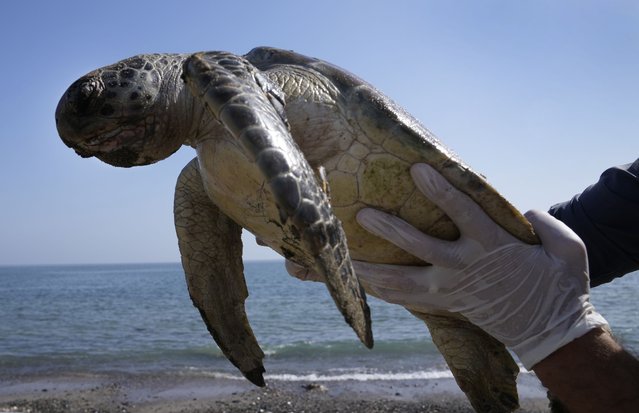
A dead green sea turtle is collected from the beach at the Khor Kalba Conservation Reserve, in the city of Kalba, on the east coast of the United Arab Emirates, Tuesday, February 1, 2022.  A staggering 75% of all dead green turtles and 57% of all loggerhead turtles in Sharjah had eaten marine debris, including plastic bags, bottle caps, rope and fishing nets, a new study published in the Marine Pollution Bulletin. The study seeks to document the damage and danger of the throwaway plastic that has surged in use around the world and in the UAE, along with other marine debris. (Photo by Kamran Jebreili/AP Photo)

A dead green sea turtle is collected from the beach at the Khor Kalba Conservation Reserve, in the city of Kalba, on the east coast of the United Arab Emirates, Tuesday, February 1, 2022. A staggering 75% of all dead green turtles and 57% of all loggerhead turtles in Sharjah had eaten marine debris, including plastic bags, bottle caps, rope and fishing nets, a new study published in the Marine Pollution Bulletin. The study seeks to document the damage and danger of the throwaway plastic that has surged in use around the world and in the UAE, along with other marine debris. (Photo by Kamran Jebreili/AP Photo)
Details
26 Feb 2022 04:58:00
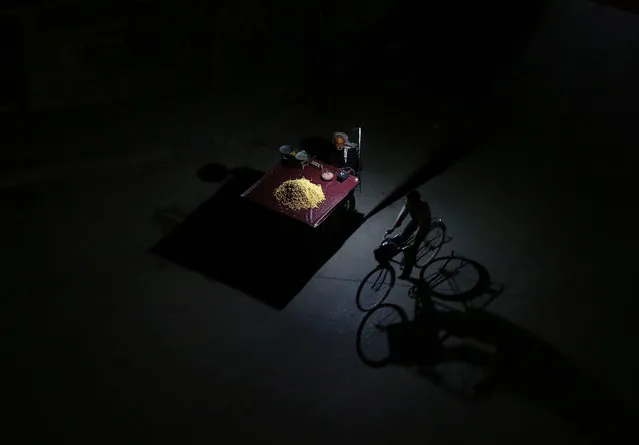
A Syrian man rides his bicycle past a man selling grains during a halt in fighting on February 29, 2016 in Douma, in the Eastern Ghouta region, east of the capital Damascus. A UN-backed ceasefire deal took hold across parts of Syria, bringing relative calm to areas where the Islamic State group and Al-Qaeda's local affiliate are not present. (Photo by Sameer Al-Doumy/AFP Photo)

A Syrian man rides his bicycle past a man selling grains during a halt in fighting on February 29, 2016 in Douma, in the Eastern Ghouta region, east of the capital Damascus. A UN-backed ceasefire deal took hold across parts of Syria, bringing relative calm to areas where the Islamic State group and Al-Qaeda's local affiliate are not present. (Photo by Sameer Al-Doumy/AFP Photo)
Details
07 Mar 2016 10:21:00
Jessie Jo Stark and Bella Hadid attend Chrome Hearts X Bella Hadid Collaboration Launch as part of Paris Fashion Week at Chrome Hearts on March 4, 2017 in Paris, France. (Photo by Julien M. Hekimian/Getty Images for Chrome Hearts)

Jessie Jo Stark and Bella Hadid attend Chrome Hearts X Bella Hadid Collaboration Launch as part of Paris Fashion Week at Chrome Hearts on March 4, 2017 in Paris, France. (Photo by Julien M. Hekimian/Getty Images for Chrome Hearts)
Details
11 Mar 2017 00:06:00
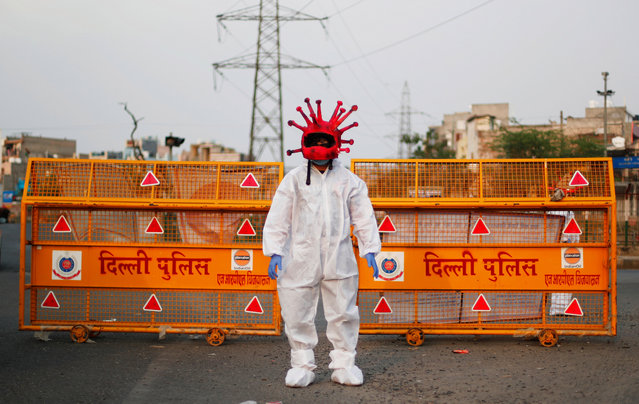
An artist wearing a coronavirus-shaped helmet and a protective suit stands next to a police barricade as he requests people to stay at home during an extended lockdown to slow the spread of the coronavirus disease (COVID-19) in New Delhi, India, April 30, 2020. (Photo by Adnan Abidi/Reuters)

An artist wearing a coronavirus-shaped helmet and a protective suit stands next to a police barricade as he requests people to stay at home during an extended lockdown to slow the spread of the coronavirus disease (COVID-19) in New Delhi, India, April 30, 2020. (Photo by Adnan Abidi/Reuters)
Details
12 May 2020 00:05:00
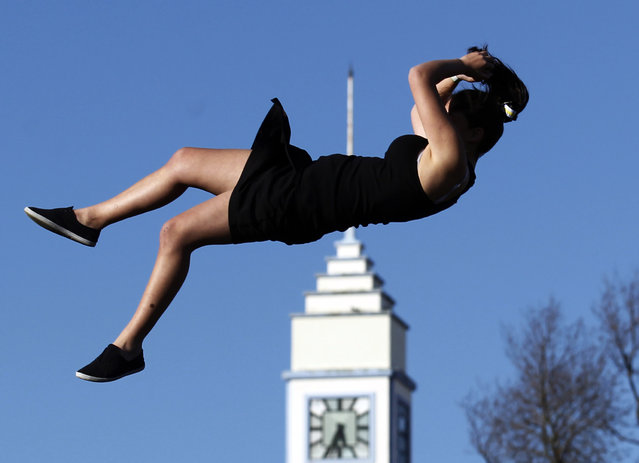
8. NEW ZEALAND: A woman dives from a platform into a giant air bed at a park in Palmerston North September 29, 2011. (Photo by Marcos Brindicci/Reuters)

The report, prepared by the Sustainable Development Solutions Network (SDSN) and the Earth Institute at Columbia University, showed Syria, Afghanistan and eight sub-Saharan countries as the 10 least happy places on earth to live. The top 10 this year were Denmark, Switzerland, Iceland, Norway, Finland, Canada, Netherlands, New Zealand, Australia, and Sweden. Denmark was in third place last year, behind Switzerland and Iceland. The bottom 10 were Madagascar, Tanzania, Liberia, Guinea, Rwanda, Benin, Afghanistan, Togo, Syria and Burundi. The United States came in at 13, the United Kingdom at 23, France at 32, and Italy at 50. Here: #8. NEW ZEALAND: A woman dives from a platform into a giant air bed at a park in Palmerston North September 29, 2011. (Photo by Marcos Brindicci/Reuters)
Details
26 Mar 2016 13:19:00
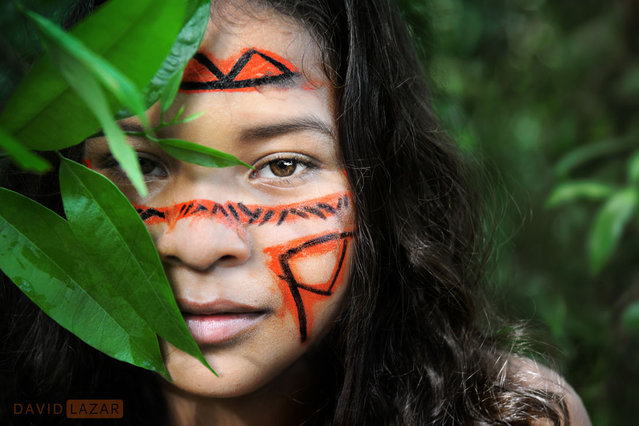
Amazon Tribe By David Lazar (Video)

Photographer David Lazar captured photos of native Dessana tribe, nearly 3,000 miles away from Brazil's capital. Tribe is only accessible by boat from city of Manaus. Surrounded by trees, waterfalls and tropical wildlife, this Amazon tribe is a world away from the beaches of Rio.
Details
27 Oct 2016 21:46:00
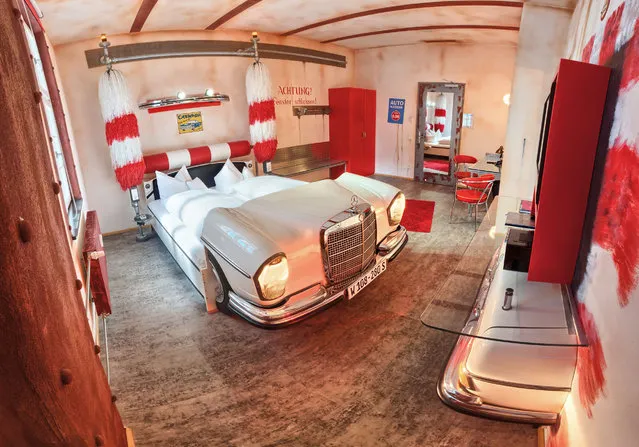
The V8 Hotel In Stuttgart, Germany

The V8 Hotel in Stuttgart is a car-lover’s heaven, it´s a theme hotel with a design clearly inspired by the car world. The Hotel is located in an auto museum called Böblingen’s Meilenwerk in Stuttgart, Germany. The hotel features themed rooms fit for both mechanics and car enthusiasts alike, it has four single rooms, 19 double rooms, tower suite and 10 theme-based rooms designed to impress visitors.
Details
01 Nov 2016 22:19:00
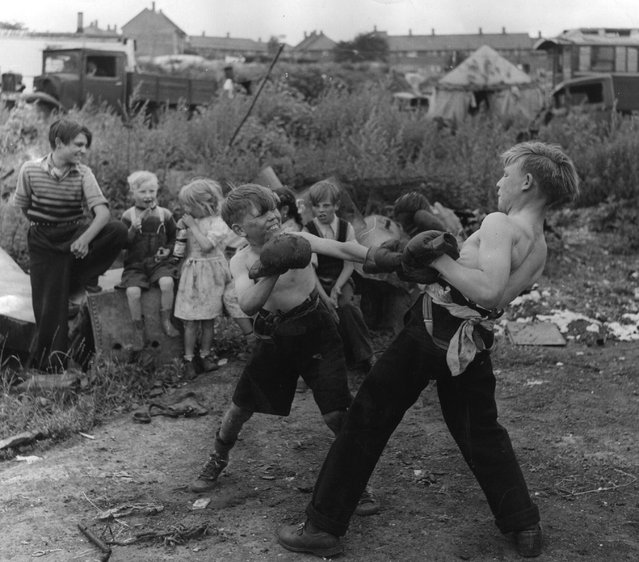
The unromantic gypsies. Children boxing in a gypsy camp in Kent, England on July 1, 1951. Like all boys these gypsy lads like to try their hand at boxing. Encouraged by their friends they fight it out on Corke's Meadow. Few Romanies now live a life of wandering romance. Most are like the three hundred squatters of Corke's Meadow, Kent, which is part of a “gypsy problem” that involves about 100,000 today. Of those about 25,000 can be rightly called gypsies, the rest are Mumpers and Posh-rats and Hobos. Corke's Meadow has both kinds. “Picture Post” cameraman Bert Hardy photographs the Corke's Meadow gypsies in their encampment. (Photo by Hulton-Deutsch Collection/Corbis via Getty Images)

The unromantic gypsies. Children boxing in a gypsy camp in Kent, England on July 1, 1951. Like all boys these gypsy lads like to try their hand at boxing. Encouraged by their friends they fight it out on Corke's Meadow. Few Romanies now live a life of wandering romance. Most are like the three hundred squatters of Corke's Meadow, Kent, which is part of a “gypsy problem” that involves about 100,000 today. Of those about 25,000 can be rightly called gypsies, the rest are Mumpers and Posh-rats and Hobos. Corke's Meadow has both kinds. “Picture Post” cameraman Bert Hardy photographs the Corke's Meadow gypsies in their encampment. (Photo by Hulton-Deutsch Collection/Corbis via Getty Images)
Details
12 Mar 2017 00:01:00