Loading...
Done
Winnie-The-Pooh

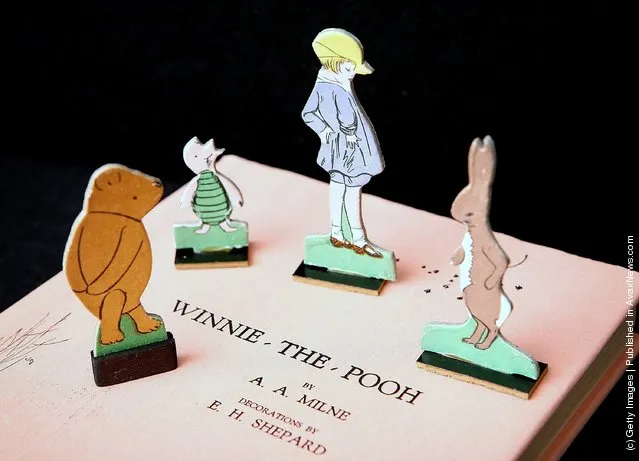
“Alan Alexander “A. A.” Milne (18 January 1882 – 31 January 1956) was an English author. Milne is most famous for his two Pooh books about a boy named Christopher Robin after his son, and various characters inspired by his son's stuffed animals, most notably the bear named Winnie-the-Pooh”. – Wikipedia

Photo: A rare American first edition of a Winnie-the-Pooh book signed by the author A.A. Milne and illustrator E. H. Shephard is displayed with Pooh characters form a 1930's game at a press preview at Sotheby's Auctioneers on December 15, 2008 in London. (Photo by Peter Macdiarmid/Getty Images)
Details
28 Aug 2011 13:34:00
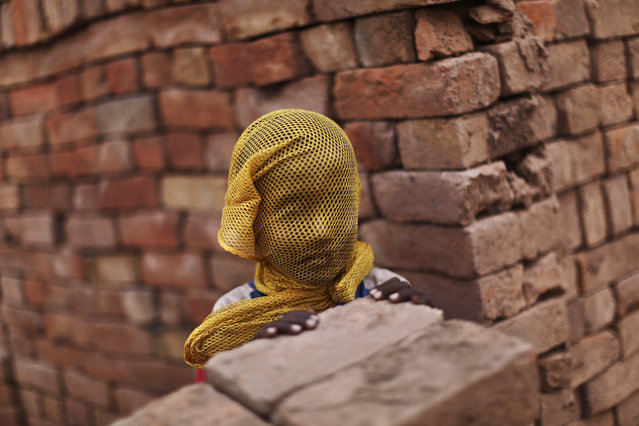
A Pakistani boy who lives near by a brick factory, covers his face with a scarf to avoid a sand storm, on the outskirts of Islamabad, Pakistan, Wednesday, June 6, 2012. (Photo by Muhammed Muheisen/AP Photo)

“Muhammed’s work has received many international awards, among others Breaking News Pulitzer Prize of 2005 for covering war in Iraq, POYI, Picture of the year 2007, of Saudi Arabia of the Annual Muslim pilgrimage, best Multimedia of the Annual Israeli photo contest of 2007, honorable mention Atlanta photojournalism seminar of 2008 and photo of the year of the Annual Israeli photo contest of 2008 with two first prizes and two second prizes in different categories, two prizes in the Atlanta photojournalism seminar of 2009, 6 prizes in the Annual Israeli photo contest of 2009”. – Associated Press
Details
11 Aug 2014 11:22:00
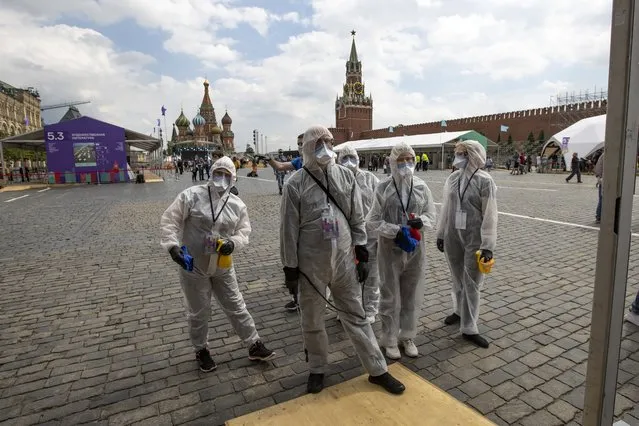
Volunteers wearing face masks, gloves and protective gear to protect against coronavirus, gather to clean an area of an outdoor book market set up at Red Square with GUM, State Department store, left, St. Basil's Cathedral, center, Spasskaya Tower, second with, and the Kremlin Wall, right, in Moscow, Russia, Saturday, June 6, 2020. Muscovites clad in face masks and gloves ventured into Red Square for an outdoor book market, a small sign of the Russian capital's gradual efforts to open up amid coronavirus concerns. (Photo by Alexander Zemlianichenko/AP Photo)

Volunteers wearing face masks, gloves and protective gear to protect against coronavirus, gather to clean an area of an outdoor book market set up at Red Square with GUM, State Department store, left, St. Basil's Cathedral, center, Spasskaya Tower, second with, and the Kremlin Wall, right, in Moscow, Russia, Saturday, June 6, 2020. Muscovites clad in face masks and gloves ventured into Red Square for an outdoor book market, a small sign of the Russian capital's gradual efforts to open up amid coronavirus concerns. (Photo by Alexander Zemlianichenko/AP Photo)
Details
08 Jun 2020 00:01:00
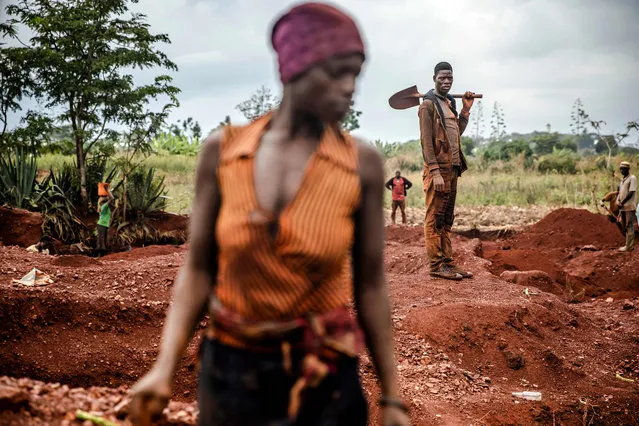
A gold miner observes from the distance how some women miners work at an open-pit gold mine in Nyarugusu, Geita Region, Tanzania on May 27, 2022. Tanzania is a land rich in minerals and one of the main gold producers in Africa, with gold representing more than 90% of the country's mineral exports. Artisanal and small-scale gold mining have culturally and historically relegated women's participation. The extractive sector in Tanzania has historically been a male-dominated industry with high levels of harassment, sеxual abuse, discrimination and misconceptions over women's involvement, and contributions following traditional beliefs. (Photo by Luis Tato/AFP Photo)

A gold miner observes from the distance how some women miners work at an open-pit gold mine in Nyarugusu, Geita Region, Tanzania on May 27, 2022. Tanzania is a land rich in minerals and one of the main gold producers in Africa, with gold representing more than 90% of the country's mineral exports. Artisanal and small-scale gold mining have culturally and historically relegated women's participation. The extractive sector in Tanzania has historically been a male-dominated industry with high levels of harassment, sеxual abuse, discrimination and misconceptions over women's involvement, and contributions following traditional beliefs. (Photo by Luis Tato/AFP Photo)
Details
13 Jun 2022 04:31:00
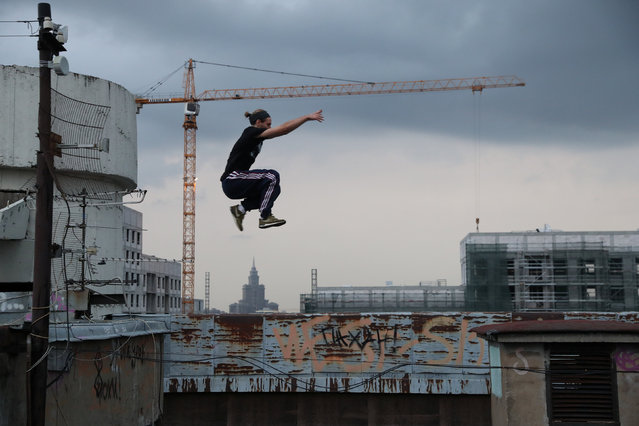
Urban explorer Vad Him of Rudex team jumps whilst on a rooftop in Moscow, Russia, August 14, 2017. (Photo by Maxim Shemetov/Reuters)

To an outsider, their passion is at times illegal and often on the verge of life and death. But climbing rooftops of high-rise buildings and exploring abandoned facilities is in the blood of these young Muscovites. The small group calls itself “Rudex”, which stands for “roof and decay exploration”, and is akin a Western youth craze known as urbex or “urban exploration” of man-made structures. Here: Urban explorer Vad Him of Rudex team jumps whilst on a rooftop in Moscow, Russia, August 14, 2017. (Photo by Maxim Shemetov/Reuters)
Details
25 Sep 2017 06:36:00
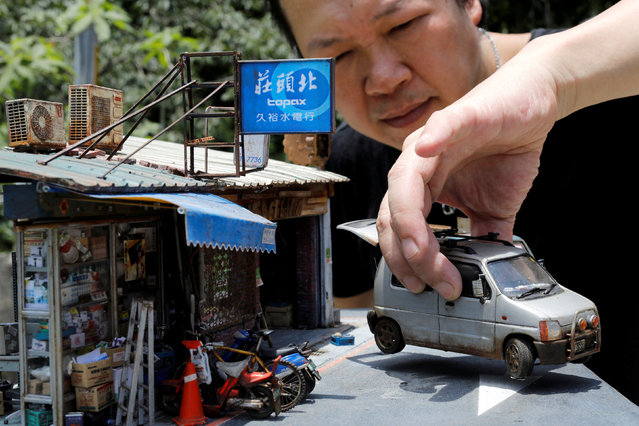
Taiwanese artist Hank Cheng poses with his miniature model of Taipei street scenes, in New Taipei City, Taiwan on June 17, 2018. (Photo by Tyrone Siu/Reuters)

Taiwanese artist Hank Cheng poses with his miniature model of Taipei street scenes, in New Taipei City, Taiwan on June 17, 2018. While some of the vehicles used in Cheng's street scenes are bought in shops, all the buildings and small details like the magazines and the furniture for his model houses are created from scratch. (Photo by Tyrone Siu/Reuters)
Details
20 Jun 2018 00:03:00
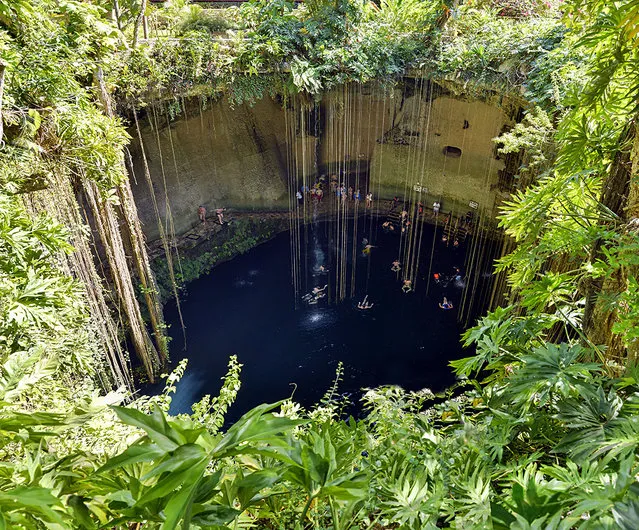
Cenote In Mexico

A cenote is a natural phenomenon, a sinkhole in the Earth’s surface. The Yucatan Peninsula in Mexico has an estimated 7,000 cenotes because it is primarily made up of porous limestone. For millions of years, rainfall slowly ate away at the limestone and a huge system of underground caves and caverns was formed. Many filled with water from rain or from the underground water table. When the roof of a water filled cave collapses, a cenote is born. The water found in a cenote may be fresh water, salt water, or both. Structurally it may be completely open, like a lake, almost completely closed with just a small opening at the top, or somewhere in between.
Details
06 Oct 2013 09:45:00
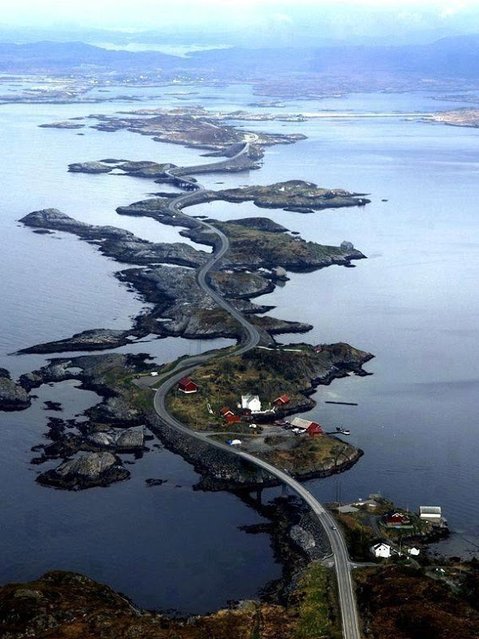
The Atlantic Road, Norway

The Atlantic Ocean Road or the Atlantic Road (Norwegian: Atlanterhavsveien) is a 8.3-kilometer (5.2 mi) long section of County Road 64 that runs through an archipelago in Eide and Averøy in Møre og Romsdal, Norway. It passes by Hustadvika, an unsheltered part of the Norwegian Sea, connecting the island of Averøy with the mainland and Romsdalshalvoya peninsula. It runs between the villages of Karvag on Averoy and Vevang in Eida. It is built on several small islands and skerries, which are connected by several causeways, viaducts and eight bridges – the most prominent being Storseisundet Bridge.
Details
18 Jan 2014 11:42:00